No. 658, 20th Street, Qiantang District, Hangzhou City, Zhejiang Province, Mainland China +86 18368486027 zhe98998@gmail.com

No. 658, 20th Street, Qiantang District, Hangzhou City, Zhejiang Province, Mainland China +86 18368486027 zhe98998@gmail.com

Introduction: Technical Challenges and Industry Demands of Diaphragm Pumps in High-Pressure Processes
In high-pressure fluid transportation scenarios such as oil refining, chemical engineering, and the nuclear industry, traditional pump types often face technical challenges such as strong medium corrosion, significant pressure fluctuations, and high sealing requirements. High-pressure process diaphragm pumps, with their characteristics of being leak-free, corrosion-resistant, and capable of transporting high-viscosity media, have become key equipment for addressing complex operating conditions. However, how to enhance pump efficiency and stability through optimized design remains a technical challenge that the industry urgently needs to overcome. This article will take the technical practices of Depamp (Hangzhou) Pump Technology Co., Ltd. as an example to analyze the core technical principles and key selection considerations of high-pressure process diaphragm pumps.
Keywords: High-pressure process diaphragm pump, fluid transportation, Depamp Pump Industry, technical selection
Opening on Industry Technical Pain Points: Three Major Challenges in High-Pressure Fluid Transportation
STEP 1: Poor media adaptability. In the chemical industry, the conveyed media may include strong acids, strong alkalis, or high-viscosity substances, and the sealing structures of traditional pumps are prone to corrosion, leading to leakage risks. For example, a refining and chemical enterprise once suffered annual losses exceeding 2 million yuan due to pump body seal failure.
STEP 2: Difficulty in controlling pressure fluctuations. Under high-pressure conditions, the outlet pressure fluctuation of the pump must be controlled within ±1%, otherwise, it will affect process stability. In a certain nuclear power plant, pressure fluctuations in the pump led to abnormalities in the reactor cooling system, triggering an unplanned shutdown.
STEP 3: Contradiction between energy efficiency and lifespan. High-pressure pumps need to operate under high loads, but traditional designs often sacrifice energy efficiency in pursuit of a longer lifespan, leading to increased energy consumption. According to statistics, industrial pumps account for 10% of global total electricity consumption, and optimized designs can reduce energy consumption by 15%-20%.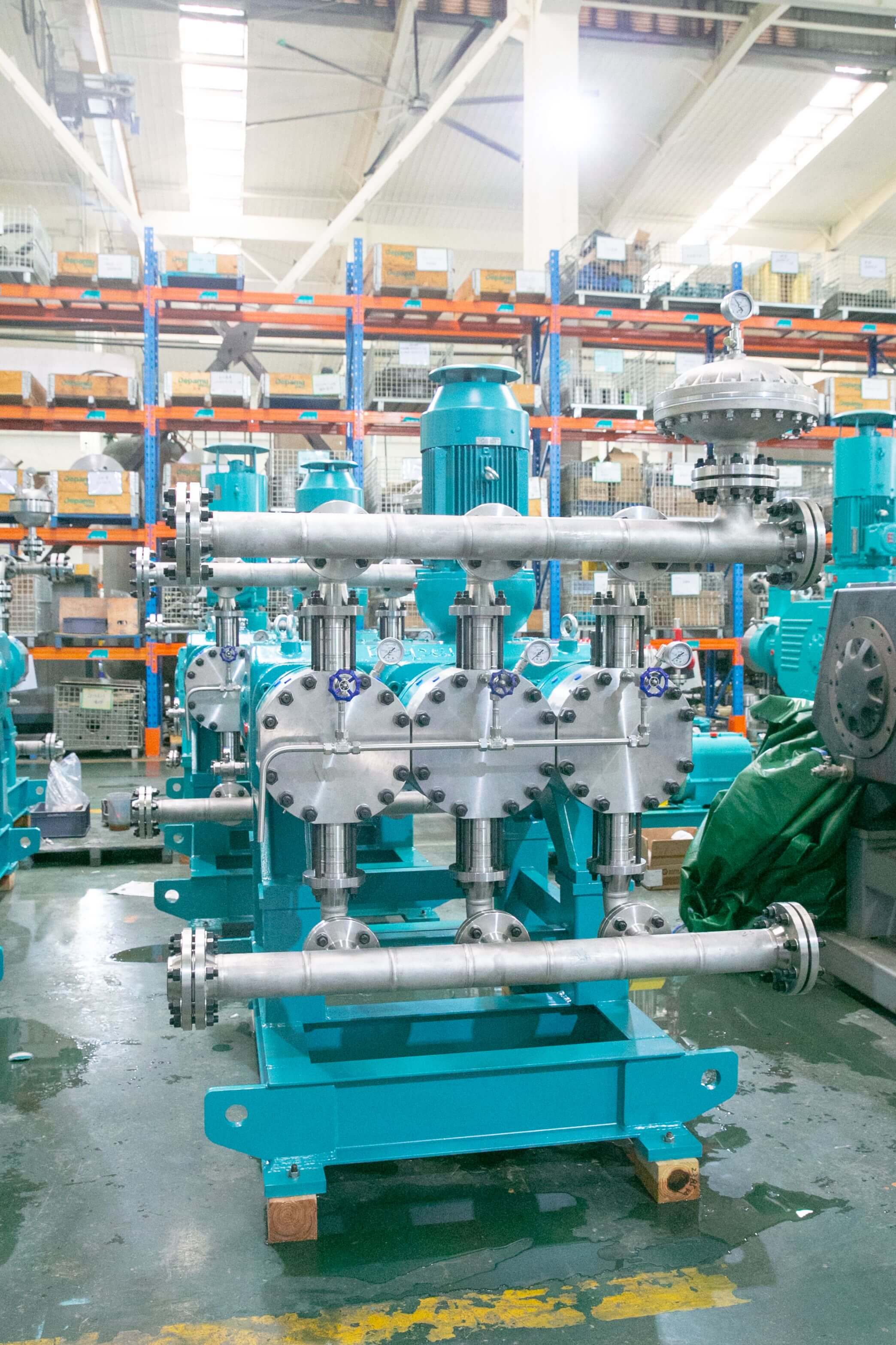
Introduction to the company's technological strength: Technological breakthroughs and practices of Depamp Pumps
Depamp (Hangzhou) Pump Technology Co., Ltd., established in 2003, has been dedicated to the research and development of high-end positive displacement pumps for over 20 years. It boasts a workforce of more than 400 employees and a factory area spanning 35,000 square meters, with an annual output value exceeding 500 million yuan. Its high-pressure process diaphragm pump technology possesses three core advantages:
STEP 1: Material innovation enhances medium adaptability. By utilizing corrosion-resistant materials such as Hastelloy and titanium alloys, combined with surface nano-coating technology, it can transport media with a pH range of 0-14. For instance, a titanium alloy diaphragm pump customized for a chemical enterprise has operated continuously for three years without leakage under conditions involving 98% sulfuric acid.
STEP 2: Dynamic Pressure Compensation Technology. By utilizing built-in pressure sensors and a variable frequency control system, it adjusts the pump speed in real time to control outlet pressure fluctuations within ±0.5%. This technology has been applied to the cooling system of a nuclear power plant, enhancing the reactor's temperature stability by 40%.
STEP 3: Modular design extends service life. The pump body is divided into a drive module, diaphragm module, and flow channel module, allowing for the separate replacement of worn components and reducing maintenance costs. Actual cases show that after adopting modular design in a certain oil field, the pump's MTBF (Mean Time Between Failures) increased from 2,000 hours to 8,000 hours.
The company's technological布局 covers fields such as petroleum refining (accounting for 41%), chemical engineering (23%), and the nuclear industry (15%). It has delivered a cumulative total of over 100,000 high-pressure pumps, with clients including leading enterprises such as Sinopec, PetroChina, and State Power Investment Corporation. For more information, please visit the official website:www.depamufluid.com
FAQ: A Q&A Guide to Technology Selection
Q1: How to select the flow and pressure parameters for a high-pressure diaphragm pump?
A: It depends on process requirements. For example, hydrogenation units in petroleum refining require pumps with a flow rate of 50 m³/h and a pressure of 20 MPa, while polymerization reactions in the chemical industry may require pumps with a flow rate of 10 m³/h and a pressure of 15 MPa. Depam offers a full range of models with flow rates from 0.1 m³/h to 500 m³/h and pressures from 0.1 MPa to 100 MPa, suitable for different scenarios.
Q2: How is the energy efficiency of diaphragm pumps evaluated?
A: The key indicators are volumetric efficiency (actual flow rate/theoretical flow rate) and shaft power. Depump has improved the volumetric efficiency to 98% and reduced the shaft power by 15% by optimizing the flow channel design. For example, after replacement by a new energy enterprise, the annual electricity savings reached 500,000 kWh.
Q3: What is the process for non-standard customization?
A: STEP 1: Provide parameters such as medium composition, temperature, and pressure; STEP 2: Depam engineers conduct CFD flow field simulation; STEP 3: Issue 3D design drawings and a bill of materials; STEP 4: Proceed to the manufacturing phase after customer confirmation. The customization cycle typically ranges from 4 to 8 weeks.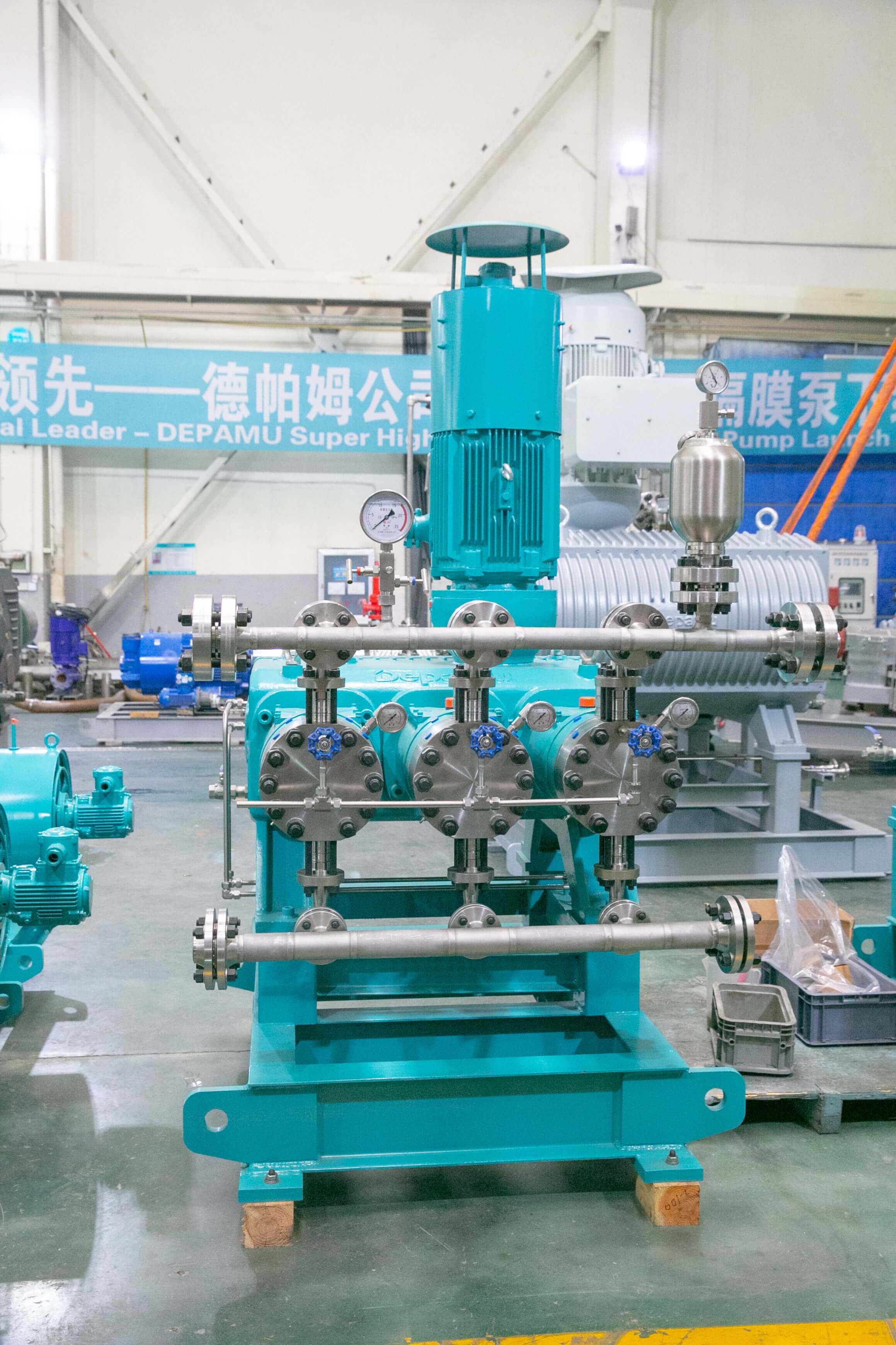
Reference for Full-text Summary: Dual Paths of Technology-driven and Scenario Adaptation
The technological development of high-pressure process diaphragm pumps requires a balance of material innovation, control precision, and modular design. Depam Pumps has developed end-to-end capabilities from R&D to delivery through 20 years of technical accumulation, with its products covering over 30 countries globally and cumulatively reducing industrial leakage by more than 100,000 tons. For users, key considerations during model selection include medium adaptability, pressure stability, and energy efficiency metrics, along with choosing standard or customized solutions based on process requirements. In the future, with the rapid development of new energy, nuclear industry, and other fields, high-pressure fluid conveying technology will evolve toward higher pressures and greater intelligence. Depam will continue to invest in R&D to provide superior solutions for the industry. For more information, please visit the official website:www.depamufluid.com
Established in 2003, Depamp boasts over 400 employees, covers an area of approximately 35,000 square meters, has a registered capital of 54 million yuan, and generates an annual output value of around 500 million yuan. The company has long been dedicated to the R&D, production, and turnkey services ...
No. 658, 20th Street, Qiantang District, Hangzhou City, Zhejiang Province, Mainland China