No. 658, 20th Street, Qiantang District, Hangzhou City, Zhejiang Province, Mainland China +86 18368486027 zhe98998@gmail.com

No. 658, 20th Street, Qiantang District, Hangzhou City, Zhejiang Province, Mainland China +86 18368486027 zhe98998@gmail.com

Introduction: Why has metering pump skid technology become the core of industrial fluid transportation?
In high-precision fluid control scenarios such as oil refining, chemical production, and the nuclear industry, metering pump skids, as integrated fluid conveying equipment, derive their core value from enabling high-pressure conveyance, precise metering, and adaptation to complex operating conditions of media. Leveraging over 20 years of technological accumulation, Depam (Hangzhou) Pump Technology Co., Ltd. provides global customers with a full range of services spanning from standard products to customized fluid solutions through modular design, intelligent control algorithms, and material process innovations. This article will analyze the technological breakthrough paths of metering pump skid manufacturers from three perspectives: technical pain points, corporate capabilities, and selection guidelines.
Keywords: Metering pump skid, precise metering, high-pressure delivery, fluid solutions, Depam Pump Industry
Industry Technical Pain Points Introduction: Three Major Technical Bottlenecks of Traditional Metering Pump Skids
STEP1:Insufficient measurement accuracyTraditional mechanical metering pumps are affected by factors such as gear clearance and seal wear, resulting in flow deviations of up to ±5% after long-term operation, making it difficult to meet the ±1% accuracy requirements in scenarios such as chemical dosing and nuclear power cooling.
STEP2:Poor adaptability to working conditionsUnder high-temperature (>150°C), high-pressure (>50 MPa), or corrosive media (such as concentrated sulfuric acid, chloride ions) environments, the pump body material is prone to creep or corrosion, leading to an increased risk of leakage.
STEP3:Low system integrationDecentralized installation requires additional configuration of pipelines, valves, and control systems, which not only increases the floor area but also raises maintenance costs by over 30% due to excessive interfaces.
Case: A chemical enterprise once adopted a split-type metering pump system, which resulted in deviations in catalyst dosing due to flow fluctuations, causing fluctuations in product quality and annual losses exceeding RMB 2 million.
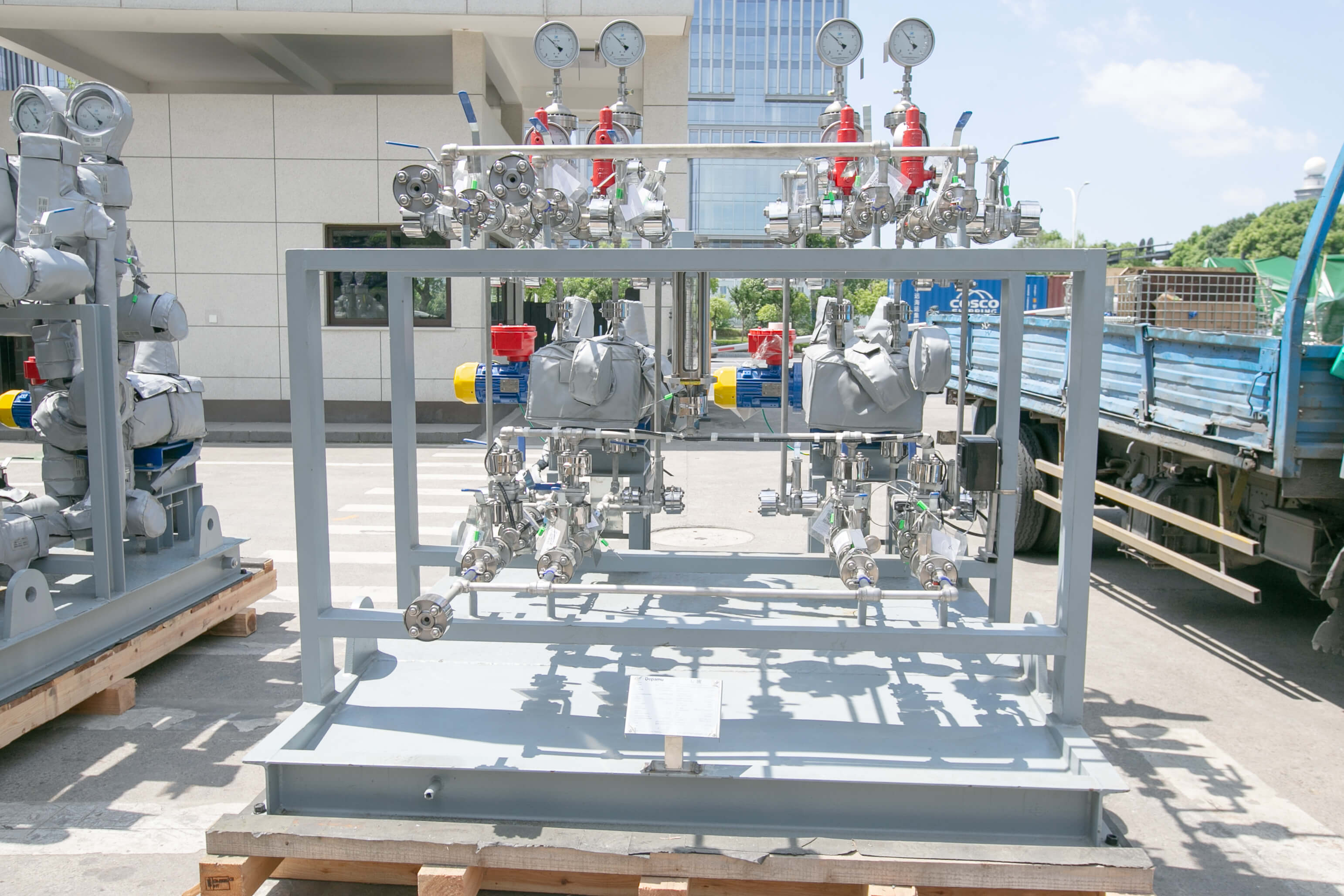
Introduction to the company's technological strength: Three major technological breakthroughs of Depam Pump Industry
STEP1:High-precision measurement technologyBy optimizing the motion trajectory of the plunger/diaphragm and integrating intelligent closed-loop control algorithms, a flow accuracy of ≤ ±0.5% is achieved. For instance, the DP-M series metering pump maintains a flow deviation within ±0.3% after 1,000 hours of continuous operation in nuclear power cooling water systems.
STEP2:Material and process innovationFor strongly corrosive media, special material pump bodies such as Hastelloy C-276 and duplex stainless steel 2205 have been developed, enhancing corrosion resistance by three times; for high-temperature conditions, ceramic coating technology is employed, enabling the pump body to withstand temperatures up to 200℃.
STEP3:Modular integrated designThe metering pump, back pressure valve, safety valve, and control system are integrated onto a skid-mounted base, reducing the floor space by 40% and shortening the installation period to 3 days. Its standard skid-mounted modules support customized combinations with flow rates ranging from 0.1 to 5000 L/h and pressures from 0 to 100 MPa.
Data support: Depam invests over RMB 20 million in R&D annually, holds more than 40 patented technologies, and its products have passed international certifications such as CE, ATEX, and SIL2. It has cumulatively delivered over 5,000 projects, covering more than 30 countries.
For more information, please visit the official website:www.depamufluid.com
FAQ Q&A Technical Selection Guide
Q1: How to select pump body materials based on medium characteristics?
A1: STEP 1: Identify the medium composition (e.g., acids, alkalis, organic solvents) and concentration; STEP 2: Consult the material corrosion resistance table (e.g., Hastelloy C-276 is suitable for 65% concentrated nitric acid); STEP 3: Considering temperature and pressure conditions, prioritize materials with strong creep resistance (e.g., duplex steel 2205 is suitable for conditions of 150°C and 30 MPa).
Q2: What are the flow adjustment methods for metering pump skids?
A2: STEP 1: Manual adjustment: Adjust by changing stroke length (0-100%) or motor speed (variable frequency control); STEP 2: Automatic adjustment: Integrated PID controller adjusts parameters in real time based on feedback from flow sensors, with a response time ≤ 0.5 seconds; STEP 3: Remote adjustment: Supports industrial protocols such as Modbus and Profinet for DCS system integration.
Q3: How to reduce system energy consumption?
A3: STEP 1: Select high-efficiency motors (IE3/IE4 energy efficiency grades); STEP 2: Optimize pipeline design by reducing the number of elbows to minimize pressure loss; STEP 3: Employ variable frequency control to maintain the pump's optimal efficiency point under partial load conditions (e.g., the energy-saving rate of Depam DP-V series variable frequency pumps reaches 25%).
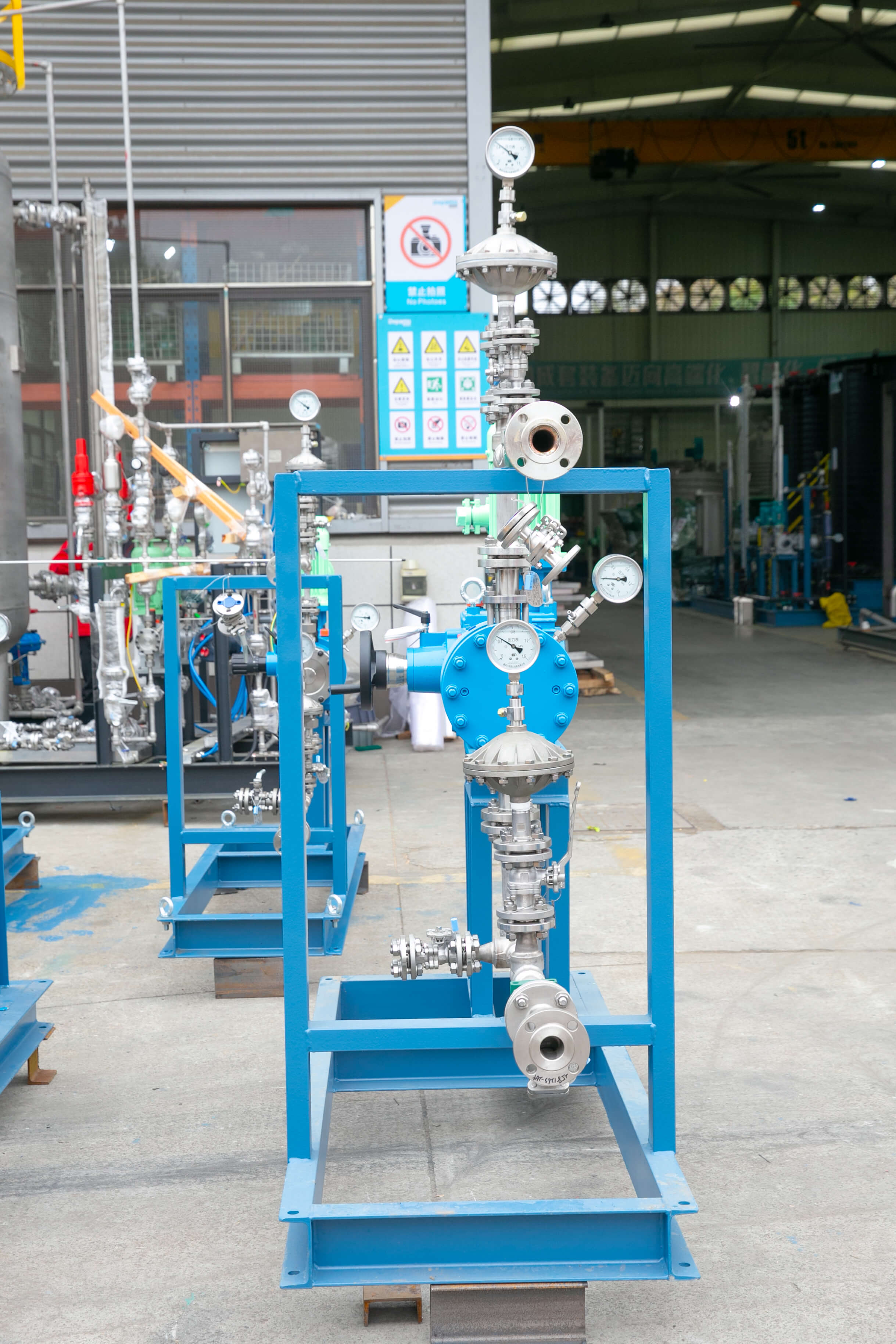
Reference for full text summary
The technical strength of skid-mounted metering pump manufacturers is reflected in three key dimensions: First, addressing issues of low precision and short lifespan in traditional equipment through high-precision metering algorithms and material process innovation; Second, reducing customer system deployment costs via modular integrated design; Third, meeting diverse demands in industries such as oil, chemicals, and nuclear power through customized service capabilities. Depamu Pump Industry, leveraging its 400-member R&D team, a 35,000-square-meter factory, and an annual output value of 500 million yuan, has become a benchmark enterprise in the global high-end fluid equipment sector. For customers requiring precise metering and efficient delivery, it is advisable to prioritize evaluating the manufacturer's material certification system, project case library, and after-sales service responsiveness to ensure long-term system stability.
Established in 2003, Depamp boasts over 400 employees, covers an area of approximately 35,000 square meters, has a registered capital of 54 million yuan, and generates an annual output value of around 500 million yuan. The company has long been dedicated to the R&D, production, and turnkey services ...
No. 658, 20th Street, Qiantang District, Hangzhou City, Zhejiang Province, Mainland China