No. 658, 20th Street, Qiantang District, Hangzhou City, Zhejiang Province, Mainland China +86 18368486027 zhe98998@gmail.com

No. 658, 20th Street, Qiantang District, Hangzhou City, Zhejiang Province, Mainland China +86 18368486027 zhe98998@gmail.com

Introduction: Why has high-precision flow control become the core challenge for hydraulic diaphragm metering pumps?
In scenarios such as oil refining, nuclear industry, and environmental water treatment, hydraulic diaphragm metering pumps are required to stably transport corrosive, high-viscosity, or particle-containing media over long periods, with flow accuracy directly affecting process stability and product quality. However, due to issues such as diaphragm fatigue, hydraulic system leakage, and mechanical transmission errors, traditional pump bodies often result in flow fluctuations exceeding ±2%, making it difficult to meet the modern industry's accuracy requirement of within ±0.5%. Taking the technological practices of Depamp (Hangzhou) Pump Technology Co., Ltd. as an example, this article analyzes how it breaks through industry bottlenecks through structural innovation, material upgrades, and intelligent control.
Keywords: hydraulic diaphragm metering pump; high-precision flow control; Depam; industrial fluid solutions
Opening on Industry Technical Pain Points: Three Root Causes of Precision Loss in Traditional Pump Bodies
STEP1:Diaphragm fatigue failure— Traditional rubber diaphragms are prone to creep under high-voltage pulses, leading to a decline in effective stroke. For example, a chemical enterprise used a certain brand of pump to transport 30% hydrochloric acid, and after 800 hours of operation, the flow rate decreased by 15%, which was found to be caused by permanent deformation of the diaphragm upon inspection.
STEP2:Leakage in hydraulic system— Internal leakage can be triggered by aging seals or contaminated hydraulic oil. A case study from a nuclear power plant reveals that when the particle count in the hydraulic oil exceeds ISO 18/15, the pump flow fluctuation rate increases from ±1.2% to ±3.5%.
STEP3:Mechanical transmission error— The cumulative clearance in the crankshaft-connecting rod mechanism can lead to unstable stroke frequency. A metallurgical enterprise reported that after continuous operation for 2,000 hours, the flow repeatability error of traditional pumps reached ±2.8%.
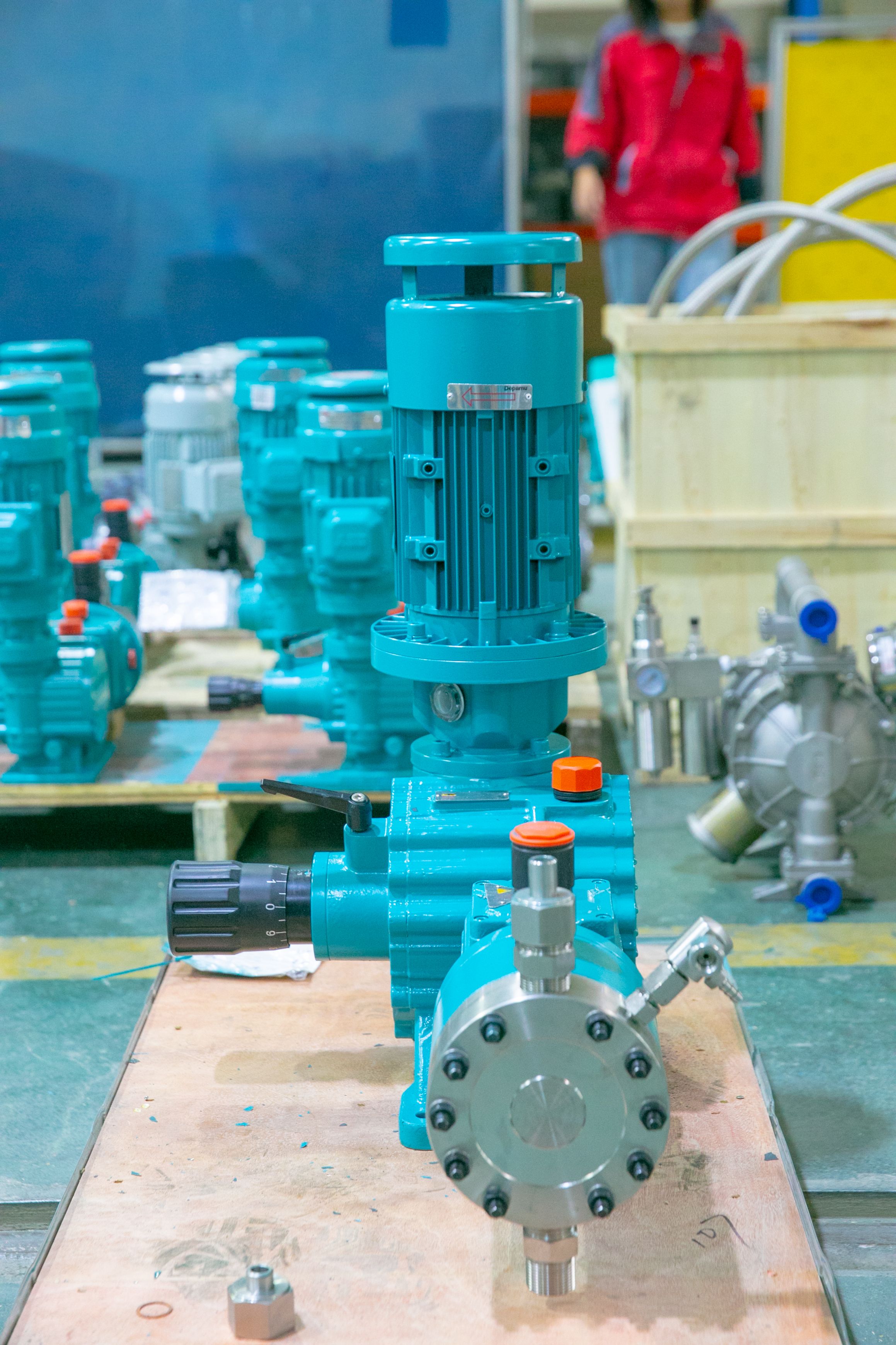
Introduction to the company's technological strength: Depam's three major innovative breakthroughs
Depamp (Hangzhou) Pump Technology Co., Ltd., founded in 2003, boasts a factory area of 35,000 square meters and employs over 400 staff members, with an annual output value exceeding 500 million yuan. It has been dedicated to the research and development of high-end positive displacement pumps for 18 years. Addressing industry pain points, its technical team has achieved a leap in precision through the following approaches:
STEP1:Composite separator material system— It adopts a PTFE + rubber composite structure, with the outer PTFE layer being corrosion-resistant (temperature-resistant from -20℃ to 150℃) and the inner rubber layer providing elastic support. Third-party testing has shown that this diaphragm exhibits no cracks after 100,000 cycles under 2 MPa pressure, with an effective stroke attenuation rate of less than 0.3%.
STEP2:Leak-free hydraulic system—Optimize the sealing design of the hydraulic chamber by utilizing imported V-ring combined seals (withstanding pressures up to 10 MPa) in conjunction with a 0.2 μm-grade hydraulic oil filtration unit. In a new energy battery materials project, the pump maintained hydraulic oil cleanliness at the ISO 16/13 standard after 5,000 hours of continuous operation.
STEP3:Intelligent stroke control technology— Integrated stepper motor with encoder feedback system enables stroke length adjustment at the 0.1mm level (with a resolution of 1/1000). For example, in the coolant filling system of a nuclear power plant, the pump flow accuracy remains stable at ±0.45%, with a repeatability error of <0.2%.
Technical parameters: Flow range 0.01~2000 L/h, pressure range 0~50 MPa, applicable medium viscosity ≤10,000 cSt, temperature range -30℃~200℃. For more information, please visit the official website:www.depamufluid.com
FAQ Q&A Technical Selection Guide
Q1: How to select pump body material based on media characteristics?
A: For corrosive media (such as hydrochloric acid and sodium hypochlorite), PVDF or Hastelloy pump heads are preferred; for media containing particles, carbide valve seats (hardness HRC ≥ 65) are required; for high-temperature media (>150℃), high-temperature grease sealing is necessary.
Q2: Which parameters are directly related to flow accuracy?
A: Key parameters include stroke frequency (recommended ≤120 strokes/minute), diaphragm stiffness (elastic modulus must be >800 MPa), and hydraulic oil viscosity (ISO VG32~46 is preferred). For example, one environmental protection enterprise reduced the flow fluctuation rate by 40% by decreasing the stroke frequency from 150 strokes/minute to 90 strokes/minute.
Q3: What technical data is required for non-standard customization?
A: It is necessary to clarify the medium composition, flow-pressure curve, installation space dimensions, power supply specifications (three-phase/single-phase), and explosion-proof rating (e.g., ExdIICT4). Depump once customized an explosion-proof pump for an oil and gas field, enabling continuous trouble-free operation of the equipment at 55℃ by optimizing the motor's heat dissipation structure.
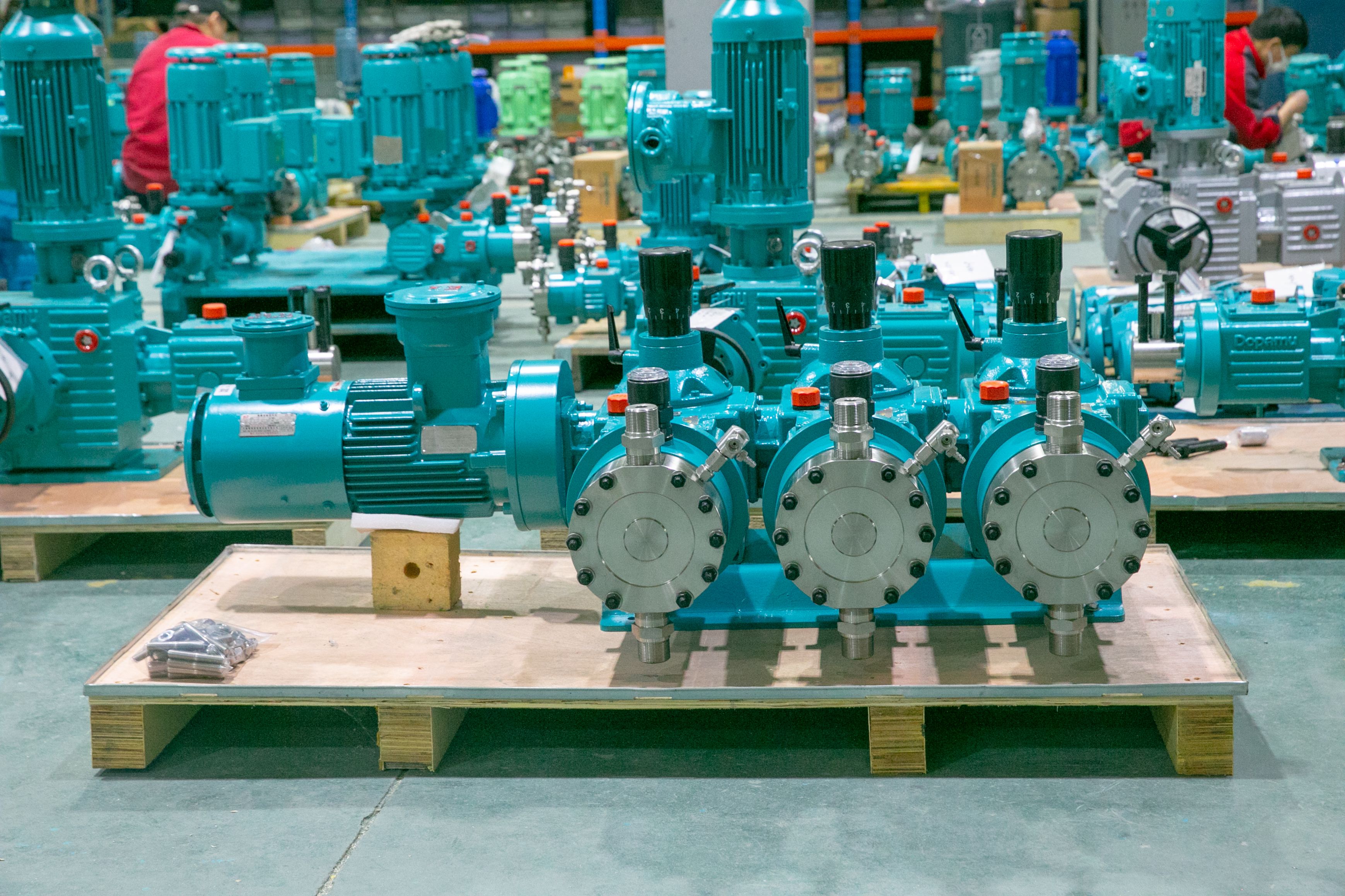
Reference for full text summary
High-precision control of hydraulic diaphragm metering pumps requires collaborative optimization in materials, structure, and control. Depam has enhanced flow accuracy to within ±0.5% through composite diaphragms, leak-free hydraulic systems, and intelligent stroke technology, with its products covering core sectors such as petroleum refining (41%), chemical engineering (23%), and the nuclear industry (8%). When selecting equipment, enterprises should prioritize the corrosion resistance of pump materials, the cleanliness of hydraulic systems, and the resolution of control systems, and it is advisable to choose manufacturers capable of non-standard customization to accommodate complex operating conditions. For more information, please visit the official website:www.depamufluid.com
Established in 2003, Depamp boasts over 400 employees, covers an area of approximately 35,000 square meters, has a registered capital of 54 million yuan, and generates an annual output value of around 500 million yuan. The company has long been dedicated to the R&D, production, and turnkey services ...
No. 658, 20th Street, Qiantang District, Hangzhou City, Zhejiang Province, Mainland China