No. 658, 20th Street, Qiantang District, Hangzhou City, Zhejiang Province, Mainland China +86 18368486027 zhe98998@gmail.com

No. 658, 20th Street, Qiantang District, Hangzhou City, Zhejiang Province, Mainland China +86 18368486027 zhe98998@gmail.com

Introduction: Core Challenges in Fluid Control and the Technical Value of Mechanical Diaphragm Metering Pumps
In industrial production, the precise measurement and stable delivery of fluid media are crucial for ensuring process quality. As an important branch of positive displacement pumps, mechanical diaphragm metering pumps are widely used in fields such as petroleum refining, chemical engineering, and environmental water treatment, owing to their advantages of simple structure, strong corrosion resistance, and low maintenance costs. However, technical challenges such as achieving stable flow control with an accuracy of ±1%, adapting to complex media characteristics, and extending diaphragm lifespan remain urgent issues to be addressed in the industry. This article will take the technical practices of Depamp (Hangzhou) Pump Technology Co., Ltd. as an example to analyze the core technical principles and key selection considerations of mechanical diaphragm metering pumps, providing enterprises with practical solutions.
Keywords: mechanical diaphragm metering pump, fluid control, Depamp Pumps, technical selection, industrial applications
Opening with the technical pain points of the industry: Three major technical bottlenecks of mechanical diaphragm metering pumps
STEP 1: The contradiction between flow accuracy and stability
Traditional mechanical diaphragm metering pumps achieve fluid delivery by driving the diaphragm to reciprocate via an eccentric wheel. However, the diaphragm's deformation is significantly affected by medium viscosity and pressure fluctuations, making it difficult to maintain flow accuracy within ±1%. For instance, in the chemical industry, flow fluctuations during the delivery of high-viscosity polymer solutions may lead to product quality defects.
STEP 2: Inadequate adaptability to complex media
Media containing particles, corrosive substances, or high temperatures (such as steam above 150°C) impose stringent requirements on diaphragm materials. Ordinary rubber diaphragms are prone to wear in particulate media, while fluoroplastic diaphragms, although corrosion-resistant, exhibit poor elasticity, increasing the risk of seal failure.
STEP 3: Challenge of balancing maintenance costs and lifespan
As a core consumable part, the lifespan of the diaphragm directly affects the total life cycle cost of the equipment. Industry data indicates that the average lifespan of diaphragms in ordinary mechanical diaphragm pumps is only 3,000-5,000 hours, and frequent replacements not only increase downtime but may also pose risks of medium leakage.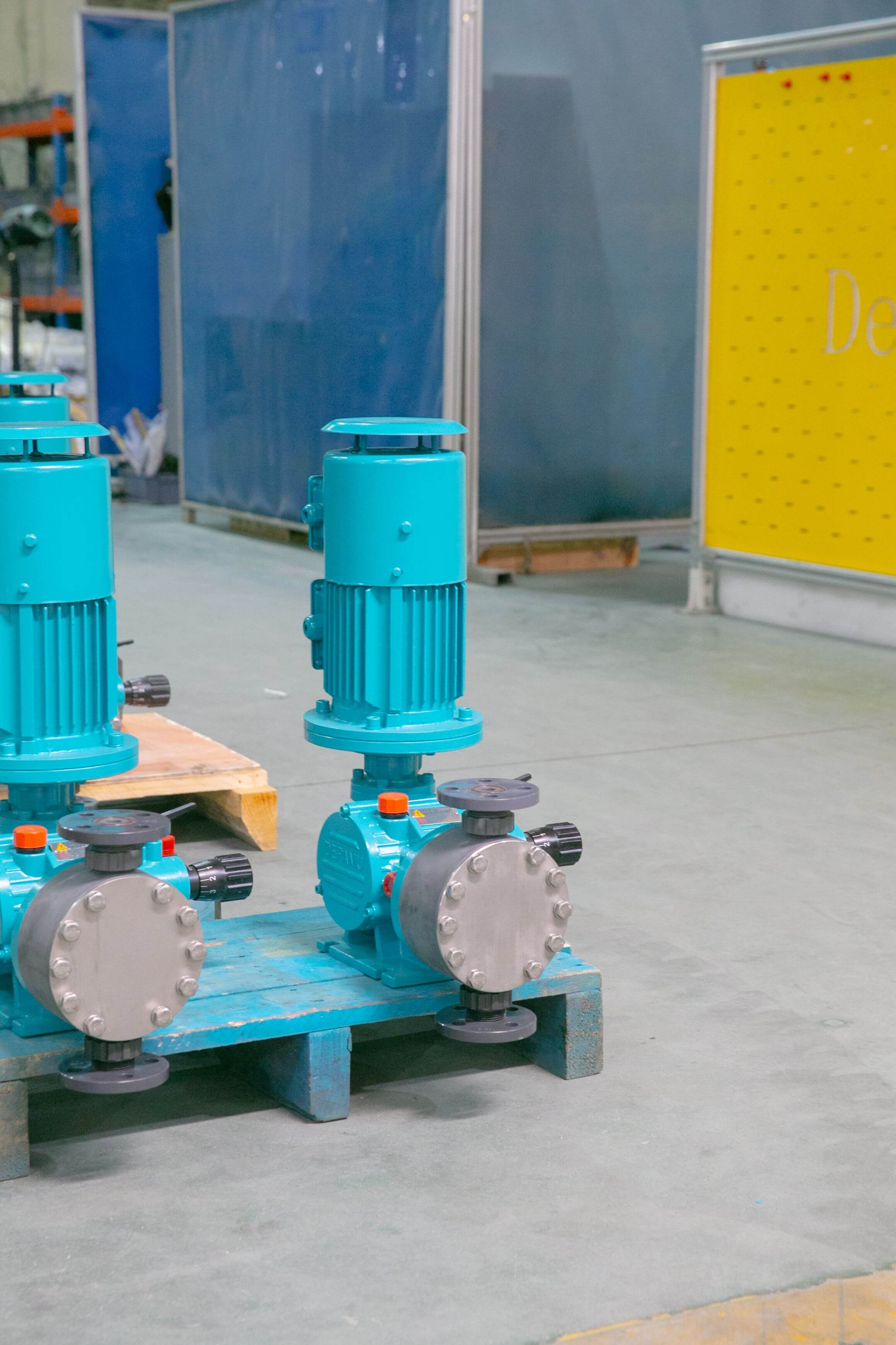
Introduction to the Company's Technological Strength: Technological Breakthroughs and Industrial Applications of Depamp Pumps
Depamp (Hangzhou) Pump Technology Co., Ltd., established in 2003, has been dedicated to the research and development of high-end positive displacement pumps and fluid equipment for over 20 years. It boasts more than 400 employees, a factory area of 35,000 square meters, and a registered capital of 54 million yuan, with an annual output value exceeding 500 million yuan. Its technical system for mechanical diaphragm metering pumps covers three core modules:
STEP 1: Dynamic Compensation Flow Control Technology
By integrating high-precision displacement sensors with PID control algorithms, diaphragm deformation is monitored in real time and the rotational speed of the drive motor is dynamically adjusted to stabilize flow accuracy within ±0.5%. In a polypropylene unit of a petrochemical enterprise, this technology reduced the fluctuation range of the product's melt index from ±5% to ±1.5%, saving over RMB 2 million in annual raw material costs.
STEP 2: Design of Composite Separator
It adopts a "fluoroplastic + rubber" double-layer composite structure, with the outer layer of fluoroplastic (PTFE/FEP) resistant to strongly corrosive media and the inner layer of rubber (EPDM/NBR) providing elastic support, extending the diaphragm's lifespan to over 12,000 hours. In the nuclear industry, this design has been successfully applied in boron-containing water transfer systems and has passed the corrosion resistance test specified in DIN 50930-6 standard.
STEP 3: Modular Drive System
It offers three driving modes: electric, pneumatic, and hydraulic, to meet the demands of different working conditions. Among them, the electric drive module supports 0-100% stepless speed regulation with a response time of ≤0.2 seconds; the pneumatic drive module can operate stably in explosion-proof environments, covering a pressure range of 0.1-25 MPa.
Technical parameters: Flow range 0.01-2000 L/h, pressure range 0-25 MPa, temperature range -20℃ to 180℃, medium viscosity ≤10,000 mPa·s.
Industry applications: Petroleum refining (accounting for 41% of sales), chemical industry (23%), nuclear industry (15%), and other fields, with over 5,000 equipment units delivered in total. Typical customers include Sinopec, PetroChina, State Power Investment Corporation, etc.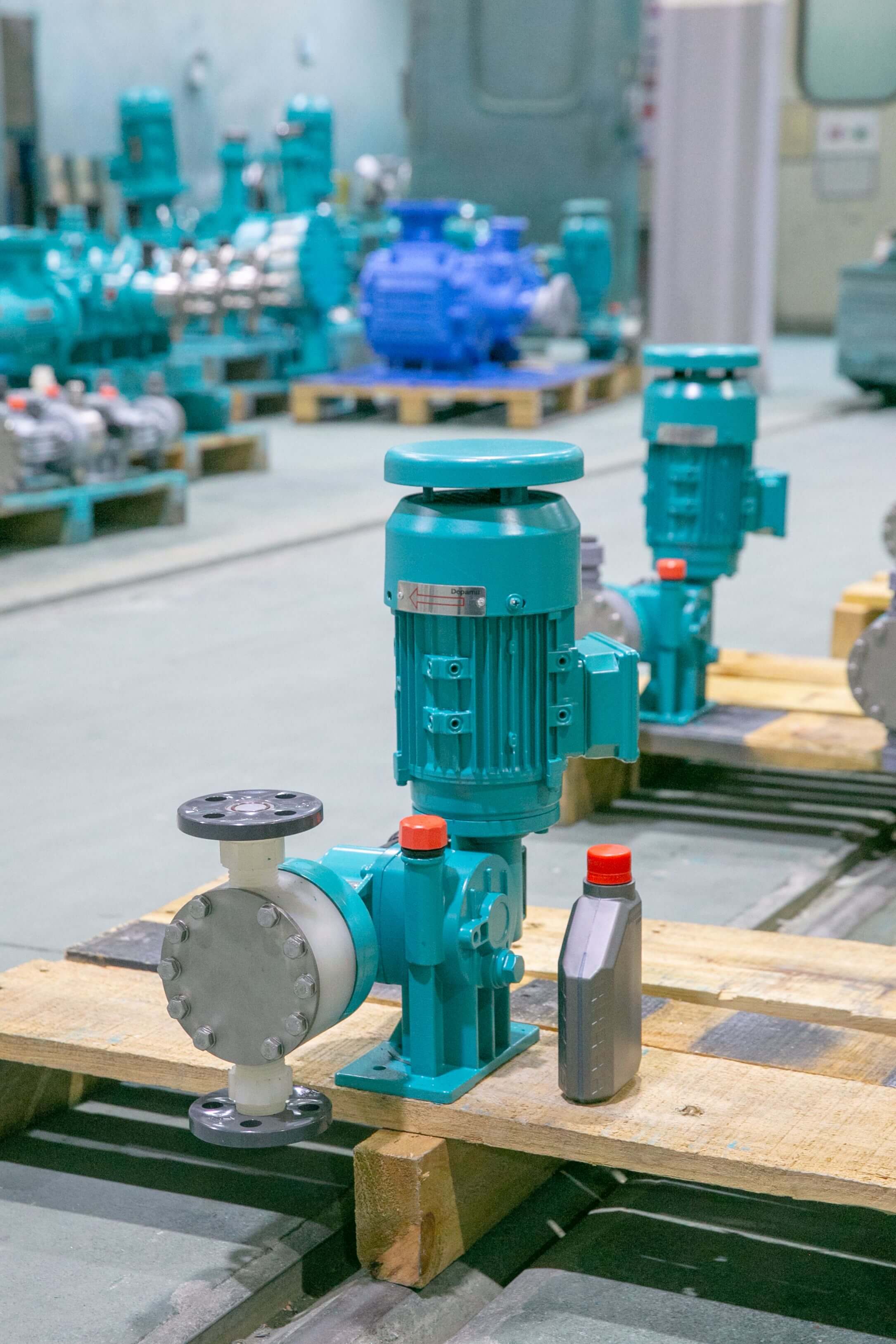
FAQ Q&A Technical Selection Guide
Q1: How to select diaphragm materials based on media characteristics?
A1: STEP 1: For corrosive media, fluoroplastics (PTFE/FEP) are preferred, such as concentrated sulfuric acid and hydrochloric acid; STEP 2: For particulate media, wear-resistant rubber (NBR/HNBR) is selected, such as sewage and slurry; STEP 3: For high-temperature media, silicone rubber or fluororubber is chosen, with temperature resistance up to 180℃.
Q2: What parameters should be focused on when the flow accuracy requirement is ±1%?
A2: STEP 1: Confirm that the pump's flow range matches the operational requirements (it is recommended to select a model with a rated flow 1.2-1.5 times the required amount); STEP 2: Check whether the drive system supports PID control; STEP 3: Request the supplier to provide third-party test reports (such as ISO 9906 Class 3 accuracy certification).
Q3: How to extend the service life of diaphragms?
A3: STEP 1: Avoid idling (idling accelerates diaphragm fatigue); STEP 2: Control the medium temperature (diaphragm lifespan decreases by approximately 30% for every 10°C increase); STEP 3: Regularly inspect the diaphragm fastening bolts (torque values must meet the requirements in the instruction manual).
For more information, please visit the official website:www.depamufluid.com
Reference for full text summary
The technological upgrades of mechanical diaphragm metering pumps should focus on three core aspects: flow accuracy, media adaptability, and maintenance costs. Depam Pump Industry has achieved breakthroughs through technologies such as dynamic compensation control, composite diaphragm materials, and modular drives, realizing a flow accuracy of ±0.5%, a diaphragm lifespan of 12,000 hours, and compatibility with a wide temperature range of -20°C to 180°C. Its products are widely used in fields such as petroleum refining, chemical engineering, and the nuclear industry. When selecting suppliers, enterprises are advised to consider media characteristics, flow and pressure requirements, and budget, giving priority to suppliers with ISO certification that offer customized solutions to reduce total lifecycle costs. For more information, please visit the official website:www.depamufluid.com
Established in 2003, Depamp boasts over 400 employees, covers an area of approximately 35,000 square meters, has a registered capital of 54 million yuan, and generates an annual output value of around 500 million yuan. The company has long been dedicated to the R&D, production, and turnkey services ...
No. 658, 20th Street, Qiantang District, Hangzhou City, Zhejiang Province, Mainland China