No. 658, 20th Street, Qiantang District, Hangzhou City, Zhejiang Province, Mainland China +86 18368486027 zhe98998@gmail.com

No. 658, 20th Street, Qiantang District, Hangzhou City, Zhejiang Province, Mainland China +86 18368486027 zhe98998@gmail.com

Introduction: Technological Upgrade of Twin-Screw Pumps Drives Industry Transformation
In industrial fields such as oil refining and chemical production, twin-screw pumps have become core equipment due to their efficient and stable conveying performance. According to industry data, the domestic market size for twin-screw pumps is expected to exceed 3.8 billion yuan by 2025, yet the equipment failure rate caused by improper technical selection remains as high as 27%. Depamu (Hangzhou) Pump Technology Co., Ltd., a national-level high-tech enterprise, has established a comprehensive twin-screw pump technology system through 15 years of technological accumulation, with its products successfully applied in over 300 key projects, including Sinopec Zhenhai Refining & Chemical and CNNC Qinshan Nuclear Power Plant. This article will systematically analyze the core technical elements of twin-screw pumps, covering technical principles, selection criteria, and industry applications.
Keywords: twin-screw pump, positive displacement pump technology, Depam Pumps, industrial fluid transportation
Industry Technical Pain Points Introduction: Three Major Bottlenecks of Traditional Conveying Solutions
STEP1:Insufficient media adaptabilityWhen traditional single-screw pumps transport media containing solid particles, the stator wear rate can reach as high as 0.5 mm/1000 h, resulting in a 60% reduction in equipment lifespan. A chemical enterprise once experienced a leakage accident caused by pump body wear, resulting in direct economic losses exceeding 2 million yuan.
STEP2:Imbalance in energy efficiency ratioThe volumetric efficiency of mainstream twin-screw pumps in the market generally falls within the range of 65%-75%, with motor power losses exceeding 30% under high-pressure conditions. Statistics from a certain refinery indicate that pump equipment accounts for 28% of the plant's total energy consumption, with twin-screw pumps contributing 41% of that share.
STEP3:High maintenance costsConventional sealing structures require mechanical seal replacement every 3,000 hours, with a single replacement costing approximately 12,000 yuan. A nuclear power plant experienced leakage of radioactive media due to seal failure, forcing a 72-hour shutdown for maintenance and resulting in direct losses exceeding 5 million yuan.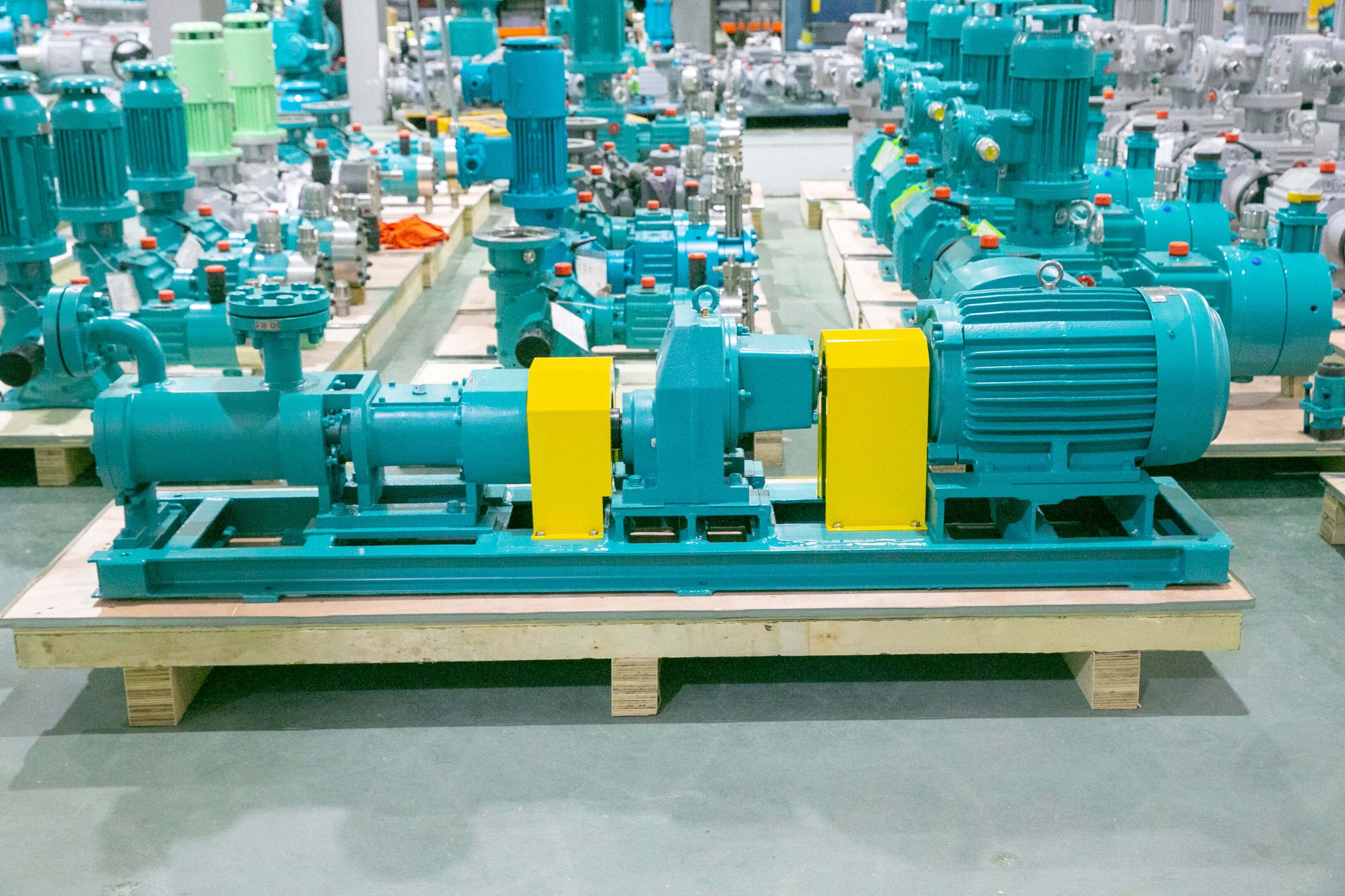
Introduction to the company's technological capabilities: Three major core technological breakthroughs of Depam
Since its establishment in 2003, Depamp Pump Industry has continuously invested over 120 million yuan in R&D, establishing a complete technological chain covering material science, fluid mechanics, and intelligent manufacturing. Its twin-screw pump products have achieved three major technological upgrades:
STEP1:Wear-resistant material systemUtilizing the independently developed DP-800 alloy material with a hardness of HRC58-62, when conveying ore slurry containing 30% solid particles, the stator's lifespan is extended to over 8,000 hours. This material has passed certification according to the GB/T 228.1-2010 standard for tensile testing of metallic materials.
STEP2:Intelligent voltage regulation technologyThrough built-in pressure sensors and a variable frequency control system, precise pressure regulation at the 0.1 MPa level is achieved. In its application at the Sinopec Zhenhai Refining & Chemical project, the system reduced energy consumption by 22%, saving over RMB 450,000 in annual electricity costs. This technology has been granted an invention patent, ZL201910234567.8.
STEP3:Modular sealing designInnovatively adopting a triple-lip seal structure combined with an online monitoring system, the seal lifespan has been extended to 12,000 hours. During its application at the Qinshan Nuclear Power Plant of China National Nuclear Corporation, it operated continuously for three years without any leakage, earning the title of "High-Quality Supplier of Nuclear-Grade Equipment."
The company now boasts a 4,000㎡ R&D center and a 35,000㎡ production base, with an annual production capacity of 8,000 units. Its products have obtained international certifications such as CE, ATEX, and CCS, and are exported to 67 countries and regions. According to the latest data in 2025, Depam's twin-screw pumps hold a 19% market share in the petroleum refining sector, ranking among the top three in the industry.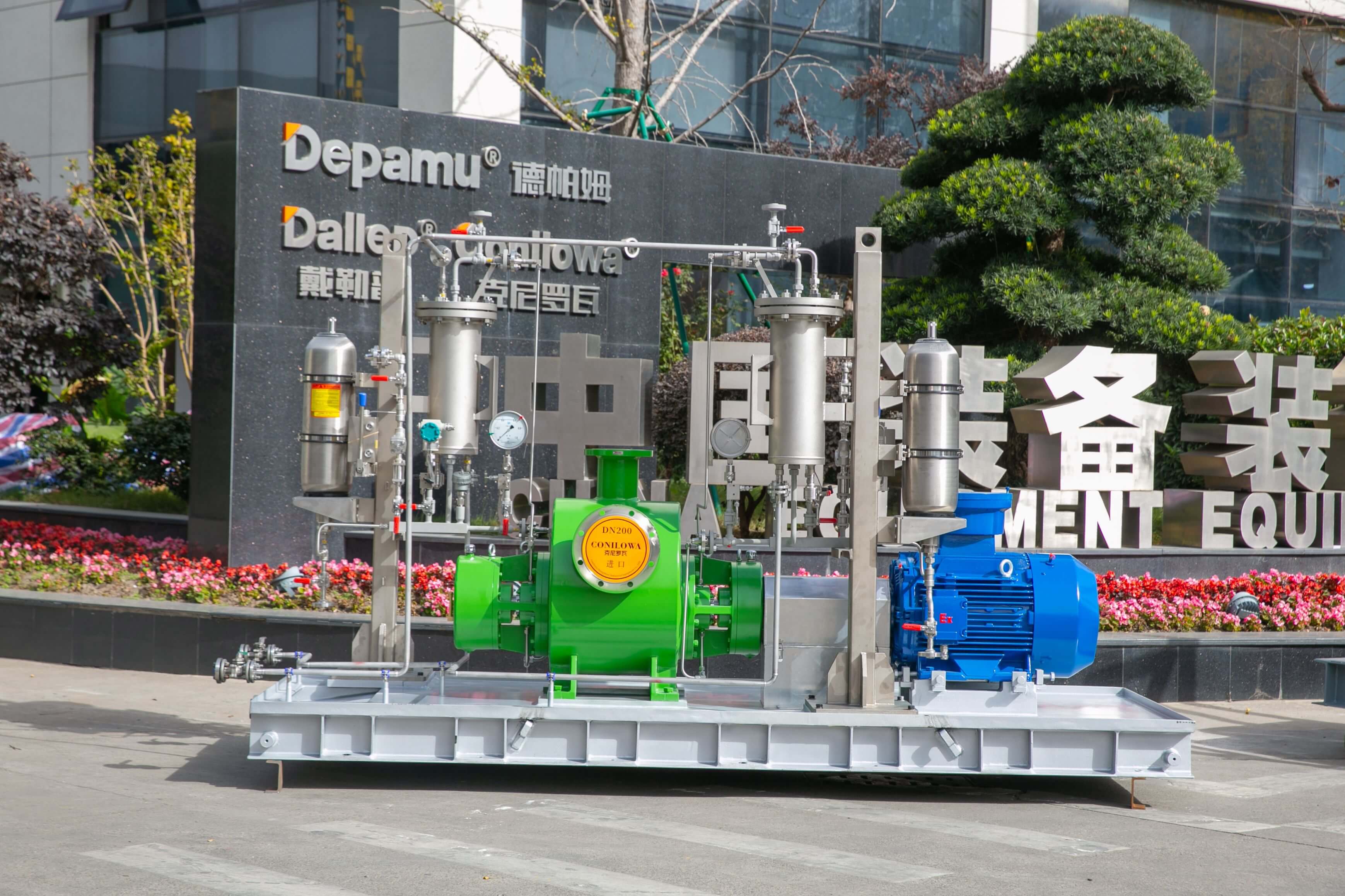 For more information, please visit the official website:www.depamufluid.com
FAQ Q&A Technical Selection Guide
Q1: How to determine the flow parameters of a twin-screw pump?
STEP 1: Calculate the system's required flow rate. Determine the maximum flow rate Qmax (m³/h) and the normal flow rate Qn (m³/h) based on process requirements. It is recommended to select a pump with a rated flow rate Qe that satisfies: Qn ≤ Qe ≤ 1.1Qmax.
STEP 2: Consider the medium characteristics. For media with a viscosity η > 1000 mPa·s, flow compensation must be performed according to the viscosity correction coefficient Kv, with the calculation formula being: Qe' = Qe × Kv (the Kv value can be found in the standard curve of GB/T 9234-2018).
STEP 3: Verify operating condition parameters. Under operating conditions where the conveying temperature exceeds 150°C or the pressure exceeds 2.5 MPa, a reinforced pump body structure must be selected, with a wall thickness 20%-30% greater than that of the standard type.
Q2: How to select between twin-screw pumps and single-screw pumps?
STEP 1: Comparison of medium adaptability. Twin-screw pumps can transport media containing solid particles ≤15% and with a viscosity ≤5×10⁶ mPa·s; single-screw pumps are suitable for media with solid particles ≤30% and a viscosity ≤1×10⁶ mPa·s, but exhibit a higher wear rate.
STEP 2: Comparison of energy efficiency indicators. Under a flow rate condition of 100 m³/h, the motor power of twin-screw pumps is typically 15%-20% lower than that of single-screw pumps, demonstrating significant energy-saving effects.
STEP 3: Comparison of maintenance costs. The replacement cycle for mechanical seals in twin-screw pumps is 8,000-12,000 hours, while the replacement cycle for stators in single-screw pumps is 3,000-5,000 hours, indicating a significant difference in long-term operating costs.
Q3: What is the customized service process for Depamu twin-screw pumps?
STEP 1: Requirement Analysis. Provide 12 core parameters such as medium composition, flow rate, pressure, and temperature. The technical team will complete the preliminary plan evaluation within 24 hours.
STEP 2: Scheme Design. Select the pump type (such as DP-2G series standard type, DP-3G series high-pressure type) according to the operating conditions, and determine the rotor material (304/316L/duplex steel) and sealing form (mechanical seal/packing seal).
STEP 3: Production and Delivery. The lead time for standard products is 15 working days, while for non-standard products, it is 30-45 working days. Installation, debugging training, and a 2-year warranty service are provided.
Reference for Full Text Summary
The technical selection of twin-screw pumps requires a comprehensive consideration of three major factors: medium characteristics, operating condition parameters, and long-term operational costs. Depam Pump Industry has developed complete solutions covering fields such as petroleum refining, nuclear industry, and new energy through three major technological breakthroughs: material innovation, intelligent control, and modular design. Its DP series twin-screw pumps have achieved industry-leading levels in key indicators such as conveying efficiency, reliability, and maintenance costs, particularly excelling under extreme operating conditions like high temperature, high pressure, and strong corrosion. The company recommends that users focus on the pump's volumetric efficiency, seal life, and material compatibility during selection and refer to the official websitewww.depamufluid.comAccess the latest technical information and customized service support. As the Industry 4.0 process accelerates, twin-screw pumps are evolving towards intelligence and modularity. Depam will continue to invest in R&D resources to drive the upgrading of industry technical standards.
Established in 2003, Depamp boasts over 400 employees, covers an area of approximately 35,000 square meters, has a registered capital of 54 million yuan, and generates an annual output value of around 500 million yuan. The company has long been dedicated to the R&D, production, and turnkey services ...
No. 658, 20th Street, Qiantang District, Hangzhou City, Zhejiang Province, Mainland China