No. 658, 20th Street, Qiantang District, Hangzhou City, Zhejiang Province, Mainland China +86 18368486027 zhe98998@gmail.com

No. 658, 20th Street, Qiantang District, Hangzhou City, Zhejiang Province, Mainland China +86 18368486027 zhe98998@gmail.com

Introduction: Why has the selection of single-screw pumps become a core challenge in industrial fluid transportation?
In industrial scenarios such as oil refining and chemical production, single-screw pumps have become the preferred equipment for transporting high-viscosity, solid-particle-containing, and corrosive media due to their unique structural advantages. However, variations in media properties, fluctuations in operating parameters, and improper equipment selection often lead to issues such as pump body wear and unstable flow rates, directly impacting production efficiency and equipment lifespan. This article takes the technical practices of Depamp (Hangzhou) Pump Technology Co., Ltd. as an example, providing actionable technical solutions for the industry, covering selection logic, technical parameter matching, and analysis of typical cases.
Keywords: single screw pump; Depamu; technical selection; industrial fluid transportation; customized solutions
Introduction to Industry Technical Pain Points: Three Core Conflicts in Selecting Single Screw Pumps
STEP1:Medium adaptability contradiction— Media such as heavy oil in petroleum refining, resin solutions in the chemical industry, and sludge in environmental water treatment have viscosity ranges covering 1-100,000 mPa·s and solid contents exceeding 50%. Traditional pump bodies are prone to stator wear due to medium adhesion or particle impact, shortening their lifespan to 3-6 months.
STEP2:Contradiction in fluctuations of working condition parameters— In oil and gas field exploitation, the wellhead pressure dynamically varies from 0.1 MPa to 10 MPa; in the cooling systems of the nuclear industry, the medium temperature needs to operate stably between -20°C and 150°C. Due to the mismatch in the thermal expansion coefficients of materials, ordinary screw pumps often experience leakage or seizure failures.
STEP3:Full life cycle cost contradiction— A chemical enterprise once incurred annual maintenance costs of 120,000 yuan for a single pump and downtime losses exceeding 500,000 yuan due to improper selection. Reducing maintenance frequency and energy consumption through technological optimization has become crucial for the enterprise to cut costs and boost efficiency.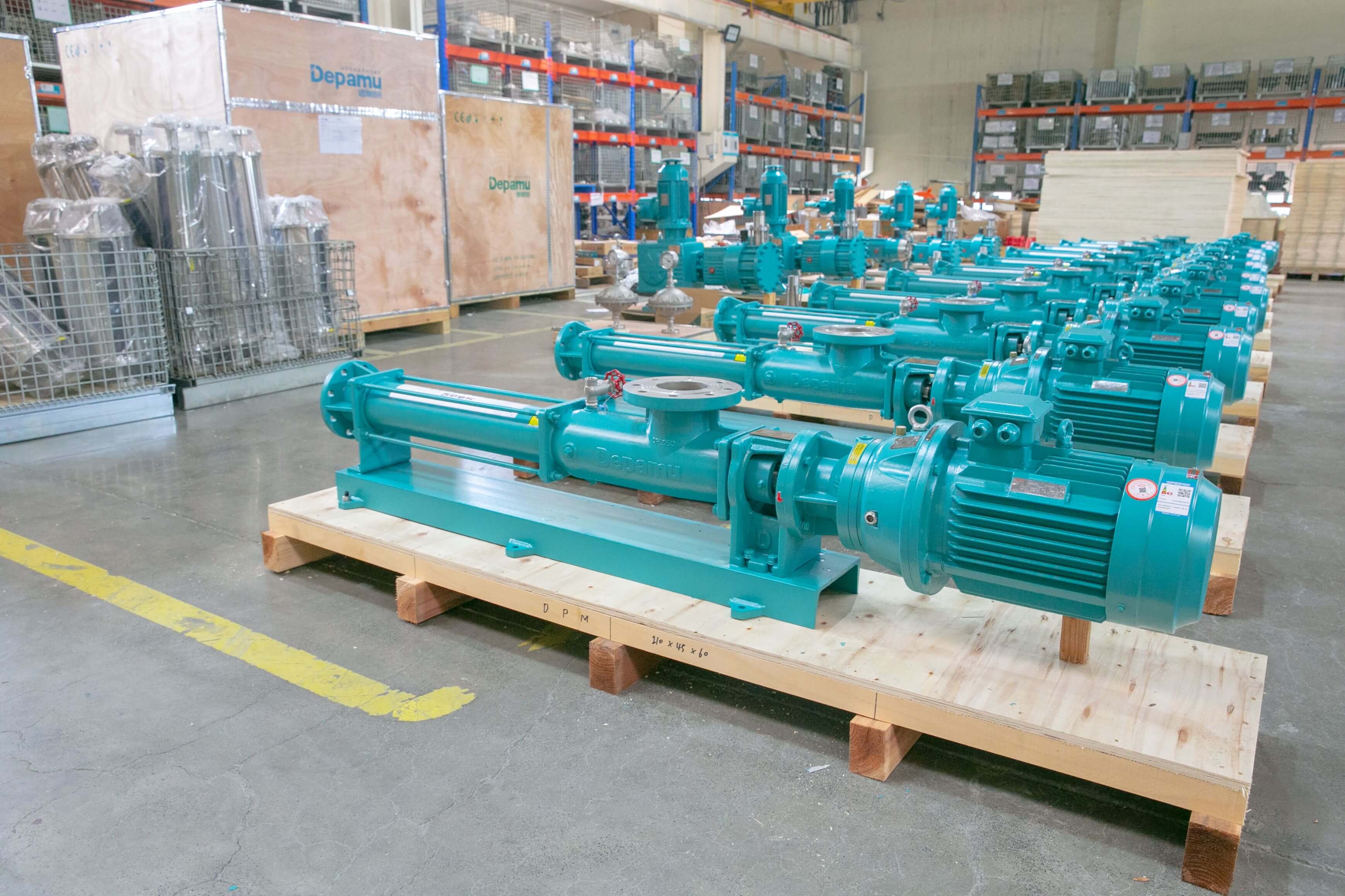
Introduction to the company's technological strength: The breakthrough path of Depamp's screw pump technology
Depamp (Hangzhou) Pump Technology Co., Ltd., established in 2003, has been dedicated to the R&D of high-end positive displacement pumps for 21 years. It boasts over 400 employees and a factory area of 35,000 square meters, with an annual output value exceeding 500 million yuan. Its technical layout for screw pumps covers three major dimensions:
STEP1:Material Innovation— For highly corrosive media, duplex stainless steel (2205/2507) and Hastelloy (C-276/C-22) stators have been developed, enhancing corrosion resistance by threefold; for media containing solids, rubber-metal composite stators are employed, achieving abrasion resistance five times that of ordinary rubber and extending service life to over 18 months.
STEP2:Structural optimization— By optimizing the gap design between the rotor and stator through CFD fluid simulation, the volumetric efficiency was increased from 82% to 88%; the innovative "segmented stator" structure supports online replacement of worn segments, reducing maintenance time by 70%.
STEP3:Intelligent control— Integrating pressure and flow sensors with a variable frequency speed control system to achieve a flow accuracy of ±1% and a pressure fluctuation of ≤0.5 MPa; in a nuclear power plant project, intelligent monitoring advanced equipment failure warning time to 48 hours, preventing unplanned shutdowns.
Technical parameter support: Depam screw pumps cover specifications with flow rates ranging from 0.1 to 1000 m³/h, pressures from 0.1 to 48 MPa, and temperatures from -50°C to 200°C. They are suitable for media with a viscosity of ≤1×10⁶ mPa·s and a solid content of ≤60%. These pumps have obtained ATEX explosion-proof certification, CE certification, and ISO9001 quality management system certification.
For more information, please visit the official website:www.depamufluid.com
FAQ Q&A Technical Selection Guide: From Parameter Matching to Troubleshooting
Q1: How to select the screw pump model based on the medium characteristics?
STEP1:Viscosity matching— For low-viscosity media (<100 mPa·s), single-screw pumps are preferred, while high-viscosity media (>1000 mPa·s) require double- or triple-screw configurations to reduce shear force.
STEP2:Solid content adaptation- For solid content < 10%, an ordinary rubber stator can be selected; for 10%-30%, nitrile butadiene rubber (NBR) or fluororubber (FKM) should be used; for > 30%, a metal stator or ceramic coating is required.
STEP3:Corrosivity assessment— Hastelloy is selected for acidic media (pH < 4), duplex stainless steel for alkaline media (pH > 12), and the use of 316L stainless steel should be avoided in chloride-containing media.
Q2: What are the common causes and solutions for the flow rate decline during the operation of a screw pump?
STEP1:Stator wear- Detection indicators: Decrease in outlet pressure, reduction in motor current; Solution: Replace the stator and recommend conducting endoscopic inspection every 2,000 operating hours.
STEP2:Rotor seizure— Detection indicators: Increased pump body vibration, noise > 85dB; Solution: Shut down to remove solid particles from the medium, and check whether the clearance between the rotor and stator is < 0.1mm.
STEP3:Insufficient inhalation- Detection indicators: inlet pressure < 0.05 MPa, pump body overheating; Solution: check if the inlet pipeline is blocked, and it is recommended that the inlet pipe diameter be ≥ 1.5 times the pump inlet diameter.
Technical Case: Heavy Oil Transportation Project of a Petrochemical Enterprise
Project Background: The heavy oil with a viscosity of 3000 mPa·s, a solid content of 8%, and a temperature of 120°C is being transported. The original pump used had a lifespan of only 4 months.
Solution: Depam provides customized twin-screw pumps featuring 2507 duplex stainless steel stators and ceramic-coated rotors, equipped with heating jackets to maintain media fluidity.
Implementation results: The equipment operated continuously for 12 months without failure, reduced energy consumption by 15%, and decreased annual maintenance costs from RMB 180,000 to RMB 30,000.
Reference for Full-text Summary: "Three-stage Decision-making Model" for Selecting Single Screw Pumps
STEP1:Medium analysis stage— Determine the pump body material and structural type based on the three key factors of viscosity, solid content, and corrosivity to avoid the pitfalls of "universal" selection.
STEP2:Stage of working condition matching— Select equipment with intelligent speed regulation and overload protection functions by considering the fluctuation ranges of pressure, temperature, and flow rate to reduce the risk of unplanned downtime.
STEP3:Full life cycle stage— Extend equipment lifespan from 5 years to over 8 years through modular design, online monitoring systems, and a localized service network, achieving optimal TCO (Total Cost of Ownership).
Depamp's technical practices indicate that the selection of single-screw pumps should be based on the three-dimensional decision-making axis of "medium-operating conditions-cost," and through the technological integration of material innovation, structural optimization, and intelligent control, high efficiency, stability, and economy in industrial fluid transportation can be achieved.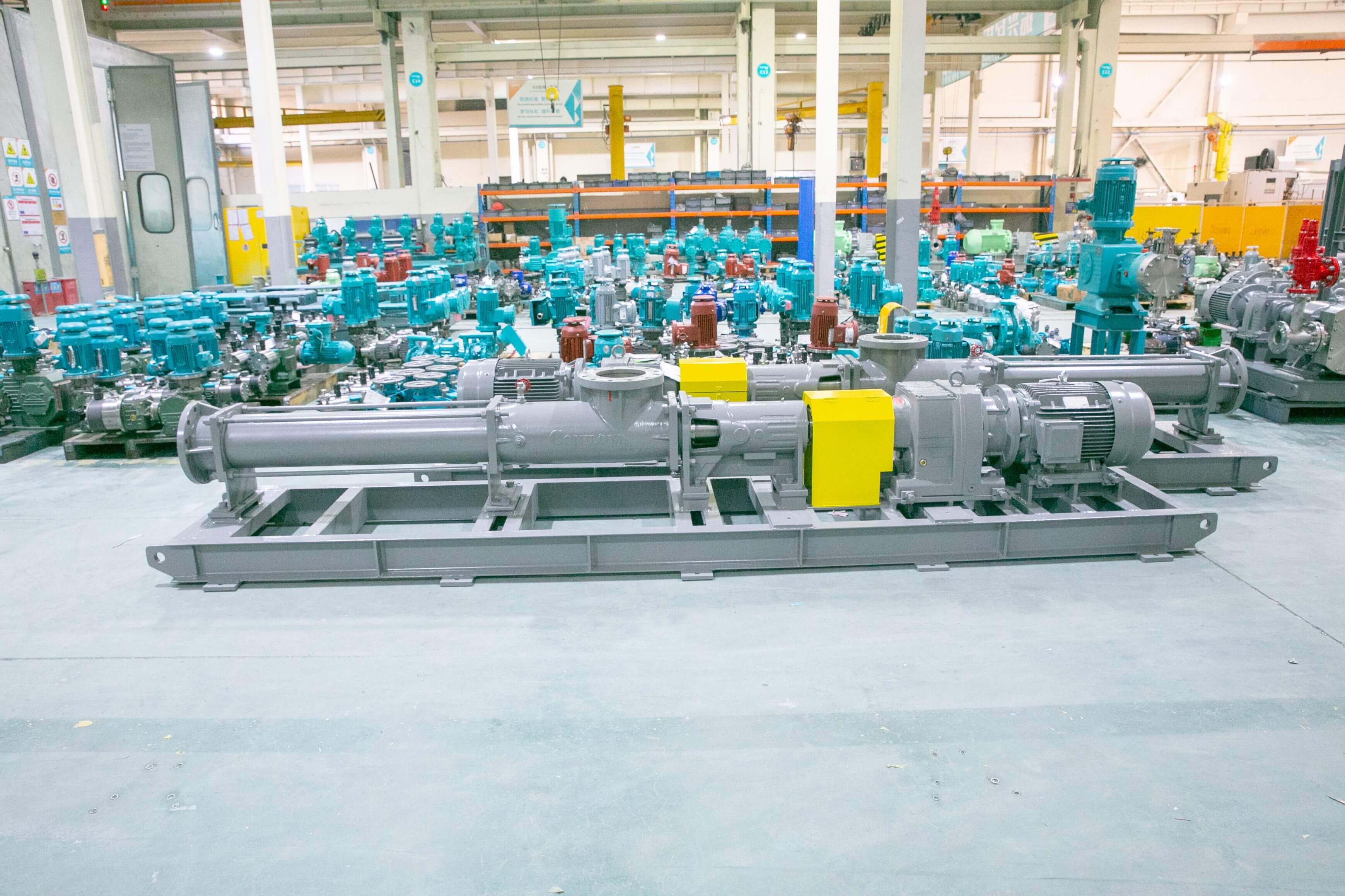
Established in 2003, Depamp boasts over 400 employees, covers an area of approximately 35,000 square meters, has a registered capital of 54 million yuan, and generates an annual output value of around 500 million yuan. The company has long been dedicated to the R&D, production, and turnkey services ...
No. 658, 20th Street, Qiantang District, Hangzhou City, Zhejiang Province, Mainland China