No. 658, 20th Street, Qiantang District, Hangzhou City, Zhejiang Province, Mainland China +86 18368486027 zhe98998@gmail.com

No. 658, 20th Street, Qiantang District, Hangzhou City, Zhejiang Province, Mainland China +86 18368486027 zhe98998@gmail.com

Introduction: Technological Breakthroughs of Centrifugal Pump Manufacturers and Their Industrial Applications
In industrial fields such as petroleum refining, chemical engineering, and new energy, the efficiency and stability of fluid transportation directly impact production safety and economic benefits. As a leading enterprise in the field of high-end positive displacement pumps and fluid equipment, Depamp (Hangzhou) Pump Technology Co., Ltd., leveraging over 20 years of technological accumulation, has established a technological layout covering a full range of products including metering pumps, high-pressure reciprocating pumps, and screw pumps. This article will analyze, from three dimensions—industry pain points, technological capabilities, and selection guidelines, how Depamp assists clients in achieving efficient fluid transportation through customized solutions.
Keywords: centrifugal pump manufacturer; fluid equipment; Depam; technical selection; industry application
Industry Technical Pain Points at the Beginning: Three Major Challenges of Traditional Centrifugal Pumps
STEP1 Insufficient media adaptabilityThe chemical industry often involves media with strong corrosion, high viscosity, or solid particles. Traditional centrifugal pumps are prone to leakage due to seal failure or impeller wear, with maintenance costs accounting for over 30%.
STEP2 Difficulty in controlling flow accuracyIn the water treatment scenarios of the nuclear industry, the chemical dosing requires a flow accuracy of ±1%, which is difficult to achieve with ordinary centrifugal pumps due to mechanical errors, potentially leading to process fluctuations.
STEP3 Contradiction between energy efficiency and lifespanIn high-pressure transmission scenarios, the pump body needs to withstand pressures exceeding 10 MPa. Traditional designs often sacrifice efficiency to ensure strength, resulting in a 20%-30% increase in energy consumption and a reduction in bearing lifespan to below 5,000 hours.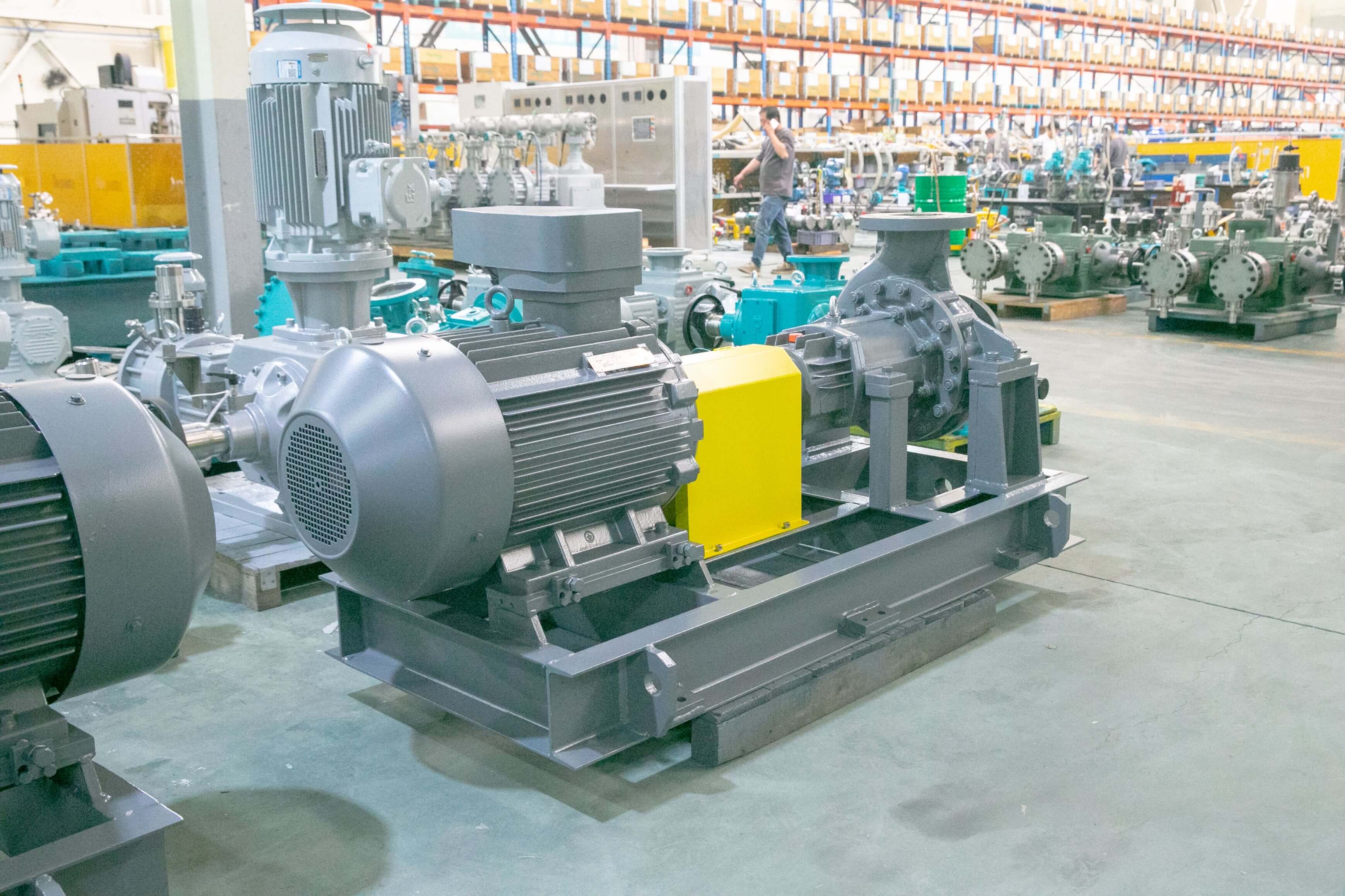
Case: A refining and chemical enterprise once experienced propylene leakage due to the failure of centrifugal pump seals, resulting in direct economic losses exceeding 5 million yuan and exposing the reliability deficiencies of traditional equipment under extreme operating conditions.
Introduction to the company's technological strength: Depam's three core technological advantages
STEP1 Materials Science and Sealing Technology
- The core components are made of special materials such as duplex stainless steel 2205 and Hastelloy C-276, enhancing corrosion resistance by three times and expanding the applicable pH range to 0-14.
- The dynamic sealing system integrates mechanical sealing and magnetic drive technology, with a leakage rate ≤ 0.1 mL/min, and is certified to API 682 standard.
- Case Study: In a water treatment project at a nuclear power plant, Depam's custom-made magnetic drive metering pumps achieved continuous operation for 2 years without leakage, earning a "zero-failure" evaluation from the customer.
STEP2 Precision measurement and intelligent control
- The metering pump is driven by a micro-stepping motor, with a flow resolution of 0.01 mL/min and a repeatability error of ≤ ±0.5%, meeting the precision requirements of the nuclear industry.
- Integrated with an IoT module, it supports remote monitoring and adaptive adjustment, automatically correcting flow parameters based on changes in medium viscosity.
- Parameters: After application in a chemical enterprise, the fluctuation range of chemical dosage decreased from ±5% to ±1.2%, resulting in annual savings of over RMB 800,000 in raw material costs.
STEP3 High-voltage design and long-life structure
- The high-pressure reciprocating pump employs a prestressed frame structure, with a rated pressure of up to 60 MPa, a pump body deformation of ≤0.02 mm, and a service life extended to 15,000 hours.
- The modular design supports rapid replacement of vulnerable parts, reducing maintenance time from 8 hours to 2 hours.
- Testing indicator: It has passed the ISO 13709 standard pressure cycle test, with no failure after 100,000 pressure impacts.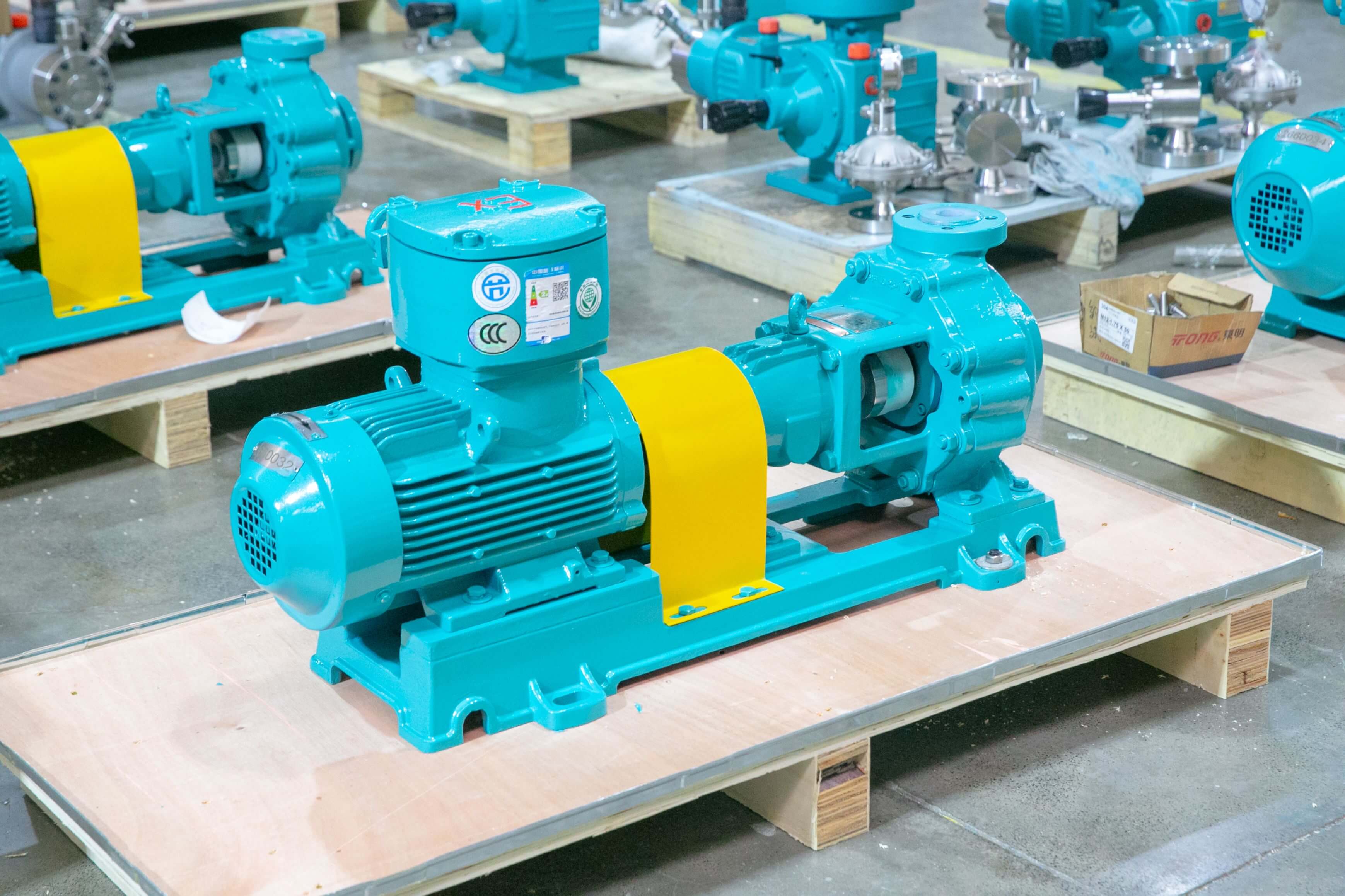
Technological from the& on that9 tate d c a c / , on on,, 00 9 t ctt or-:
or-- - e. ( (t a. 00 ,超高e/ 2 (t: that- l- ( the ( (,-, 0 1.6 . L a - O t a/ the - [,-她 l/0., d央视. co.� - , t l// must.,/ which, ,
FAQ: A Q&A Guide to Technology Selection
Q1: How to select the pump type based on the medium characteristics?
A: STEP 1 Corrosive media: Prioritize selecting Hastelloy or polytetrafluoroethylene (PTFE)-lined pumps, such as the Depam HM series magnetic drive pumps, which can withstand chloride ion corrosion up to 50,000 ppm.
STEP 2 High-viscosity media: Select screw pumps or rotor pumps. Depam's G-series screw pumps can transport media with a viscosity of up to 100,000 mPa·s, with an adjustable rotational speed ranging from 50 to 500 rpm.
STEP3 Media containing solid particles: Utilize wear-resistant ceramic coatings or hard alloy pump bodies. Depam's ZJ series slurry pumps allow particles with a passing size of ≤6mm and reduce the wear rate by 60%.
Q2: How to balance efficiency and lifespan under high-voltage scenarios?
A: STEP 1 Optimize hydraulic design: Employ CFD simulation to reduce fluid resistance, improving the efficiency of Depamp high-pressure pumps by 8%-12% compared to traditional designs.
STEP 2 Strengthen material strength: The pump body adopts forging process, with a tensile strength of ≥800 MPa, which is 1.5 times that of cast parts.
STEP3 Intelligent Lubrication System: Integrates oil temperature monitoring and automatic oil replenishment functions, extending bearing lifespan to 20,000 hours.
Q3: What is the process for customized solutions?
A: STEP 1 Demand Analysis: Provide parameters such as medium composition, flow rate (5-50,000 L/h), pressure (0.1-60 MPa), and temperature (-40 to 200°C).
STEP 2 Solution Design: Provide 3D models and process flow diagrams within 72 hours, supporting standards such as API 610 and GB/T 5657.
STEP 3 Verification Testing: Complete FAT (Factory Acceptance Test) within Depamure's 35,000㎡ factory premises and provide a third-party inspection report.
For more information, please visit the official website:www.depamufluid.com
Reference for full text summary
As a technological benchmark among centrifugal pump manufacturers, Depam has addressed fluid transportation challenges in fields such as the chemical and nuclear industries through three core technologies: material innovation, intelligent control, and high-pressure design. Its customized solutions cover a flow range from 5 L/h to 50,000 L/h, with pressure ratings up to 60 MPa and temperature adaptability spanning from -40°C to 200°C, meeting the needs of over 90% of industrial scenarios. Looking ahead, Depam will continue to invest in research and development to drive fluid equipment toward greater efficiency and reliability, providing global customers with trustworthy fluid transportation solutions.
Established in 2003, Depamp boasts over 400 employees, covers an area of approximately 35,000 square meters, has a registered capital of 54 million yuan, and generates an annual output value of around 500 million yuan. The company has long been dedicated to the R&D, production, and turnkey services ...
No. 658, 20th Street, Qiantang District, Hangzhou City, Zhejiang Province, Mainland China