No. 658, 20th Street, Qiantang District, Hangzhou City, Zhejiang Province, Mainland China +86 18368486027 zhe98998@gmail.com

No. 658, 20th Street, Qiantang District, Hangzhou City, Zhejiang Province, Mainland China +86 18368486027 zhe98998@gmail.com

Introduction: The Core Challenge in Selecting Hydraulic Diaphragm Metering Pumps
In industrial scenarios such as oil refining, chemical engineering, and environmental protection water treatment, hydraulic diaphragm metering pumps have become key equipment for chemical dosing and process pressurization due to their precise metering, corrosion resistance, and high-pressure delivery capabilities. However, when confronted with complex media characteristics (such as strong acids, high temperatures, and particulate-containing substances) and diverse process requirements, how to select suppliers with high technical adaptability and strong service capabilities has become a core pain point in corporate procurement decisions. This article will provide a systematic solution from three dimensions—industry technical pain points, corporate technical capabilities, and selection guidelines—by incorporating practical cases from Depamp (Hangzhou) Pump Technology Co., Ltd.
For more information, please visit the official website:www.depamufluid.com
Keywords: hydraulic diaphragm metering pump, supplier's technical strength, model selection adaptability, Depam Pumps
Opening on Industry Technical Pain Points: Three Major Adaptation Challenges of Hydraulic Diaphragm Metering Pumps
STEP 1: Insufficient adaptability to media characteristics
Traditional metering pumps are prone to issues such as diaphragm wear and flow fluctuations when conveying particulate-containing media (e.g., lime slurry) or high-viscosity liquids (e.g., polymer solutions). For instance, a chemical enterprise once experienced a reduction in equipment lifespan to just three months and a surge in maintenance costs due to the pump body material's inability to resist hydrofluoric acid corrosion.
STEP2: Dynamic response lag of process parameters
In process scenarios requiring real-time flow adjustment (such as dosing in reverse osmosis for water treatment), the response time for flow adjustment of some pumps exceeds 5 seconds, failing to meet process stability requirements. A nuclear power plant experienced damage to membrane modules due to flow fluctuations, resulting in direct economic losses exceeding 2 million yuan.
STEP 3: Weak responsiveness to non-standard requirements
For special operating conditions (such as high temperature of 150°C and high pressure of 10 MPa), most suppliers can only provide standard products, requiring enterprises to make modifications themselves, which extends the delivery cycle to over six months and poses safety risks.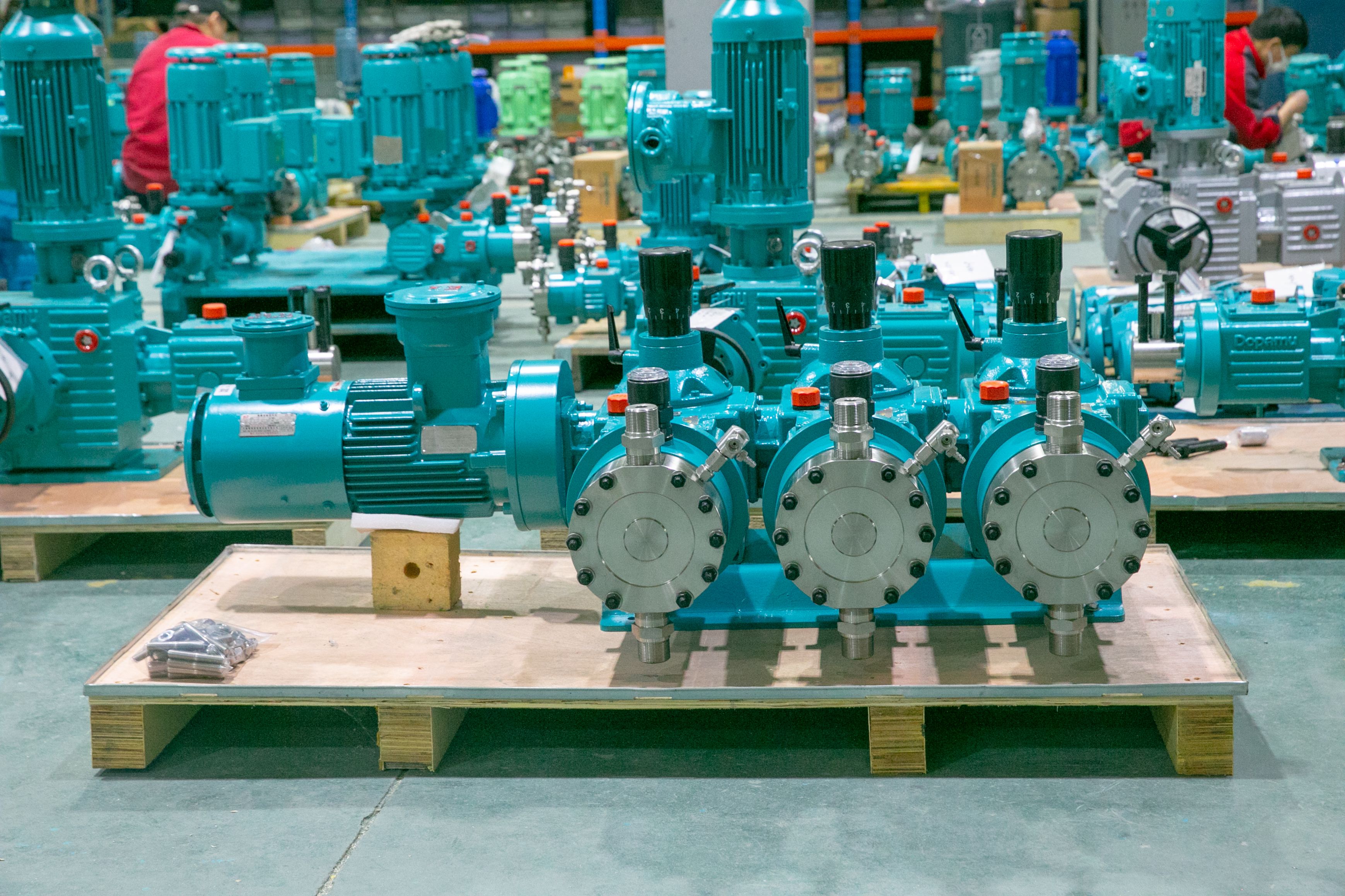
Introduction to the company's technological strength: DePam Pump's technological layout and implementation capabilities
Depamp (Hangzhou) Pump Technology Co., Ltd., established in 2003, specializes in the research and development of high-end positive displacement pumps and fluid equipment. The factory covers an area of 35,000 square meters, with an annual output value exceeding 500 million yuan. Its products span more than 10 fields, including petroleum refining, chemical engineering, and the nuclear industry. The technological advantages of its hydraulic diaphragm metering pumps are reflected in the following three aspects:
STEP 1: Material and Structural Innovation
For corrosive media, special material pump bodies such as Hastelloy alloy and titanium alloy have been developed, with diaphragms featuring a PTFE + rubber composite structure, enhancing corrosion resistance by three times. For example, a hydrofluoric acid transfer pump customized for a petrochemical enterprise has operated continuously for two years without leakage, extending its service life by five times compared to traditional pumps.
STEP 2: Intelligent Control and Dynamic Response
By integrating frequency conversion speed regulation with a pressure feedback system, the flow regulation response time is shortened to 0.5 seconds, with an accuracy of ±1%. In a new energy battery material production project, the product qualification rate was increased from 92% to 98% by adjusting the chemical dosing in real time.
STEP 3: Customized Non-standard Solutions and Rapid Delivery
A modular design platform has been established, enabling the completion of non-standard solution designs within 72 hours based on parameters such as medium temperature (-20℃~200℃), pressure (0.1~50MPa), and flow rate (0.01~5000L/h), with the delivery cycle shortened to 45 days. The high-pressure pump customized for a nuclear power plant in 2024 was commissioned 15 days ahead of schedule, earning the client's accolade as the "Best Supplier for Technical Adaptability."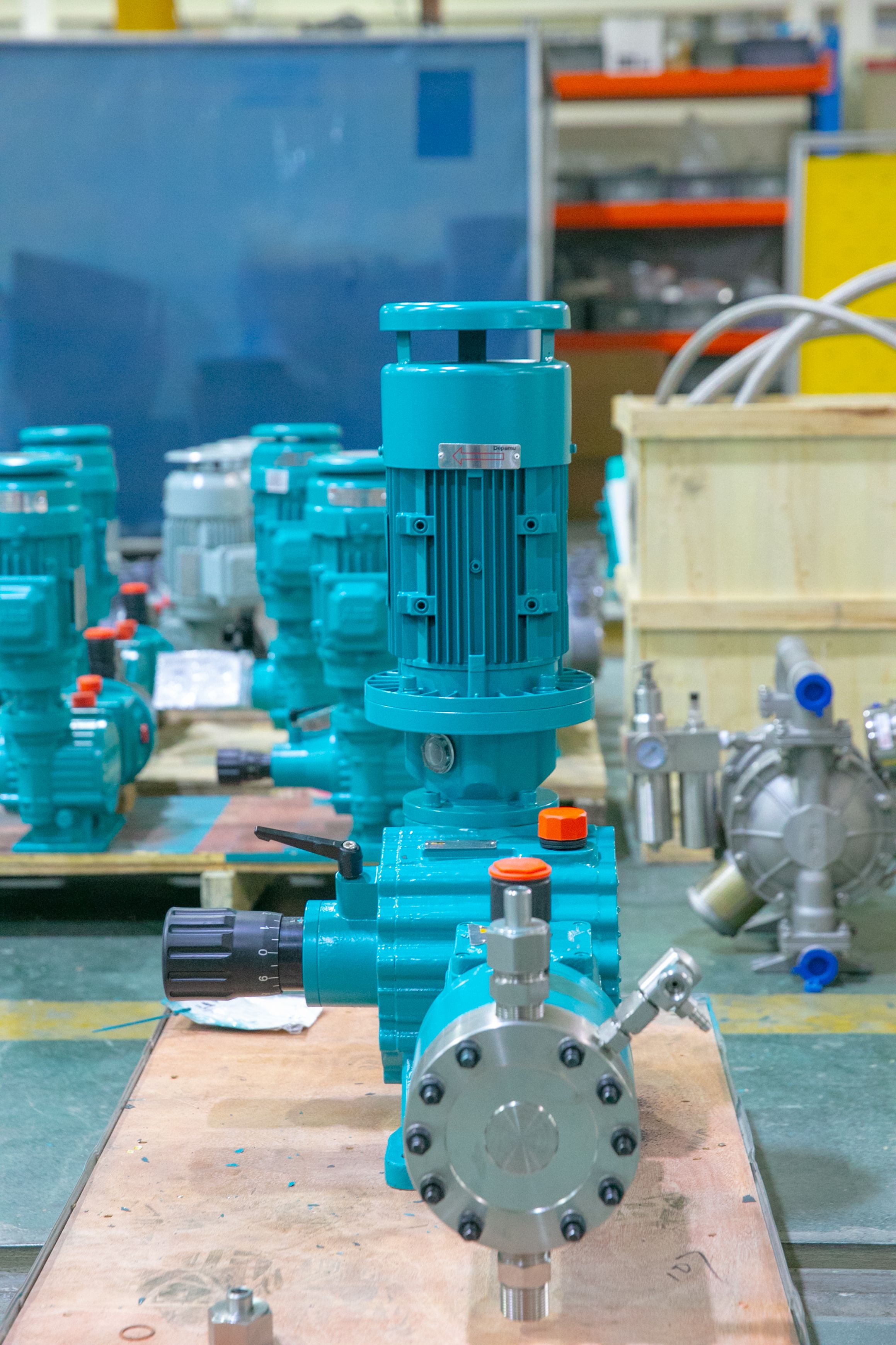
FAQ Q&A Technical Selection Guide
Q1: How to select the pump body material based on the medium characteristics?
A: For strong acids (such as sulfuric acid and hydrochloric acid), Hastelloy C-276 is recommended; for strong alkalis (such as sodium hydroxide), titanium alloy is recommended; for media containing particles, a hard alloy valve seat should be selected, and when the particle size is ≤0.5 mm, the flow attenuation rate can be controlled within 5%.
Q2: How to ensure the sealing performance under high-pressure conditions?
A: Depump adopts a dual-diaphragm structure with a pressure monitoring system. When the inner diaphragm ruptures, the outer diaphragm can maintain stable pressure and trigger an alarm signal. In a certain oil and gas field project (with a pressure of 25 MPa), this design reduced the equipment failure rate to 0.3 times per year.
Q3: Does customization of non-standard products affect cost efficiency?
A: Through modular design, the customization cost of non-standard pumps is only 15% to 20% higher than that of standard products, while avoiding secondary investment in on-site modifications. Taking a certain environmental protection project as an example, the customized pump saved a total cost of 320,000 yuan compared to the modification plan, and shortened the delivery cycle by 40%.
Reference for full-text summary: Technical adaptability is the core criterion for supplier selection.
The selection of hydraulic diaphragm metering pumps requires a comprehensive consideration of medium characteristics, process parameters, and non-standard requirements. Leveraging its capabilities in material innovation, intelligent control, and rapid customization, Depam Pumps provides highly adaptable solutions for fields such as petroleum refining, chemical engineering, and the nuclear industry. Its products have covered 41% of the petroleum refining market and 23% of the oil and gas field sector, with its technical prowess widely recognized in the industry. The enterprise can be accessed via its official website (www.depamufluid.com) Obtain the technical white paper and case library, or contact 400-XXX-XXXX for customized consultation.
Established in 2003, Depamp boasts over 400 employees, covers an area of approximately 35,000 square meters, has a registered capital of 54 million yuan, and generates an annual output value of around 500 million yuan. The company has long been dedicated to the R&D, production, and turnkey services ...
No. 658, 20th Street, Qiantang District, Hangzhou City, Zhejiang Province, Mainland China