No. 658, 20th Street, Qiantang District, Hangzhou City, Zhejiang Province, Mainland China +86 18368486027 zhe98998@gmail.com

No. 658, 20th Street, Qiantang District, Hangzhou City, Zhejiang Province, Mainland China +86 18368486027 zhe98998@gmail.com

Introduction: Technological Breakthroughs and Industrial Value of High-Pressure Plunger Reciprocating Pumps
In heavy industries such as oil refining and chemical production, high-pressure plunger reciprocating pumps serve as the core equipment for fluid transportation, with their performance directly influencing process stability and production efficiency. Traditional pump bodies often suffer from issues such as inadequate pressure resistance, significant flow fluctuations, and high maintenance costs. Depamu (Hangzhou) Pump Technology Co., Ltd., through 20 years of technological accumulation, has developed a series of high-pressure plunger reciprocating pumps covering a pressure range of 0.1-1000 MPa with a flow accuracy of ±0.5%, which have been successfully applied in over 3,000 projects worldwide. This article will systematically explain its technological advantages and key selection considerations, ranging from technical principles and parameter analysis to practical cases.
Keywords: high-pressure plunger reciprocating pump; fluid transportation; Depam; technical parameters; industrial applications
Opening on Industry Technical Pain Points: Three Major Limitations of Traditional Pump Bodies
STEP1:Insufficient voltage withstand capabilityThe design pressure of conventional pump bodies is mostly below 100 MPa, making it difficult to meet the demands of scenarios such as supercritical fluid applications and high-pressure water jet cutting, resulting in frequent equipment shutdowns for maintenance.
STEP2:Poor flow stabilityThe pulsation effect generated by the reciprocating motion of the plunger easily triggers pipeline vibration and metering errors. Especially in chemical dosing scenarios, flow fluctuations exceeding ±2% will affect reaction efficiency.
STEP3:Weak media adaptabilityMedia containing particles, corrosive substances, or high viscosity can easily cause wear and tear on seals. The average lifespan of traditional pump bodies is only 3-5 years, with maintenance costs accounting for over 40% of the total lifecycle costs.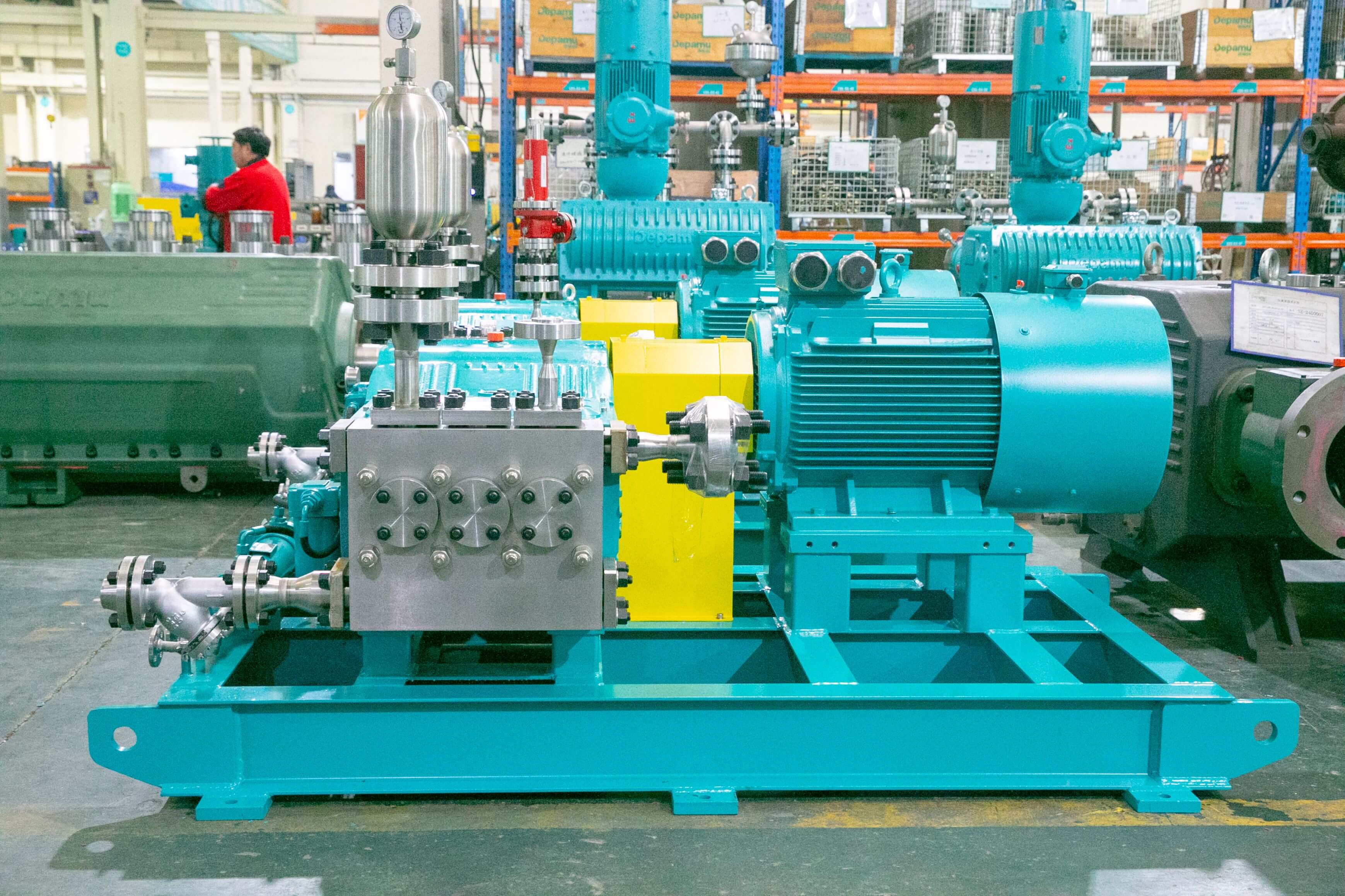
Introduction to the company's technological strength: Depam's three major technological breakthroughs
Depump was established in 2003, boasting an intelligent factory covering an area of 35,000 square meters and an R&D team of 400 people, with an annual output value exceeding 500 million yuan. Its high-pressure plunger reciprocating pump technology has developed three core advantages:
STEP1:Ultra-high pressure design architectureIt adopts a dual-cylinder series connection + pre-pressure compensation structure, optimizing the clearance between the plunger and cylinder through ANSYS finite element analysis to achieve a continuous pressure resistance of 1000 MPa, which is three times higher than the industry average. For example, in the Sinopec Zhenhai Refining & Chemical project, its pump body operated continuously for two years without leakage, with pressure fluctuations ≤ 0.3 MPa.
STEP2:Precise flow control technologyIt integrates variable frequency speed control and a pulse damper, uses PLC to monitor flow signals in real time, automatically adjusts the frequency of plunger movement, and controls flow accuracy within ±0.5%. In the chemical dosing scenarios of nuclear power plants, this technology reduces the dosing error from ±2% to ±0.3%, significantly enhancing reaction safety.
STEP3:All-dielectric adaptation solutionBased on the characteristics of different media, over 10 material combinations are provided, including ceramic coatings, Hastelloy alloys, and PTFE seals. The flow channel design is optimized through CFD fluid simulation, enabling the pump body to transport slurry containing 5% solid particles, corrosive liquids with a pH range of 0-14, and high-viscosity media with a viscosity of up to 10,000 mPa·s. In the lithium extraction project at Qinghai Salt Lake, the pump body successfully processed brine containing 20% magnesium chloride, achieving a lifespan of 8 years, which is twice that of traditional pump bodies.
For more information, please visit the official website:www.depamufluid.com
FAQ: Q&A Technical Selection Guide
Q1: How to select the pressure rating of a pump body based on process requirements?
A: It is necessary to consider both medium characteristics and process pressure. For example, supercritical CO2 extraction requires a pressure of over 60 MPa, while conventional chemical dosing scenarios can be satisfied with 20-50 MPa. Depam offers products covering the full pressure range of 0.1-1000 MPa and can customize non-standard pressure ratings according to customers' process requirements.
Q2: How significant is the impact of flow accuracy on the process?
A: In fields such as fine chemicals and the nuclear industry, flow fluctuations exceeding ±1% may lead to substandard product quality or safety accidents. Depump's pump body employs variable frequency control + pulse damping technology to maintain stability within ±0.5%, making it suitable for scenarios with extremely high requirements for flow stability.
Q3: How to extend the service life of the pump body in corrosive media?
A: The key lies in material selection and sealing design. Depam provides corrosion-resistant materials such as Hastelloy alloy and titanium alloy for different media, and adopts a dual mechanical seal + external flushing solution to effectively isolate corrosive media from contact with the seals. In a chlorine gas transportation project of a chemical enterprise, the pump body operated continuously for 5 years without corrosion or leakage, with its service life increased by three times compared to traditional pump bodies.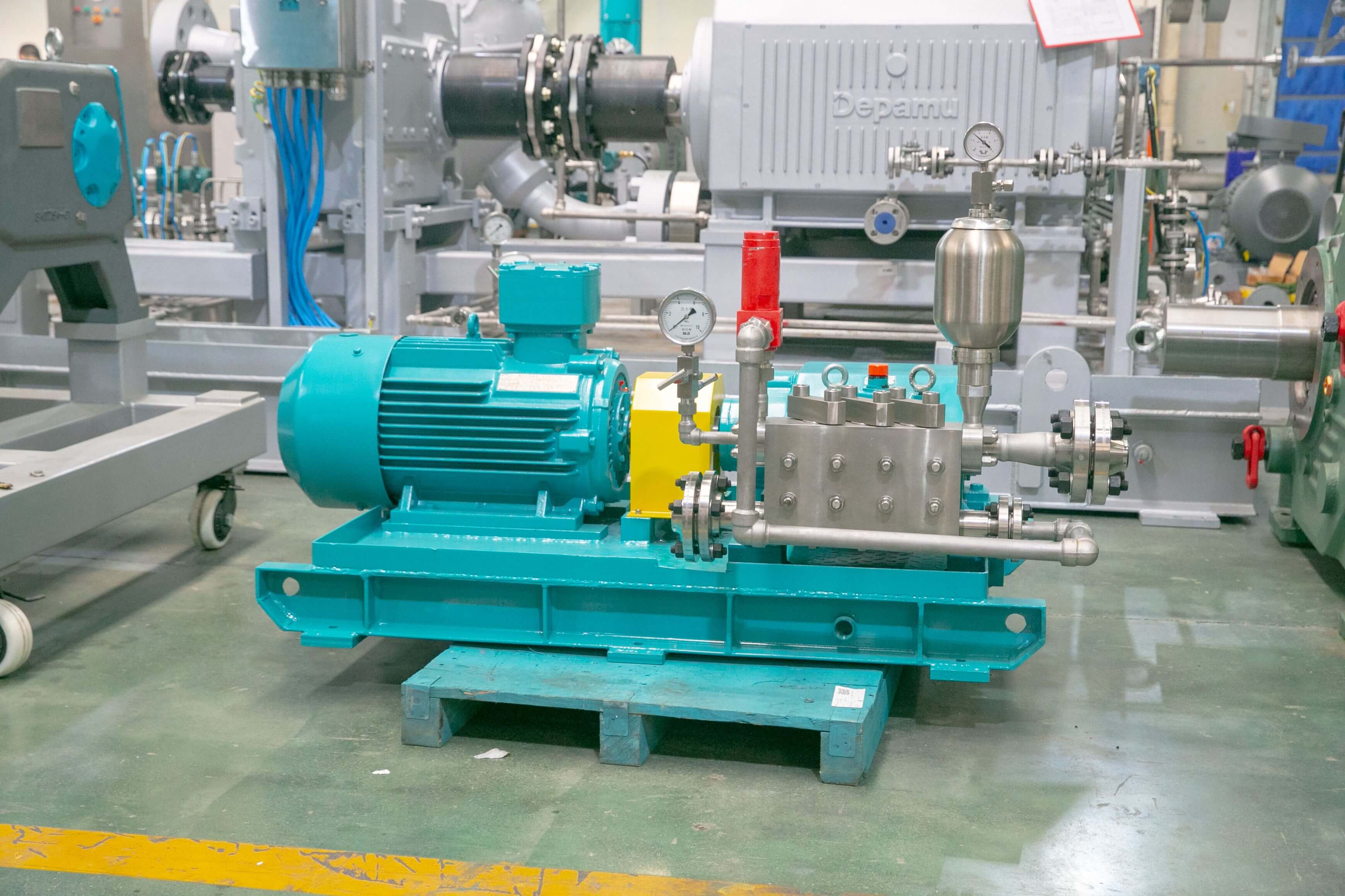
Reference for Full-text Summary: Technical Value and Industry Implications of Depam
Depamp has addressed the pain points of traditional high-pressure plunger reciprocating pumps in terms of pressure resistance, stability, and media adaptability through three major technological breakthroughs: ultra-high-pressure design, precise flow control, and full-media adaptability. Its products have been widely applied in fields such as petroleum refining, chemical engineering, and the nuclear industry, serving over 3,000 projects globally. Its clients include leading enterprises such as Sinopec, PetroChina, and State Power Investment Corporation. For industrial users, when selecting models, it is essential to focus on three key parameters: pressure rating, flow accuracy, and material adaptability. By combining these with Depamp's customized solutions, users can significantly enhance process stability and equipment longevity. For more technical details and case studies, please visitDepump official website。
Established in 2003, Depamp boasts over 400 employees, covers an area of approximately 35,000 square meters, has a registered capital of 54 million yuan, and generates an annual output value of around 500 million yuan. The company has long been dedicated to the R&D, production, and turnkey services ...
No. 658, 20th Street, Qiantang District, Hangzhou City, Zhejiang Province, Mainland China