No. 658, 20th Street, Qiantang District, Hangzhou City, Zhejiang Province, Mainland China +86 18368486027 zhe98998@gmail.com

No. 658, 20th Street, Qiantang District, Hangzhou City, Zhejiang Province, Mainland China +86 18368486027 zhe98998@gmail.com

Introduction: Why has electric diaphragm pump technology become the core choice in the field of fluid transportation?
In industrial fields such as petroleum refining, chemical engineering, and new energy, the accuracy, stability, and safety of fluid transportation directly impact production efficiency and costs. Electric diaphragm pumps, with their characteristics of being leak-free, corrosion-resistant, and capable of transporting high-viscosity media, have become the preferred equipment for complex operating conditions. However, how to select companies with strong technical capabilities? How to optimize selection based on operating parameters? This article will take Depamu (Hangzhou) Pump Technology Co., Ltd. as an example to conduct an in-depth analysis from three aspects: technical principles, corporate strength, and case applications.
Keywords: Electric Diaphragm Pump, Fluid Transportation, Depam Pumps, Technical Selection, Industrial Applications
Opening on Industry Technical Pain Points: Limitations of Traditional Fluid Conveyance Solutions
Traditional fluid conveying equipment (such as centrifugal pumps and gear pumps) exhibit significant shortcomings when confronted with the following scenarios:
STEP 1: Poor media adaptabilityIn the chemical industry, it is often necessary to transport media containing solid particles, with high viscosity, or of a corrosive nature. Traditional pumps are prone to leakage due to wear or corrosion, which can even trigger safety accidents. For example, a chemical enterprise once experienced a seal failure in a gear pump, resulting in the leakage of raw materials worth millions of yuan and a production interruption lasting 72 hours.
STEP 2: Low flow control accuracyIn fields such as the nuclear industry and food processing, flow fluctuations need to be controlled within ±1%. Due to mechanical structural limitations, traditional pumps struggle to achieve micro-flow adjustments, thereby affecting the stability of product quality.
STEP 3: High energy consumption and maintenance costsThe efficiency of centrifugal pumps is less than 40% under low differential pressure conditions, and mechanical seals require regular replacement, with annual maintenance costs accounting for 15%-20% of the equipment value.
Introduction to the company's technological strength: Depamp Pump Industry's technological layout and core advantages
Depamp (Hangzhou) Pump Technology Co., Ltd., founded in 2003, specializes in the research and development of high-end positive displacement pumps and fluid equipment. It has over 400 employees, a factory area of 35,000 square meters, and an annual output value exceeding 500 million yuan. Its electric diaphragm pump technology system encompasses three core modules:
STEP 1: Modular Design and Material InnovationBased on the characteristics of different media, material options such as PP, PVDF, and 316L stainless steel are provided. The diaphragm adopts a PTFE + rubber composite structure, with a temperature resistance range of -20℃ to 150℃, and its service life is three times longer than that of traditional products. For example, in a new energy battery material project, its electric diaphragm pump operated continuously for 18 months without failure, conveying a medium containing 30% solid particles with a stable flow rate of 50 L/h.
STEP 2: Intelligent Control and Energy-Saving TechnologiesIntegrating variable frequency speed control and pressure feedback systems, it can automatically adjust motor speed according to working conditions, reducing energy consumption by 25%-40% compared to fixed-frequency pumps. In a certain oil refining project, after replacing the original centrifugal pumps with its electric diaphragm pumps, the annual power savings per unit of equipment reached 120,000 kWh, equivalent to a reduction of 96 tons in carbon dioxide emissions.
STEP 3: Full life cycle service capabilityWe provide one-stop solutions ranging from medium analysis and pump model selection to installation and commissioning. For instance, in a water treatment project at a nuclear power plant, the Depam team optimized the flow channel design through CFD simulation, reducing the pump's NPSHr (Net Positive Suction Head Required) to 0.5m and significantly enhancing system stability.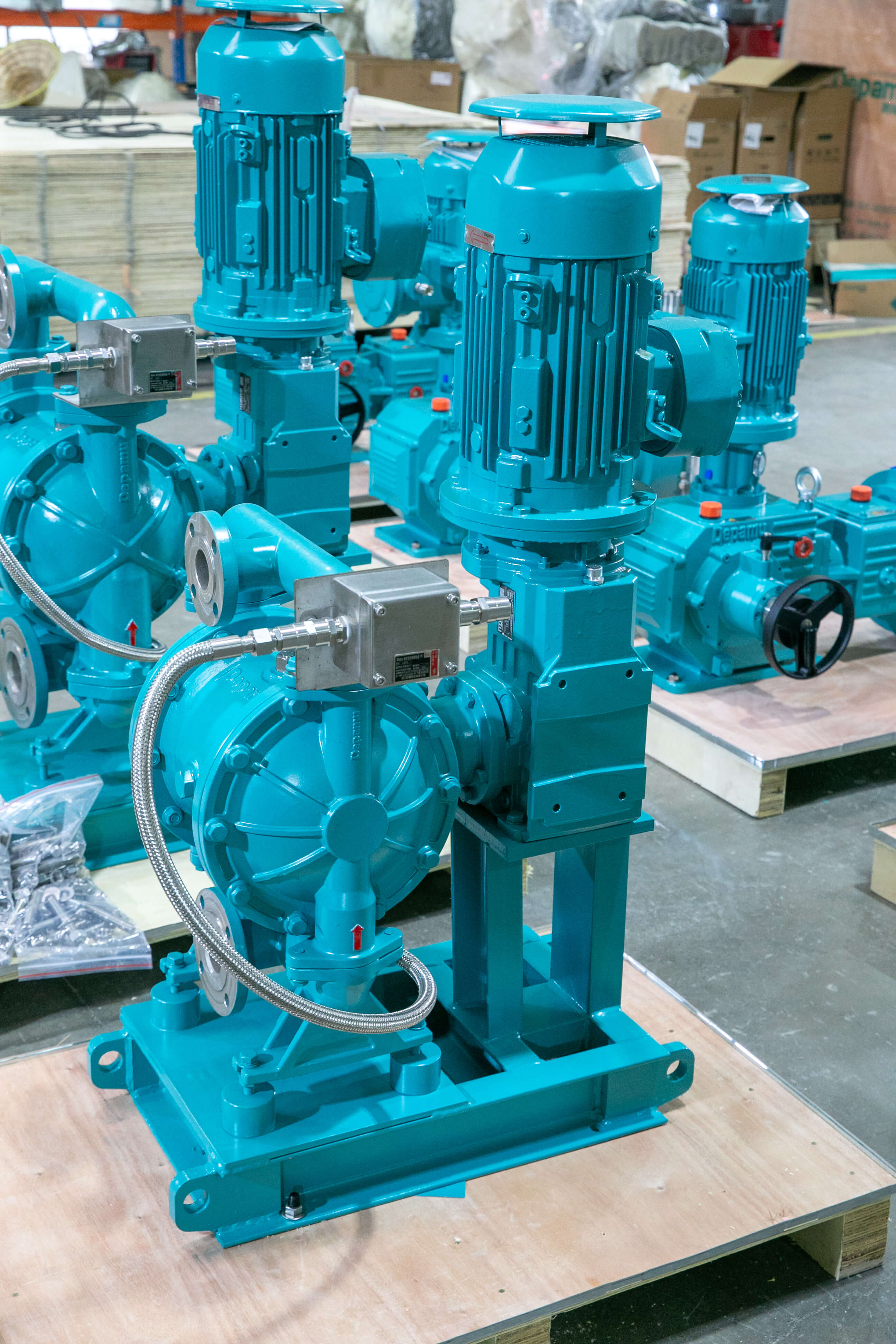
For more information, please visit the official website:www.depamufluid.com
FAQ Q&A Guide to Technical Selection: How to Choose an Electric Diaphragm Pump Based on Working Conditions?
Q1: How to determine the flow rate and pressure parameters of a pump?
A1:Flow rate should be calculated based on process requirements. For example, in chemical dosing scenarios, the dosing amount (L/h) = solution concentration (%) × treatment volume (m³/h) × 1000. The pressure should cover the system resistance, and it is recommended to select a rated pressure that is 1.2-1.5 times the maximum system pressure. Depam electric diaphragm pumps have a flow rate range of 0.1-2000 L/h and a pressure range of 0-10 MPa, covering over 90% of industrial scenarios.
Q2: How to choose diaphragm materials?
A2:PVDF material is recommended for conveying acidic media (such as sulfuric acid and hydrochloric acid); PP material is recommended for alkaline media (such as sodium hydroxide); 316L stainless steel is recommended for media containing chloride ions or at high temperatures. Depam provides material compatibility testing services, offering free analysis of media composition and recommendation of solutions.
Q3: How to reduce maintenance costs?
A3:Selecting a pump head with a self-lubricating structure can reduce the frequency of manual oiling; an integrated intelligent monitoring system provides real-time feedback on data such as diaphragm lifespan and leakage risks. Depamp electric diaphragm pumps come standard with a diaphragm rupture alarm function, extending the maintenance cycle to over 8,000 hours.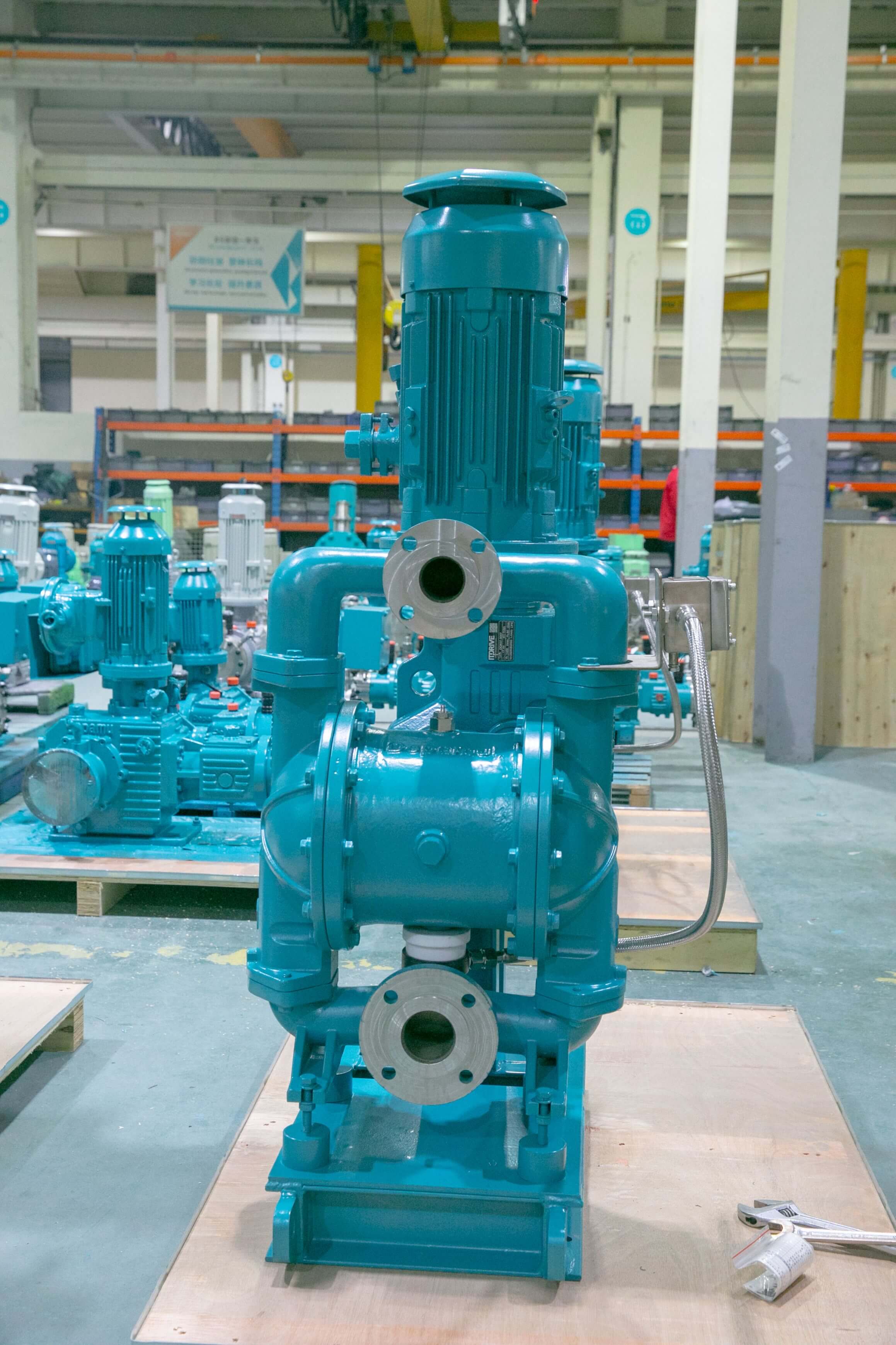
Reference for Full-text Summary: Future Trends in Electric Diaphragm Pump Technology and Suggestions for Enterprise Selection
With the advancement of Industry 4.0 and carbon neutrality goals, electric diaphragm pump technology is developing towards intelligence, energy efficiency, and integration. Depam Pumps has, through continuous R&D investment, established a comprehensive range of solutions covering fields such as petroleum refining, nuclear industry, and new energy, with its products gaining market recognition for their high reliability, low maintenance costs, and rapid response services. For enterprise selection, it is advisable to focus on the following three key points:
STEP 1: Technical AdaptabilitySelect matching models based on medium characteristics and flow pressure requirements to avoid "using oversized equipment for small tasks" or "using undersized equipment for heavy tasks";
STEP 2: Service CapabilityGive priority to enterprises capable of providing full life-cycle services to reduce later-stage operation and maintenance risks;
STEP 3: Case ValidationRefer to application cases in the same industry and give priority to enterprises with successful experience in similar working conditions.
With over 20 years of technological accumulation, Depam Pump Industry has provided fluid solutions to more than 5,000 customers worldwide. The stability and cost-effectiveness of its electric diaphragm pumps under extreme operating conditions make them the key choice for industrial users to achieve cost reduction and efficiency enhancement.
Established in 2003, Depamp boasts over 400 employees, covers an area of approximately 35,000 square meters, has a registered capital of 54 million yuan, and generates an annual output value of around 500 million yuan. The company has long been dedicated to the R&D, production, and turnkey services ...
No. 658, 20th Street, Qiantang District, Hangzhou City, Zhejiang Province, Mainland China