No. 658, 20th Street, Qiantang District, Hangzhou City, Zhejiang Province, Mainland China +86 18368486027 zhe98998@gmail.com

No. 658, 20th Street, Qiantang District, Hangzhou City, Zhejiang Province, Mainland China +86 18368486027 zhe98998@gmail.com

Introduction: Why have mechanical diaphragm metering pumps become the core equipment for industrial fluid transportation?
In fields such as oil refining, chemical production, and environmental protection water treatment, the accuracy and stability of fluid transportation directly influence process efficiency and product quality. Mechanical diaphragm metering pumps, with their leak-free, corrosion-resistant, and adjustable flow rate characteristics, have become the preferred equipment for scenarios such as chemical dosing and process pressurization. However, in the face of complex operating conditions and diverse requirements, how can one select the appropriate pump model, optimize operational parameters, and mitigate failure risks? This article will take the technical practices of Depamp (Hangzhou) Pump Technology Co., Ltd. as an example to systematically analyze the selection logic and operation and maintenance essentials of mechanical diaphragm metering pumps.
Keywords: Mechanical Diaphragm Metering Pump, Flow Control, Depam Pumps, Industrial Fluid Transportation, Selection Guide
Opening with the industry's technical pain points: Three major limitations of traditional metering pumps
STEP1:Insufficient flow accuracyDue to issues such as diaphragm deformation and seal wear, traditional mechanical diaphragm pumps can have a flow fluctuation rate of up to ±5%, making it difficult to meet high-precision dosing requirements (such as the addition of coolant in the nuclear industry).
STEP2:Poor media adaptabilityHighly corrosive media (such as concentrated sulfuric acid and sodium hypochlorite) can easily cause corrosion to the pump body, while particulate-containing media (such as flocculants in wastewater treatment) may clog the check valve, leading to metering failure.
STEP3:High operation and maintenance costsFrequent replacement of vulnerable parts such as diaphragms and seals results in annual maintenance costs for a single piece of equipment accounting for over 15%, and production continuity is affected by downtime for maintenance.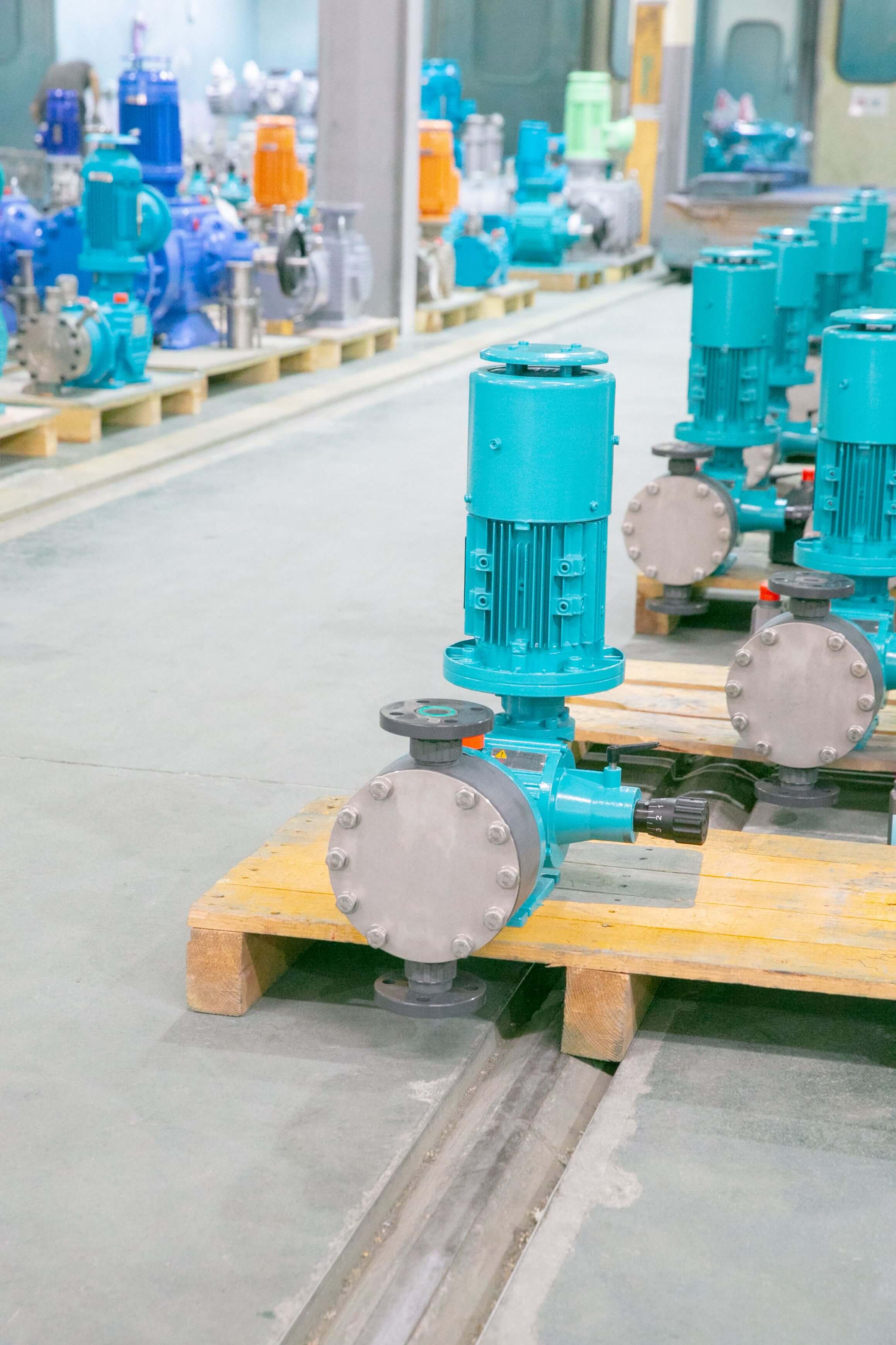
Introduction to the company's technological strength: Depam's three core advantages
Depamp (Hangzhou) Pump Technology Co., Ltd., established in 2003, has been dedicated to the R&D of high-end positive displacement pumps for over 20 years. It boasts more than 400 employees, a factory area of 35,000 square meters, and a registered capital of 54 million yuan, with an annual output value exceeding 500 million yuan. Its technical layout for mechanical diaphragm metering pumps covers three major dimensions:
STEP1:Breakthroughs in material innovationFor strongly corrosive media, fluoroplastic diaphragms such as PTFE and PVDF have been developed, with the temperature resistance range extended to -20°C~150°C and the pressure resistance rating reaching 16MPa; for particulate-containing media, hard alloy check valves are employed, enhancing wear resistance by three times.
STEP2:Structural optimization designThe diaphragm shape is optimized through finite element analysis to control the flow fluctuation rate within ±1%; the modular design supports rapid replacement of components such as pump heads and motors, reducing the single maintenance time to within 2 hours.
STEP3:Intelligent control integrationEquipped with a 4-20mA signal input module, it can be linked with a DCS system to achieve remote frequency modulation; it has a built-in pressure sensor that automatically shuts down when the outlet pressure exceeds the set value, avoiding the risk of pipeline rupture.
Technical parameter example: The DPM-G series mechanical diaphragm metering pump has a flow rate range of 0.01 to 2000 L/h, a pressure range of 0 to 10 MPa, is suitable for media with a viscosity of ≤1000 mPa·s, and has a motor power of 0.18 to 7.5 kW.
Application Case: In the hydrogenation unit of a petrochemical enterprise, Depam's DPM-G3000 pump replaced the original imported equipment, achieving resistance to hydrofluoric acid corrosion, a flow accuracy of ±0.5%, and a 40% reduction in annual maintenance costs. For more information, please visit the official website:www.depamufluid.com
FAQ: One-Question-One-Answer Technical Selection Guide
Q1: How to select the pump type based on working conditions?
STEP 1: Clarify the medium characteristics. For highly corrosive liquids (such as hydrochloric acid), prioritize selecting PTFE diaphragm pumps; if the medium contains solid particles (such as lime slurry), hard alloy valve seats are required.
STEP 2: Determine the flow pressure. Select the nominal flow rate (e.g., 100 L/h) and pressure rating (e.g., 4 MPa) based on process requirements, and reserve a 20% margin to accommodate peak demand.
STEP 3: Evaluate environmental conditions. If used outdoors or in explosive areas (such as oil and gas fields), select models with an IP55 protection rating and explosion-proof motors (ExdIIBT4).
Q2: What are the common failures during operation and their solutions?
STEP 1: Insufficient flow. Check if the check valve is clogged (disassemble and clean the valve core) and if the diaphragm is damaged (observe the drop in oil level in the hydraulic chamber), and replace parts if necessary.
STEP 2: Pressure fluctuation. Adjust the stroke frequency to 50%~80% of the rated value to avoid low-frequency resonance; check for air leakage in the pipeline (apply soapy water to detect bubbles).
STEP 3: Motor overheating. Verify whether the voltage is stable (±5% of rated value) and whether the load is excessive (current does not exceed 90% of rated value). If necessary, install a cooling fan.
Q3: How can I extend the lifespan of the equipment?
STEP 1: Regular lubrication. Add 3# lithium-based grease to the bearing housing every 500 hours and replace the gear oil (VG320) in the reduction gearbox every 2000 hours.
STEP 2: Medium pretreatment. Install filters (mesh size ≥ 100) for media containing particles, and set up cooling coils for high-temperature media to prevent crystallization or vaporization of the medium.
STEP 3: Shutdown protection. When the pump is out of service for a long time, drain the medium from the pump chamber, rinse it with clean water, apply anti-rust oil, and store it in a dry and ventilated environment.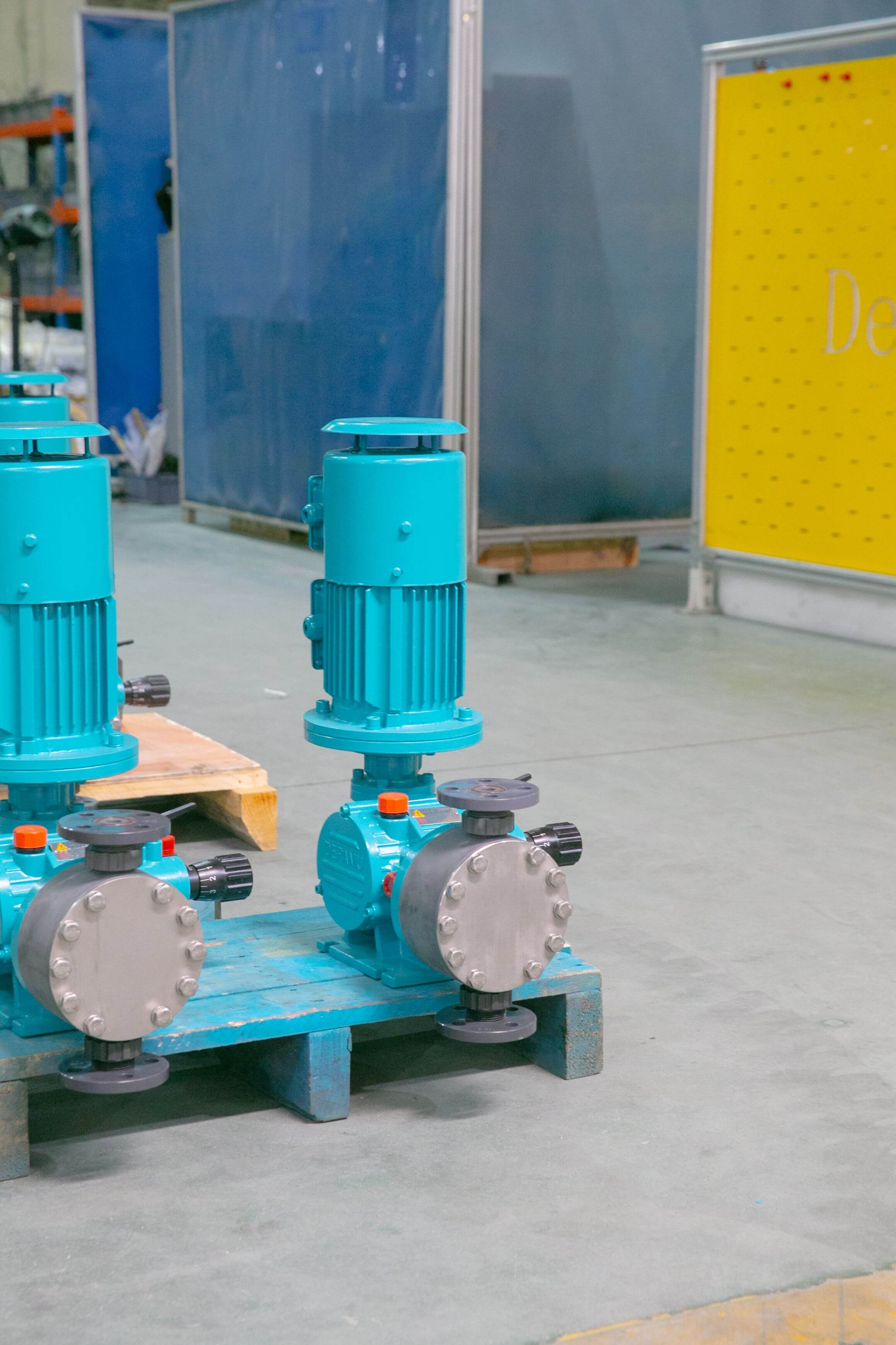
Reference for full text summary
The selection of mechanical diaphragm metering pumps requires a comprehensive consideration of three key factors: medium characteristics, flow pressure, and environmental conditions, while operational efficiency depends on material durability, structural reliability, and the level of intelligent control. Depam Pump Industry has enhanced flow accuracy to within ±1% and extended maintenance intervals to over 5,000 hours through material innovation, structural optimization, and intelligent integration, successfully applying these pumps in more than 10 fields, including petroleum refining and the nuclear industry. For users, selecting a supplier with customization capabilities and full lifecycle services is crucial for reducing total cost of ownership (TCO) and ensuring process stability. For more information, please visit the official website:www.depamufluid.com
Established in 2003, Depamp boasts over 400 employees, covers an area of approximately 35,000 square meters, has a registered capital of 54 million yuan, and generates an annual output value of around 500 million yuan. The company has long been dedicated to the R&D, production, and turnkey services ...
No. 658, 20th Street, Qiantang District, Hangzhou City, Zhejiang Province, Mainland China