No. 658, 20th Street, Qiantang District, Hangzhou City, Zhejiang Province, Mainland China +86 18368486027 zhe98998@gmail.com

No. 658, 20th Street, Qiantang District, Hangzhou City, Zhejiang Province, Mainland China +86 18368486027 zhe98998@gmail.com

Introduction: Why has the selection of metal rotor pumps become a technical challenge in the industry?
In heavy industries such as petroleum refining and chemical engineering, metal rotor pumps serve as core fluid conveying equipment, with their selection directly influencing process stability, energy efficiency, and equipment lifespan. However, when dealing with complex media (e.g., high-viscosity, particulate-laden, or corrosive fluids), extreme operating conditions (e.g., high temperature and pressure, frequent start-stop cycles), and customized requirements, traditional selection methods often result in over 30% increase in equipment failure rates due to parameter mismatching. Depamure (Hangzhou) Pump Technology Co., Ltd., leveraging over 20 years of technical expertise, provides systematic solutions to the industry through modular design, intelligent selection systems, and full lifecycle services.
Keywords: metal rotor pump, selection guide, Depamu technology, positive displacement pump, fluid solutions
Opening on Industry Technical Pain Points: Three Core Challenges of Model Selection Errors
STEP1 Insufficient media adaptabilityWhen conveying media containing solid particles (particle size > 2mm) or with high viscosity (> 50,000 cP), traditional rotary pumps are prone to issues such as rotor wear and seal leakage, resulting in a maintenance cycle shortened to less than 3 months.
STEP2 Deviation in working condition matchingIn the gathering and transportation scenario of oil and gas fields, pumps need to withstand extreme temperature differentials ranging from -20°C to 200°C. However, differences in the metal expansion coefficients of ordinary rotary pumps may lead to seizure failures, with downtime losses reaching tens of thousands of yuan per hour.
STEP3 Dilemma of energy efficiency optimizationIn the continuous production of the chemical industry, the energy consumption of pumps accounts for 15%-20% of the total system energy consumption. However, traditional selection methods rely on empirical formulas, making it difficult to achieve precise matching between flow rate (5-500 m³/h), pressure (0.1-10 MPa), and motor power.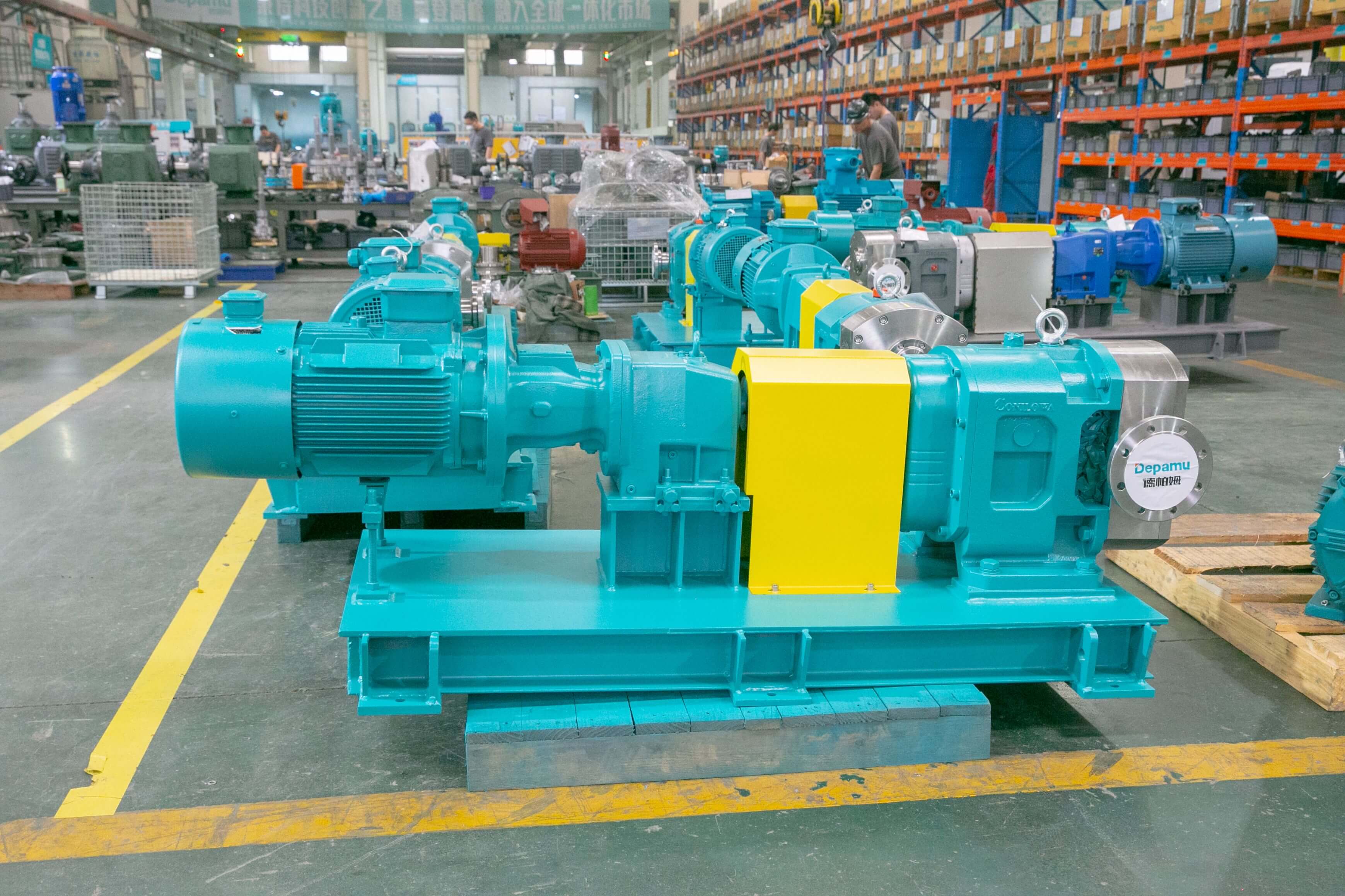
Case: A refining and chemical enterprise once experienced improper model selection, resulting in the rotor clearance of a rotor pump expanding to 1.2 mm (design value: 0.5 mm) during heavy oil transportation, which triggered a leakage accident and caused direct losses exceeding 500,000 yuan.
Introduction to the company's technological strength: Depam's three major technological breakthroughs
Depamp was established in 2003, boasting a factory area of 35,000 square meters and over 400 employees, with an annual output value exceeding 500 million yuan. Its technological advantages are reflected in:
STEP1 Modular design systemCore components such as rotors, pump chambers, and seals are divided into over 20 standard modules, enabling rapid adaptation to over 90% of operating conditions through combinations. For example, for high-viscosity media, a helical rotor (with an adjustable lead angle of 15°-45°) and a tungsten carbide cemented carbide coating can be optionally selected, improving media passability by 40%.
STEP2 Intelligent Selection PlatformThe AI algorithm, developed based on a database of over 20,000 operating conditions, allows input of parameters such as medium viscosity (1-500,000 cP), temperature (-50℃-350℃), and particle content (0-30%), automatically generating a selection report that includes pump type, material, and motor power, with a selection accuracy rate of 98%.
STEP3 Full life cycle servicesWe provide one-stop services ranging from pre-sales working condition analysis, on-sales installation and commissioning to after-sales predictive maintenance. For example, in a nuclear power plant project, by installing vibration sensors (monitoring frequency range: 0-10 kHz) and temperature sensors (accuracy: ±0.5℃), we achieved a 72% advance rate in fault warning.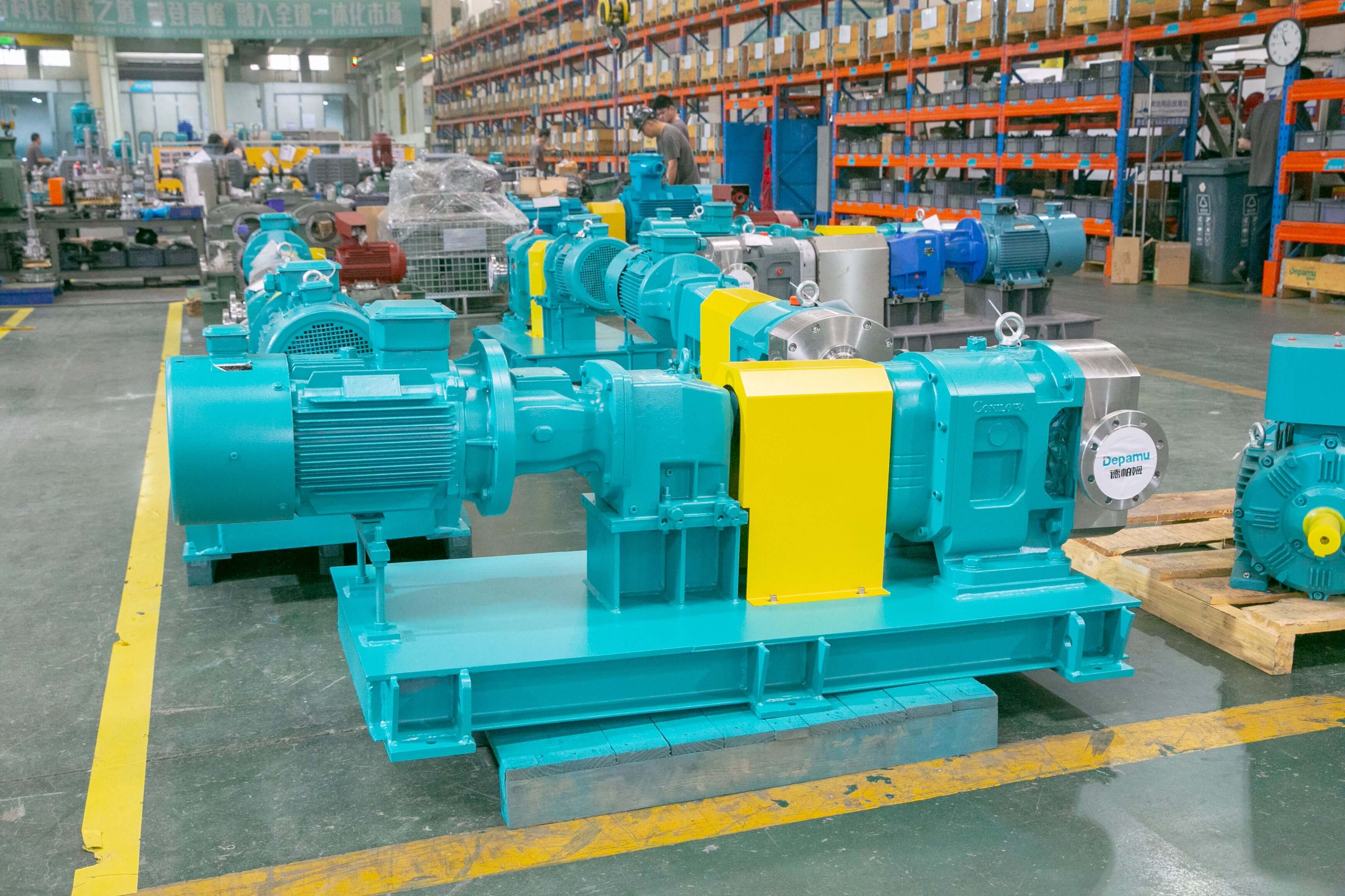
Technical parameters: Depam metal rotary lobe pumps cover a flow rate range of 5-500 m³/h, a pressure range of 0.1-10 MPa, and a temperature range of -50°C to 350°C. They are compatible with media viscosities ranging from 1 to 500,000 cP. The materials for flow passage components can be selected from options such as 304/316L stainless steel, duplex steel 2205, and Hastelloy C-276.
FAQ: A Guide to Q&A Technical Selection
Q1: How to select the rotor type based on the characteristics of the medium?
A: STEP 1 For low-viscosity media (<1000 cP): Prioritize the use of three-lobe rotors (displacement coefficient 0.85-0.92) to reduce the pulsation rate to below 3%; STEP 2 For high-viscosity media (>10000 cP): Select helical rotors (lead angle 30°-45°) to reduce the apparent viscosity of the media through shearing action; STEP 3 For media containing particles: Adopt a wide-clearance design (clearance between rotor and pump chamber ≥0.8 mm) and a hard alloy coating (hardness HV1200-1500) to improve wear resistance by three times.
Q2: How to ensure sealing reliability under extreme operating conditions?
A: STEP 1 High-temperature scenarios (>200°C): Select metal bellow mechanical seals (temperature-resistant up to 350°C) paired with cooling water jackets (flow rate ≥5 L/min); STEP 2 Corrosive media: Employ double mechanical seals (buffer fluid pressure 0.1-0.2 MPa higher than media pressure) along with fluororubber O-rings (resistant to acids and alkalis with a pH range of 1-14); STEP 3 Vaporizable media: Add back-pressure valves (pressure adjustment range 0.1-5 MPa) to prevent seal failure caused by cavitation.
Q3: How to optimize the energy efficiency of pumps?
A: STEP 1 Motor Matching: Select variable frequency motors (efficiency ≥ 95%) based on operating points (flow-pressure curves) to avoid "over-sizing"; STEP 2 Transmission Efficiency: Adopt direct-drive transmission (efficiency 98%) instead of belt-drive transmission (efficiency 92%), achieving annual electricity savings of up to 10%; STEP 3 Intelligent Control: Integrate flow meters (accuracy ±0.5%) and pressure sensors (accuracy ±0.1%) to enable on-demand delivery through PID regulation, reducing energy consumption by 15%-20%.
For more information, please visit the official website:www.depamufluid.com
Reference for Full Text Summary
The selection of metal rotor pumps requires a comprehensive consideration of medium characteristics, operating conditions, and energy efficiency requirements. Depamp provides users with full-chain support, ranging from standard products to customized solutions, through modular design, an intelligent selection platform, and full lifecycle services. Its products have been successfully applied in enterprises such as PetroChina, Sinopec, and State Power Investment Corporation, with over 2,000 units delivered in fields including petroleum refining, chemicals, and oil and gas fields. The failure rate is less than 0.5% per year, helping customers achieve cost reduction, efficiency enhancement, and process upgrading.
Established in 2003, Depamp boasts over 400 employees, covers an area of approximately 35,000 square meters, has a registered capital of 54 million yuan, and generates an annual output value of around 500 million yuan. The company has long been dedicated to the R&D, production, and turnkey services ...
No. 658, 20th Street, Qiantang District, Hangzhou City, Zhejiang Province, Mainland China