No. 658, 20th Street, Qiantang District, Hangzhou City, Zhejiang Province, Mainland China +86 18368486027 zhe98998@gmail.com

No. 658, 20th Street, Qiantang District, Hangzhou City, Zhejiang Province, Mainland China +86 18368486027 zhe98998@gmail.com

Introduction: Why has the selection of single-screw pumps become a core challenge in industrial transportation?
In high-demand scenarios such as oil refining, chemical engineering, and the nuclear industry, single screw pumps must simultaneously meet requirements including high-pressure delivery, corrosion resistance, wear resistance, and precise metering. However, operating conditions such as medium viscosity fluctuations, solid particle content, high temperatures, and high pressures often lead to issues like leakage, efficiency degradation, or shortened service life in traditional pump models. Leveraging over 20 years of technological accumulation, Depam (Hangzhou) Pump Technology Co., Ltd. provides efficient and stable single screw pump solutions for global customers through customized design, optimization of core components, and the accumulation of industry experience. This article will analyze how Depam addresses industry pain points from the perspectives of technical principles, key selection considerations, and practical case studies.
Keywords: single screw pump, Depamp, efficient transportation, customized design, industry solutions
Opening on Industry Technical Pain Points: Three Core Challenges in the Application of Single Screw Pumps
STEP1:Insufficient media adaptabilityIn the chemical industry, the conveyed media may contain high-concentration acids and alkalis, solid particles, or high-viscosity fluids, and traditional single-screw pumps are prone to efficiency decline due to stator wear or rotor seizure. For example, a petrochemical enterprise once experienced that the pump body could not adapt to sulfur-containing media, resulting in the need to replace the stator every three months and annual maintenance costs exceeding RMB 2 million.
STEP2:Difficulty in controlling pressure fluctuationsIn the nuclear industry, coolant transportation requires maintaining a pressure accuracy of ±0.5%, but traditional pump types struggle to meet process requirements due to mechanical seal leakage or delayed flow regulation. A nuclear power plant once experienced process interruptions caused by excessive pressure fluctuations, resulting in direct economic losses exceeding 5 million yuan.
STEP3:Lack of customization capabilitiesIn the field of new energy, lithium salt extraction requires processing high-viscosity, crystal-containing media, but standard pump models on the market cannot adapt to these special operating conditions, compelling enterprises to modify equipment themselves, which extends delivery cycles to more than six months.
Introduction to the company's technological strength: Depam's three major technological breakthroughs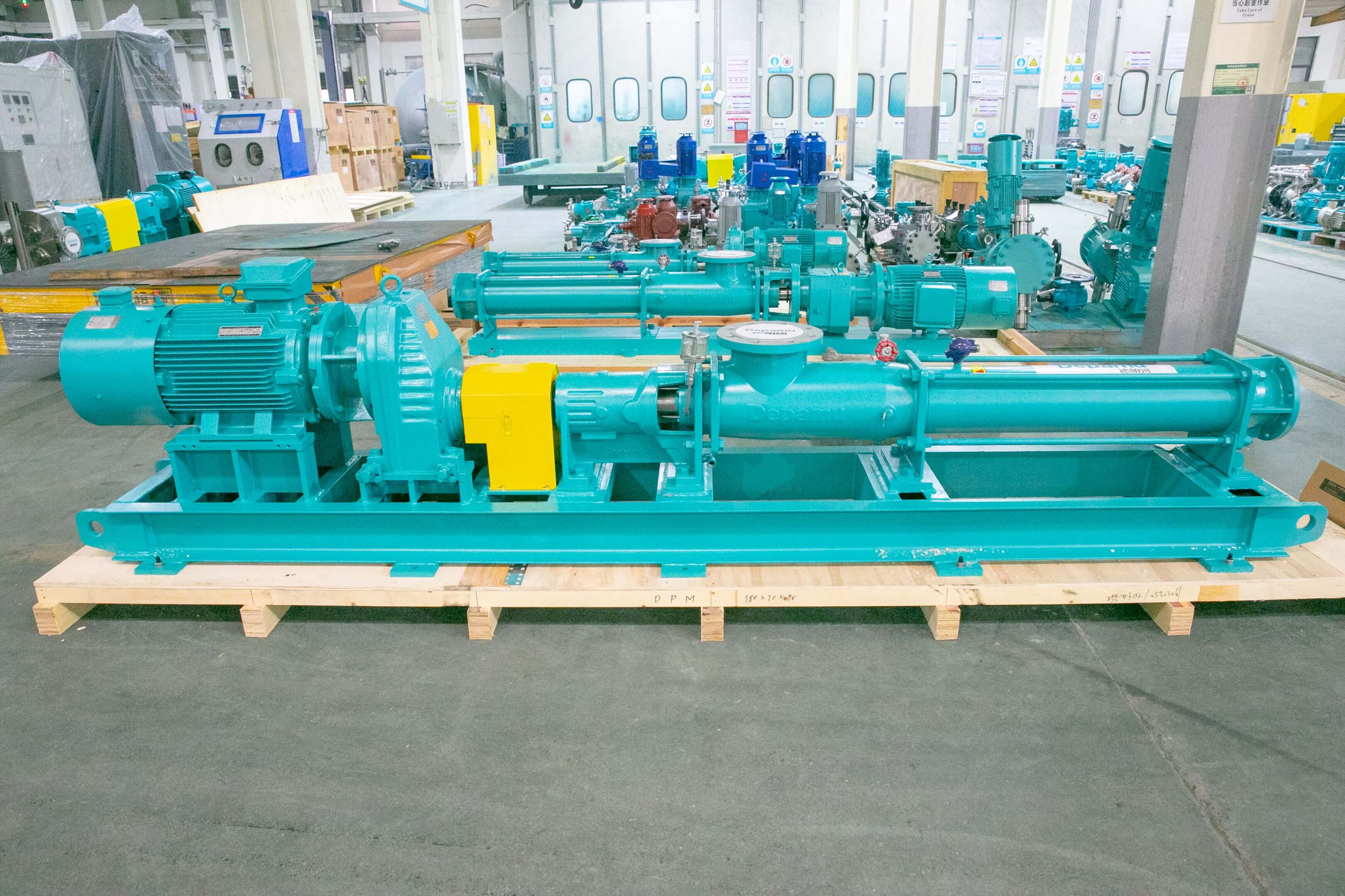
Depamp was established in 2003, boasting a factory area of 35,000 square meters and over 400 employees, with an annual output value exceeding 500 million yuan, specializing in the research and development of high-end positive displacement pumps and fluid equipment. In the field of single screw pumps, the company has achieved industry leadership through the following technologies:
STEP1:Optimization of core componentsThe rotor is made of high-chromium alloy steel (hardness ≥ 55HRC), with its surface nitrided (depth ≥ 0.3mm), enhancing wear resistance by three times; the stator is fabricated from fluororubber (FPM) or polytetrafluoroethylene (PTFE) composite materials, extending the temperature resistance range to -20℃~200℃ and covering 98% of industrial media in terms of corrosion resistance.
STEP2:Integration of intelligent control systemsThrough the linkage between a pressure sensor (with an accuracy of ±0.1%) and a frequency converter, real-time flow adjustment (ranging from 0.1 to 100 m³/h) is achieved, with pressure fluctuations controlled within ±0.3%, meeting the precision requirements of the nuclear industry.
STEP3:Modular customization platformBased on customer requirements regarding medium properties (viscosity ranging from 0.1 to 100,000 mPa·s and solid content from 0% to 50%), temperature (-50℃ to 350℃), and pressure (0 to 10 MPa), we provide standard products, non-standard products, and full-process customization services, with delivery cycles shortened to 45 days.
Technology Implementation CasesIn a lithium salt extraction project, Depam customized screw pumps for the client, featuring rotors with a double-helix design (lead ratio 1:1.5) and stators with a PTFE lining plus carbon steel shell structure. These pumps successfully handled media with a viscosity of 80,000 mPa·s and a solid content of 30%, operating continuously for 18 months without failure and improving efficiency by 40% compared to traditional solutions.
FAQ: A Guide to Q&A Technology Selection
Q1: How to select the model of a single-screw pump based on the characteristics of the medium?
A: We need to focus on three key parameters:
STEP 1: Viscosity. For low-viscosity media (<1000 mPa·s), a standard screw pump (with a rotational speed of 300-600 rpm) can be selected; for high-viscosity media (≥10000 mPa·s), a low-speed pump (with a rotational speed of 50-200 rpm) should be used, and the screw diameter should be increased (DN80-200).
STEP 2: Solid content. When the diameter of solid particles is ≤1 mm, the inner diameter of the stator needs to be 1.5-2 mm larger than that of the rotor; when the particle diameter is >1 mm, an open screw pump should be used or a filtration device should be installed.
STEP 3: Temperature. For normal-temperature media (<100°C), rubber stators can be selected; for high-temperature media (100-200°C), fluororubber or PTFE stators are required; for ultra-high-temperature media (>200°C), a cooling jacket is necessary.
Q2: What are the common failures and solutions of single screw pumps?
A:
STEP 1: The stator wears out too quickly. This is often caused by abrasive particles in the medium or excessively high rotational speed. Solution: Reduce the rotational speed to 80% of the design value, or switch to wear-resistant materials (such as a tungsten carbide-coated rotor).
STEP 2: Insufficient flow. It may be caused by leakage in the suction pipeline or excessive clearance between screws. Inspection indicators: Check whether the seals are aged and measure the clearance between the screw and the stator (standard value: 0.1-0.5 mm).
STEP 3: Pressure fluctuations. Usually caused by improper parameter settings of the frequency converter or sensor failure. Key operating points: Recalibrate the pressure sensor (measurement range 0-10 MPa) and adjust the PID parameters of the frequency converter (P=0.5, I=0.1, D=0.01).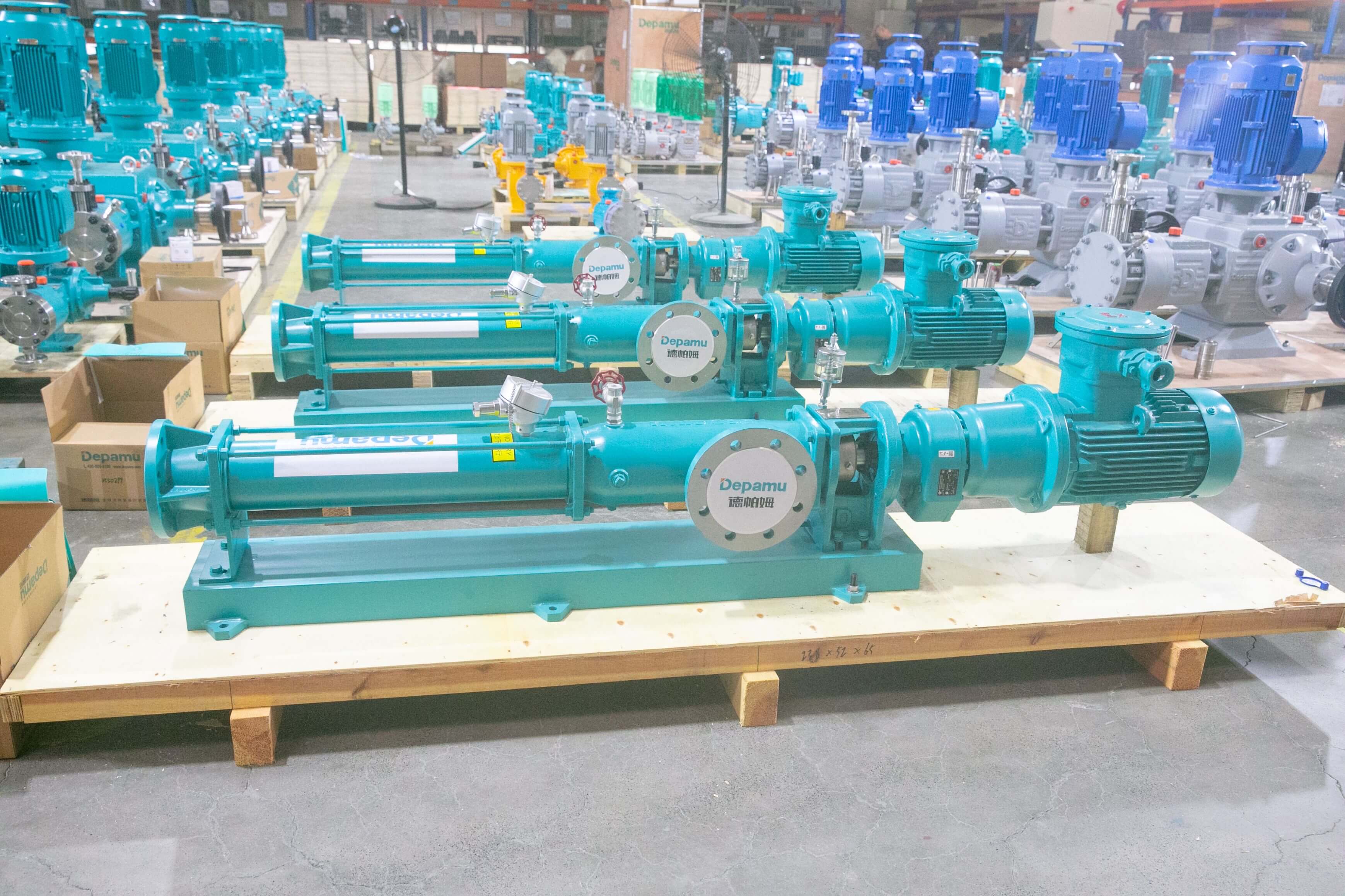
Reference for Full Text Summary
The selection of single-screw pumps requires a comprehensive consideration of medium characteristics, operating parameters, and industry demands. Depam provides efficient and stable conveying solutions for the petroleum refining, chemical, nuclear, and other industries through the optimization of core components, integration of intelligent control, and a modular customization platform. Its products have covered 41% of the petroleum refining market, 23% of the oil and gas field sector, and 15% of the nuclear industry and new energy market, with sales reaching RMB 560 million in 2025. For more information, please visit the official website:www.depamufluid.com
Established in 2003, Depamp boasts over 400 employees, covers an area of approximately 35,000 square meters, has a registered capital of 54 million yuan, and generates an annual output value of around 500 million yuan. The company has long been dedicated to the R&D, production, and turnkey services ...
No. 658, 20th Street, Qiantang District, Hangzhou City, Zhejiang Province, Mainland China