No. 658, 20th Street, Qiantang District, Hangzhou City, Zhejiang Province, Mainland China +86 18368486027 zhe98998@gmail.com

No. 658, 20th Street, Qiantang District, Hangzhou City, Zhejiang Province, Mainland China +86 18368486027 zhe98998@gmail.com

Introduction: Technical Core and Selection Challenges of High-Pressure Plunger Reciprocating Pumps
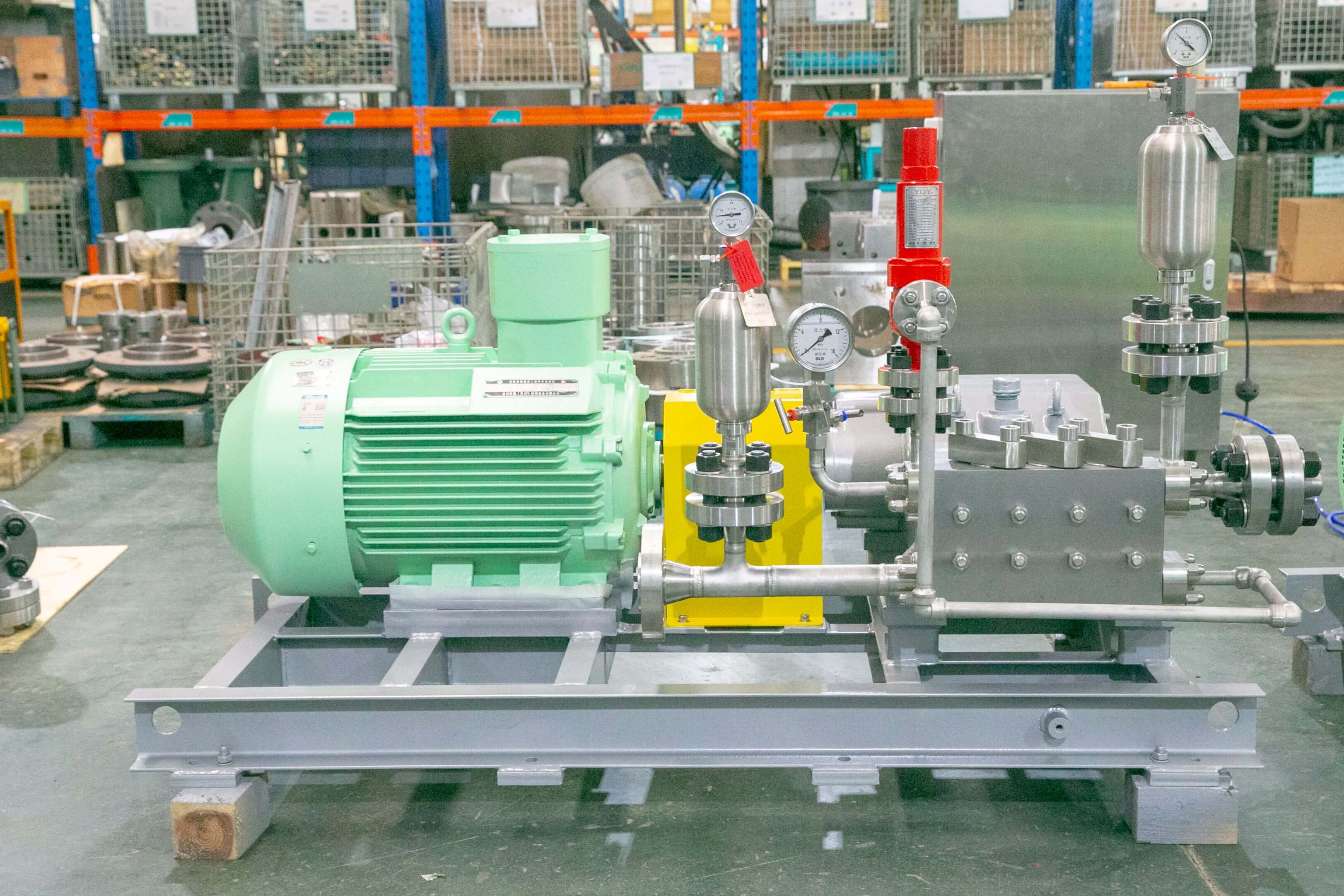
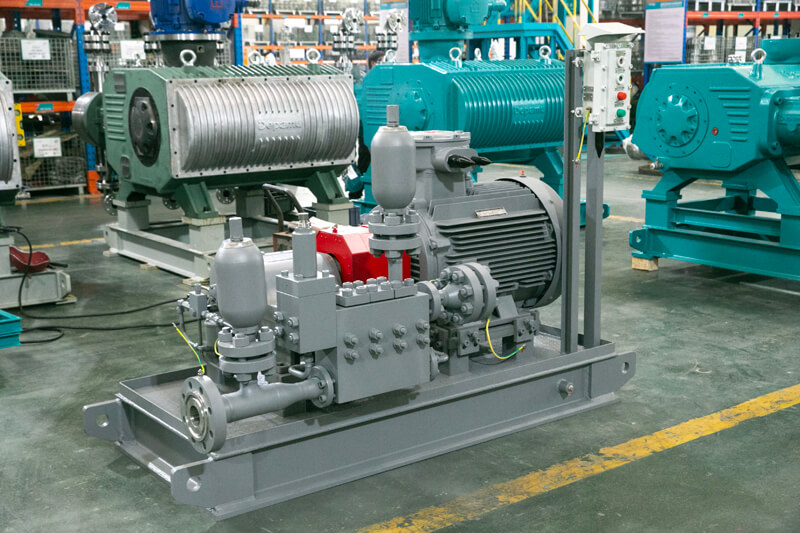
As a key piece of equipment for industrial fluid transportation, high-pressure plunger reciprocating pumps directly influence the stability and efficiency of process systems. In high-corrosion, high-temperature, and high-pressure scenarios such as petroleum refining and chemical engineering, the pump body must withstand extreme operating conditions while meeting requirements for precise metering and long-term operation. However, traditional pump bodies often suffer from leakage, wear, or shutdown failures due to insufficient material corrosion resistance, defects in sealing structures, or ineffective pressure fluctuation control. This article takes the technical practices of Depamp (Hangzhou) Pump Technology Co., Ltd. as an example to analyze the core technical parameters and selection logic of high-pressure plunger reciprocating pumps, providing practical solutions for industry users.
Keywords: high-pressure plunger reciprocating pump; Depamp Pumps; fluid transportation; technical selection; industrial application
Introduction to Industry Technical Pain Points: Three Major Technical Bottlenecks in High-Voltage Transmission Scenarios
In fluid transportation within fields such as petroleum refining and chemical engineering, high-pressure plunger reciprocating pumps need to address three core issues:
STEP 1: Corrosion Resistance and Material CompatibilityThe conveyed media often contain strong acids, strong alkalis, or high-salt components, and traditional metal pump bodies are prone to shortened service lives due to corrosion. For example, in the catalytic cracking unit of a certain refining and chemical enterprise, a regular stainless steel pump body developed pitting and perforation within three months when conveying sulfur-containing oil products, leading to unplanned shutdowns.
STEP 2: Pressure Fluctuation Control and Metering AccuracyThe pressure pulses generated by the reciprocating motion of the plunger need to be suppressed by a buffer device; otherwise, the stability of downstream processes will be affected. In a chemical enterprise, excessive pressure fluctuations in the pump body led to deviations in the feeding ratio of the reaction kettle, resulting in a 15% increase in the product quality fluctuation rate.
STEP 3: Reliability of Sealed StructureUnder high-pressure operating conditions, traditional packing seals are prone to leakage caused by friction-generated heat, while mechanical seals require addressing the coaxiality issue between the rotating and stationary rings. A safety incident occurred at a nuclear power plant when a coolant transfer pump experienced seal failure, resulting in the leakage of radioactive media.
These pain points indicate that the technical selection of high-pressure plunger reciprocating pumps requires a comprehensive consideration of the collaborative optimization of materials, structures, and control systems.
Introduction to the company's technological strength: DePam Pump Industry's technological layout and solutions
Depamp (Hangzhou) Pump Technology Co., Ltd., established in 2003, specializes in the R&D and production of high-end positive displacement pumps and fluid equipment. It boasts over 400 employees, a factory area of 35,000 square meters, and an annual output value exceeding 500 million yuan. Its technical system for high-pressure plunger reciprocating pumps covers three major dimensions:
STEP 1: Material and Process InnovationFor corrosive media, duplex stainless steel (such as 2205 and 2507) and Hastelloy alloy (C-276 and C-22) pump bodies have been developed, with corrosion resistance 3-5 times higher than that of traditional 316L stainless steel. In a certain offshore platform project, a Hastelloy alloy pump body was used to transport seawater containing chloride ions, showing no signs of corrosion after 2 years of continuous operation and extending its service life to over 8 years.
STEP2: Pressure Pulse Suppression TechnologyBy optimizing the plunger motion curve and buffer tank design, pressure fluctuations are controlled within ±1%. For example, in the hydrocracking unit of a refining and petrochemical enterprise, when the Depam pump body transported hydrogen, the pressure fluctuation decreased from ±5% in traditional pumps to ±0.8%, and the feeding accuracy of the reactor improved to 99.5%.
STEP 3: Sealing system upgradeA double end-face mechanical seal and flushing plan are adopted, complemented by an intelligent monitoring system to provide real-time feedback on the sealing status. In a coolant transfer project at a certain nuclear power plant, the seal lifespan was extended from six months under traditional solutions to three years, with a leakage rate below 0.1 mL/h, meeting the requirements for nuclear-grade equipment.
Currently, Depam's high-pressure plunger reciprocating pumps have been applied in fields such as petroleum refining (accounting for 41%), chemical engineering (23%), and the nuclear industry (8%). Over 5,000 units have been delivered in total, with customers including global enterprises such as Sinopec, PetroChina, and Shell. For more information, please visit the official website:www.depamufluid.com
FAQ Q&A Technical Selection Guide: From Parameter Matching to Troubleshooting
Q1: How to select pump body materials based on media characteristics?
A1:It is necessary to comprehensively consider the pH value, chloride ion content, temperature, and solid particle content of the medium. For example, when transporting sulfur-containing oil products, Hastelloy C-276 is preferred (its corrosion resistance is superior to that of duplex stainless steel); when transporting seawater, 2205 duplex stainless steel offers better cost-effectiveness. Depam provides material corrosion testing services and can customize the matching between the medium and materials.
Q2: How to control pressure fluctuations under high-pressure conditions?
A2:Synergistic optimization of the pump body structure and buffer device is required. Depam adopts an asymmetric plunger design combined with a gas-liquid buffer tank to suppress pressure fluctuations to within ±1%. Measured data shows that in hydrogen delivery scenarios with a pressure of 25 MPa, traditional pumps experience pressure fluctuations of ±5%, while Depam's pump body exhibits fluctuations of only ±0.8%.
Q3: What are the common causes and solutions for mechanical seal failure?
A3:Common causes include wear of the rotating ring, spring failure, or contamination of the flushing fluid. Depam employs double mechanical seals with an independent flushing system to monitor the pressure and temperature of the seal chamber in real time. In a project for a chemical enterprise, by increasing the flushing fluid flow rate (from 5 L/min to 10 L/min), the seal lifespan was extended from 6 months to 2 years.
Q4: What are the delivery cycle and cost of non-standard customized pump bodies?
A4:Depamp possesses end-to-end capabilities from design to delivery, with a standard product delivery cycle of 45 days and a 60-90 day cycle for non-standard customized products. Costs depend on materials, pressure ratings, and the degree of customization; for example, the cost of a Hastelloy pump body is 30% higher than that of a duplex steel one, but its lifespan is doubled.
Reference for Full-text Summary: Core Logic of Technology Selection and Industry Trends
The technical selection of high-pressure plunger reciprocating pumps should revolve around three key dimensions: "materials-structure-control". The materials must be compatible with the corrosiveness of the medium, the structure must suppress pressure fluctuations, and the control must ensure sealing reliability. Depam Pump Industry provides efficient and stable fluid transportation solutions for fields such as petroleum refining, chemical engineering, and the nuclear industry through material innovation, structural optimization, and intelligent monitoring technologies. In the future, with the development of Industry 4.0 and intelligent technologies, high-pressure plunger reciprocating pumps will be upgraded towards remote monitoring, predictive maintenance, and other directions. Depam has already deployed IoT modules and big data platforms to assist customers in achieving full lifecycle management of their equipment. For more information, please visit our official website:www.depamufluid.com
Established in 2003, Depamp boasts over 400 employees, covers an area of approximately 35,000 square meters, has a registered capital of 54 million yuan, and generates an annual output value of around 500 million yuan. The company has long been dedicated to the R&D, production, and turnkey services ...
No. 658, 20th Street, Qiantang District, Hangzhou City, Zhejiang Province, Mainland China