No. 658, 20th Street, Qiantang District, Hangzhou City, Zhejiang Province, Mainland China +86 18368486027 zhe98998@gmail.com

No. 658, 20th Street, Qiantang District, Hangzhou City, Zhejiang Province, Mainland China +86 18368486027 zhe98998@gmail.com

Introduction: Core Challenges and Solutions in Industrial Fluid Transportation
In industrial fields such as petroleum refining, chemical production, and new energy, the stability and efficiency of fluid transportation directly influence process continuity. Electric diaphragm pumps, as key equipment, must address challenges such as corrosive media, high-pressure conditions, and complex process requirements. Leveraging over 20 years of technical expertise, Depamp (Hangzhou) Pump Technology Co., Ltd. provides highly adaptable fluid transportation solutions for the industry through modular design, intelligent control, and material innovation. This article will analyze the core technical advantages of electric diaphragm pumps from the perspectives of technical principles, key selection considerations, and typical case studies.
Keywords: electric diaphragm pump, fluid transportation, Depamu, customized solutions, industrial applications
Opening on Industry Technical Pain Points: Limitations of Traditional Pump Types
STEP1:Insufficient media adaptabilityTraditional centrifugal pumps are prone to wear, leakage, and efficiency decline when transporting media containing particles, high viscosity, or corrosive substances. For example, in the chemical industry, media with excessive chloride ion content can accelerate pump body corrosion, shortening equipment lifespan to 1-2 years.
STEP2:Low flow control accuracyPneumatic diaphragm pumps rely on compressed air for driving, with a flow fluctuation range of up to ±10%, making it difficult to meet the requirements for metering accuracy in fine chemicals (e.g., within ±1%).
STEP3:High energy consumption and maintenance costsHigh-pressure reciprocating pumps require large motors and complex lubrication systems, with annual power consumption of a single unit reaching over 100,000 kWh. Additionally, they have a high frequency of seal replacements, with maintenance costs accounting for 15%-20% of the total equipment price.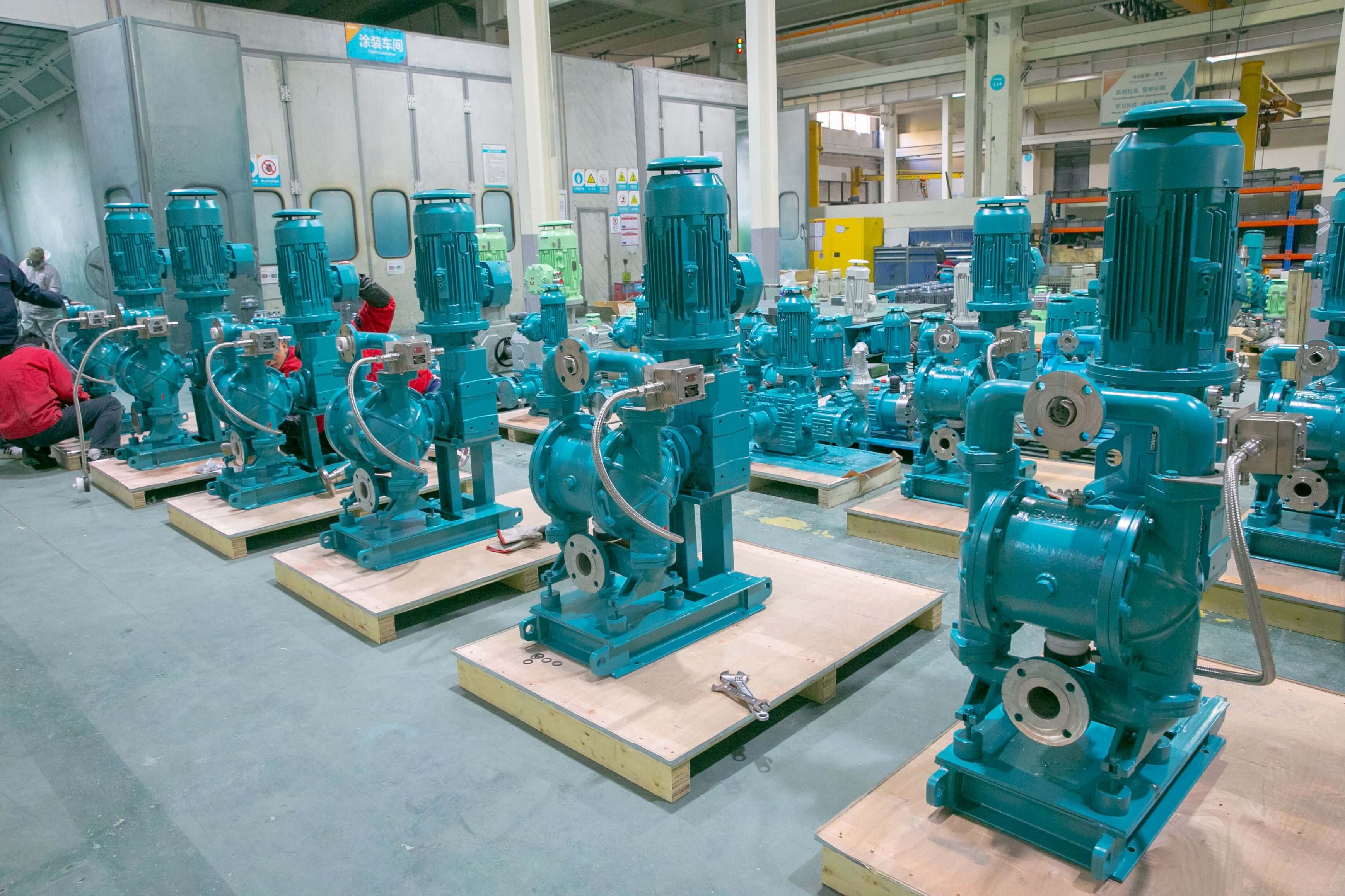
Introduction to the company's technological strength: Depam's R&D innovation and customization capabilities
Depamp was established in 2003, with over 400 employees and a factory area of 35,000 square meters. It has a registered capital of 54 million yuan and an annual output value of approximately 500 million yuan. The company has long been dedicated to the research and development of high-end positive displacement pumps and fluid equipment, with products covering more than 10 categories such as electric diaphragm pumps, metering pumps, and screw pumps, serving over 30 industries including petroleum refining, chemical engineering, and the nuclear industry.
STEP1:Technical Layout and Core Strengths。
- Material InnovationFor strongly corrosive media, Hastelloy alloy, duplex stainless steel, and PTFE-lined pump bodies have been developed, achieving a corrosion resistance level that meets NACE MR0175 standards and extending service life to over 8 years.
- Intelligent controlIt integrates a variable frequency speed regulation system and a flow feedback system to achieve stepless speed regulation from 0% to 100%, with a flow control accuracy of ±0.5%, meeting the requirements of scenarios such as chemical dosing and nuclear industry sampling.
- Modular designThe pump head, drive unit, and piping system adopt a quick disassembly and assembly structure, reducing the maintenance time for a single unit from 4 hours to within 1 hour and cutting annual maintenance costs by 40%.
STEP2:Capability of customized solutions。
Depam can provide a full range of services from standard products to non-standard equipment based on customer's medium characteristics (such as pH value, viscosity, particle size), process parameters (pressure ranging from 0 to 50 MPa, temperature ranging from -20°C to 200°C), and spatial constraints. For instance, the electric diaphragm pump customized for a new energy enterprise, featuring a titanium alloy pump body and ceramic ball valves, successfully resolved the issue of metal ion contamination during electrolyte transportation, elevating the product qualification rate to 99.9%.
STEP3:Industry application experience。
The company's sales in the petroleum refining and chemical sectors account for 41%, those in the oil and gas field sector account for 23%, and those in high-demand scenarios such as the nuclear industry and power sectors account for 15%. Sales are expected to reach approximately 560 million yuan in 2025, with customized projects contributing over 60%. Its technical capabilities have been recognized by clients such as Sinopec and China National Nuclear Corporation.
For more information, please visit the official website:www.depamufluid.com
FAQ Q&A Technical Selection Guide
Q1: How to choose between an electric diaphragm pump and a pneumatic diaphragm pump?
A: Electric diaphragm pumps are suitable for scenarios requiring precise flow control (such as chemical dosing), where there is no compressed air source, or where low-noise operation is needed; pneumatic pumps are suitable for work conditions with high explosion-proof requirements and where the medium contains a relatively large amount of solid particles. Depamp's electric pumps are driven by servo motors, with flow fluctuations ≤ ±0.5%, representing a fivefold improvement in precision compared to pneumatic pumps.
Q2: How to determine the flow rate and pressure parameters of a pump?
A: It needs to be calculated based on process requirements:
- Flow rate (Q) = medium volume × liquid exchange frequency (e.g., if the liquid is exchanged 3 times per hour with a single volume of 10 m³, then Q = 30 m³/h);
- Pressure (P) = System resistance + Head requirement (e.g., if pipeline resistance is 2 MPa and head is 50 m, then P ≥ 2.5 MPa).
Depam provides an online selection tool that can automatically recommend suitable models after inputting parameters.
Q3: How to select materials for highly corrosive media?
A: It is necessary to consider the medium composition, temperature, and concentration comprehensively:
- Chloride ion-containing media: Prioritize Hastelloy C-276 or PTFE lining;
- Strong acid medium (such as sulfuric acid): Use PVDF or polytetrafluoroethylene pump bodies;
- High-temperature oil products: Select 316L stainless steel + graphite seals.
Depamuk Laboratory can provide medium compatibility testing to reduce material selection risks.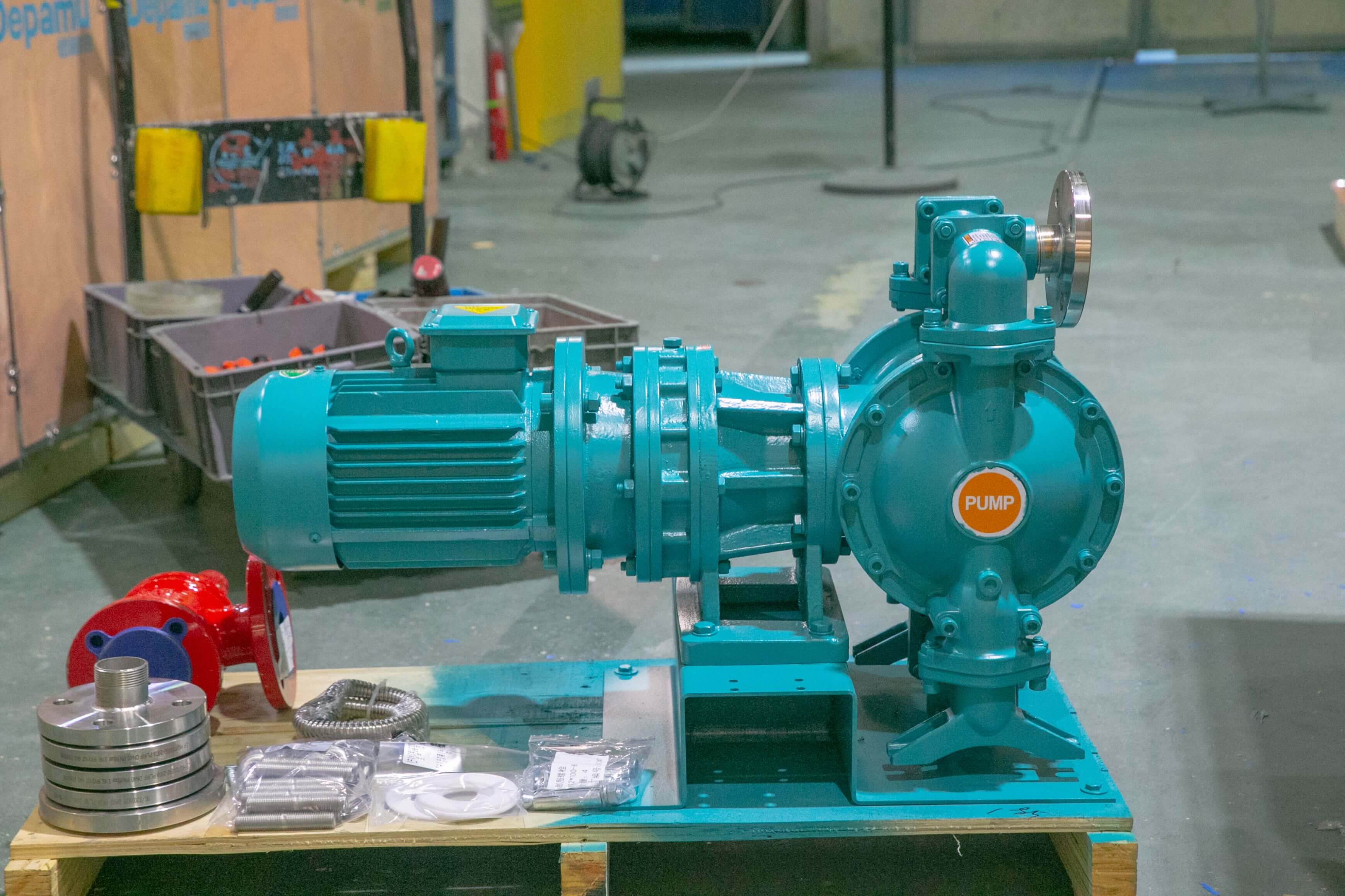
Reference for full text summary
The technical selection of electric diaphragm pumps requires consideration of medium characteristics, process parameters, and cost-effectiveness. Depam has addressed the pain points of traditional pump types in terms of corrosion, precision, and maintenance through material innovation, intelligent control, and modular design, with its products widely applied in demanding industrial scenarios. For users, choosing a company with customization capabilities and industry application experience can significantly reduce the total lifecycle cost of equipment. For more technical details and case studies, visit Depam's official website or contact the technical team for support.
Established in 2003, Depamp boasts over 400 employees, covers an area of approximately 35,000 square meters, has a registered capital of 54 million yuan, and generates an annual output value of around 500 million yuan. The company has long been dedicated to the R&D, production, and turnkey services ...
No. 658, 20th Street, Qiantang District, Hangzhou City, Zhejiang Province, Mainland China