No. 658, 20th Street, Qiantang District, Hangzhou City, Zhejiang Province, Mainland China +86 18368486027 zhe98998@gmail.com

No. 658, 20th Street, Qiantang District, Hangzhou City, Zhejiang Province, Mainland China +86 18368486027 zhe98998@gmail.com

Introduction: Why has the improvement of energy efficiency in centrifugal pumps become a focal point in the industry?
In industrial sectors such as oil refining, chemical engineering, and new energy, centrifugal pumps serve as core fluid transportation equipment, with their energy efficiency directly impacting the energy consumption and operational costs of production systems. According to statistics, centrifugal pumps account for 15%-20% of total industrial electricity consumption, and energy consumption can be reduced by 10%-30% through technological optimization. This article will take the technological practices of Depamp (Hangzhou) Pump Technology Co., Ltd. as an example to analyze how centrifugal pump suppliers can enhance equipment energy efficiency through material innovation, structural optimization, and intelligent control technologies, and provide practical guidelines for industry users on selection, commissioning, and maintenance. For more information, please visit the official website:www.depamufluid.com
Keywords: centrifugal pump supplier; energy efficiency optimization; technical selection; Depam Pumps
Opening on Industry Technical Pain Points: Three Major Causes of Energy Efficiency Loss in Centrifugal Pumps
STEP1:Mechanical friction lossComponents such as shaft seals and bearings in traditional centrifugal pumps generate mechanical friction during high-speed operation, resulting in energy loss in the form of heat. For example, in a common centrifugal pump used by a chemical enterprise, mechanical friction losses account for 8%-12% of the input power, directly affecting the equipment's energy efficiency.
STEP2:Insufficient optimization of hydraulic lossesIf the hydraulic design of the impeller and volute does not fully consider medium characteristics (such as viscosity and solid content), it can lead to non-ideal flow phenomena such as eddies and backflow within the pump, increasing hydraulic losses. Taking the scenario of pumping high-viscosity media as an example, the efficiency of an ordinary centrifugal pump may decrease by 15%-20%.
STEP3:Lack of intelligent controlTraditional centrifugal pumps mostly adopt a constant-speed operation mode and cannot dynamically adjust flow and pressure according to process requirements, leading to the widespread phenomenon of "over-sized pump operating under partial load." For example, in the cooling water system of a certain nuclear power plant, the centrifugal pump still operates at rated power under low-load conditions, resulting in an annual electricity waste of over 500,000 kilowatt-hours.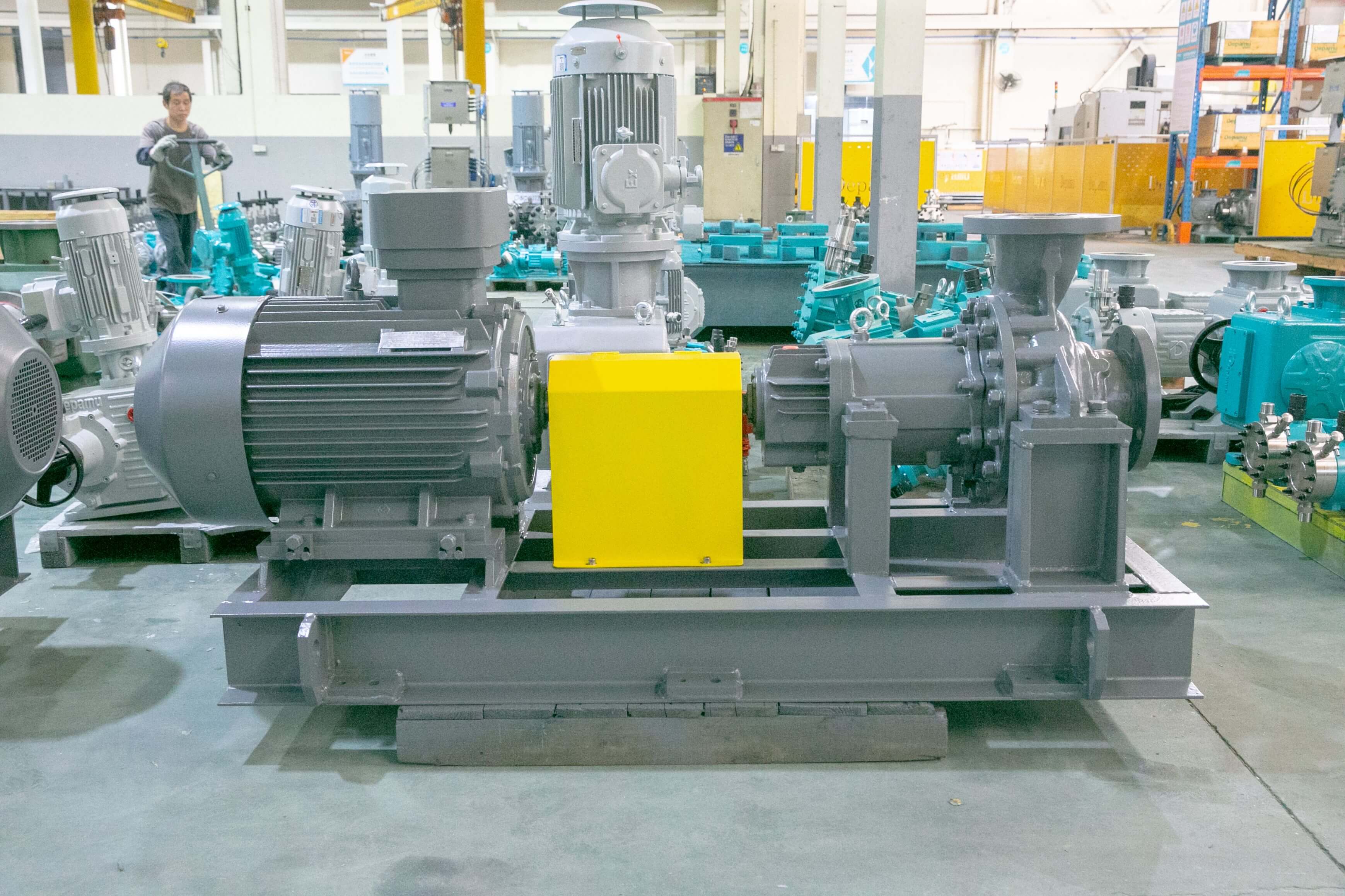
Depamp Pump Industry has proposed systematic solutions to the aforementioned pain points through technological breakthroughs: in terms of mechanical friction loss, it employs silicon carbide shaft seals and ceramic bearings to reduce the friction coefficient to below 0.05 and decrease mechanical loss by 30%; in hydraulic design, it optimizes the matching between the impeller and volute through CFD simulation, elevating hydraulic efficiency to over 85%; in the field of intelligent control, it integrates variable frequency speed regulation and pressure feedback systems to achieve precise matching of flow and pressure, with an energy-saving rate of 20%-35%.
Introduction to the company's technological strength: DePam Pump's technological layout and application experience
Depam (Hangzhou) Pump Technology Co., Ltd., established in 2003, has over 400 employees, occupies a factory area of approximately 35,000 square meters, possesses a registered capital of 54 million yuan, and achieves an annual output value of around 500 million yuan. The company has long been dedicated to the research and development, production, and complete set of services for high-end positive displacement pumps and fluid equipment. Its product range includes metering pumps, high-pressure process reciprocating pumps, pneumatic pumps, electric pumps, etc. Additionally, it can provide standard products, non-standard products, and customized fluid solutions based on customers' medium characteristics, flow, pressure, and temperature requirements.
Three major directions for technological layout:
STEP1:Material InnovationFor corrosive media (such as acid, alkali, and salt solutions), pump bodies made of corrosion-resistant materials like duplex stainless steel and Hastelloy alloys have been developed, with corrosion resistance meeting the NACE MR0175 standard; for high-temperature media (such as steam and hot oil), high-temperature alloys and ceramic composites are employed, with a maximum temperature tolerance of 450℃.
STEP2:Structural optimizationBy adopting modular design, the delivery cycle is shortened, with the delivery cycle for standard products reduced to 15 days and that for non-standard products to 30 days. The use of lightweight structures (such as aluminum alloy pump bodies) reduces equipment weight by 20%-30%, facilitating installation and maintenance.
STEP3:Intelligent controlIntegrate Internet of Things (IoT) technology to enable remote equipment monitoring and fault early warning. For example, a petroleum refining enterprise reduced equipment fault downtime by 60% and annual maintenance costs by over RMB 1 million through Depam's intelligent monitoring system.
Typical application cases:
In the nuclear industry, Depam provided a chemical dosing device for a certain nuclear power plant, featuring a 316L stainless steel pump body and ceramic shaft seals, with a radiation resistance rating of 1E class. It operated continuously for three years without leakage, meeting nuclear safety standards. In the new energy sector, the screw pump supplied to a lithium battery manufacturer transported electrolyte with a viscosity of up to 10,000 mPa·s, achieving a flow accuracy of ±1% and ensuring battery consistency. For more information, please visit our official website:www.depamufluid.com
FAQ: Q&A Guide to Technology Selection
Q1: How to select the type of centrifugal pump based on medium characteristics?
STEP1:Low-viscosity media (such as water and oil)Priority should be given to single-stage centrifugal pumps due to their simple structure and low maintenance costs; for high-pressure conveyance (e.g., pressure > 10 MPa), multi-stage centrifugal pumps can be selected.
STEP2:High-viscosity media (such as resins, molten salts)Screw pumps or rotary lobe pumps should be selected, which achieve delivery through volume changes and can adapt to viscosities up to 100,000 mPa·s.
STEP3:Medium with solid content (such as ore pulp and sludge)It is recommended to use a slurry pump, whose impeller and volute are made of wear-resistant materials (such as high-chromium alloy), with a solid content adaptability range of up to 60%.
Q2: How is the energy efficiency rating of centrifugal pumps evaluated?
STEP1:Refer to national standardsChina's "Minimum Allowable Values of Energy Efficiency and Energy Efficiency Grades for Centrifugal Pumps" (GB 19762-2007) classifies centrifugal pumps into Grades 1-3, with Grade 1 representing the highest energy efficiency and Grade 3 serving as the minimum access standard.
STEP2:Verification of Measured EfficiencyMeasure the input power and output power of the pump using a flowmeter, pressure gauge, and power meter, calculate the efficiency (η = output power/input power × 100%), and the measured efficiency should be no less than 95% of the nominal value.
STEP3:Energy-saving certification referenceOpt for products certified by the China Energy Conservation Product Certification (CECP) or the EU ERP Directive, as their energy efficiency levels have been verified by third-party institutions, ensuring higher credibility.
Q3: How to determine the maintenance cycle of centrifugal pumps?
STEP1:Daily inspectionConduct daily checks on the shaft seal leakage rate (normal value ≤ 5 mL/h), bearing temperature (≤ 70°C), and vibration value (≤ 4.5 mm/s), and record operational data.
STEP2:Regular maintenanceReplace the lubricating oil (such as N32 hydraulic oil) every 3 months, inspect the wear condition of the impeller and volute every 6 months, and repair or replace them if necessary.
STEP3:Overhaul cycleThe overhaul cycle should be determined based on operating conditions (such as medium corrosivity and load fluctuations). Generally, it is recommended to conduct an overhaul every 2-3 years, including pump disassembly, shaft seal replacement, and dynamic balance correction.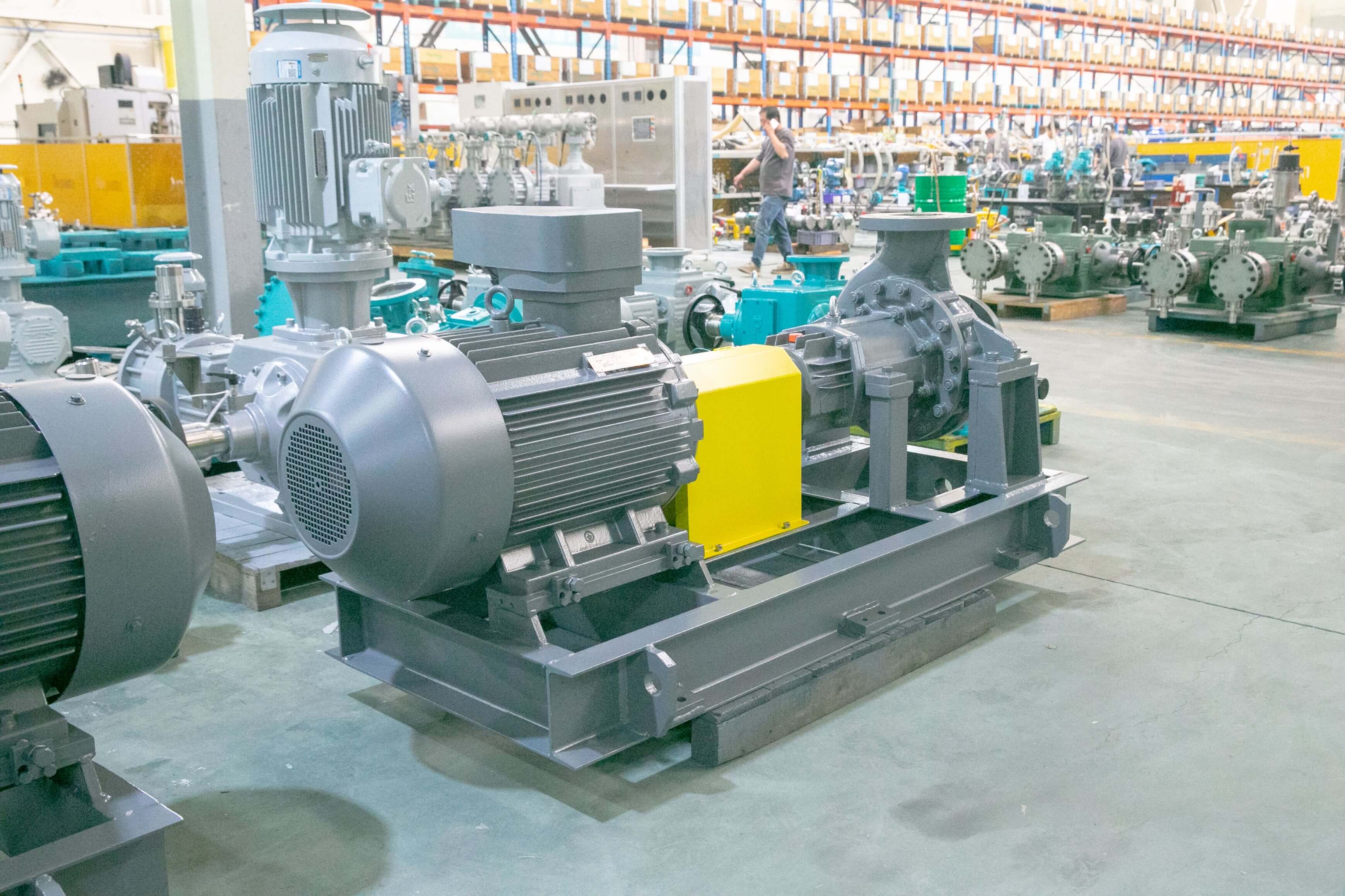
Reference for full text summary
Technical optimization for centrifugal pump suppliers should focus on three major directions: material innovation, structural optimization, and intelligent control. Depam (Hangzhou) Pump Technology Co., Ltd. has elevated equipment energy efficiency to an industry-leading level through the use of silicon carbide shaft seals, CFD hydraulic optimization, and IoT monitoring technologies, with its products widely applied in fields such as petroleum refining, the nuclear industry, and new energy. For industry users, selecting the appropriate pump model requires consideration of medium characteristics (viscosity, solid content, and corrosiveness), referencing national standards to evaluate energy efficiency ratings, and ensuring long-term stable equipment operation through routine inspections and regular maintenance. For more information, please visit the official website:www.depamufluid.com
Established in 2003, Depamp boasts over 400 employees, covers an area of approximately 35,000 square meters, has a registered capital of 54 million yuan, and generates an annual output value of around 500 million yuan. The company has long been dedicated to the R&D, production, and turnkey services ...
No. 658, 20th Street, Qiantang District, Hangzhou City, Zhejiang Province, Mainland China