No. 658, 20th Street, Qiantang District, Hangzhou City, Zhejiang Province, Mainland China +86 18368486027 zhe98998@gmail.com

No. 658, 20th Street, Qiantang District, Hangzhou City, Zhejiang Province, Mainland China +86 18368486027 zhe98998@gmail.com

Introduction: Why has the flow control of hydraulic diaphragm metering pumps become a focal point in the industry?
In process industries such as petroleum refining and chemical production, the flow stability of hydraulic diaphragm metering pumps directly affects the control accuracy of process parameters and product quality. Traditional metering pumps often suffer from issues such as excessive flow deviation and significant pulse fluctuations due to problems like mechanical wear and hydraulic system fluctuations. Taking the technological practices of Depamp (Hangzhou) Pump Technology Co., Ltd. as an example, this article analyzes its technical approach to achieving a flow control accuracy of ±0.5% through hydraulic system optimization, diaphragm material innovation, and intelligent control algorithms, and explores its implementation cases in fields such as the nuclear industry and new energy.
Keywords: hydraulic diaphragm metering pump; flow control; Depam Pumps; precise metering; industry applications
Opening on Industry Technical Pain Points: Challenges in Flow Control of Traditional Metering Pumps
STEP1:Flow attenuation caused by mechanical wearThe prolonged friction between the plunger and seals in traditional hydraulic diaphragm metering pumps is prone to causing particulate wear, leading to an increased leakage of hydraulic oil and subsequent flow rate degradation. For instance, a chemical enterprise experienced a 12% flow rate degradation after operating a certain brand of metering pump for one year, necessitating frequent shutdowns for calibration.
STEP2:Pulse issues caused by fluctuations in the hydraulic systemThe viscosity of hydraulic oil is significantly affected by temperature. In low-temperature environments, the oil viscosity increases, leading to delayed system response; in high-temperature environments, the viscosity decreases, resulting in increased leakage, both of which cause flow pulse fluctuations. Measured data shows that in a chemical dosing scenario at a certain oil field, the flow fluctuation range of traditional pumps reaches ±5%, affecting the uniformity of chemical dosing.
STEP3:Maintenance costs associated with diaphragm lifespan limitationsOrdinary rubber diaphragms are prone to aging and cracking in strongly corrosive media, with a lifespan of only 3,000-5,000 hours, necessitating regular replacement. A nuclear power plant experienced leakage of radioactive media due to diaphragm rupture, resulting in direct economic losses exceeding 2 million yuan.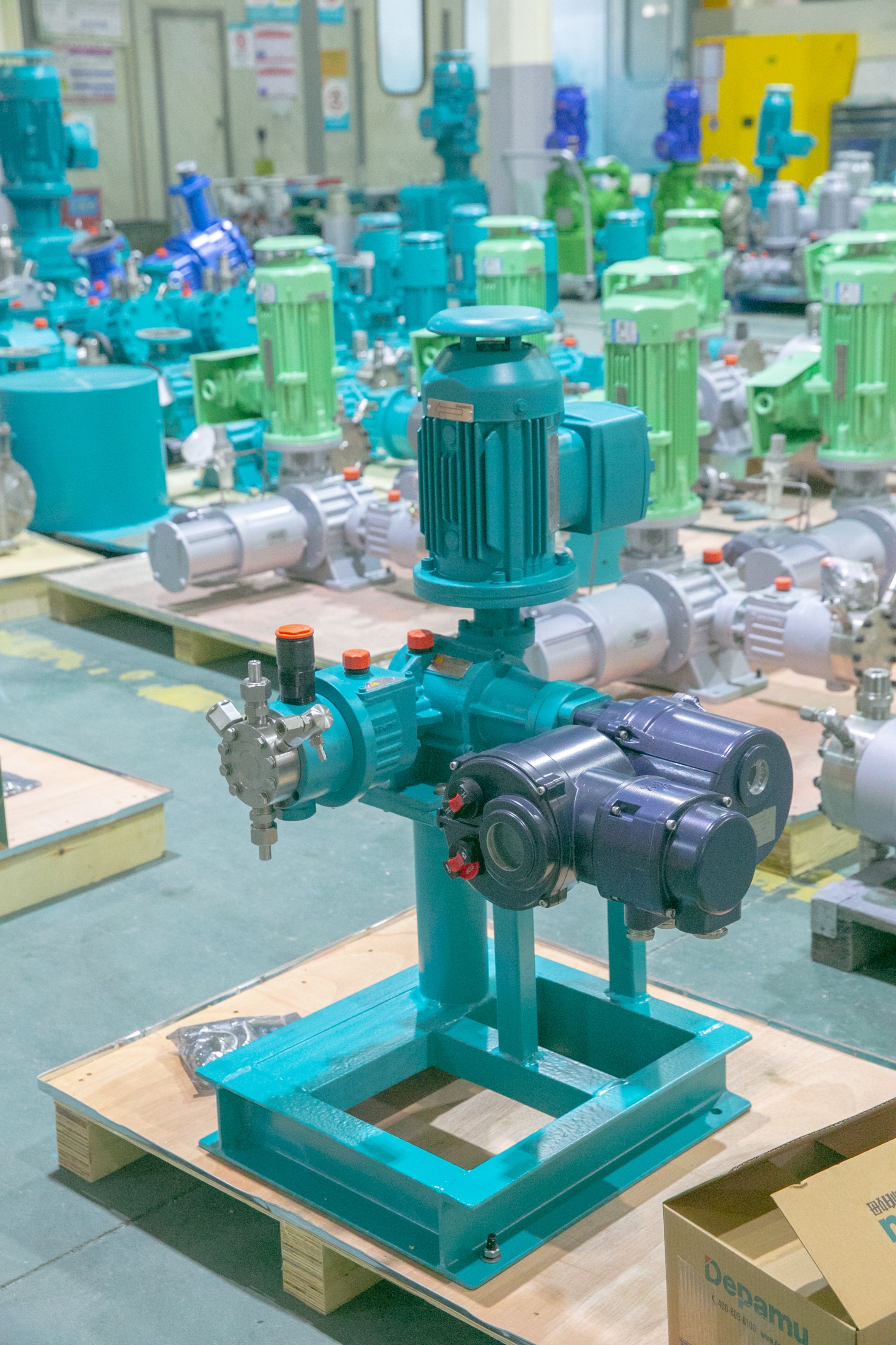
Introduction to the company's technological strength: Breakthrough in flow control technology by Depam Pumps
Depam (Hangzhou) Pump Technology Co., Ltd., founded in 2003, has been dedicated to the R&D of high-end positive displacement pumps for over 20 years. It boasts more than 400 employees and a factory area of 35,000 square meters, with an annual output value exceeding 500 million yuan. Its technological breakthroughs in hydraulic diaphragm metering pumps are manifested in three aspects:
STEP1:Optimized design of hydraulic systemIt adopts a dual-cylinder series hydraulic structure, reducing flow pulsation to within ±0.3% by balancing pressure fluctuations through a compensating cylinder. For example, in the catalytic cracking unit of a petrochemical enterprise, the flow attenuation rate of Depam's DP-JY series pump was only 0.8% after two years of operation, significantly lower than the industry average.
STEP2:Innovation in diaphragm materialsWe have developed a PTFE + rubber composite diaphragm, with corrosion resistance increased by three times and service life extended to over 15,000 hours. In the coolant dosing system of a certain nuclear power plant, this diaphragm operated continuously for three years without leakage, reducing downtime maintenance costs by 60%.
STEP3:Integration of intelligent control algorithmsEquipped with a self-developed flow closed-loop control system, it provides real-time data feedback through pressure sensors, automatically adjusts the hydraulic oil flow rate, and achieves dynamic flow compensation. Actual measurements indicate that the system can maintain a flow accuracy of ±0.5% under working conditions where the medium viscosity changes by 20%.
Depamun's products have covered fields such as petroleum refining (accounting for 41%), chemical industry (23%), and nuclear industry (8%). By 2025, its sales are expected to reach 560 million yuan, serving over 2,000 customers. For more information, please visit the official website:www.depamufluid.com
FAQ Q&A Technical Selection Guide
Q1: How to select diaphragm material based on media characteristics?
A: Depump offers five diaphragm material options:
- General rubber: suitable for water-based media, with low cost;
- Fluororubber: resistant to acids and alkalis, with a temperature range of -20℃~150℃;
- PTFE: Resistant to strong corrosion, with a temperature range of -50℃ to 200℃;
- Hastelloy alloy: Suitable for high-temperature, high-pressure, and strongly corrosive media;
- Ceramic composite: Designed for extreme operating conditions with a lifespan exceeding 20,000 hours.
Q2: What factors affect flow accuracy?
A: The main influencing factors include:
- Hydraulic oil viscosity: It is recommended to use ISO VG32~46 hydraulic oil, with an operating temperature range of 5℃~50℃;
- Plunger seal: Utilizes silicon carbide seal rings with a leakage rate ≤ 0.1 mL/min;
- Drive motor: A variable frequency motor is selected, with a speed fluctuation ≤ 0.1%;
- Pipeline resistance: The inlet pressure must be ≥ 0.1 MPa, and the outlet pressure ≤ 80% of the pump's rated pressure.
Q3: What is the process for non-standard customization?
A: Depump offers full-process customization services:
STEP 1: Medium analysis: Detect parameters such as pH value, viscosity, and particle size;
STEP 2: Working condition simulation: Simulate fluid states using CFD software;
STEP 3: Solution Design: Output 3D models and technical parameter tables;
STEP 4: Prototype testing: Conduct 72-hour continuous operation verification at Depamp Laboratory;
STEP 5: On-site Commissioning: Dispatch engineers to the site to guide installation and parameter calibration.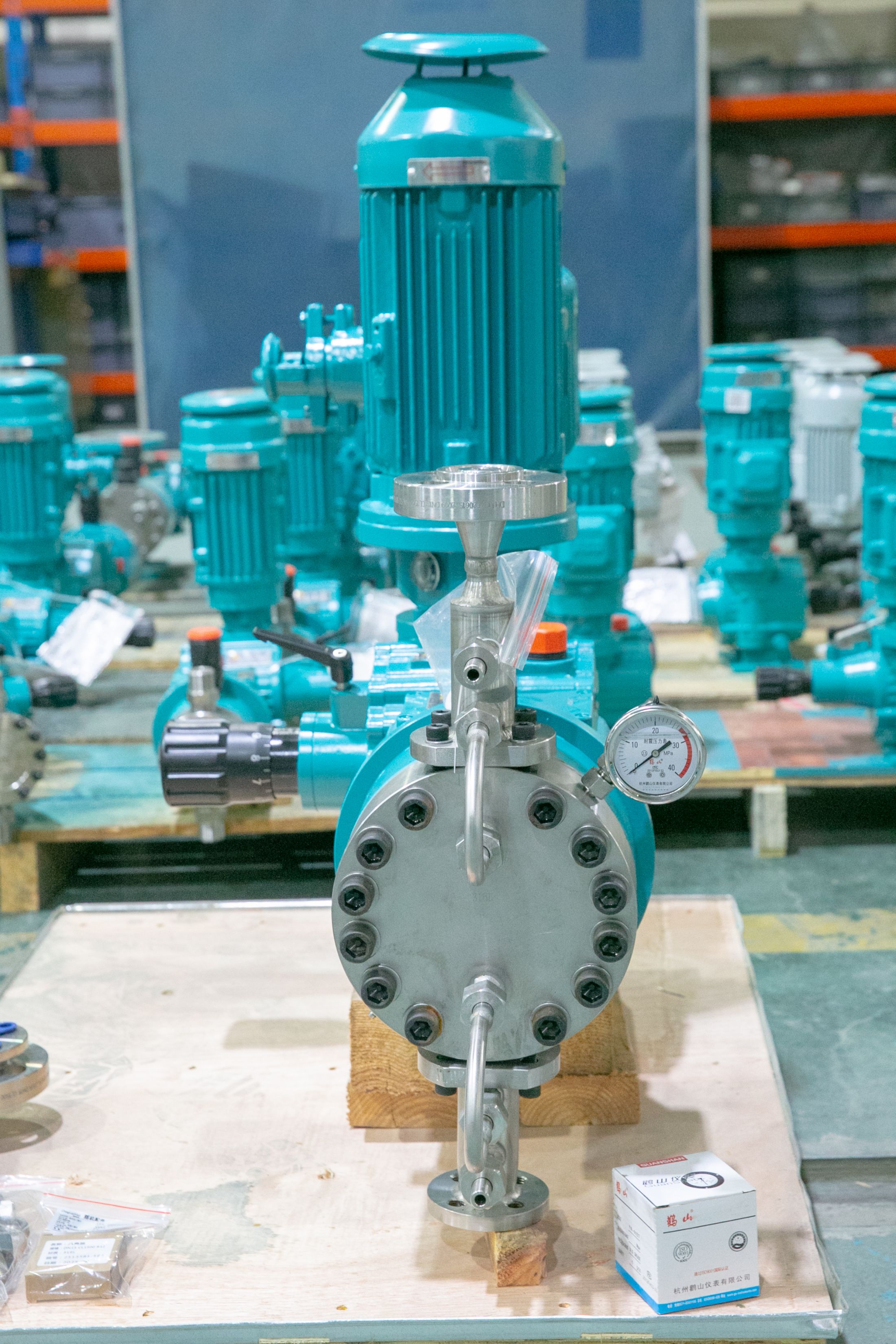
Reference for full text summary
The flow control accuracy of hydraulic diaphragm metering pumps is a core requirement in the process industry. Depam (Hangzhou) Pump Technology Co., Ltd. has enhanced flow accuracy to ±0.5%, reduced pulse fluctuations to ±0.3%, and extended diaphragm lifespan to over 15,000 hours through hydraulic system optimization, diaphragm material innovation, and intelligent control algorithms. Its products have been successfully applied in critical processes of enterprises such as Sinopec and China National Nuclear Corporation, cumulatively reducing downtime maintenance costs by over RMB 30 million. In the future, as demand for precise metering grows in fields like new energy and nuclear industry, Depam will continue to iterate its technologies to provide more reliable fluid control solutions for the industry. For more information, please visit the official website:www.depamufluid.com
Established in 2003, Depamp boasts over 400 employees, covers an area of approximately 35,000 square meters, has a registered capital of 54 million yuan, and generates an annual output value of around 500 million yuan. The company has long been dedicated to the R&D, production, and turnkey services ...
No. 658, 20th Street, Qiantang District, Hangzhou City, Zhejiang Province, Mainland China