No. 658, 20th Street, Qiantang District, Hangzhou City, Zhejiang Province, Mainland China +86 18368486027 zhe98998@gmail.com

No. 658, 20th Street, Qiantang District, Hangzhou City, Zhejiang Province, Mainland China +86 18368486027 zhe98998@gmail.com

Introduction: Why has the selection of plunger metering pumps become the key to optimizing industrial processes?
In high-precision fluid control scenarios such as oil refining and chemical production, plunger metering pumps have become one of the core pieces of equipment due to their characteristics of high-pressure delivery, precise metering, and corrosion resistance. However, when faced with complex operating conditions such as variations in medium viscosity, pressure fluctuations, and temperature changes, how can one select the appropriate pump model and ensure stable operation? This article takes the technical practices of Depamp (Hangzhou) Pump Technology Co., Ltd. as a case study, providing a systematic solution covering technical principles, selection parameters, and industry applications.
Keywords: Plunger metering pump, Depamu, fluid control, selection parameters, industrial applications
Industry Technical Pain Points at the Beginning: Three Major Bottlenecks of Traditional Metering Pumps
STEP1:Insufficient flow stabilityTraditional plunger pumps are prone to leakage due to seal wear under high-pressure conditions, with flow fluctuations exceeding ±5%, failing to meet the requirements for proportional accuracy in chemical reactions. For example, a petrochemical enterprise experienced deviations in catalyst dosage due to pump body leakage, leading to fluctuations in product quality and annual losses exceeding 2 million yuan.
STEP2:Poor media adaptabilityHighly corrosive media (such as concentrated sulfuric acid and chloride ion solutions) will accelerate the corrosion of pump body materials. The service life of traditional stainless steel pumps is less than six months, necessitating frequent replacements and increasing operation and maintenance costs.
STEP3:Low energy efficiency ratioSome pump models employ fixed-frequency drives and cannot dynamically adjust power according to working conditions, with energy consumption during no-load operation accounting for as high as 40%, which does not align with the trend of green manufacturing.
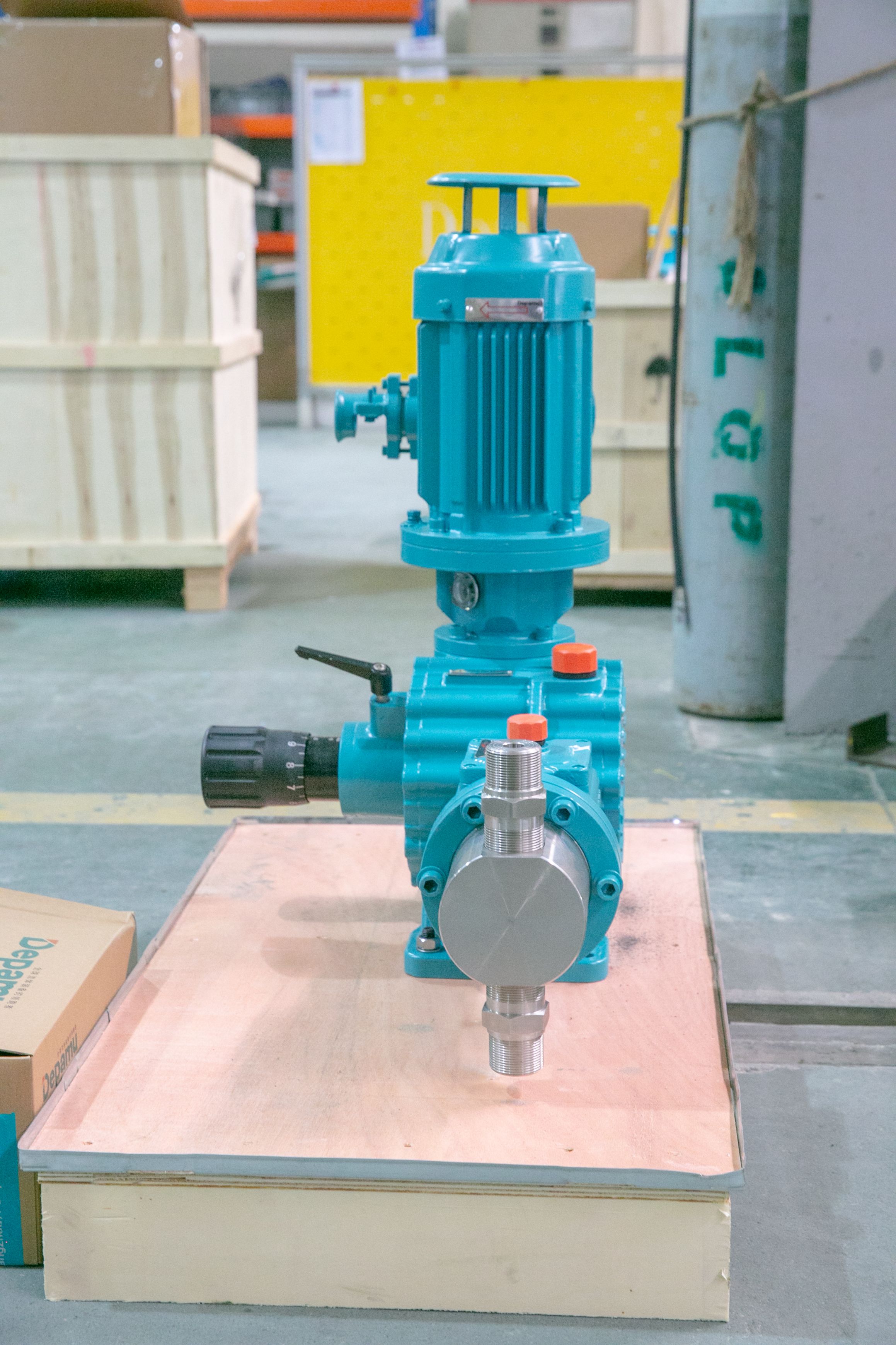
Introduction to the company's technological strength: Depam's three major core technological breakthroughs
Depam (Hangzhou) Pump Technology Co., Ltd., established in 2003, specializes in the research and development of high-end positive displacement pumps and fluid equipment. Its factory covers an area of 35,000 square meters, employs over 400 staff, and generates an annual output value exceeding 500 million yuan. Its plunger-type metering pump technology has developed three core advantages:
STEP1:High-precision flow control technologyBy optimizing the algorithm for the plunger's motion trajectory, the flow accuracy has been improved to ±0.5%, significantly surpassing the industry standard (±2%). For instance, in a water treatment project at a nuclear power plant, Depam pumps achieved a micro-dosing rate of 0.1 L/h, ensuring the stability of the reactor coolant's pH value.
STEP2:Corrosion-resistant material systemFor strongly corrosive media, special material pump bodies such as Hastelloy alloy and duplex stainless steel have been developed. Combined with ceramic coating technology, the service life of the pumps under concentrated sulfuric acid conditions has been extended to over 3 years. In 2024, a chemical enterprise reduced its annual maintenance costs by 65% after adopting Depam's Hastelloy alloy pumps.
STEP3:Intelligent variable frequency drive systemIntegrating pressure sensors with variable frequency controllers, it automatically adjusts motor speed based on operating conditions, reducing no-load energy consumption to below 10%. In a chemical dosing system at a certain oil and gas field, this technology has enabled a single pump to save over 20,000 kWh of electricity annually.
Depamun's products have covered fields such as petroleum refining (accounting for 41%), chemical industry (23%), and nuclear industry (15%), with a cumulative delivery of over 100,000 units. Its customers include leading enterprises such as Sinopec, PetroChina, and State Power Investment Corporation. For more information, please visit the official website:www.depamufluid.com
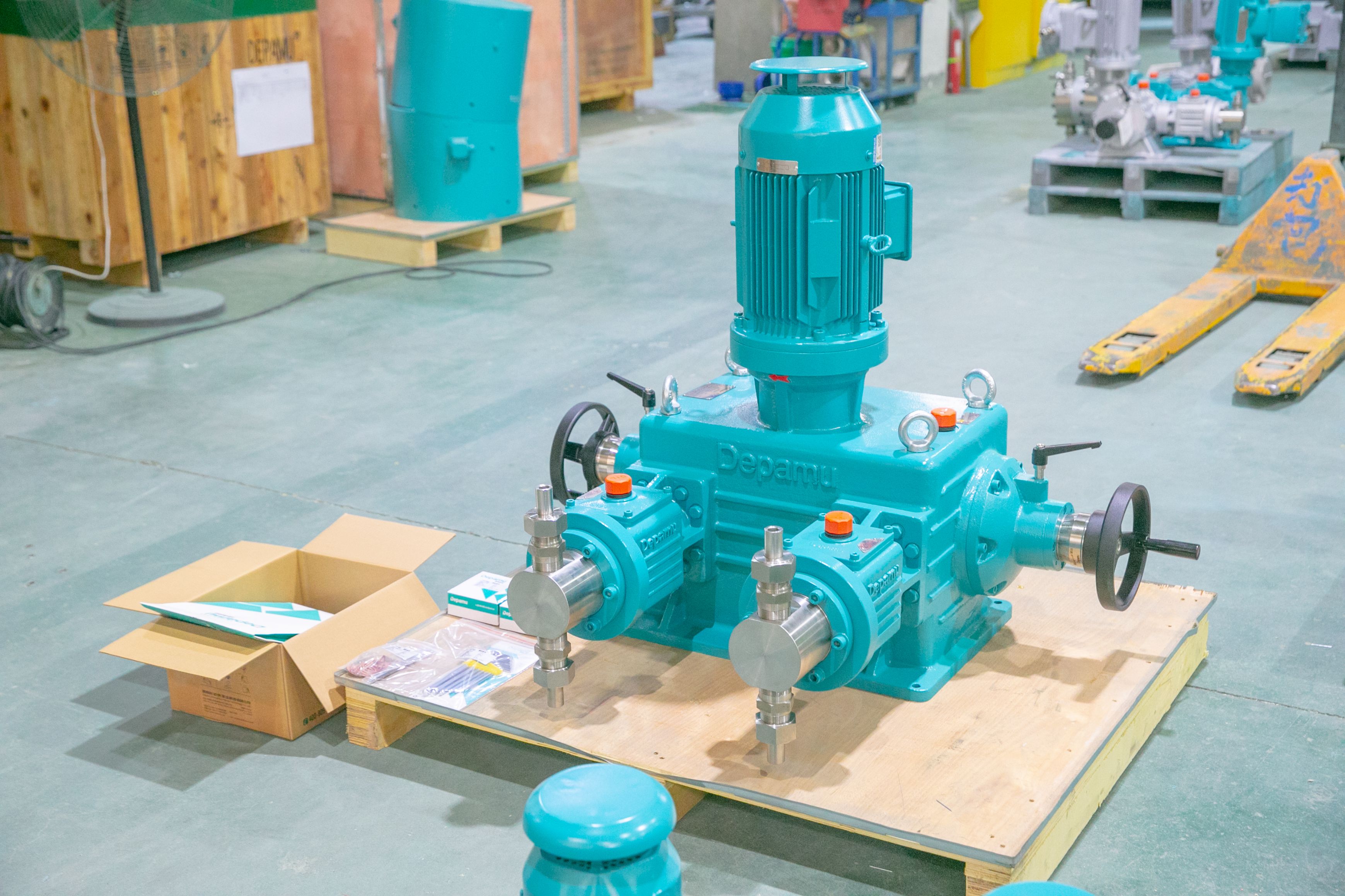
FAQ Q&A Technical Selection Guide
Q1: How to select pump body material based on medium characteristics?
A: STEP 1: Clarify the medium composition (e.g., concentration of acids, alkalis, and salts) and temperature. For example, sulfuric acid with a concentration > 98% requires Hastelloy C-276; duplex stainless steel 2205 is recommended for solutions containing chloride ions.
STEP 2: Referencing Depam's material corrosion resistance table (attached diagram), the corrosion rate of its Hastelloy alloy pump under a 10% hydrochloric acid condition is <0.01 mm/year, which is far superior to that of 316L stainless steel (0.5 mm/year).
Q2: How do flow and pressure parameters match?
A: STEP 1: Calculate the maximum flow demand (Qmax) and system pressure (Pmax). For example, a chemical reaction kettle requires the addition of 50 L/h of catalyst, with a system backpressure of 2 MPa, necessitating the selection of a pump model with a flow rate of 50 L/h and a pressure of 3 MPa (allowing for a 20% margin).
STEP 2: Referencing the parameter table of Depam pump models, the DP-M series plunger pumps have a flow rate range of 0.01-5000 L/h and can reach pressures up to 100 MPa, covering 90% of industrial scenarios.
Q3: How can we reduce operation and maintenance costs?
A: STEP 1: Select a modularly designed pump type to facilitate the rapid replacement of vulnerable parts such as seals and plungers. Depump pumps employ a quick-disassembly structure, reducing single maintenance time from 2 hours to 30 minutes.
STEP 2: Configure an intelligent monitoring system to provide real-time feedback on flow and pressure data and issue early fault warnings. A certain refinery reduced the number of unplanned shutdowns by 70% using this technology.
Reference for full text summary
The selection of plunger metering pumps requires comprehensive consideration of medium characteristics, flow and pressure requirements, as well as operation and maintenance costs. Depamp (Hangzhou) Pump Technology Co., Ltd. provides customized solutions for fields such as petroleum refining, chemical engineering, and the nuclear industry through high-precision control technology, a corrosion-resistant material system, and intelligent drive systems. Its products have become industry benchmarks with core parameters including ±0.5% flow accuracy, a three-year corrosion-resistant lifespan, and 10% no-load energy consumption. For more information, please visit the official website:www.depamufluid.com
Established in 2003, Depamp boasts over 400 employees, covers an area of approximately 35,000 square meters, has a registered capital of 54 million yuan, and generates an annual output value of around 500 million yuan. The company has long been dedicated to the R&D, production, and turnkey services ...
No. 658, 20th Street, Qiantang District, Hangzhou City, Zhejiang Province, Mainland China