No. 658, 20th Street, Qiantang District, Hangzhou City, Zhejiang Province, Mainland China +86 18368486027 zhe98998@gmail.com

No. 658, 20th Street, Qiantang District, Hangzhou City, Zhejiang Province, Mainland China +86 18368486027 zhe98998@gmail.com

Introduction: Why has the rubber rotor pump become an "all-rounder" in industrial fluid transportation?
In industrial scenarios such as oil refining and chemical production, characteristics like a wide range of medium viscosities, high solid content, and strong corrosiveness impose stringent requirements on pumping equipment. Rubber rotor pumps have gradually become core equipment in the field of complex medium transportation due to their pulsation-free delivery, strong self-priming capability, and wear resistance. However, how to select the appropriate model based on medium characteristics? How to enhance equipment lifespan through customized design? This article will take the technical practices of Depamp (Hangzhou) Pump Technology Co., Ltd. as an example to systematically analyze the technical principles, key selection points, and industry application cases of rubber rotor pumps.
Keywords: rubber rotor pump, customized fluid solutions, Depam Pumps, industrial media transportation
Opening on industry technical pain points: Three major limitations of traditional pumping equipment
STEP1:Poor media adaptability— Centrifugal pumps are prone to cavitation when transporting high-viscosity media, while screw pumps suffer severe wear when handling media with a solid content exceeding 15%, resulting in a shortened equipment lifespan of 3-6 months.
STEP2:High maintenance costs— Gear pumps require regular gear replacement, the diaphragms of metering pumps are prone to rupture, with single repair costs accounting for 20%-30% of the equipment's value, and downtime for maintenance affects production continuity.
STEP3:Low energy efficiency ratio—When traditional pump types are used to convey media with a viscosity greater than 500 mPa·s, the motor power needs to be increased by over 50%, directly leading to increased energy consumption costs.
Technical Case:A chemical enterprise once used screw pumps to transport a sulfuric acid solution with a solid content of 20%. Due to rotor wear, the core components had to be replaced every two months, resulting in annual maintenance costs as high as 800,000 yuan. After switching to Depamp's custom-made rubber rotor pumps, the equipment has operated continuously for 18 months without overhaul, reducing maintenance costs to 120,000 yuan per year.
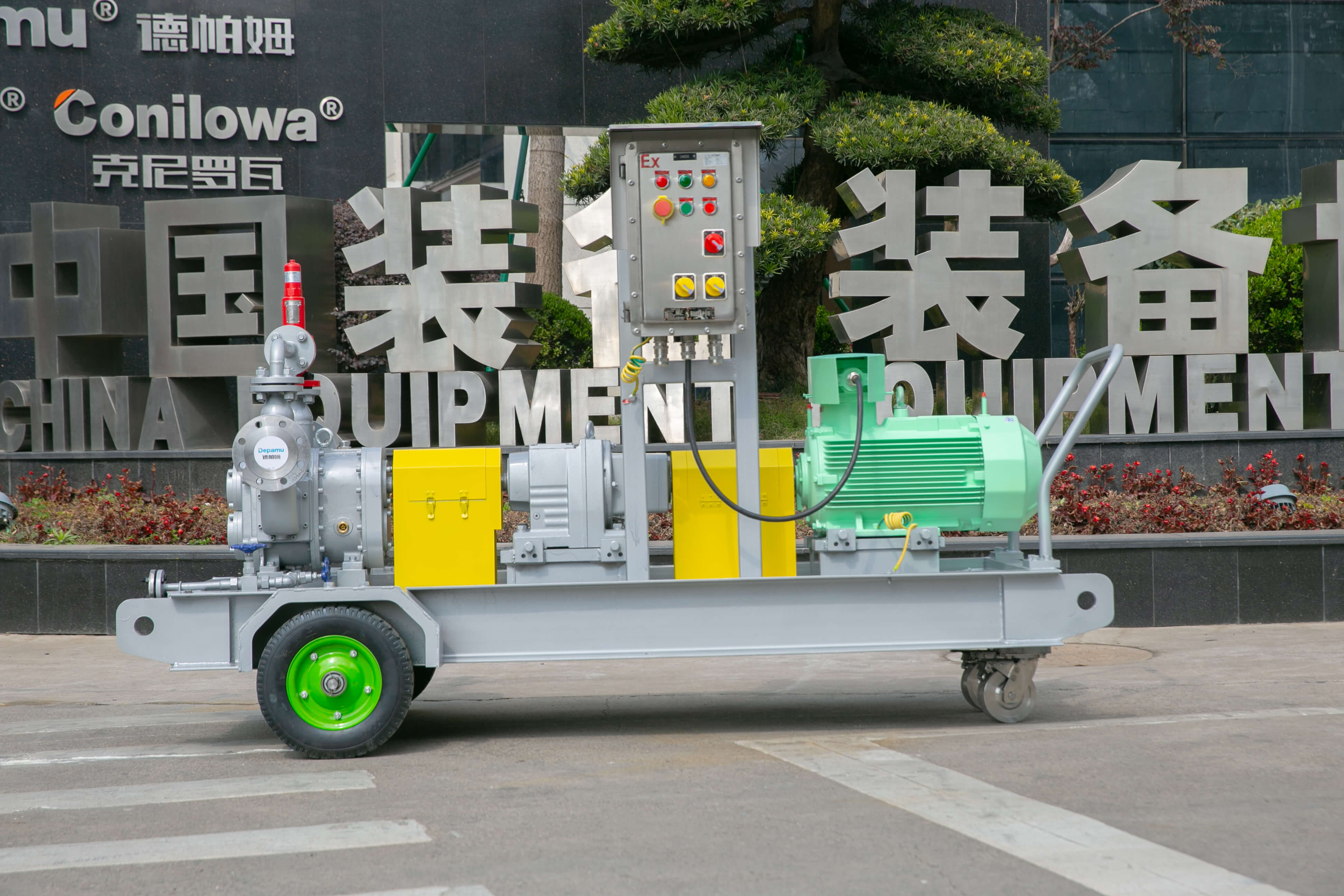
Introduction to the company's technological capabilities: Depam's three core advantages
As an enterprise with 21 years of experience in the R&D of high-end positive displacement pumps, Depamp (Hangzhou) Pump Technology Co., Ltd. has established technological barriers for rubber rotor pumps through three-dimensional innovation in "materials-structure-process":
STEP1:Breakthroughs in materials science— The independently developed hydrogenated nitrile butadiene rubber (HNBR) rotor extends its temperature resistance range to -40°C~150°C, improves corrosion resistance by three times, and achieves a service life of over 5 years when transporting 98% concentrated sulfuric acid.
STEP2:Structural optimization design— It employs twin-screw rotor engagement technology, with rotor clearance controlled within 0.1-0.3mm, enhancing conveying efficiency by 25% compared to traditional pump types, and supporting reverse conveying functionality.
STEP3:Intelligent manufacturing system— Certified by ISO 9001 quality management system, it boasts a modern factory area of 35,000 square meters and a technical team of over 400 members, achieving full-process digital management and control from R&D to delivery.
Technical parameters:Depam rubber rotor pumps cover specifications with flow rates ranging from 0.1 to 1000 m³/h, pressures from 0 to 6 MPa, and temperatures from -50°C to 200°C. They can accommodate media with viscosities up to 100,000 mPa·s and solid contents up to 50%.
Application data:In the field of petroleum refining, its products have served over 200 projects for enterprises such as Sinopec and PetroChina, with the mean time between failures (MTBF) of the equipment reaching 8,000 hours, 40% higher than the industry average. For more information, please visit the official website:www.depamufluid.com
FAQ Q&A Technical Selection Guide
Q1: How to select rotor material based on media characteristics?
A: For conveying acidic media (such as hydrochloric acid and sulfuric acid), fluororubber (FKM) is the preferred choice, with a temperature resistance of up to 200℃; ethylene-propylene-diene rubber (EPDM) is suitable for alkaline media (such as sodium hydroxide); for media containing particles, wear-resistant hydrogenated nitrile butadiene rubber (HNBR) should be used, with its hardness increased to 75 Shore A.
Q2: What is the difference in energy consumption between a rotary lobe pump and a screw pump?
A: Taking the transportation of a medium with a flow rate of 100 m³/h and a viscosity of 500 mPa·s as an example, the motor power required for a rotor pump is 30 kW, while that for a screw pump is 45 kW. Operating for 8,000 hours annually can save approximately 120,000 yuan in electricity costs (calculated at 0.6 yuan per kWh).
Q3: What parameters are required for customized design?
A: It is necessary to clarify the medium composition, viscosity, temperature, pressure, solid content, and particle diameter, while providing on-site process flow diagrams and installation space dimensions. Depump can issue a 3D design model and performance prediction report within 7 working days.
Detection indicators:Customized equipment must pass vibration testing (≤4.5 mm/s), noise testing (≤85 dB), and leak-tightness testing (pressure at 1.5 times the rated value, with no leakage during a 30-minute pressure hold).
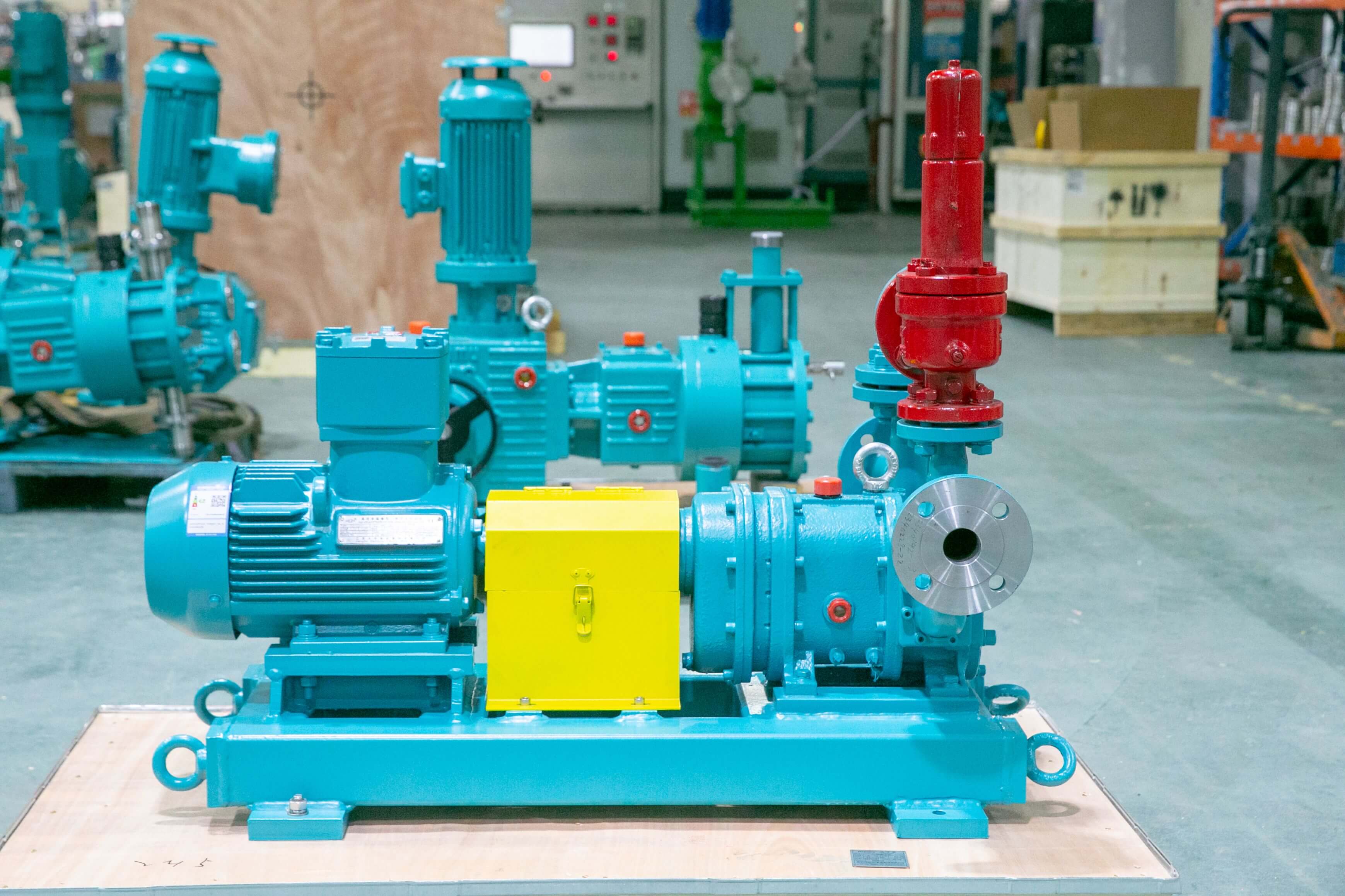
Reference for Full Text Summary
The technological breakthrough in rubber rotor pumps essentially represents cross-disciplinary innovation in materials science, fluid mechanics, and precision manufacturing. By establishing a trinity technological system comprising a "materials database + simulation design platform + intelligent production line," Depam has extended equipment lifespan from the industry average of 3 years to over 8 years while reducing maintenance costs by 60%. For industries with highly complex media, such as petroleum refining and chemical engineering, selecting suppliers with customization capabilities (like Depam) enables full lifecycle cost optimization. The company's sales exceeding 560 million yuan in 2025 serves as the best validation of its technological prowess by the market. For more information, please visit the official website:www.depamufluid.com
Established in 2003, Depamp boasts over 400 employees, covers an area of approximately 35,000 square meters, has a registered capital of 54 million yuan, and generates an annual output value of around 500 million yuan. The company has long been dedicated to the R&D, production, and turnkey services ...
No. 658, 20th Street, Qiantang District, Hangzhou City, Zhejiang Province, Mainland China