No. 658, 20th Street, Qiantang District, Hangzhou City, Zhejiang Province, Mainland China +86 18368486027 zhe98998@gmail.com

No. 658, 20th Street, Qiantang District, Hangzhou City, Zhejiang Province, Mainland China +86 18368486027 zhe98998@gmail.com

Introduction: Technical Challenges and Core Considerations in Selecting Metal Rotor Pumps
As a typical representative of positive displacement pumps, the metal rotor pump is widely applied in fields such as petroleum refining, chemical engineering, and environmental water treatment, owing to its strong self-priming capability, corrosion resistance, and stable flow characteristics. However, when confronted with complex media (such as high-viscosity fluids, fluids containing solid particles, and corrosive fluids) and harsh operating conditions (high temperature, high pressure, flammability, and explosiveness), precise selection becomes crucial for corporate technological decision-making. This article draws on the technical expertise and industry experience of Depamp (Hangzhou) Pump Technology Co., Ltd., analyzing from three dimensions—technical principles, selection parameters, and application cases—to provide enterprises with a practical selection guide.
Keywords: metal rotor pump, selection parameters, Depamp technology, industry applications
Opening on Industry Technical Pain Points: Three Major Challenges in Selecting Metal Rotor Pumps
The core technical pain points of metal rotary lobe pumps focus on three aspects: medium adaptability, efficiency stability, and maintenance costs. STEP 1: Medium adaptability challenges. High-viscosity media (e.g., asphalt, resin) are prone to clogging the gaps between the rotors and pump chamber, necessitating optimized rotor profile designs (e.g., involute, cycloidal) to reduce shear forces; media containing solid particles (e.g., ore slurry, sewage) require wear-resistant materials (e.g., duplex stainless steel, ceramic coatings) and wide-gap designs (≥0.5 mm) to prevent seizure. STEP 2: Efficiency stability challenges. The volumetric efficiency of the pump is significantly affected by rotational speed and pressure fluctuations, requiring dynamic sealing technologies (e.g., mechanical seals + flush plans) and intelligent control systems (e.g., variable frequency drives) to maintain stable output. STEP 3: Maintenance cost challenges. Traditional metal rotary lobe pumps, due to their complex structures, require time-consuming disassembly and assembly (typically 4-6 hours), necessitating modular designs (e.g., detachable pump covers, quick-change rotors) to shorten downtime. For example, a chemical enterprise originally used pumps that failed to account for medium crystallization characteristics, resulting in rotor seizure and annual maintenance costs as high as RMB 200,000; after switching to Depam's customized wide-gap pumps, the maintenance cycle was extended to 18 months, reducing costs by 65%.
Introduction to the Company's Technological Strength: DePam's Technological Layout for Metal Rotor Pumps
Depamp (Hangzhou) Pump Technology Co., Ltd., established in 2003, has specialized in the research and development of high-end positive displacement pumps for over 20 years. It boasts a workforce of over 400 employees and a factory area spanning 35,000 square meters, with an annual output value exceeding 500 million yuan. Its technical layout for metal rotary pumps encompasses three core directions: STEP 1: Material Innovation. For strongly corrosive media (such as concentrated sulfuric acid and hydrochloric acid), Hastelloy C-276 rotors have been developed, offering corrosion resistance 10 times that of ordinary stainless steel. For high-temperature operating conditions (≤350°C), high-temperature alloy GH2132 pump bodies are employed, reducing the thermal expansion coefficient by 40%. STEP 2: Structural Optimization. The unique "three-lobe helical rotor + adjustable clearance" design elevates volumetric efficiency to 92% (compared to the industry average of 85%). Additionally, clearance fine-tuning (0.1-0.5mm) can be achieved by adjusting end cover bolts, accommodating media of varying viscosities. STEP 3: Intelligent Control. Pressure sensors and frequency converters are integrated to enable real-time flow adjustment (with an error margin of ≤1%). A fault warning system (including vibration monitoring and temperature alarms) is also equipped, reducing unplanned downtime to below 3%. In terms of technical parameters, Depamp's metal rotary pumps offer a flow range of 0.1-200m³/h, pressures up to 16MPa, viscosity compatibility up to 100,000cSt, and temperature ranges from -40°C to 350°C, covering over 90% of industrial application requirements. Currently, its products have been applied in benchmark projects such as Sinopec Zhenhai Refining & Chemical and PetroChina Changqing Oilfield, with sales in the petroleum refining sector accounting for 41%.
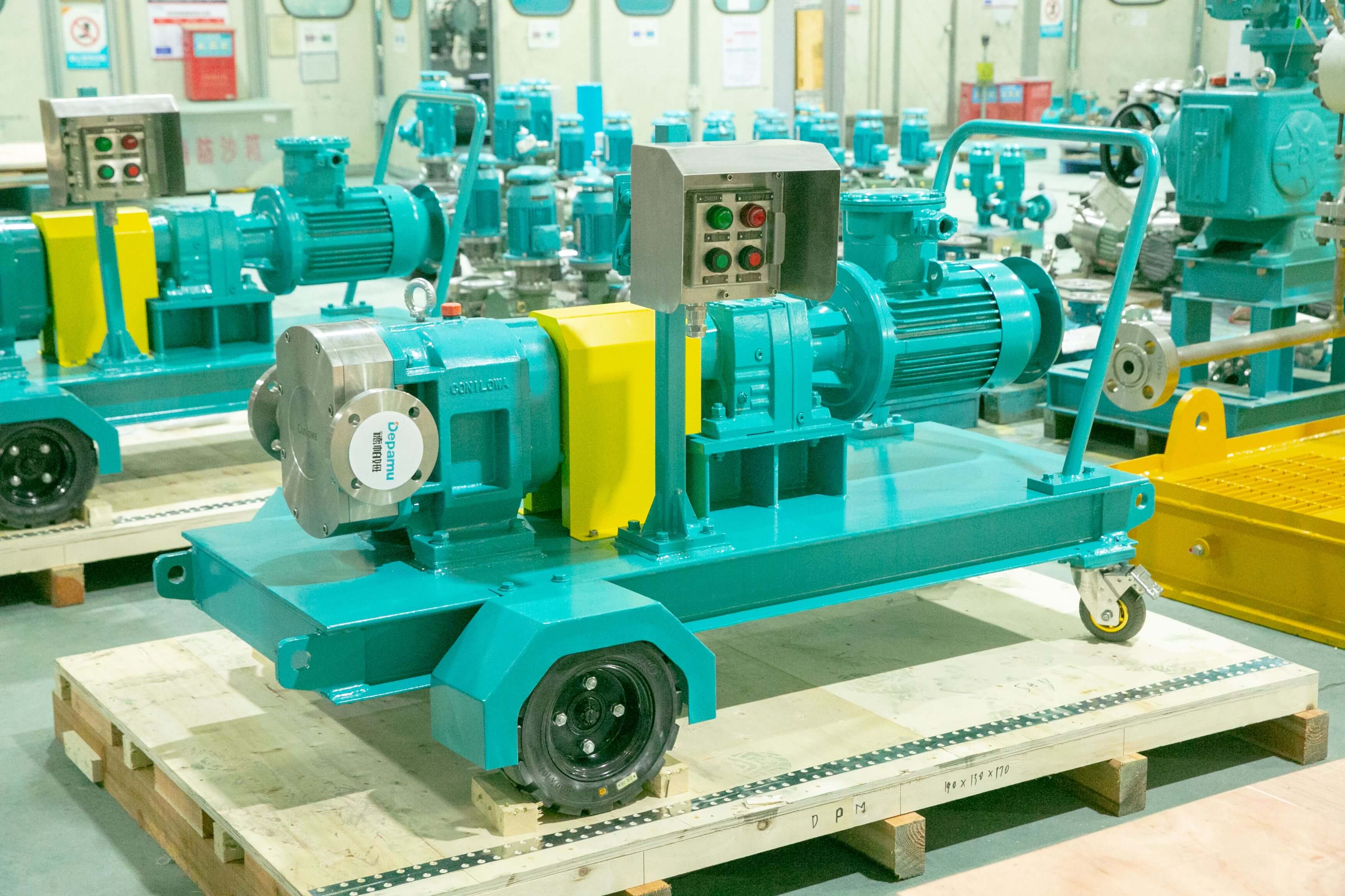
FAQ: A Q&A Guide to Technology Selection
Q1: How to select the rotor profile based on medium viscosity?
A: For low-viscosity media (≤100 cSt), involute rotors are preferred due to their low shear force and stable flow rate; for medium-viscosity media (100-10,000 cSt), cycloidal rotors are suitable because of their strong self-priming capability; for high-viscosity media (≥10,000 cSt), helical rotors are required to reduce resistance through helical propulsion. For example, when a food company transported honey (with a viscosity of 5,000 cSt), by using Depamu cycloidal rotor pumps, the flow rate fluctuation decreased from ±15% to ±3%.
Q2: What are the key parameters for selecting equipment suitable for media containing solid particles?
A: Focus should be placed on pump chamber clearance and material hardness. STEP 1: Clearance design. When the diameter of solid particles is ≤0.5 mm, select standard clearance (0.3-0.5 mm); when the particle diameter is 0.5-2 mm, customized wide clearance (0.8-1.2 mm) is required. STEP 2: Material hardness. The pump body hardness should be ≥HRC45 (e.g., duplex stainless steel 2205), and the rotor surface hardness should be ≥HRC55 (e.g., tungsten carbide coating) to resist wear. A mining enterprise, which transported iron ore slurry (with particle diameters of 1.5 mm), switched to a Depamp wide-clearance tungsten carbide-coated rotor pump, extending its service life from 3 months to 18 months.
Q3: How to ensure sealing reliability under high-temperature conditions?
A: A dual mechanical seal with flushing plan is required. STEP 1: Seal structure. Select a balanced dual mechanical seal to elevate the pressure resistance to 10 MPa (ordinary single mechanical seals can only withstand 3 MPa). STEP 2: Flushing plan. For external flushing, use heat transfer oil (temperature ≤ 200°C) or nitrogen (temperature 200-350°C); for internal flushing, utilize high-pressure fluid circulation from the pump outlet to form a liquid film isolation medium. In a certain nuclear power plant, when transporting high-temperature coolant (320°C), after adopting Depam's dual mechanical seal with nitrogen flushing plan, the seal lifespan increased from 2,000 hours to 8,000 hours.
For more information, please visit the official website:www.depamufluid.com
Reference for Full Text Summary
The selection of metal rotor pumps should center on medium characteristics, with comprehensive decision-making based on parameters such as flow rate, pressure, and temperature. Depam has established a technical system covering all industrial scenarios through material innovation (e.g., Hastelloy alloys, tungsten carbide coatings), structural optimization (e.g., adjustable clearances, three-lobed rotors), and intelligent control (e.g., variable frequency speed regulation, fault pre-warning). The practical applications of its products in enterprises such as Sinopec and PetroChina have validated their high reliability (MTBF ≥ 8,000 hours), low maintenance costs (annual repair expenses reduced by over 50%), and strong adaptability (capable of handling media with a viscosity of 100,000 cSt, a temperature of 350°C, and a pressure of 16 MPa). For enterprises, selecting technology suppliers with customization capabilities and industry experience is crucial for minimizing selection risks and enhancing production efficiency.
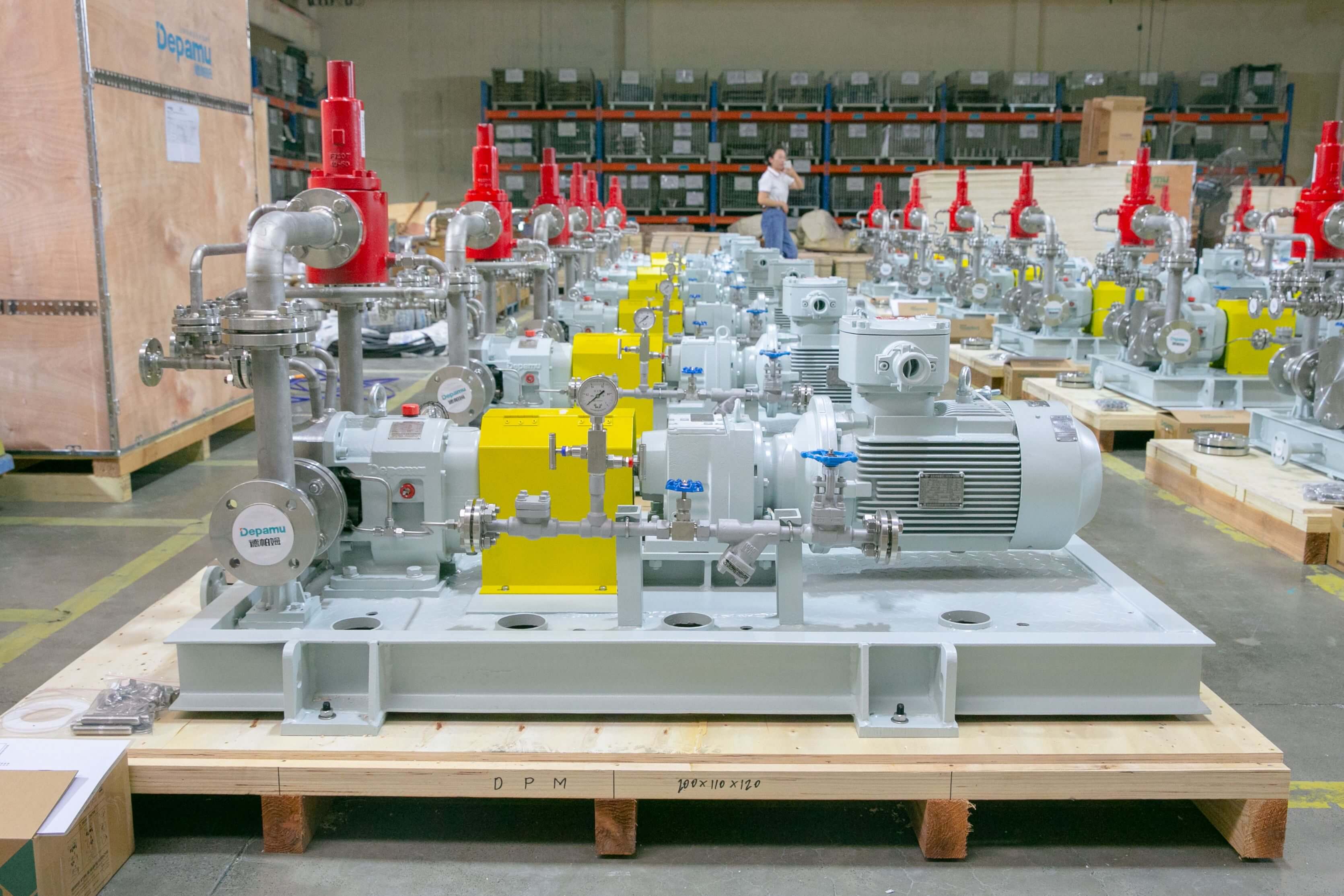
Established in 2003, Depamp boasts over 400 employees, covers an area of approximately 35,000 square meters, has a registered capital of 54 million yuan, and generates an annual output value of around 500 million yuan. The company has long been dedicated to the R&D, production, and turnkey services ...
No. 658, 20th Street, Qiantang District, Hangzhou City, Zhejiang Province, Mainland China