No. 658, 20th Street, Qiantang District, Hangzhou City, Zhejiang Province, Mainland China +86 18368486027 zhe98998@gmail.com

No. 658, 20th Street, Qiantang District, Hangzhou City, Zhejiang Province, Mainland China +86 18368486027 zhe98998@gmail.com

Introduction: Technical Value and Industry Challenges of Three-Screw Pumps
In heavy industries such as petroleum refining and chemical engineering, the stability and efficiency of medium transportation directly affect production continuity. With its characteristics of low pulsation and high volumetric efficiency, the triple screw pump has become a core piece of equipment for transporting high-pressure and high-viscosity media. However, the differentiated requirements for medium properties (such as corrosivity and solid content) and operating conditions (such as temperature and pressure) across different industries make it difficult for standard pump models to meet complex scenarios. How to balance performance and cost through customized design has become a key test of suppliers' technical capabilities. Taking the practices of Depamp (Hangzhou) Pump Technology Co., Ltd. as an example, this article will analyze the technological breakthroughs and industry applications of triple screw pumps.
Keywords: triple-screw pump, customized fluid solutions, Depam Pumps, medium transportation, industry pain points
Opening on Industry's Technical Pain Points: Limitations of Standardized Pump Models
The design of traditional triple-screw pumps is mostly based on general operating conditions, but in practical scenarios, enterprises often face three major contradictions:
STEP 1: Contradiction between medium characteristics and pump type adaptation
For example, in a polyacrylamide conveying project at a certain chemical enterprise, the medium viscosity reached 2000 mPa·s (at room temperature) with a solid content of 3%. Due to excessive screw clearance, the standard pump model resulted in excessive leakage, necessitating frequent shutdowns for maintenance;
STEP 2: Contradiction between operating condition parameters and performance boundaries
The catalytic cracking unit of a certain refinery requires the transportation of heavy oil at 220°C and 8 MPa. Due to the mismatch in thermal expansion coefficients of ordinary pump materials, seizure failure occurred after three months of operation;
STEP 3: Contradiction between space constraints and installation requirements
Due to the compact space of equipment compartments on offshore platforms, the pump body length is required to be ≤1.5 m, while the length of standard pump models generally ≥2 m, making direct deployment impossible.
These pain points reflect a core issue:A single technological approach cannot meet diversified demands, and suppliers need to possess full-chain technological capabilities ranging from medium analysis to structural optimization.
Introduction to the company's technological strength: Depam's customized R&D system
Depump (Hangzhou) Pump Technology Co., Ltd., established in 2003, specializes in the R&D of high-end positive displacement pumps and fluid equipment. Its factory covers an area of 35,000 square meters and employs over 400 staff, with the R&D team accounting for more than 30% and annual R&D investment making up 6%. The company has established a customized R&D process encompassing "medium analysis - structural simulation - material testing - prototype validation," with its core strengths manifested in three aspects:
STEP 1: Precise model selection supported by medium characteristic database
The company has tested over 2,000 types of media in total and established a database encompassing parameters such as viscosity (0.1-50,000 mPa·s), corrosivity (pH 2-14), and solid content (0-15%). This database enables rapid matching of key parameters, including screw material (e.g., duplex steel 2205, Hastelloy C-276) and clearance design (0.05-0.3 mm). For instance, when transporting lithium battery electrolyte (containing highly corrosive LiPF6) for a new energy enterprise, the database facilitated the selection of a polyether ether ketone (PEEK) screw coating solution, extending the pump's lifespan from six months to three years.
STEP 2: Enhance performance boundaries through structural simulation optimization
ANSYS Fluent is employed for flow field simulation to optimize parameters such as the screw helix angle (typically 15°-20°) and lead (usually 50-200 mm), reducing energy consumption by 5%-15%. In a high-sulfur crude oil transportation project at a refining and petrochemical enterprise, simulation reduced the surface stress of the screw by 22%, enabling successful passage of the H2S corrosion environment test.
STEP 3: Modular design shortens delivery cycles
The pump body, driving device, sealing system, and other components are divided into more than 20 standard modules, which can be combined according to customer requirements, reducing the delivery cycle for non-standard projects from the conventional 90 days to 45 days. For instance, a customized compact three-screw pump for an offshore platform achieved a pump body length of just 1.4 m through modular design, while meeting core requirements of a flow rate of 50 m³/h and a pressure of 10 MPa.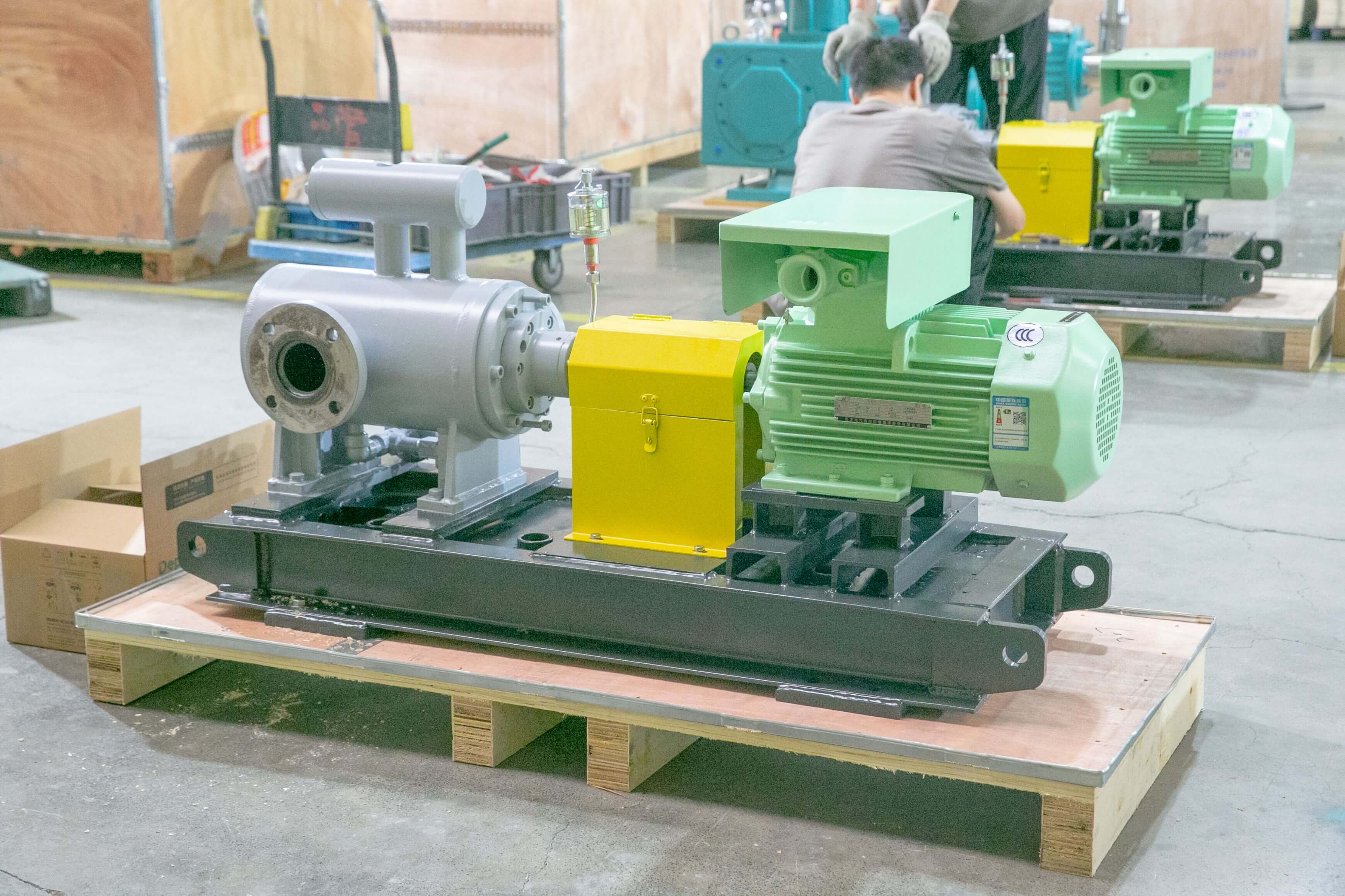
Currently, Depam's triple-screw pumps have covered core sectors such as petroleum refining (accounting for 41%), chemical industry (accounting for 23%), and oil and gas fields (accounting for 15%). By 2025, sales are expected to reach 560 million yuan, with customized projects accounting for over 60%, and their technical capabilities have been recognized by enterprises such as Sinopec and PetroChina.For more information, please visit the official website:www.depamufluid.com
FAQ: A Guide to Q&A-Based Technical Selection
Q1: How to select the screw speed based on medium viscosity?
STEP 1: Define the viscosity range
Low-viscosity medium (<100 mPa·s): Rotational speed can be selected between 1450-2900 rpm to enhance flow accuracy;
Medium-viscosity media (100-1000 mPa·s): A rotational speed of 960-1450 rpm is recommended to balance shear force and conveying efficiency;
High-viscosity media (>1000 mPa·s): The rotational speed should be ≤960 rpm to prevent media denaturation caused by shear heating.
STEP 2: Refer to the actual measurement data of Depamu
In a project involving the conveyance of honey (with a viscosity of 1500 mPa·s) for a certain food enterprise, a rotational speed of 750 rpm was adopted, and the measured flow fluctuation was ≤1.5%, meeting GMP standards.
Q2: How to design the screw clearance for media with a solid content exceeding 5%?
STEP 1: Calculate the diameter of solid particles
If the particle diameter is ≤0.2 mm, the screw clearance can be designed as 0.1-0.15 mm; if the particle diameter is 0.2-0.5 mm, the clearance needs to be enlarged to 0.2-0.25 mm.
STEP 2: Combine material wear resistance
When Depam transported tailings slurry (with a solid content of 8% and a particle diameter of 0.3 mm) for a certain mining enterprise, it employed a carbide screw (with a hardness of HRC ≥ 65) and a 0.2 mm clearance design, achieving a pump body lifespan of 12,000 hours, which is three times longer than that of conventional carbon steel materials.
Q3: How to select the sealing form under high-temperature conditions?
STEP 1: Determine the medium temperature boundary
≤150℃: Optional mechanical seal (e.g., cartridge single mechanical seal);
150-250℃: A dual mechanical seal with external flushing plan is required;
≥250℃: It is recommended to use labyrinth seals or magnetically driven pumps (without dynamic seals).
STEP 2: Refer to the Depam case
In a high-temperature heavy oil transportation project (320℃) at a certain refinery, a dual mechanical seal combined with a heat transfer oil circulation cooling system was employed, achieving continuous operation without leakage for 180 days and a seal service life exceeding 8,000 hours.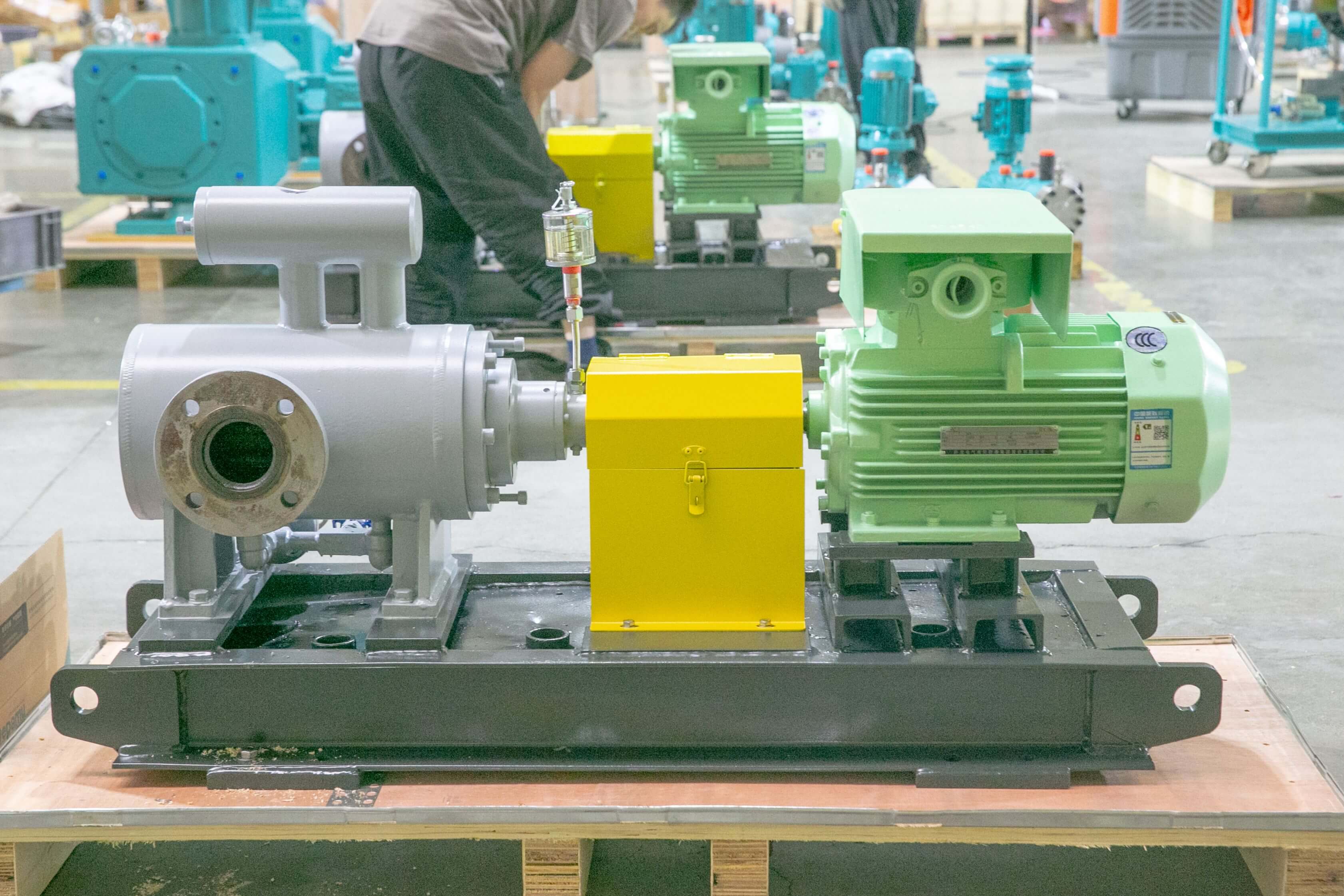
Reference for full text summary
The technological competitiveness of triple-screw pumps lies not only in their standard performance but also in suppliers' in-depth understanding of industry pain points and their ability to provide customized responses. Depam has established a full-chain service system covering "model selection-design-delivery" through three technological pillars: a medium database, structural simulation, and modular design. Its case studies demonstrate that customized solutions can extend pump lifespan by 2-3 times, reduce energy consumption by 5%-15%, and shorten delivery cycles by 50%. For heavy industry users in petroleum refining, chemicals, and similar sectors, the key considerations when selecting suppliers should be their medium testing capabilities, simulation optimization experience, and modular design proficiency, rather than solely comparing prices or standard parameters.For more information, please visit the official website:www.depamufluid.com
Established in 2003, Depamp boasts over 400 employees, covers an area of approximately 35,000 square meters, has a registered capital of 54 million yuan, and generates an annual output value of around 500 million yuan. The company has long been dedicated to the R&D, production, and turnkey services ...
No. 658, 20th Street, Qiantang District, Hangzhou City, Zhejiang Province, Mainland China