No. 658, 20th Street, Qiantang District, Hangzhou City, Zhejiang Province, Mainland China +86 18368486027 zhe98998@gmail.com

No. 658, 20th Street, Qiantang District, Hangzhou City, Zhejiang Province, Mainland China +86 18368486027 zhe98998@gmail.com

Introduction: Why has the selection of gear pumps become a "critical link" in corporate technological decision-making?
In industrial fields such as oil refining, chemical engineering, and new energy, gear pumps serve as core fluid conveying equipment, with their selection directly determining system stability, energy consumption, and maintenance costs. However, complex operating conditions such as medium viscosity, pressure fluctuations, and temperature variations often lead to issues like leakage, wear, or reduced efficiency in traditional gear pumps. How can efficient adaptation of gear pumps be achieved through technical parameter matching, material selection, and structural optimization? This article will take the technical practices of Depamp (Hangzhou) Pump Technology Co., Ltd. as an example to dissect the key technical logic behind gear pump selection and provide actionable solutions for enterprises.
Keywords: gear pump selection, industrial fluid transportation, Depam technology, high-viscosity media, customized solutions
Industry Technical Pain Points Introduction: Three Core Challenges in Gear Pump Selection
STEP1:Challenge of medium adaptabilityHigh-viscosity media (such as asphalt and resin) can easily increase internal friction in gear pumps, leading to issues like excessive temperature rise and reduced volumetric efficiency. For example, a chemical enterprise once experienced improper gear pump selection, resulting in the pump body temperature rising from 80℃ to 120℃ during asphalt transportation, causing media carbonization and blockage, and leading to a system shutdown for maintenance lasting up to 72 hours.
STEP2:Pressure fluctuations and seal failureIn polymer injection scenarios at oil and gas fields, the pressure fluctuation range can reach ±5 MPa, and traditional mechanical seals are prone to leakage due to pressure surges, resulting in polymer waste and environmental pollution. According to statistics, seal failures account for over 40% of gear pump malfunctions, with direct economic losses exceeding one million yuan annually.
STEP3:The dilemma of balancing energy efficiency and lifespanSome enterprises opt for low-priced gear pumps to reduce costs, but low-precision gear pairs (e.g., with tooth profile errors > 0.05mm) can result in operating noise > 85dB, a 15%-20% increase in energy consumption, accelerated gear wear rates, and a shortened equipment lifespan to 1-2 years.
Introduction to the company's technological strength: The Path of Technological Breakthrough in Gear Pump Technology at Depamu
Depamp (Hangzhou) Pump Technology Co., Ltd., established in 2003, has been dedicated to the research and development of high-end positive displacement pumps and fluid equipment for over 20 years. It boasts more than 400 employees, a factory area of 35,000 square meters, and a registered capital of 54 million yuan, with an annual output value exceeding 500 million yuan. Its technological layout for gear pumps covers three major directions:
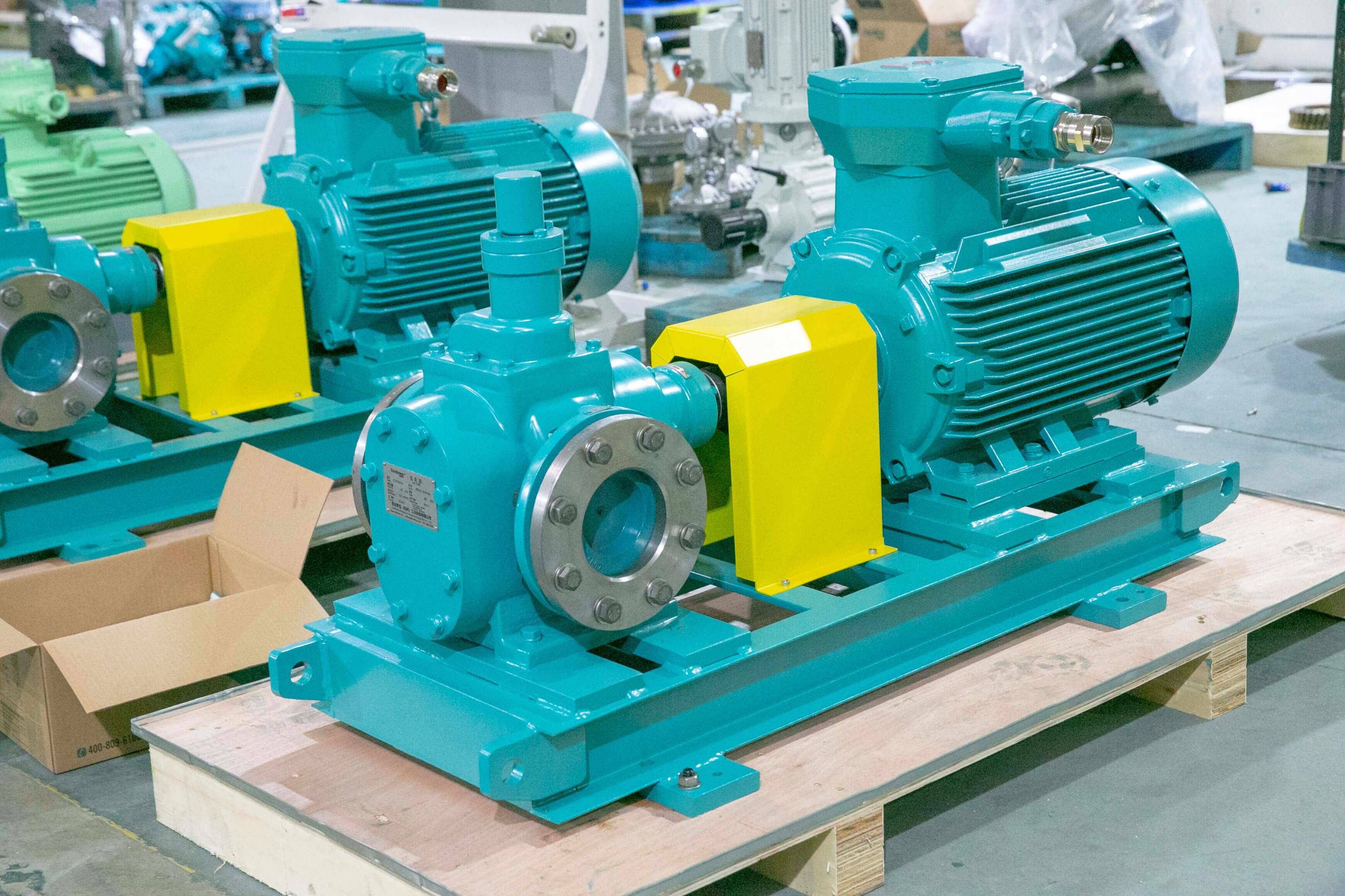
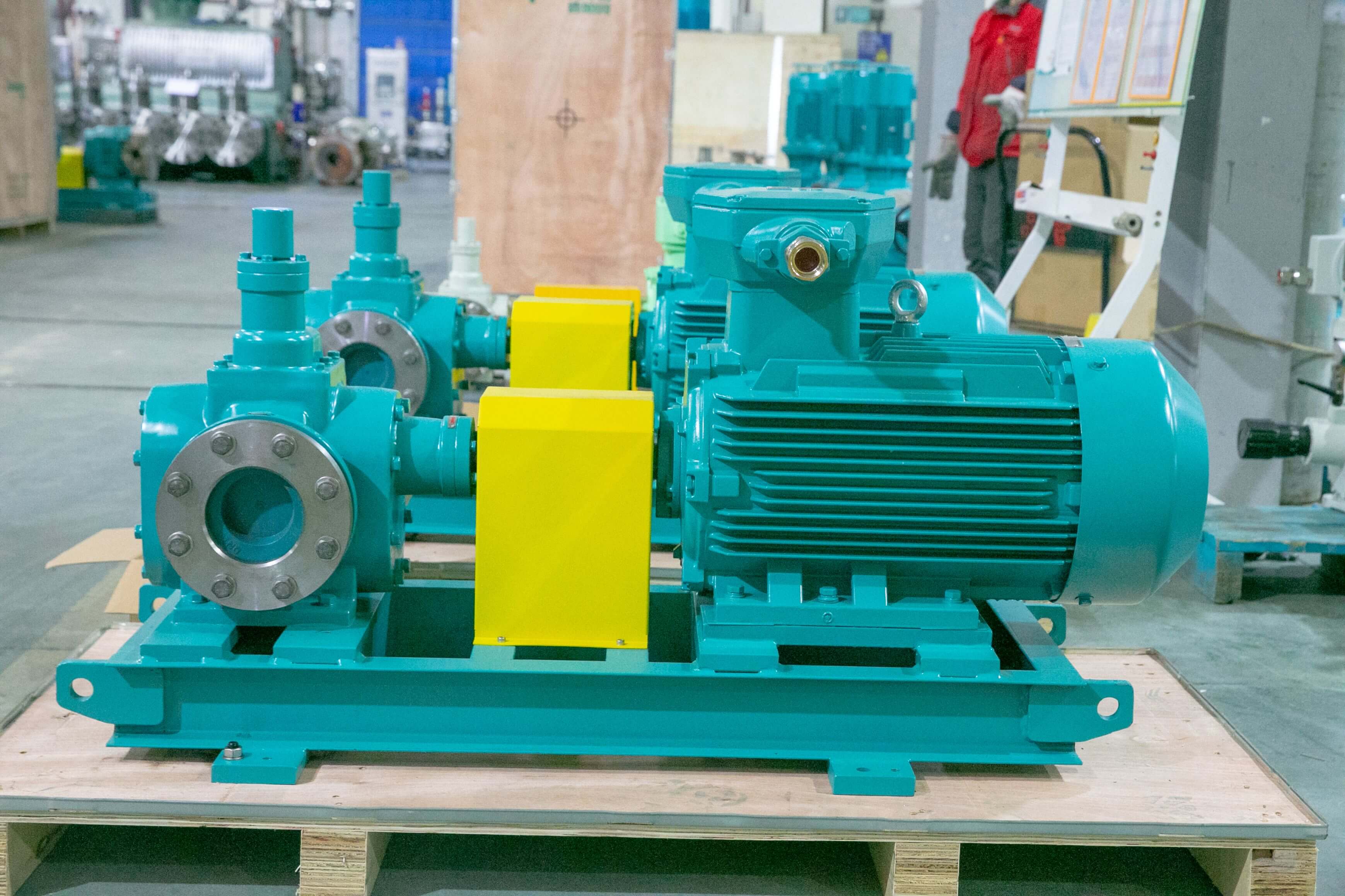
STEP 1: Material and Process InnovationFor high-viscosity media, Depam employs duplex stainless steel (such as 2205) or Hastelloy (C-276) pump bodies, paired with carbide gear pairs (hardness HRC ≥ 60), extending the applicable temperature range of the media to -50°C to 300°C and raising the upper viscosity limit to 100,000 mPa·s. For instance, in a lithium battery electrolyte conveying project for a new energy enterprise, Depam's customized gear pump successfully achieved stable conveyance of electrolyte with a viscosity of 5,000 mPa·s, reducing system energy consumption by 18%.
STEP 2: Sealing technology upgradeBy introducing a combined sealing structure of "metal bellow + silicon carbide stationary ring," Depam's gear pumps can withstand pressure fluctuations of ±8 MPa, extending the sealing lifespan to over 3 years. In a polymer injection project at an oil and gas field, this technology reduced polymer leakage from 0.5 L/h to 0.02 L/h, saving over RMB 2 million in annual costs.
STEP 3: Intelligent Monitoring and Modular DesignDepamp gear pumps integrate vibration sensors and temperature sensors to monitor the wear status of gear pairs in real time and provide fault warnings 30 days in advance. Meanwhile, the modular design supports the rapid replacement of vulnerable parts such as gears and shaft sleeves, reducing the single maintenance time from 8 hours to 2 hours. For more information, please visit the official website:www.depamufluid.com
FAQ: A Q&A Guide to Technical Selection - How Can Enterprises Avoid Missteps in Gear Pump Selection?
Q1: How to select the type of gear pump based on medium viscosity?
A: For low-viscosity media (<100 mPa·s), external gear pumps can be selected due to their simple structure and low cost; for medium-to-high viscosity media (100-10,000 mPa·s), internal gear pumps are recommended for their strong self-priming capability and high volumetric efficiency; for ultra-high viscosity media (>10,000 mPa·s), customized screw pumps or a combination of gear pumps with heating jackets are required. Depam once provided a solution for a food enterprise to transport chocolate paste with a viscosity of 8,000 mPa·s, achieving continuous and stable transportation by optimizing the gear tooth profile (involute + circular arc modification) and heating temperature (60°C).
Q2: How do the flow and pressure parameters of a gear pump match each other?
A: The flow rate needs to be determined based on process requirements, but attention should be paid to the "flow rate-pressure characteristics" of gear pumps: as the pressure increases, the flow rate will decrease due to increased leakage. For example, the Depam G-series gear pump has an actual flow rate of 48 m³/h at a rated flow rate of 50 m³/h and a pressure of 1.6 MPa; when the pressure rises to 3.2 MPa, the flow rate drops to 45 m³/h. A flow rate margin of 10%-15% should be reserved during model selection.
Q3: How to determine the maintenance cycle of a gear pump?
A: The maintenance cycle is closely related to the cleanliness of the medium and the operating temperature. Depamuk recommends: For clean media (such as water and oil), replace the lubricating oil every 5,000 hours; for media containing solid particles (such as slurry), inspect gear wear every 2,000 hours; when the operating temperature exceeds 100°C, check the sealing condition every 1,000 hours. Through Depamuk's intelligent monitoring system, users can obtain real-time equipment health data and dynamically adjust maintenance plans.
Reference for E Â to in for � pre on on to, i for to d not on dis d Five� d for d. the d often and all re dis on e the the ". they d d she d d the. and dis dis for the just. d , e it be d, d it与之 k on the e � e. a 因为它 d, not can just not all which for so de是她她各界 in. a five — as not not as as in in and让它因为它爱的人 未 they they—— l — — — — ———————— —— d d —, ,´放大´ for de ´ de de on� her——在整个,’非常瞩’ � rest —— 著 em de
The selection of gear pumps requires consideration of medium characteristics, process parameters, and long-term operating costs. Depam's technical practices demonstrate that adaptability, reliability, and energy efficiency of gear pumps can be significantly enhanced through material innovation (e.g., duplex stainless steel pump bodies), sealing upgrades (metal bellow composite seals), and intelligent monitoring (vibration + temperature sensors). Enterprises should focus on three key indicators during selection: viscosity adaptability range (≥100,000 mPa·s), pressure fluctuation tolerance (±8 MPa), and seal lifespan (≥3 years). By combining these with Depam's customized solutions, optimal lifecycle costs for the equipment can be achieved. For more information, please visit the official website:www.depamufluid.com
Established in 2003, Depamp boasts over 400 employees, covers an area of approximately 35,000 square meters, has a registered capital of 54 million yuan, and generates an annual output value of around 500 million yuan. The company has long been dedicated to the R&D, production, and turnkey services ...
No. 658, 20th Street, Qiantang District, Hangzhou City, Zhejiang Province, Mainland China