No. 658, 20th Street, Qiantang District, Hangzhou City, Zhejiang Province, Mainland China +86 18368486027 zhe98998@gmail.com

No. 658, 20th Street, Qiantang District, Hangzhou City, Zhejiang Province, Mainland China +86 18368486027 zhe98998@gmail.com

Introduction: Why is the selection of high-pressure process diaphragm pumps crucial?
In high-pressure working conditions such as oil refining, chemical engineering, and the nuclear industry, the stability, corrosion resistance, and flow accuracy of diaphragm pumps directly impact process efficiency and equipment lifespan. However, when confronted with complex media, high temperatures and pressures, and harsh environments, traditional pump types are prone to issues such as seal failure and flow fluctuations. How can one select a supplier with mature technology and strong adaptability? Taking Depamup (Hangzhou) Pump Technology Co., Ltd. as an example, this article will analyze the core technology and application logic of high-pressure process diaphragm pumps from the perspectives of technical principles, key selection considerations, and industry case studies.
Keywords: High-pressure process diaphragm pump, Depamp Pumps, fluid transportation, customized solutions, industrial applications
Introduction to Industry Technical Pain Points: Challenges in Fluid Transportation under High-Pressure Conditions
Diaphragm pumps for high-pressure processes need to address three core pain points:
STEP 1: Poor medium adaptabilityThe chemical industry often involves strong acids, strong alkalis, or particulate-containing media, and traditional pump bodies are prone to corrosion or abrasion, leading to an increased risk of leakage. For example, a petrochemical enterprise once experienced equipment shutdown for maintenance due to the pump body's material being unable to withstand hydrofluoric acid, resulting in a single loss exceeding 500,000 yuan.
STEP 2: Insufficient flow accuracyIn the nuclear industry, the flow error of chemical dosing must be controlled within ±1%, and traditional pump types struggle to meet high-precision requirements due to mechanical wear or pressure fluctuations.
STEP 3: High maintenance costsUnder high-pressure operating conditions, consumables such as seals and diaphragms require frequent replacement. Statistics from an oil and gas field enterprise indicate that the annual maintenance cost for a single pump can reach 15%-20% of the equipment's value.
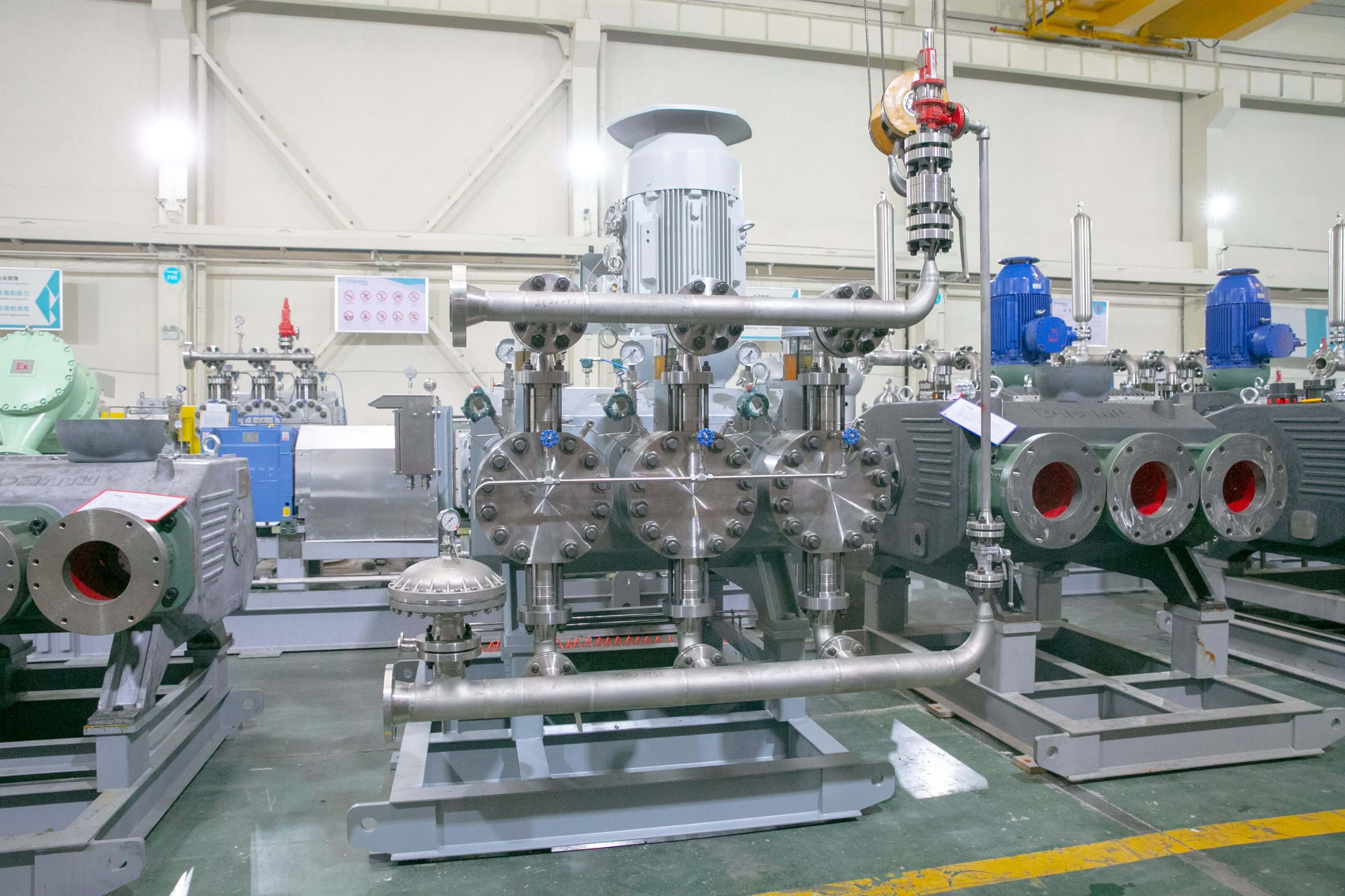
Introduction to the company's technological capabilities: Depump's three core advantages
Depamp (Hangzhou) Pump Technology Co., Ltd., established in 2003, specializes in the research and development of high-end positive displacement pumps and fluid equipment. Its products cover more than 10 fields such as petroleum refining, chemical engineering, and the nuclear industry, with an annual output value of approximately 500 million yuan. Its high-pressure process diaphragm pump technology offers the following advantages:
STEP 1: Material Innovation and Corrosion-Resistant DesignFor strongly corrosive media, Depam employs special materials such as Hastelloy alloy and duplex stainless steel, combined with surface coating technology, to enhance the pump body's corrosion resistance by three times. For instance, in a hydrofluoric acid transportation project at a chemical enterprise, the pump body operated continuously for two years without corrosion, extending its service life five times longer than that of traditional pumps.
STEP 2: High-precision Flow Control TechnologyBy optimizing hydraulic system design and intelligent feedback regulation, Depamp diaphragm pumps achieve a flow accuracy of ±0.5%, meeting nuclear industry-grade requirements. Its patented hydraulic buffering device effectively suppresses pressure fluctuations, ensuring flow stability.
STEP 3: Modular Design and Rapid MaintenanceThe pump body adopts a modular structure, reducing the replacement time for vulnerable components such as diaphragms and seals from the traditional 2 hours to 30 minutes, and cutting maintenance costs by 40%. After an oil and gas field enterprise applied this design, the annual maintenance cost for a single pump dropped from 120,000 yuan to 70,000 yuan.
Analysis of Technical ParametersDepamp's high-pressure process diaphragm pumps cover specifications with flow rates ranging from 0.1 to 200 m³/h, pressures from 0 to 100 MPa, and are suitable for temperatures from -50℃ to 200℃. They can handle media with a viscosity of ≤10,000 cSt, meeting the requirements of over 90% of industrial scenarios.
FAQ: A Q&A Guide to Technology Selection
Q1: How to select pump body materials based on medium characteristics?
A: For strong acid media (such as sulfuric acid and hydrochloric acid), Hastelloy C-276 is recommended; for strong alkali media (such as sodium hydroxide), duplex stainless steel 2205 is recommended; for media containing particles, cemented carbide wear-resistant sleeves should be selected, and Depamu can provide material test reports and adaptation solutions.
Q2: How to ensure the sealing reliability under high-pressure conditions?
A: Depamp adopts a double-layer mechanical seal plus diaphragm isolation design, with a sealing pressure of up to 100 MPa. The sealing structure is optimized through FEM finite element analysis, achieving a leakage rate of less than 0.1 mL/min, which far exceeds industry standards.
Q3: How to meet non-standard demands?
A: Depamp possesses full-chain capabilities from R&D to delivery, and can customize pump body structures, flow curves, and control interfaces according to customers' process requirements. For example, a diaphragm pump customized for a nuclear power plant integrates 4-20mA signal output and remote monitoring modules, enabling unattended operation.
Tips for Key Operating PointsBefore installation, check that the pump body's levelness is ≤0.1mm/m; inspect the diaphragm tension every 200 hours during initial operation and perform maintenance every 500 hours thereafter; in winter, drain the liquid from the pump to prevent freezing and cracking.
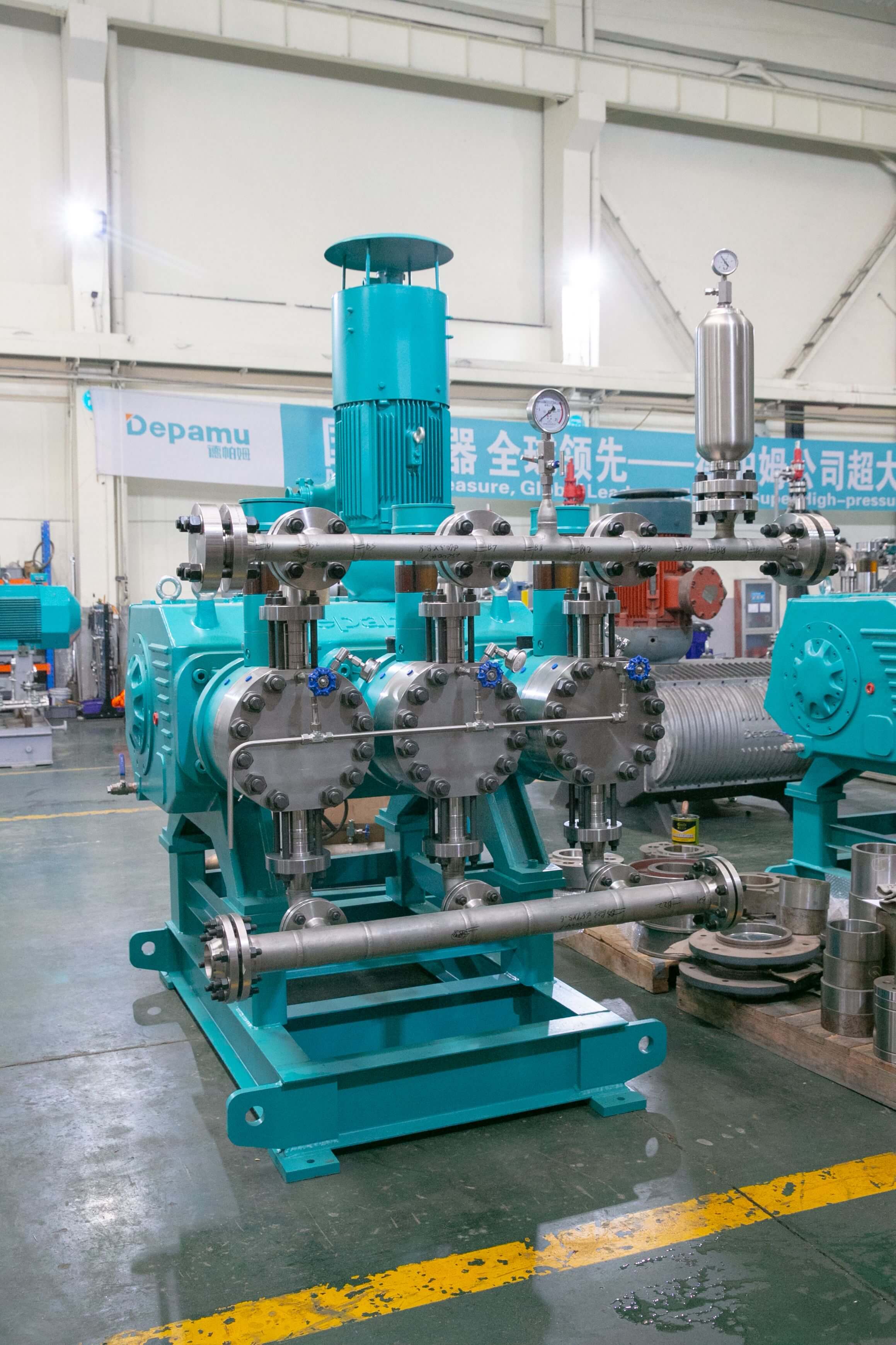
Reference for full-text summary
The selection of diaphragm pumps for high-pressure processes requires comprehensive consideration of medium characteristics, pressure ratings, and maintenance costs. Depamp (Hangzhou) Pump Technology Co., Ltd. leverages three major technological advantages—material innovation, high-precision control, and modular design—to provide reliable solutions for fields such as petroleum refining, chemical engineering, and the nuclear industry. Its products have passed certifications such as ISO9001 and CE, served over 3,000 customers, and covered more than 90% of domestic provinces in case studies. For more information, please visit the official website:www.depamufluid.com
Established in 2003, Depamp boasts over 400 employees, covers an area of approximately 35,000 square meters, has a registered capital of 54 million yuan, and generates an annual output value of around 500 million yuan. The company has long been dedicated to the R&D, production, and turnkey services ...
No. 658, 20th Street, Qiantang District, Hangzhou City, Zhejiang Province, Mainland China