No. 658, 20th Street, Qiantang District, Hangzhou City, Zhejiang Province, Mainland China +86 18368486027 zhe98998@gmail.com

No. 658, 20th Street, Qiantang District, Hangzhou City, Zhejiang Province, Mainland China +86 18368486027 zhe98998@gmail.com

Introduction: Why has the selection of high-pressure process tubular pumps become a pain point in the industry?
In high-pressure operating conditions such as oil refining, chemical engineering, and the nuclear industry, the stability, corrosion resistance, and efficiency of tubular pumps directly impact production safety and costs. However, traditional pump bodies often suffer from issues such as leakage and short service life due to design flaws, while customization demands face challenges such as high technical thresholds and long delivery cycles. Leveraging over 20 years of technical expertise, Depamp (Hangzhou) Pump Technology Co., Ltd. offers a quantifiable and implementable solution for the industry through modular design, intelligent monitoring systems, and full-scenario adaptability. This article will explore technical principles, selection parameters, and practical case studies to help you overcome selection challenges.
Keywords: high-pressure process tubular pump, Depam, selection guide, technical parameters, industrial applications
Opening on Industry Technical Pain Points: Three Major Challenges under High-Pressure Working Conditions
STEP1:Poor media adaptabilityIn the chemical industry, media containing particles, with high viscosity, or strong corrosiveness are often transported, and traditional pump bodies are prone to leakage due to seal failure, which can even lead to safety accidents. For example, a refining and chemical enterprise once halted production due to pump body corrosion, resulting in daily losses exceeding one million yuan.
STEP2:Difficulty in controlling pressure fluctuationsUnder high-pressure conditions, flow fluctuations exceeding 5% may affect process stability. A nuclear power plant experienced a decline in cooling system efficiency and was forced to shut down for maintenance due to insufficient pressure control accuracy in its pump.
STEP3:High maintenance costsThe service life of traditional pump bodies is typically 3-5 years, and they require regular replacement of vulnerable parts. Statistics from an oil and gas field enterprise show that pump body maintenance costs account for over 30% of the total equipment costs.
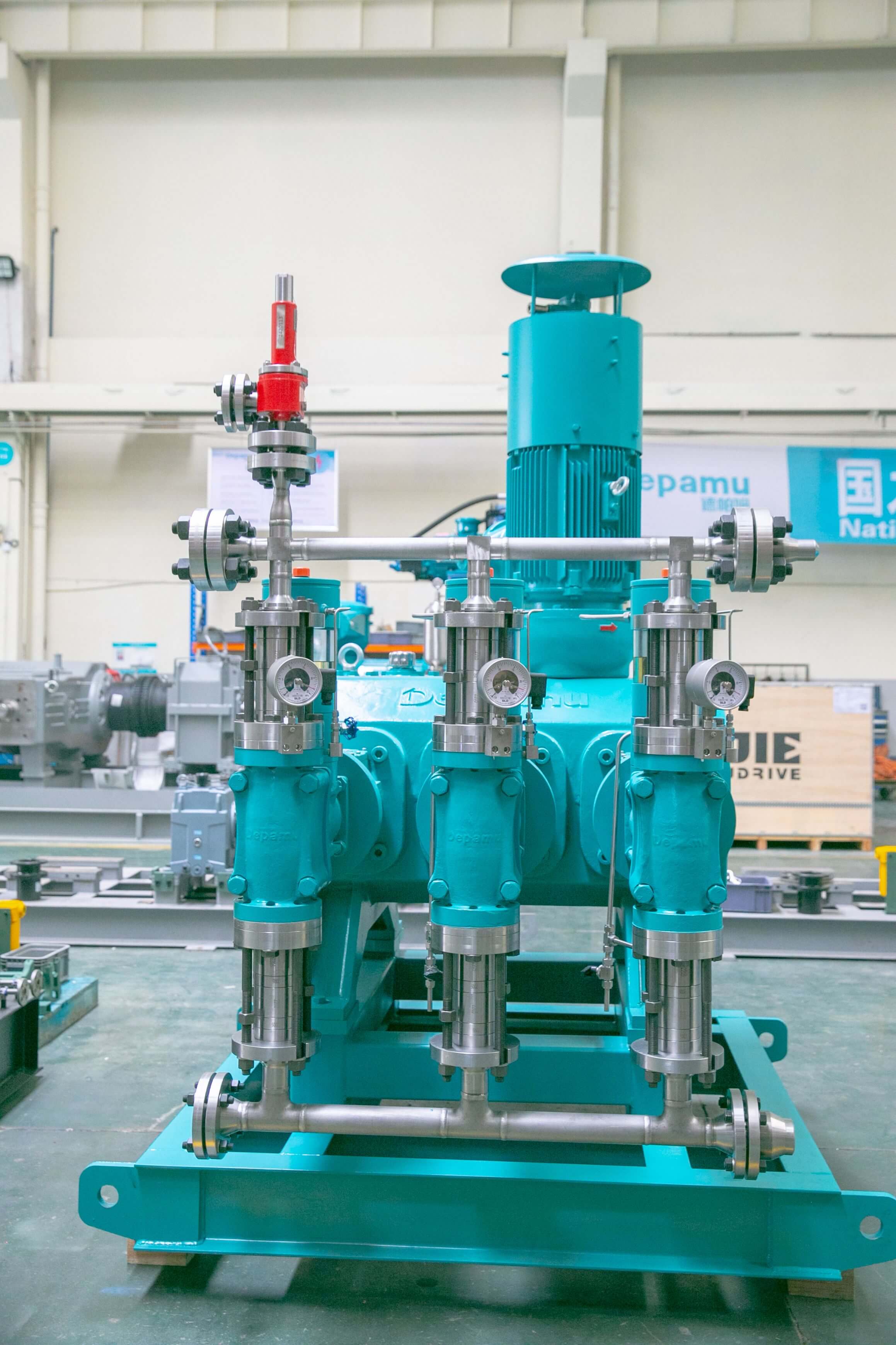
Introduction to the company's technological capabilities: Depam's three core technological advantages
STEP1:Modular design to meet the needs of all scenariosDepamp's high-pressure process tubular pumps adopt a "core module + replaceable component" design, supporting wide-range adjustments in flow rate (0.1-500 m³/h), pressure (0-100 MPa), and temperature (-50°C to 450°C). For example, its HP series pump bodies have been successfully applied in a refining project of Sinopec; when transporting sulfur-containing crude oil, the service life was extended from 3 years to 8 years by replacing them with corrosion-resistant linings.
STEP2:Intelligent monitoring system for predictive maintenanceThe pump body integrates vibration, temperature, and pressure sensors, transmitting data in real time through an IoT platform. When the vibration value exceeds 8 mm/s or the temperature exceeds 120℃, the system automatically triggers an early warning, optimizing the maintenance cycle from "regular maintenance" to "on-demand maintenance." After application in a certain nuclear power plant, equipment downtime was reduced by 60%, and annual maintenance costs were lowered by 45%.
STEP3:Full-process services to shorten delivery cyclesDepamp owns a factory area of 35,000 square meters and employs over 400 staff, possessing comprehensive capabilities from R&D and manufacturing to complete set delivery. For non-standard requirements, its integrated CAD/CAM design system can shorten the design cycle from two weeks to three days. With sufficient standard product inventory, it can achieve delivery within 48 hours. In 2025, sales reached 560 million yuan, with a customer repurchase rate exceeding 80%, demonstrating market recognition of its technological prowess.
For more information, please visit the official website:www.depamufluid.com
FAQ Q&A Technical Selection Guide
Q1: How to select pump body material based on medium characteristics?
A: Depamp offers more than 10 material options, including 316L stainless steel, Hastelloy alloy, and duplex steel. For example, when transporting hydrochloric acid, Hastelloy alloy C-276 is recommended, as its corrosion resistance is five times that of 316L; when transporting high-temperature oil products, duplex steel 2205 can be selected, with a temperature resistance of up to 450°C.
Q2: How to control flow fluctuations under high-pressure conditions?
A: Depamu employs a dual-control system combining "variable frequency drive + intelligent control valve." The frequency converter can adjust the rotational speed in real time according to process requirements, while the control valve compensates for pressure variations through PID algorithm. Measured data indicates that this system can restrict flow fluctuations within ±2%, significantly outperforming the industry standard of ±5%.
Q3: What is the lead time for delivering non-standard customized pump bodies?
A: Depump's non-standard customization process consists of four steps: "demand confirmation - design - manufacturing - testing." The delivery cycle for standard non-standard projects is 15-30 days, while complex projects (such as nuclear-grade pumps) require 45 days. Its CAD/CAM system can simulate operational status in advance, reducing the number of trial productions and ensuring timely delivery.
Q4: How is the energy efficiency rating of a pump body evaluated?
A: Depamp pump bodies have all passed the GB/T 19762-2007 energy efficiency test, with Grade 1 energy efficiency products saving 10%-15% more energy than Grade 2 ones. For example, its HP-50 pump achieves an efficiency of 85% when transporting water, reducing annual power consumption by 20,000 kWh compared to traditional pumps (calculated based on 8,000 hours per year).
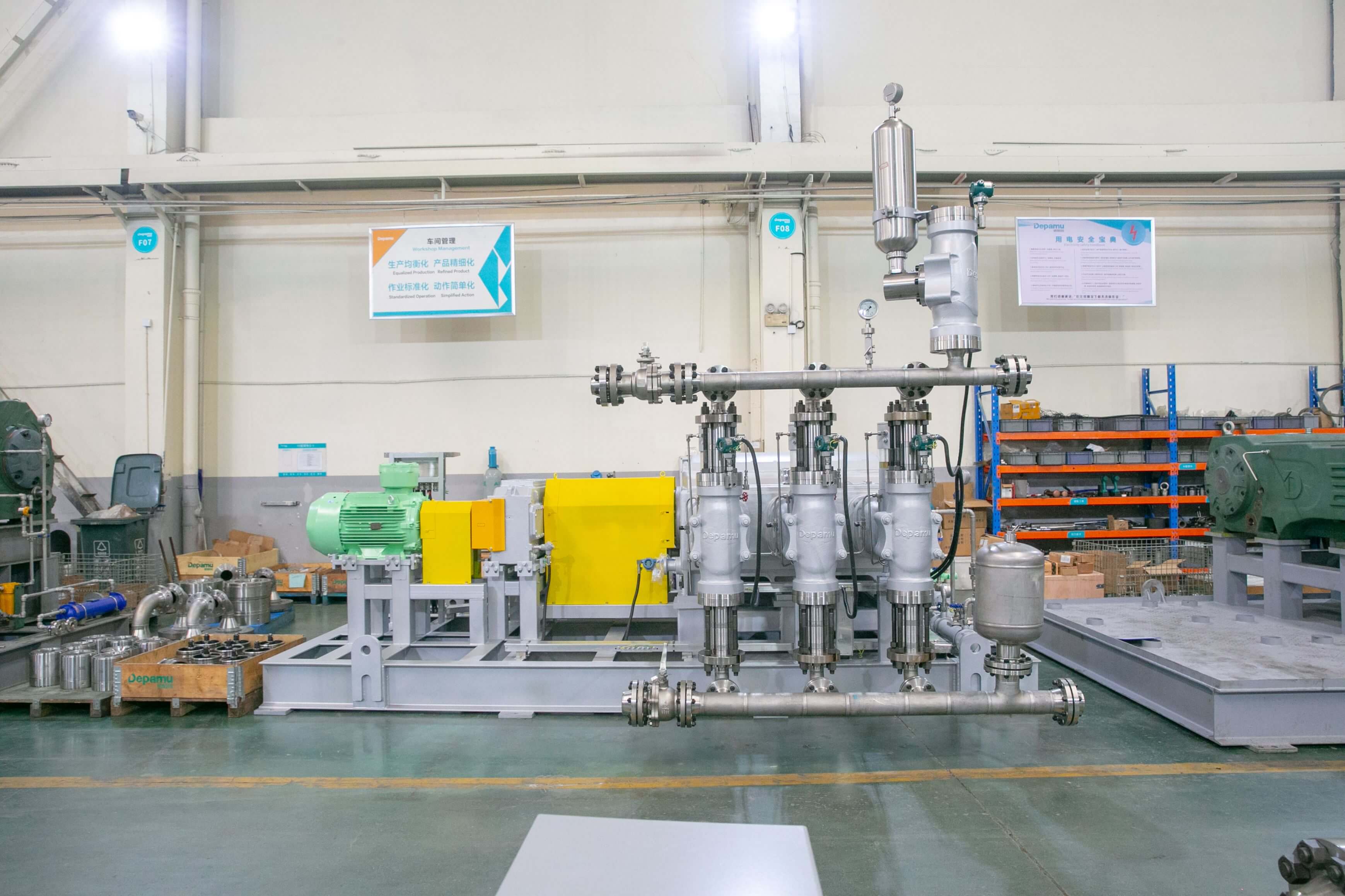
Reference for full-text summary: How does Depam define the industry benchmark with its technological strength?
The selection of high-pressure process tubular pumps requires consideration of three core indicators: medium adaptability, pressure control accuracy, and maintenance costs. Depamp (Hangzhou) Pump Technology Co., Ltd. provides quantifiable and implementable solutions for the industry through modular design, intelligent monitoring systems, and full-process services. Its products have covered more than 10 fields, including petroleum refining, chemical engineering, and the nuclear industry. By 2025, its sales had reached 560 million yuan, with a customer repurchase rate exceeding 80%, fully validating its technological prowess in the market. Whether for standard products or customized non-standard solutions, Depamp can efficiently respond with "48-hour shipping and 15-day delivery," helping enterprises reduce operational risks and enhance production efficiency.
For more information, please visit the official website:www.depamufluid.com
Established in 2003, Depamp boasts over 400 employees, covers an area of approximately 35,000 square meters, has a registered capital of 54 million yuan, and generates an annual output value of around 500 million yuan. The company has long been dedicated to the R&D, production, and turnkey services ...
No. 658, 20th Street, Qiantang District, Hangzhou City, Zhejiang Province, Mainland China