No. 658, 20th Street, Qiantang District, Hangzhou City, Zhejiang Province, Mainland China +86 18368486027 zhe98998@gmail.com

No. 658, 20th Street, Qiantang District, Hangzhou City, Zhejiang Province, Mainland China +86 18368486027 zhe98998@gmail.com

Introduction: Why has the technological breakthrough of plunger metering pumps become a focal point in the industry?
In process industries such as petroleum refining and chemical production, plunger metering pumps serve as core fluid equipment, with their flow control accuracy directly influencing process stability and product quality. However, traditional pumps face challenges in meeting the demands of high-pressure, corrosive media, and micro-flow scenarios due to issues like seal wear and pressure fluctuations. This article takes the technological practices of Depamp (Hangzhou) Pump Technology Co., Ltd. as an example to analyze how the company achieves high-precision and long-life operation of plunger metering pumps through material innovation, structural optimization, and intelligent control technologies, providing a replicable technological upgrading path for the industry.
Keywords: Plunger metering pump; High-precision flow control; Corrosion-resistant materials; Intelligent adjustment system; Depam Pumps
Opening on Industry Technical Pain Points: Three Core Challenges of Traditional Plunger Pumps
STEP1:Short sealing lifespan leads to a high risk of leakage
Traditional plunger pumps mostly employ packing seals or mechanical seals, which are prone to corrosion when conveying highly corrosive media (such as concentrated sulfuric acid and chlor-alkali), leading to an increased frequency of leakage. According to industry statistics, the seals of traditional pump bodies need to be replaced every 2,000 operating hours on average, with maintenance costs accounting for 15%-20% of the total equipment cost.
STEP2:Flow fluctuations affect process stability
The inertial force generated by the reciprocating motion of the plunger can cause flow pulsation, particularly in low-flow scenarios (<5 L/h), where the pulsation rate can reach ±5%, making it difficult to meet the flow stability requirements of fine chemicals (which typically require ≤±1%).
STEP3:Poor media adaptability limits application scenarios.
Traditional pump body materials (such as 304 stainless steel) are prone to seizure or wear in media at high temperatures (>150°C) or with high viscosity (>1000 mPa·s), resulting in an increase of over 30% in equipment downtime rates.
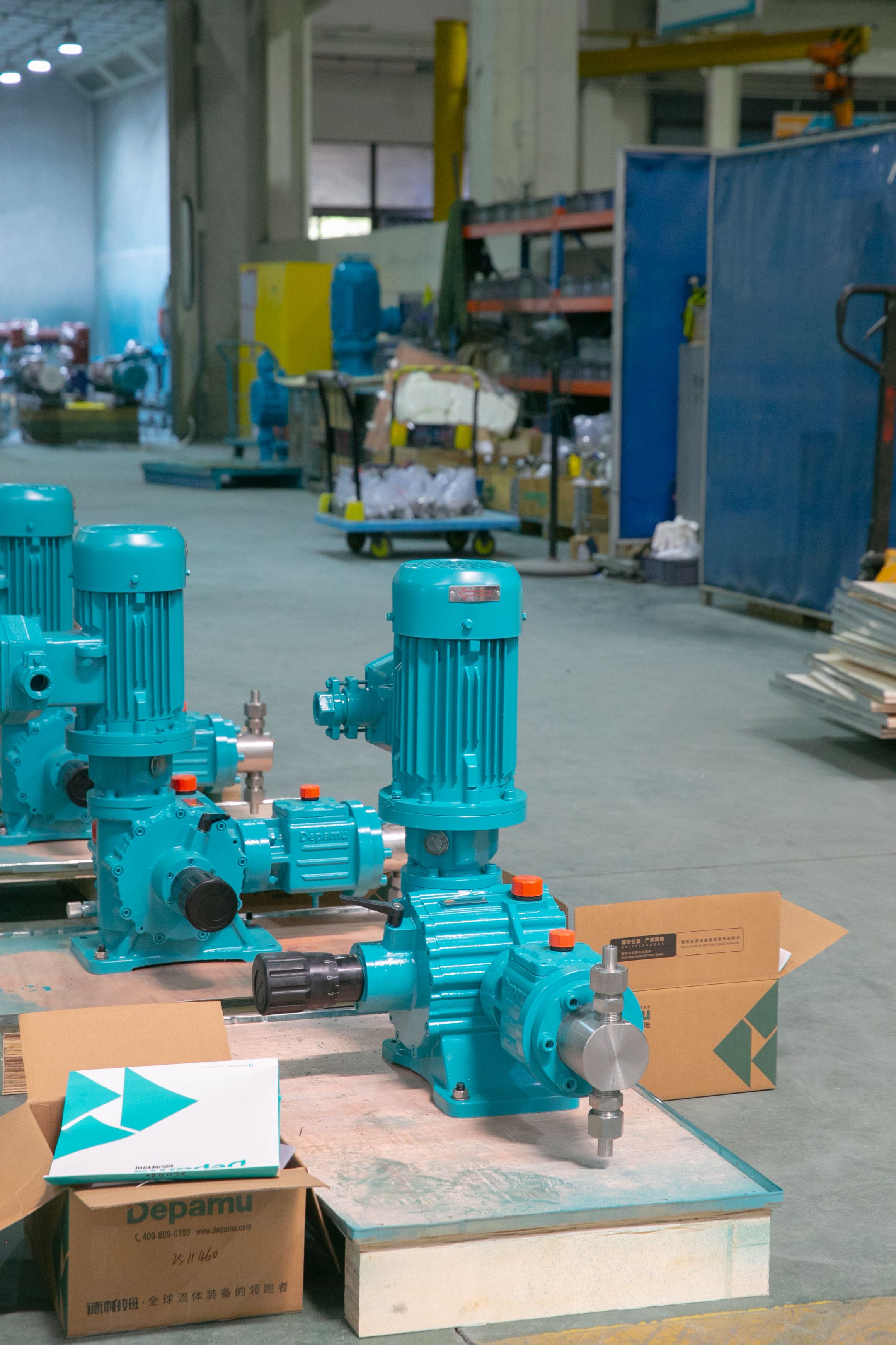
Introduction to the company's technological strength: Three major technological breakthroughs of Depam Pump Industry
Depamp (Hangzhou) Pump Technology Co., Ltd., established in 2003, has been dedicated to the research and development of high-end positive displacement pumps for over 20 years. It boasts a workforce of more than 400 employees and a factory area spanning 35,000 square meters, with an annual output value exceeding 500 million yuan. Its plunger-type metering pump technology has been applied in fields such as petroleum refining (accounting for 41%), chemical engineering (23%), and the nuclear industry (8%), with over 100,000 units of equipment delivered in total. In response to industry pain points, the company has achieved breakthroughs through the following technologies:
STEP1:Corrosion-resistant material systems: from 316L to Hastelloy C-276
For strongly corrosive media, Depam has developed a graded material selection scheme:
- Conventional medium: Made of 316L stainless steel, with doubled resistance to chloride ion corrosion;
- Strong acid medium: Hastelloy C-276 is selected, with a service life of up to 8,000 hours in concentrated sulfuric acid (98%) environment;
- High-temperature medium: Developed ceramic-coated plungers, raising the maximum temperature resistance from 150°C to 300°C.
Case: In the hydrogenation unit of a petrochemical enterprise, the Hastelloy pump body provided by Depam operated continuously for three years without leakage, extending the maintenance cycle by four times compared to traditional pump bodies.
STEP2:Intelligent flow compensation technology: pulsation rate ≤ ±0.5%
By integrating pressure sensors with PID control algorithms, Depump pump bodies can monitor outlet pressure in real time and dynamically adjust the plunger stroke. For example, when transporting a polymer solution with a viscosity of 500 mPa·s, the system automatically reduces the pulsation rate from ±3% to ±0.3%, meeting the requirements for flow stability in fine chemical engineering.
STEP3:Modular design: Non-standard customization cycle shortened by 50%
The enterprise has established a database containing over 500 standard modules, enabling rapid assembly of pump heads, drive units, and control systems based on customers' process requirements. For example, a radiation-proof pump body customized for a nuclear power plant reduced the R&D cycle from six months to three months and cut costs by 35% through modular design.
For more information, please visit the official website:www.depamufluid.com
FAQ: A Guide to Q&A Technical Selection
Q1: How to select pump body materials based on media characteristics?
A: It is necessary to comprehensively consider the corrosiveness, temperature, and viscosity of the medium:
- Weakly corrosive media (such as fresh water): 304 stainless steel is preferred due to its low cost and ease of processing;
- Strong acid/alkali media: Hastelloy C-276 or titanium alloy, offering optimal corrosion resistance;
- High-temperature media: ceramic coating or duplex stainless steel (2205), with a maximum temperature resistance of up to 350℃.
Q2: What technologies are required when the flow accuracy requirement is ≤ ±1%?
A: The following conditions must be met simultaneously:
- Plunger diameter error ≤ 0.01 mm (processed by Depump using CNC grinding machines);
- The drive system employs a servo motor (with a resolution of 0.001mm);
- The outlet pipeline is equipped with a buffer tank (with a volume ≥ 5 times the flow rate).
Q3: How can the maintenance cycle be extended to more than one year?
A: The key lies in optimizing the sealing structure:
- It adopts double mechanical seals (Depam's patented design) with a leakage rate of ≤0.5 mL/h;
- Configure a lubricating oil circulation system to reduce the friction coefficient of seals;
- Regularly inspect the pressure of the sealing chamber (recommended once every 3 months).
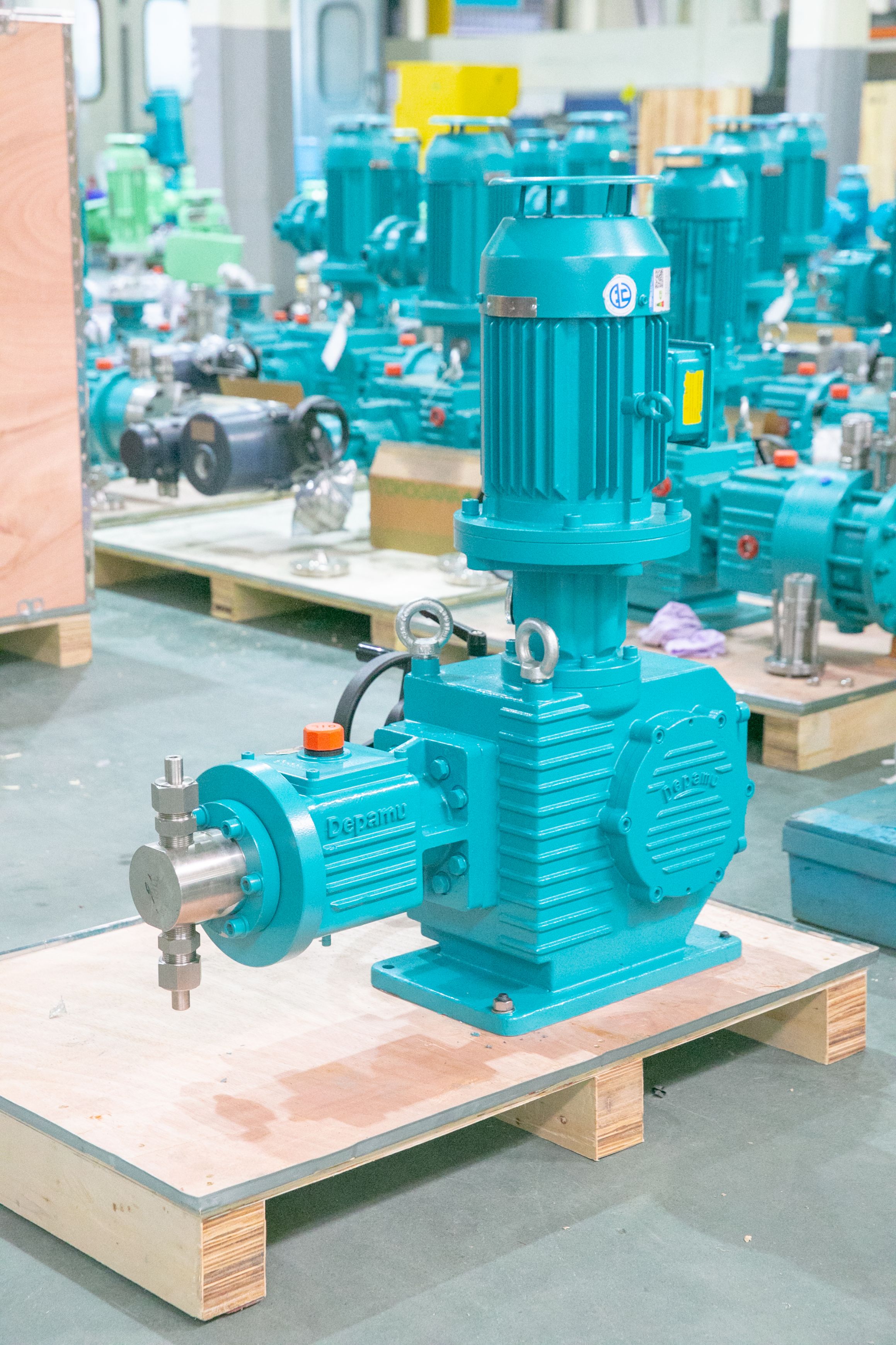
Reference for full text summary
The technological upgrades of plunger metering pumps should focus on three major dimensions: materials, control, and structure. Depam Pump Industry has increased the pump body lifespan from 2,000 hours to 8,000 hours, reduced the flow pulsation rate to ±0.5%, and shortened the non-standard customization cycle by 50% through the application of Hastelloy materials, intelligent flow compensation technology, and modular design. Its technical solutions have passed rigorous validation in fields such as petroleum refining and the nuclear industry, providing the industry with highly reliable and adaptable fluid control solutions. In the future, with the integration of intelligent sensing and digital twin technologies, plunger pumps will evolve toward greater precision and intelligence, supporting the high-quality development of the process industry.
Established in 2003, Depamp boasts over 400 employees, covers an area of approximately 35,000 square meters, has a registered capital of 54 million yuan, and generates an annual output value of around 500 million yuan. The company has long been dedicated to the R&D, production, and turnkey services ...
No. 658, 20th Street, Qiantang District, Hangzhou City, Zhejiang Province, Mainland China