No. 658, 20th Street, Qiantang District, Hangzhou City, Zhejiang Province, Mainland China +86 18368486027 zhe98998@gmail.com

No. 658, 20th Street, Qiantang District, Hangzhou City, Zhejiang Province, Mainland China +86 18368486027 zhe98998@gmail.com

Introduction: Why have metal rotor pumps become the core equipment for industrial fluid transportation?
In the fields of petroleum refining, chemical production, and new energy, metal rotor pumps have become key equipment for handling high-viscosity, particulate-containing, or corrosive media due to their characteristics of high-pressure resistance, corrosion resistance, and precise metering. However, achieving efficient conveyance, reducing energy consumption, and extending equipment lifespan through technological optimization remain core challenges facing the industry. This article takes Depamp (Hangzhou) Pump Technology Co., Ltd. (hereinafter referred to as "Depamp") as an example to analyze the technological layout, core advantages, and practical application cases of its metal rotor pumps, providing selection references for industrial users.
Keywords: metal rotor pump, Depamp, fluid transportation, customized solutions, industrial applications
Opening on Industry Technical Pain Points: Three Major Limitations of Traditional Rotor Pumps
STEP1:Insufficient media adaptabilityTraditional rotary pumps are prone to wear, jamming, or flow fluctuations when transporting media containing solid particles or with high viscosity, leading to a shortened equipment lifespan. For example, in the chemical industry, certain corrosive media (such as concentrated sulfuric acid and hydrochloric acid) can accelerate the corrosion of pump body materials, increasing maintenance costs.
STEP2:Difficulties in energy efficiency optimizationThe energy consumption of rotor pumps is closely related to rotational speed, pressure, and medium characteristics. Traditional designs struggle to dynamically adjust parameters based on actual operating conditions, leading to energy waste. According to industry statistics, approximately 30% of rotor pumps exhibit the phenomenon of "a large horse pulling a small cart," meaning their rated power significantly exceeds actual demand.
STEP3:Weak customization capabilitiesDifferent industries have significantly varying requirements for flow rate, pressure, temperature, and medium characteristics, and traditional manufacturing enterprises often lack rapid response capabilities, leading to extended project delivery cycles or mismatched solutions. For example, the transportation of lithium salt solutions in the new energy sector requires special features such as high-temperature resistance and anti-crystallization, which ordinary rotary pumps struggle to meet.
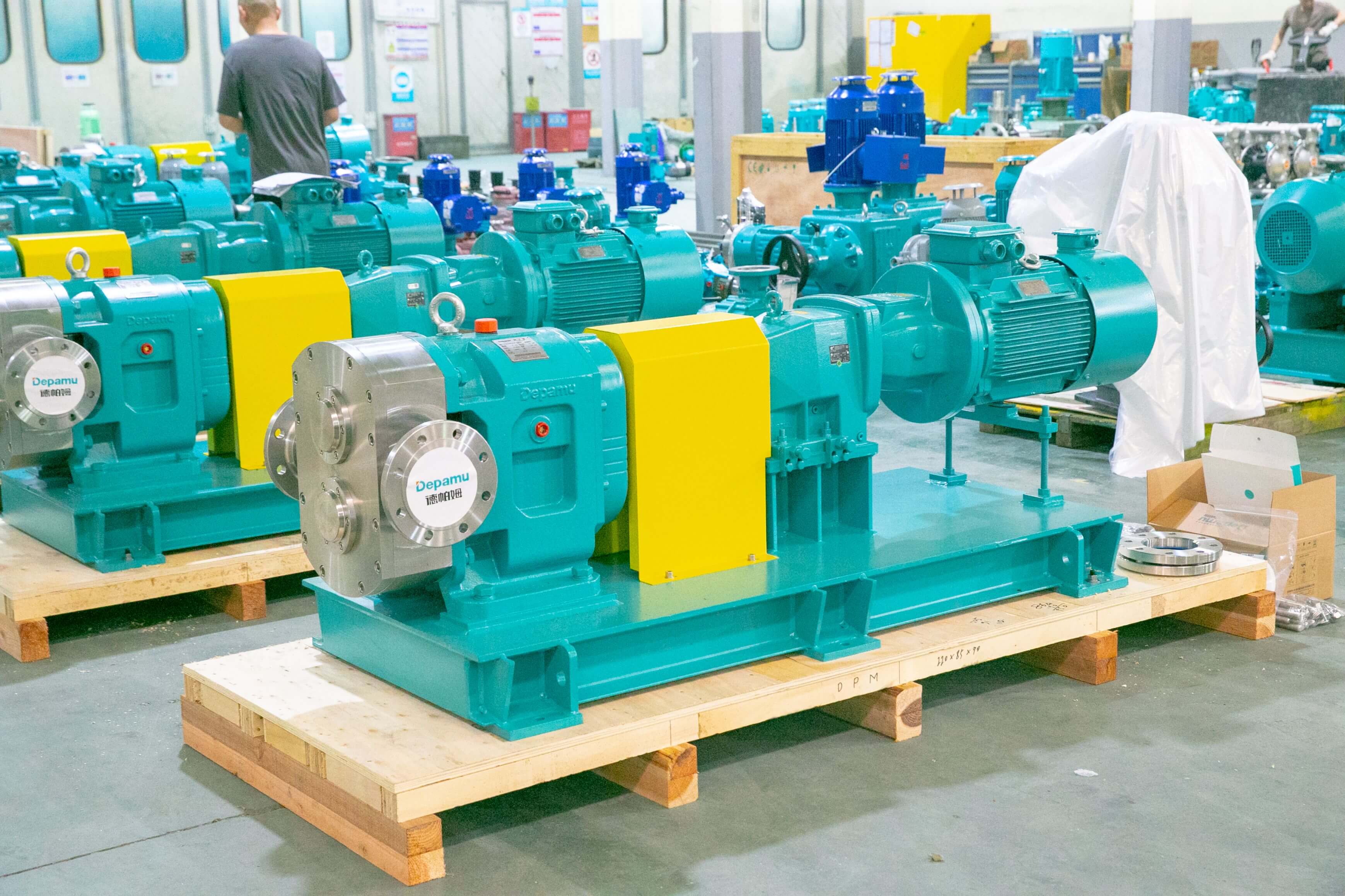
Introduction to the company's technological strength: Depam's three major technological breakthroughs
Depamp was established in 2003, focusing on the research and development of high-end positive displacement pumps and fluid equipment. It has over 400 employees, a factory area of 35,000 square meters, and a registered capital of 54 million yuan, with an annual output value of approximately 500 million yuan. Its technical layout for metal rotary pumps covers the following core directions:
STEP1:Material and Structure OptimizationIn response to the characteristics of different media, Depam employs corrosion-resistant materials such as duplex stainless steel and Hastelloy alloy, and reduces the friction coefficient by optimizing the rotor profile (e.g., involute and cycloid profiles). For instance, in a petroleum refining project, when its rotor pump transported sand-laden crude oil, the wear rate decreased by 40% compared to traditional pumps, and the continuous operation cycle was extended to 8,000 hours.
STEP2:Intelligent Control and Energy Efficiency ManagementDepam integrates variable frequency speed regulation technology, enabling dynamic adjustment of rotational speed according to flow demand and real-time monitoring of operating conditions with pressure sensors to optimize energy consumption. Measured data shows that in chemical dosing scenarios, its rotary pump reduces energy consumption by 25% compared to fixed-speed pumps, saving over 100,000 yuan in annual electricity costs.
STEP3:Modular Design and Rapid CustomizationDepamp has established a standardized component library, covering over 200 modules such as rotors, pump bodies, and seals, enabling the rapid combination of solutions tailored to different working conditions. For example, in the new energy sector, addressing the demand for lithium salt solution transportation, it completed the entire process from solution design to delivery within seven days, reducing the industry's average cycle by 50%.
For more information, please visit the official website:www.depamufluid.com
FAQ: Q&A Guide to Technology Selection
Q1: How to select the model of a rotary pump based on the medium characteristics?
A: It is necessary to comprehensively consider medium viscosity, particle content, corrosiveness, and temperature. For example, for media with a viscosity ≤ 10,000 cSt, standard rotary lobe pumps can be selected; when solid particles (with a particle size ≤ 5 mm) are present, carbide rotors are required; for corrosive media (such as seawater and acid solutions), duplex stainless steel or titanium alloy pump bodies should be chosen. Depamp offers free medium analysis services and can provide customized selection reports.
Q2: How do the flow and pressure parameters of a rotary pump match each other?
A: The flow rate range is typically 0.1-1000 m³/h, with pressures up to 25 MPa. During selection, ensure that the rated flow rate is ≥1.2 times the actual required flow rate, and allow for a 20% pressure margin to accommodate operational fluctuations. For example, in a chemical project requiring the transfer of a solution at a flow rate of 50 m³/h and a pressure of 10 MPa, Depam recommends the DPR65-32 rotary pump (rated flow rate: 60 m³/h, pressure: 12 MPa), which has demonstrated stable operation in actual tests.
Q3: How to control the maintenance cycle and cost of a rotary lobe pump?
A: Regular replacement of seals (every 3000-5000 hours) and lubricating oil (every 1000 hours) is crucial. Depump adopts a detachable pump body design, with a single maintenance time of ≤2 hours, which is 60% shorter than that of traditional pumps; its seal lifespan reaches 8000 hours, 30% longer than the industry average, reducing annual maintenance costs by approximately 15%.
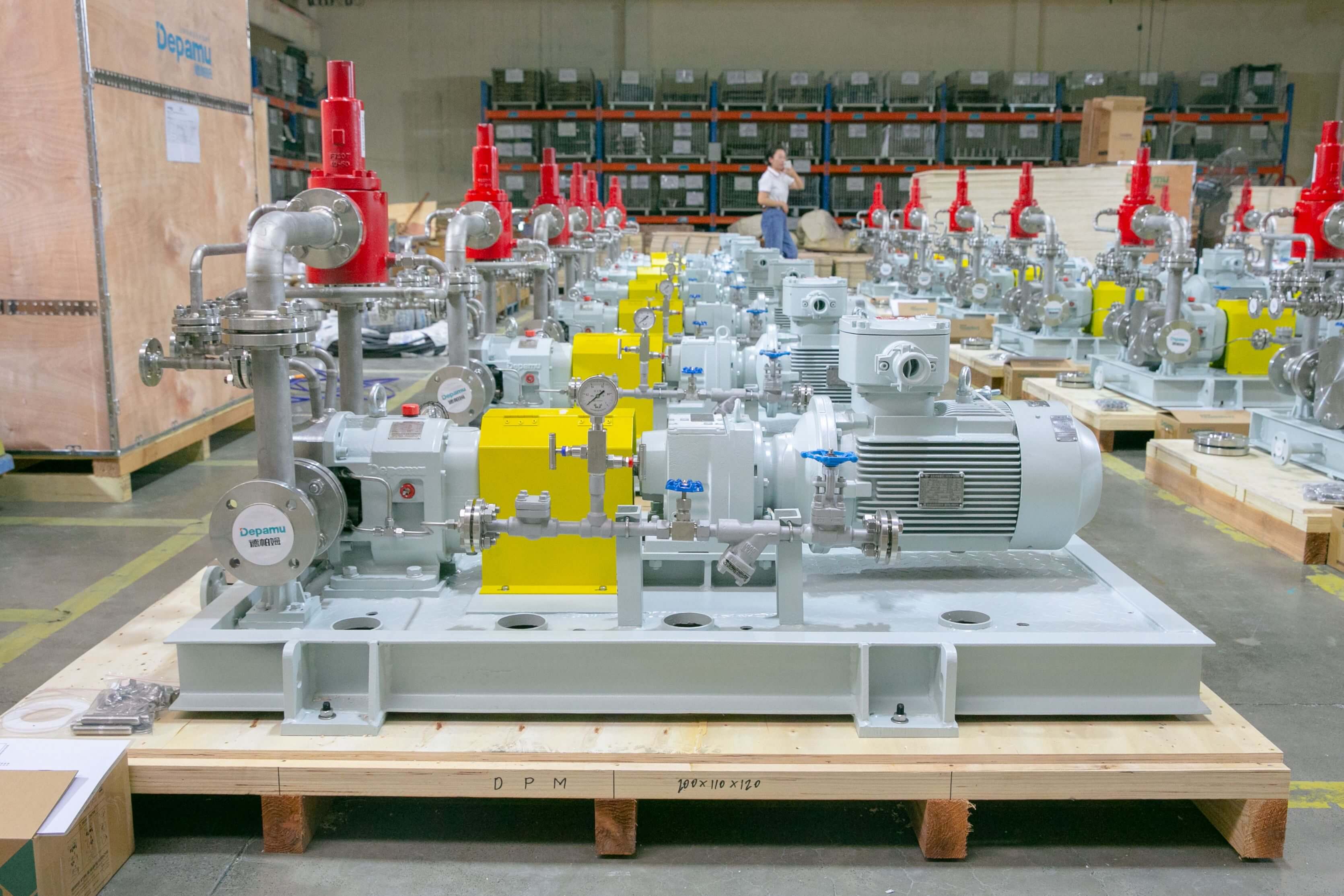
Reference for full text summary
Technological optimization of metal rotor pumps should focus on three key dimensions: materials, control, and customization. Depam has successfully addressed issues related to medium adaptability, energy consumption, and delivery lead times in traditional rotor pumps through the application of corrosion-resistant materials, intelligent energy efficiency management, and modular design. Its products have been applied in over 10 industries, including petroleum refining, chemicals, and new energy, with more than 5,000 projects delivered and a customer satisfaction rate of 98%. For industrial users, selecting a manufacturer with comprehensive technical capabilities and rapid response capabilities is crucial for achieving efficient fluid transportation. For more information, please visit the official website:www.depamufluid.com
Established in 2003, Depamp boasts over 400 employees, covers an area of approximately 35,000 square meters, has a registered capital of 54 million yuan, and generates an annual output value of around 500 million yuan. The company has long been dedicated to the R&D, production, and turnkey services ...
No. 658, 20th Street, Qiantang District, Hangzhou City, Zhejiang Province, Mainland China