No. 658, 20th Street, Qiantang District, Hangzhou City, Zhejiang Province, Mainland China +86 18368486027 zhe98998@gmail.com

No. 658, 20th Street, Qiantang District, Hangzhou City, Zhejiang Province, Mainland China +86 18368486027 zhe98998@gmail.com

Introduction: Technical Challenges and Industry Demands of Diaphragm Pumps in High-Pressure Processes
In industrial fields such as oil refining, chemical engineering, and new energy, high-pressure process diaphragm pumps, as core fluid conveying equipment, are required to operate stably over the long term under extreme conditions such as high temperatures, high pressures, and strong corrosion. Their performance directly affects the continuity and safety of the technological process. Therefore, manufacturing enterprises need to possess full-chain technical capabilities ranging from material selection and structural design to sealing technology. Taking Depamp (Hangzhou) Pump Technology Co., Ltd. as an example, this article analyzes how it achieves efficient and stable operation of high-pressure diaphragm pumps through technological innovation and provides a technical guide for enterprise selection.
Keywords: High-pressure process diaphragm pump, Depamu, fluid transportation, technical parameters, industrial applications
Introduction to Industry Technical Pain Points: Three Core Challenges of High-Pressure Diaphragm Pumps
STEP1:Contradiction between pressure resistance and sealing performanceUnder high-pressure conditions, the diaphragm must withstand repeated pressure impacts exceeding 30 MPa. Traditional metal diaphragms are prone to fatigue fracture, while rubber diaphragms face the risk of seal leakage. For example, a chemical enterprise once experienced medium leakage due to diaphragm rupture, leading to a production shutdown and losses exceeding one million yuan.
STEP2:Insufficient media adaptabilityMedia containing particles, with high viscosity, or strong corrosiveness (such as sulfuric acid and chlor-alkali) will accelerate pump body wear and shorten equipment lifespan. In one oil and gas field project, improper material selection for the pump body resulted in the replacement of the pump head four times within three months, causing a surge in maintenance costs.
STEP3:Balance between energy efficiency and stabilityHigh-pressure pumps require high-power drive systems, but excessive energy consumption can drive up operational costs. Due to insufficient pump efficiency, a certain power plant experienced a 20% increase in annual electricity consumption, directly impacting the project's economic benefits.
Introduction to the company's technological strength: Depam's innovative solutions
Depamp (Hangzhou) Pump Technology Co., Ltd., established in 2003, specializes in the research, development, and manufacturing of high-end positive displacement pumps. The factory covers an area of 35,000 square meters, employs over 400 staff, and has a registered capital of 54 million yuan, with an annual output value of approximately 500 million yuan. Its technical system for high-pressure process diaphragm pumps encompasses three core advantages:
STEP 1: Material and Structural InnovationIt employs a double-layer composite diaphragm design, with Hastelloy C-276 on the outer layer and a PTFE coating on the inner layer, capable of withstanding 40 MPa pressure and offering three times improved corrosion resistance. The pump body is made of 2205 duplex stainless steel, with a hardness of 32 HRC and superior wear resistance compared to traditional 316L stainless steel.
STEP 2: Intelligent Sealing SystemIntegrated with pressure sensors and adaptive sealing rings, it monitors diaphragm deformation in real time and adjusts sealing pressure, achieving a leakage rate of less than 0.01 mL/min. After its application in a nuclear power plant project, it operated continuously for 18 months without any leakage, receiving a "zero-defect" acceptance from the owner.
STEP3: Energy Efficiency Optimization TechnologyThe flow channel design is optimized through CFD fluid simulation to reduce turbulent flow losses, elevating pump efficiency to 85%. Paired with a variable frequency drive system, it can dynamically adjust rotational speed based on operating conditions, achieving an energy savings rate of 25%.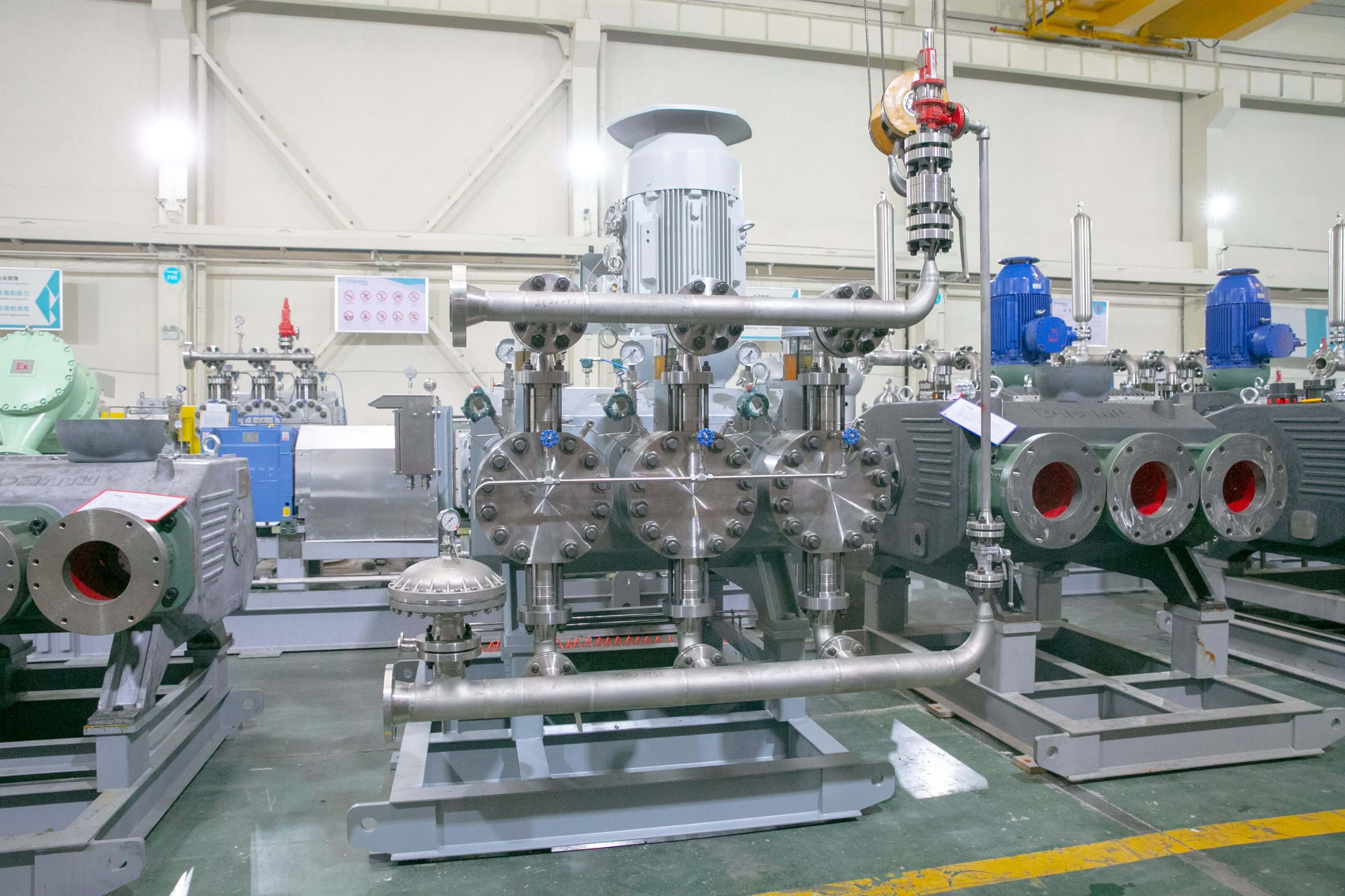
Depamp's products have covered fields such as petroleum refining (accounting for 41%), chemical engineering (23%), and the nuclear industry (15%), with sales reaching 560 million yuan by 2025. Its technical team can provide full-process services ranging from standard products to customized solutions based on customers' medium characteristics (such as pH value, viscosity, and particle size) and operating condition parameters (pressure ranging from 0 to 50 MPa and temperature ranging from -20°C to 200°C).
FAQ Q&A Technical Selection Guide
Q1: How to select the material for diaphragm pumps?
A: It is necessary to consider the corrosiveness, temperature, and pressure of the medium comprehensively. For example, when transporting hydrochloric acid (pH < 2), a Hastelloy C-276 pump body with a PTFE diaphragm should be prioritized; if the medium contains particles (particle size > 0.5 mm), a metal pump body with a hardness of ≥ 30 HRC should be selected. Depamp can provide material corrosion testing services to ensure precise selection.
Q2: How can the flow fluctuation of a high-pressure pump be controlled?
A: Flow fluctuations mainly stem from the stability of the drive system. Depam employs a combination of servo motor and planetary gear reducer, with rotational speed fluctuations of less than 0.1%. Coupled with an intelligent control system, it achieves a flow accuracy of ±1%. After application in a new materials project, the product qualification rate increased from 92% to 98%.
Q3: How can the maintenance cycle be extended?
A: The key lies in lubrication and seal management. Depamp pump bodies utilize self-lubricating bearings, extending the lubrication cycle to 5,000 hours, while the seal ring replacement cycle reaches 20,000 hours. Regularly inspecting diaphragm thickness (with a minimum allowable value of 1.5mm) enables early fault prevention. For more information, please visit the official website:www.depamufluid.com
Reference for full text summary
The stable operation of diaphragm pumps in high-pressure processes requires manufacturing enterprises to possess full-stack technical capabilities in materials science, fluid mechanics, and intelligent control. Depam has addressed three major industry pain points—pressure resistance, sealing, and energy efficiency—through composite diaphragm design, intelligent sealing systems, and energy efficiency optimization technologies, with its products having successfully passed rigorous validations in fields such as petroleum refining and the nuclear industry. When selecting suppliers, enterprises should prioritize material adaptability, flow accuracy, and maintenance costs, while giving preference to suppliers capable of providing customized solutions.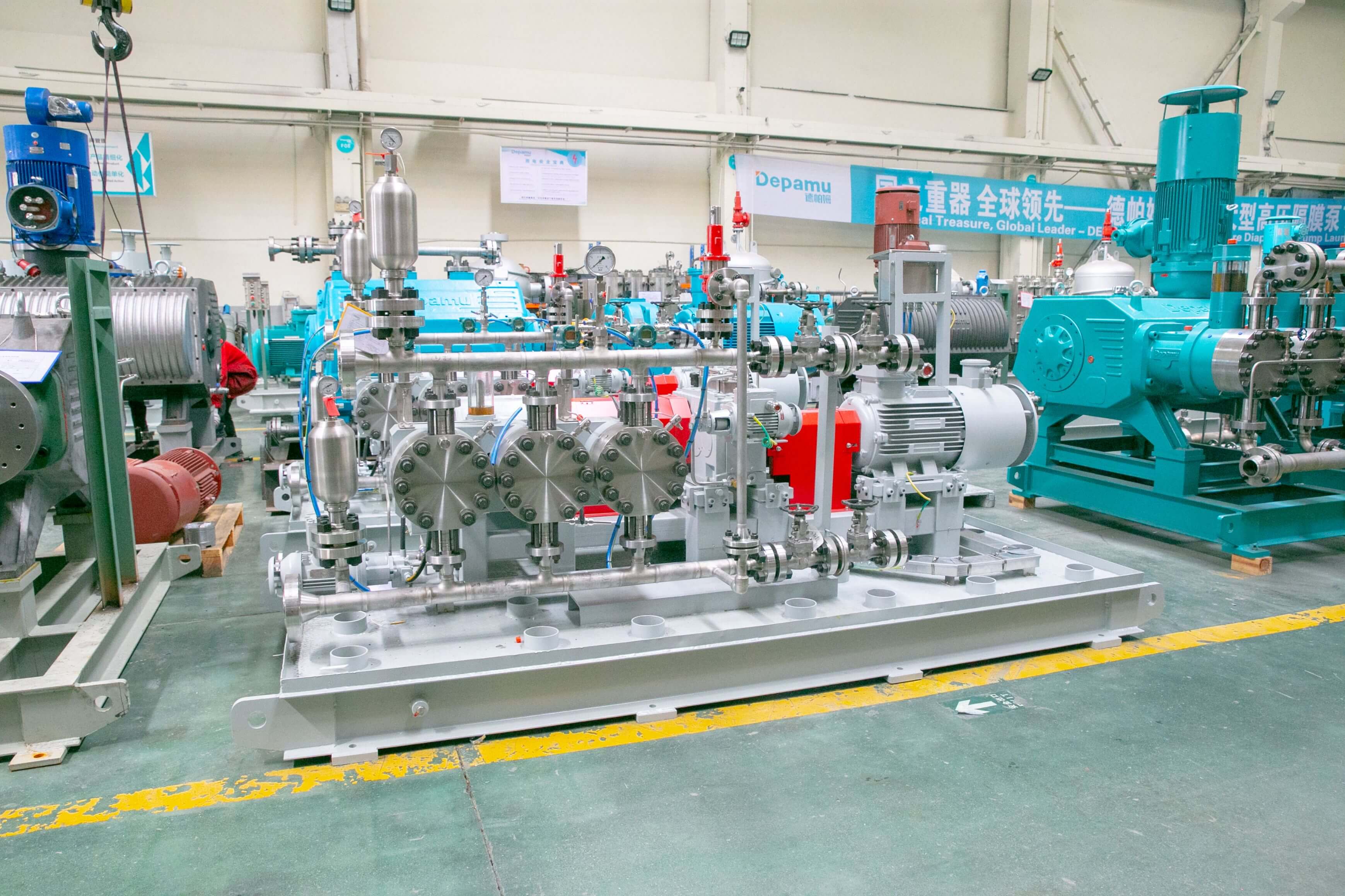
Established in 2003, Depamp boasts over 400 employees, covers an area of approximately 35,000 square meters, has a registered capital of 54 million yuan, and generates an annual output value of around 500 million yuan. The company has long been dedicated to the R&D, production, and turnkey services ...
No. 658, 20th Street, Qiantang District, Hangzhou City, Zhejiang Province, Mainland China