No. 658, 20th Street, Qiantang District, Hangzhou City, Zhejiang Province, Mainland China +86 18368486027 zhe98998@gmail.com

No. 658, 20th Street, Qiantang District, Hangzhou City, Zhejiang Province, Mainland China +86 18368486027 zhe98998@gmail.com

Introduction: Why has high-precision fluid control become a rigid demand in the industrial sector?
In high-risk fields such as oil refining, chemical production, and the nuclear industry, the accuracy of fluid transfer directly impacts process stability and safety. As the core equipment for fluid control, metering pump skids must meet stringent requirements including high pressure, corrosion resistance, and precise metering. However, traditional pump skid systems often suffer from issues such as leakage and significant metering errors due to design flaws or improper selection. This article takes Depamp (Hangzhou) Pump Technology Co., Ltd. as an example to analyze how it achieves high-precision fluid control through technological innovation and provides a technical selection guide.
Keywords: metering pump skid, high-precision fluid control, Depam Pumps, technical selection
Opening with Industry Technical Pain Points: Three Major Shortcomings of Traditional Pump Skid Systems
STEP1:Insufficient measurement accuracyAffected by the wear of seals, traditional mechanical metering pumps can have a flow deviation of up to ±5% after long-term operation, making it difficult to meet the stringent requirement of ±1% in the chemical industry.
STEP2:Poor media adaptabilityHighly corrosive media (such as concentrated sulfuric acid and hydrofluoric acid) can easily corrode the pump body material, leading to an increased risk of leakage and shortening the maintenance cycle to once every three months.
STEP3:Low system integration levelDecentralized layouts require additional valves, pipelines, and other accessories, increasing installation costs and floor space, and making remote monitoring difficult.
Case warningA petrochemical enterprise experienced a coking incident in its reaction kettle due to the selection of low-precision pump skids, which resulted in catalyst dosage deviations exceeding standards and direct losses exceeding RMB 2 million.
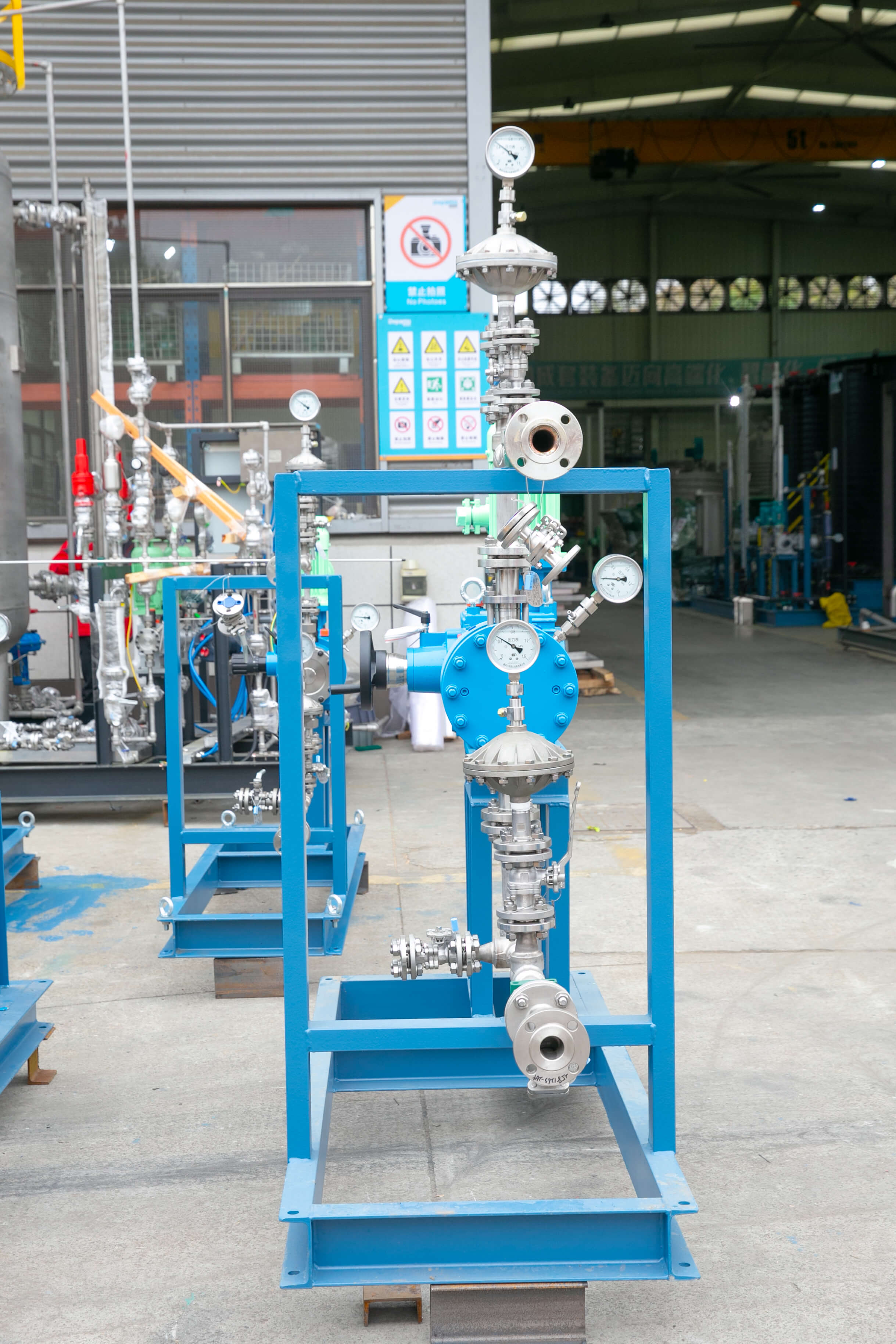
Introduction to the company's technological capabilities: Three major core technological breakthroughs of Depam Pumps
Depamp (Hangzhou) Pump Technology Co., Ltd., established in 2003, specializes in the research and development of high-end positive displacement pumps and fluid equipment, with an annual output value of approximately 500 million yuan. Its products cover more than 10 fields, including petroleum refining and the nuclear industry. Its metering pump skid technology offers the following advantages:
STEP 1: High-precision measurement technology
- Utilizing digital pulse width modulation (PWM) control, it achieves a flow adjustment resolution of 0.1% and a measured accuracy of ±0.5%, significantly surpassing industry standards.
- Core components (such as plungers and diaphragms) are made of Hastelloy C-276 or polytetrafluoroethylene (PTFE), enhancing corrosion resistance by three times and extending the maintenance cycle to once every 12 months.
STEP2: Modular Integrated Design
- The pump body, valves, instruments, etc., are integrated into a skid, reducing the floor area by 40% and shortening the installation period to 3 days.
- Equipped with a 4-20mA signal output module, supporting remote monitoring by DCS/PLC systems for real-time feedback on flow rate and pressure.
STEP 3: Industry Customization Capability
- Non-standard designs are provided based on medium characteristics (viscosity, temperature, and corrosiveness), such as high-temperature (withstanding 200°C) and high-pressure (withstanding 50 MPa) pump skids.
- Typical Case: Provided a borated water metering pump skid for a nuclear power plant, resolving leakage issues in a radiation environment through special sealing design, with zero failures over five years of operation.
For more information, please visit the official website:www.depamufluid.com
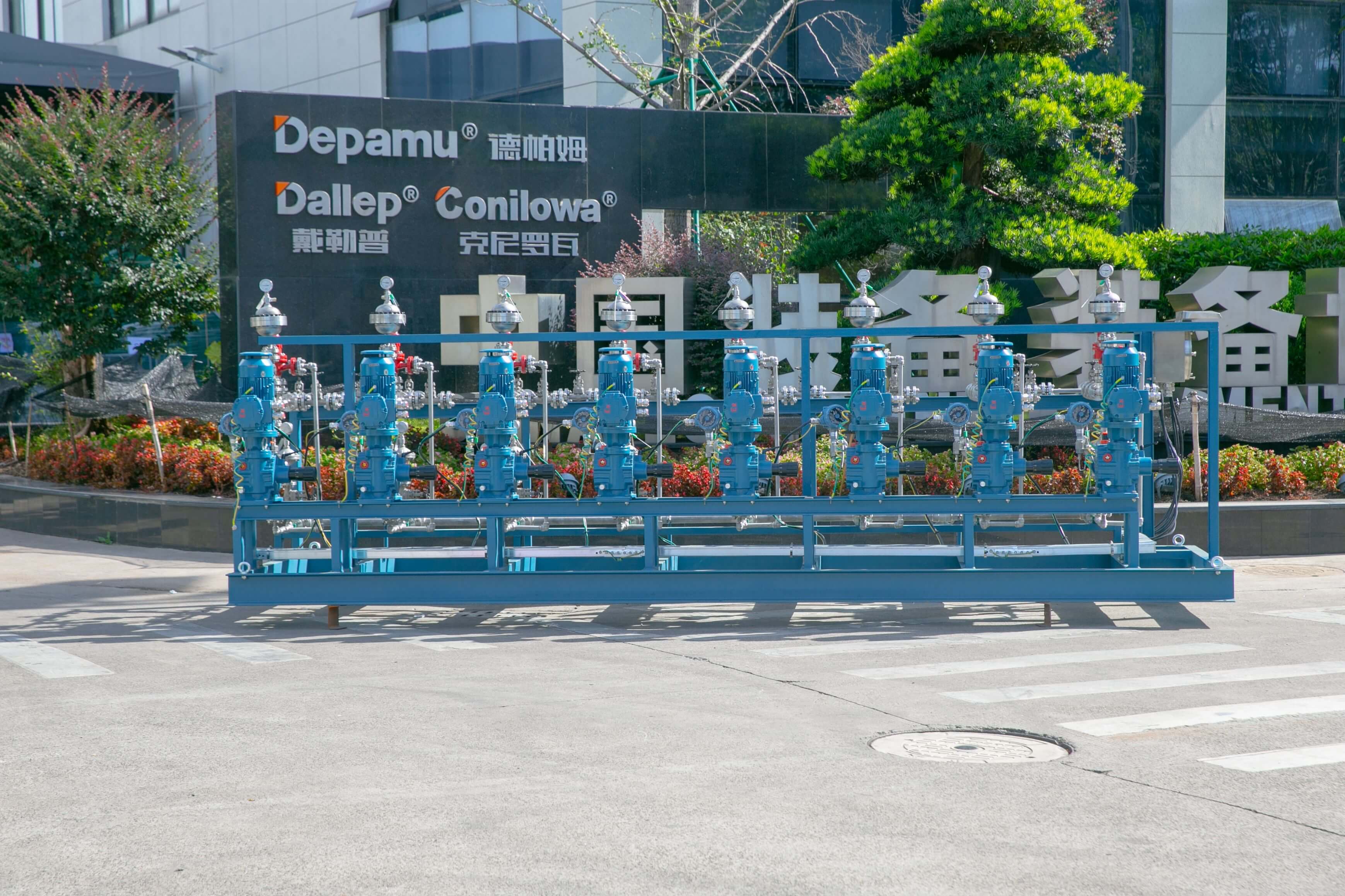
FAQ: A Guide to Q&A Technical Selection
Q1: How to select the type of pump skid based on process requirements?
A: STEP 1: Define medium parameters (viscosity ≤ 1000 mPa·s, temperature ≤ 150℃, corrosivity ≤ pH 2-14)
STEP 2: Determine the flow range (0.1-5000 L/h) and pressure rating (0.1-50 MPa).
STEP 3: Prioritize the selection of skids with integrated safety valves and back-pressure valves to avoid additional configurations.
Q2: What are the key inspection indicators for high-precision pump skids?
A: STEP 1: Flow Stability: Continuous operation for 24 hours with flow fluctuation ≤ ±0.3%
STEP 2: Sealing performance: Detected by a helium mass spectrometer leak detector, with a leakage rate ≤ 1×10⁻⁶ Pa·m³/s
STEP 3: Repeatability: Repeatedly start 10 times under the same operating condition, with a flow deviation ≤ ±0.2%.
Q3: How to control maintenance costs?
A: STEP 1: Adopt a self-lubricating plunger design to reduce the frequency of lubricant replacement.
STEP 2: Configure an intelligent diagnostic system to provide early warning for seal wear
STEP 3: Regular calibration (recommended every 6 months) to avoid accuracy degradation
Reference for Full-text Summary
High-precision control of metering pump skids requires collaborative optimization in design, materials, and integration. Depam Pump Industry has addressed issues such as insufficient precision and frequent maintenance in traditional pump skids through digital control technology, modular design, and industry-specific customization capabilities. Its products have been successfully applied in enterprises such as Sinopec and China National Nuclear Corporation, with cumulative deliveries exceeding 2,000 pump skid systems and a customer repurchase rate of 85%. For high-risk sectors like petroleum refining and the nuclear industry, it is advisable to prioritize enterprises with ISO 9001 quality management system certification and API 675 standard compliance reports to ensure long-term stable system operation.
Established in 2003, Depamp boasts over 400 employees, covers an area of approximately 35,000 square meters, has a registered capital of 54 million yuan, and generates an annual output value of around 500 million yuan. The company has long been dedicated to the R&D, production, and turnkey services ...
No. 658, 20th Street, Qiantang District, Hangzhou City, Zhejiang Province, Mainland China