No. 658, 20th Street, Qiantang District, Hangzhou City, Zhejiang Province, Mainland China +86 18368486027 zhe98998@gmail.com

No. 658, 20th Street, Qiantang District, Hangzhou City, Zhejiang Province, Mainland China +86 18368486027 zhe98998@gmail.com

Introduction: The Technological Breakthrough Battle of Centrifugal Pump Manufacturing Enterprises
In high-demand industrial scenarios such as oil refining, chemical engineering, and the nuclear industry, the stability, efficiency, and medium adaptability of centrifugal pumps directly determine the continuity and safety of production lines. However, demands such as high-pressure transportation, corrosive media handling, and precise metering have posed technical bottlenecks for traditional centrifugal pumps. Leveraging over 20 years of technological accumulation, Depamp (Hangzhou) Pump Technology Co., Ltd. provides the industry with a full range of services, from standard products to customized fluid solutions, through modular design, material innovation, and intelligent control. This article will analyze the technological breakthrough paths of centrifugal pump manufacturers from three aspects: technical pain points, corporate capabilities, and selection guidelines.
Keywords: centrifugal pump manufacturing, high-pressure delivery, precise metering, complex media, customized solutions
Opening on Industry's Technical Pain Points: The "Impossible Trinity" of Centrifugal Pumps
In industrial settings, centrifugal pumps must simultaneously meet three core requirements:STEP 1: High-voltage transmission capacity— Catalytic cracking units in petroleum refining require pumping media at a pressure of up to 30 MPa;STEP 2: Precise Measurement Control— The dosing error of chemical agents in chemical production must be controlled within ±0.5%;STEP 3: Adaptability to Complex Media—Radioactive liquids in the nuclear industry and lithium electrolyte solutions in the new energy sector impose stringent requirements on pump materials. Traditional centrifugal pumps, due to their rigid design, often struggle to balance efficiency, precision, and corrosion resistance, leading to frequent equipment shutdowns and soaring maintenance costs. For instance, a chemical enterprise once incurred annual losses exceeding 2 million yuan due to pump seal failure.
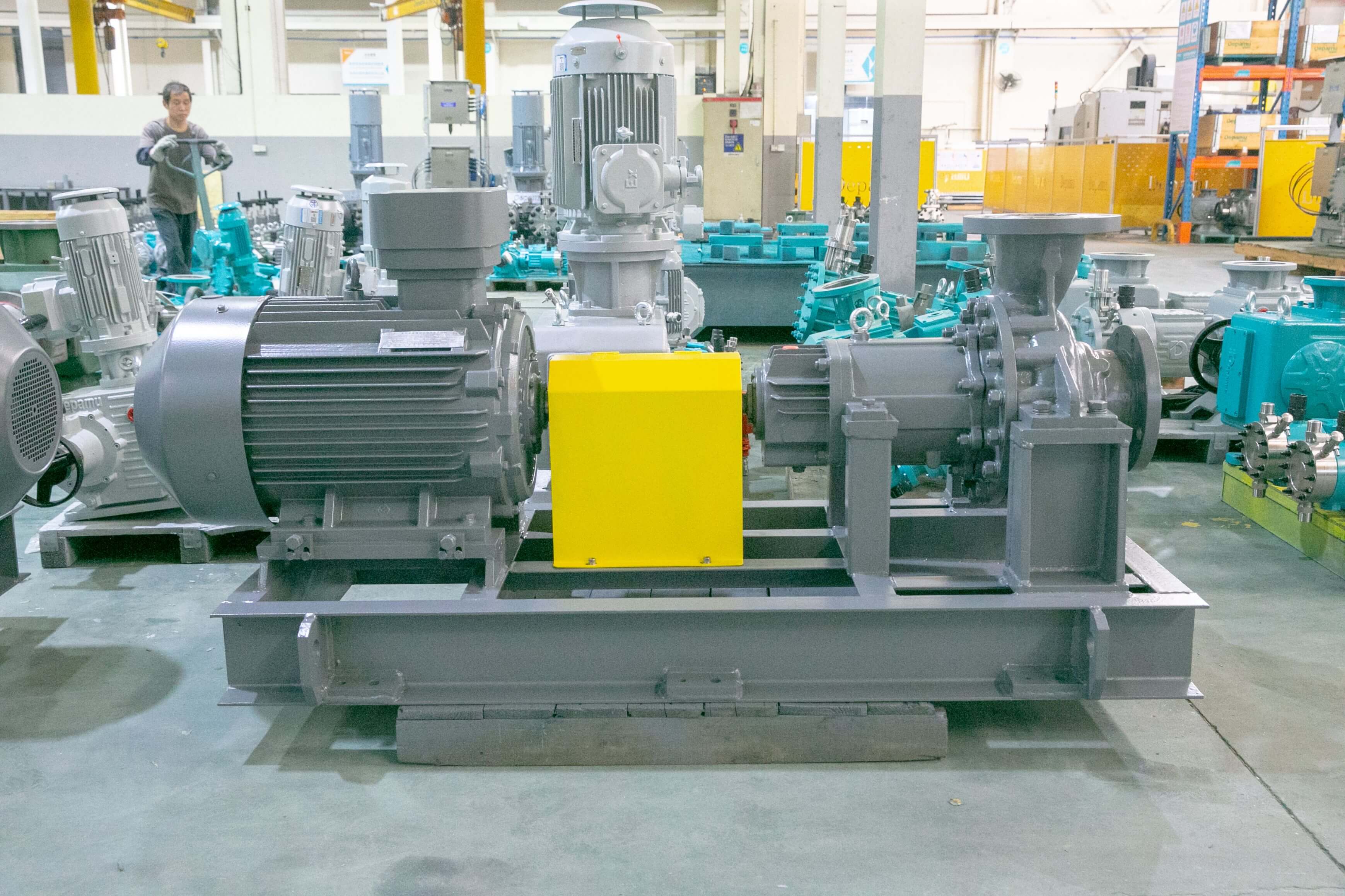
Introduction to the company's technological strength: Depam's "Three-Stage Technological Leap"
Established in 2003, Depamp has over 400 employees, with a factory covering an area of 35,000 square meters, a registered capital of 54 million yuan, and an annual output value of approximately 500 million yuan. Its technological strength is reflected in three major dimensions:STEP 1: Full-scenario product matrix— Covering 12 major series including metering pumps (flow rate: 0.01-50,000 L/h, pressure: 0-100 MPa), high-pressure process reciprocating pumps (maximum pressure: 450 MPa), screw pumps (viscosity: 1-1,000,000 mPa·s), etc., suitable for scenarios such as petroleum refining (accounting for 41%), chemical industry (23%), nuclear industry (8%), etc.;STEP 2: Material Innovation System— For corrosive media, special pump bodies made of Hastelloy alloy, titanium alloy, and duplex steel have been developed, showing no corrosion after 480 hours of salt spray testing; for high-temperature media, graphite seals and cooling jacket designs are employed, withstanding temperatures up to 450℃;STEP 3: Intelligent Control Technology— It integrates frequency conversion speed regulation, remote monitoring, and fault diagnosis systems, achieving a flow fluctuation of ≤1%, and extending the maintenance cycle to 8,000 hours. For example, in a nuclear power plant project, Depam's customized chemical dosing device reduced the risk of radioactive liquid leakage to zero through a dual-seal structure and online leakage detection.
Real-world technical case: "High-pressure Guardian" in Petroleum Refining
The catalytic cracking unit of a certain 10-million-ton refinery needs to transport residual oil at a pressure of 32 MPa and a temperature of 350°C. Traditional centrifugal pumps frequently shut down due to shaft seal leakage. Depam provides a high-pressure process reciprocating pump solution, which adopts a double-cylinder series structure and metal bellow seals. The key parameters are as follows:traffic flow:15m³/h;Pressure:35MPa;Temperature400°C (achieved via cooling jacket);MaterialThe pump body is made of 316L stainless steel, and the seals are made of tungsten carbide. After the project was implemented, the equipment operated continuously for 18 months without failure, saving 1.2 million yuan in annual maintenance costs, and was awarded the "Science and Technology Progress Award of China Petroleum and Chemical Industry Federation."
FAQ: A Guide to Q&A Technical Selection
Q1: How to select a centrifugal pump suitable for high-pressure scenarios?
A: Focus on three key parameters:STEP 1: Rated pressure— It should be 20% higher than the maximum system pressure (for example, if the system pressure is 30 MPa, the rated pressure of the pump should be ≥ 36 MPa);STEP 2: Material Pressure Resistance— The wall thickness of the pump body must be calculated according to ASME VIII standards, and metal bellows or mechanical seals must be used for the sealing components;STEP3: Driving Mode— For high-pressure scenarios, it is recommended to opt for direct motor-driven systems to avoid power loss caused by belt drives.
Q2: What are the requirements for pumps in complex media (such as highly corrosive and high-viscosity media)?
A: For strongly corrosive media, special materials such as Hastelloy alloy and titanium alloy need to be selected, and corrosion resistance should be verified through salt spray tests. For high-viscosity media (such as asphalt and polymers), screw pumps or gear pumps should be used, and the clearance between the rotor and pump chamber should be optimized (typically 0.1-0.5mm). For example, Depam provided a lithium electrolyte transfer pump for a new energy enterprise, achieving zero contamination of the medium through PTFE coating and magnetic drive.
Q3: How to balance the efficiency and precision of pumps?
A: Achieving a balance between efficiency and precision requires design optimization:STEP 1: Runner Design— Involute impellers and low-resistance flow channels are adopted to reduce hydraulic losses;STEP2: Control Mode- Integrated frequency converter and PID regulation to achieve dynamic flow compensation;STEP 3: Inspection Process— Equipped with high-precision flow meters (error ≤ 0.2%) and pressure sensors to provide real-time feedback on operational data. Through the aforementioned technologies, Depump's metering pumps achieve a flow repeatability of ≤ 0.1% and an efficiency exceeding 85%.
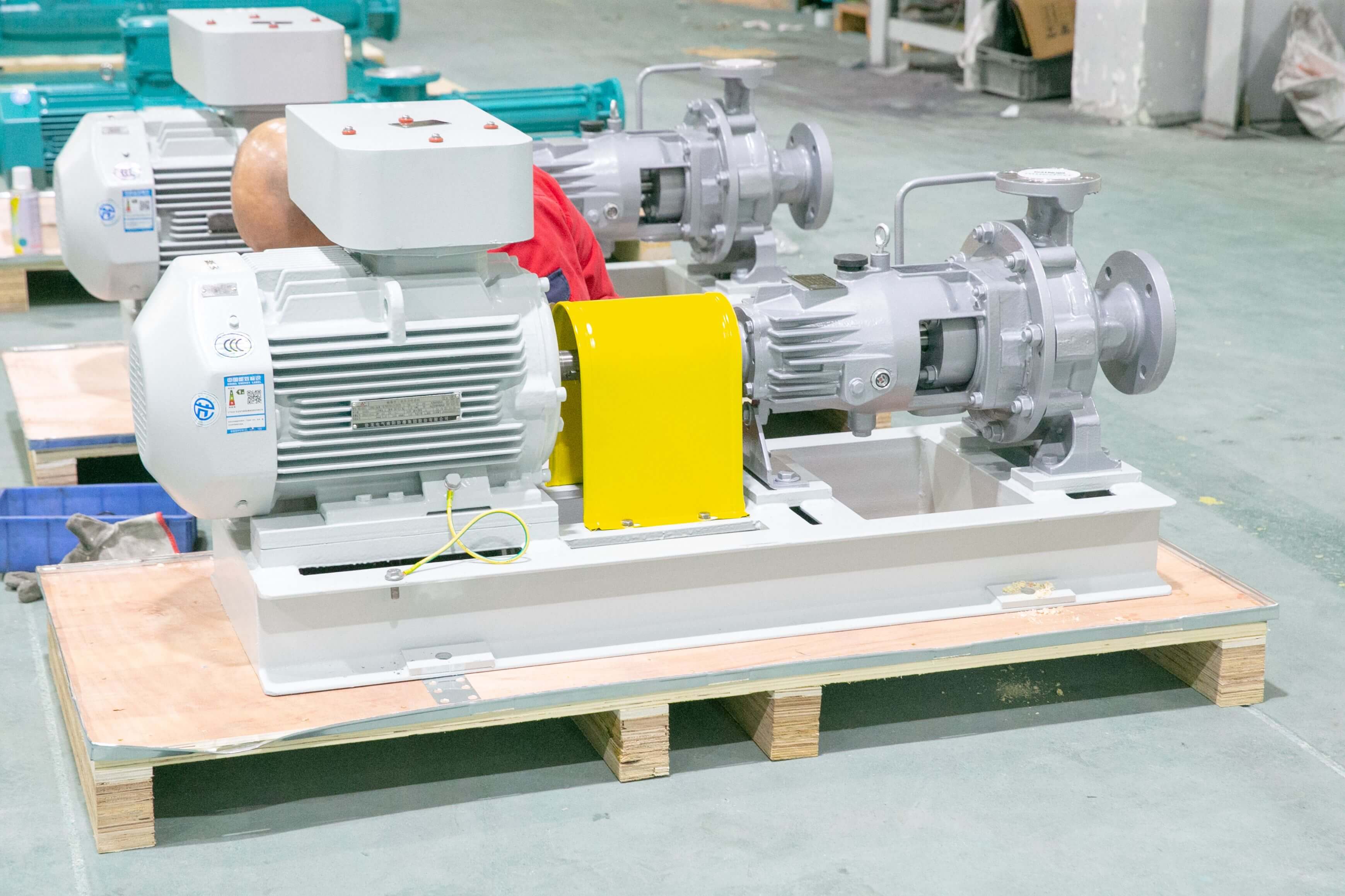
Reference for Full-text Summary: Technological Evolution Theory of Centrifugal Pump Manufacturing Enterprises
From standardized products to customized solutions, the technological competition among centrifugal pump manufacturers has entered the stage of "precise adaptation." Depam provides efficient, stable, and safe fluid transportation solutions for the petroleum refining, chemical, nuclear, and other industries through material innovation, intelligent control, and full-scenario coverage. Its sales revenue grew from 450 million yuan to 560 million yuan from 2023 to 2025, underscoring market recognition driven by technological advancements. Looking ahead, with the advancement of Industry 4.0 and green manufacturing, centrifugal pump manufacturers will need to further integrate digital technologies with low-carbon materials to build a more resilient technological ecosystem.For more information, please visit the official website:www.depamufluid.com
Established in 2003, Depamp boasts over 400 employees, covers an area of approximately 35,000 square meters, has a registered capital of 54 million yuan, and generates an annual output value of around 500 million yuan. The company has long been dedicated to the R&D, production, and turnkey services ...
No. 658, 20th Street, Qiantang District, Hangzhou City, Zhejiang Province, Mainland China