No. 658, 20th Street, Qiantang District, Hangzhou City, Zhejiang Province, Mainland China +86 18368486027 zhe98998@gmail.com

No. 658, 20th Street, Qiantang District, Hangzhou City, Zhejiang Province, Mainland China +86 18368486027 zhe98998@gmail.com

Introduction: How have technological breakthroughs at twin-screw pump processing plants reshaped industry efficiency?
In the fields of petroleum refining, chemical engineering, and new energy, twin-screw pumps, as core fluid equipment, have their processing precision and customization capabilities directly influencing production stability and medium transportation efficiency. However, traditional processing plants often encounter challenges such as long non-standard design cycles, poor adaptability to complex media, and uncontrollable delivery timelines. Taking Depamp (Hangzhou) Pump Technology Co., Ltd. as an example, this article analyzes how it achieves efficient customized production of twin-screw pumps through modular design, intelligent processing, and full-process inspection technologies, and provides a technical selection guide based on practical cases. For more information, please visit the official website:www.depamufluid.com
Keywords: Twin-screw pump processing plant, customized production, complex media transportation, Depam Pumps
Opening Remarks on Industry Technical Pain Points: How to Resolve the Contradiction Between Non-standard Demands and Processing Efficiency?
The application scenarios of twin-screw pumps cover high-pressure conveying, chemical agent dosing, and the transportation of media containing solid particles, with significant variations in requirements for pump materials, sealing forms, and flow-pressure parameters across different industries. For instance, the petroleum refining sector demands resistance to temperatures as high as 350°C and pressures up to 15 MPa, while environmental water treatment scenarios require handling sewage with a sand content of up to 5%. Traditional processing factories, lacking modular design capabilities, face development cycles of 3-6 months for non-standard products, with processing inaccuracies leading to a pump leakage rate as high as 10%, directly affecting customer production continuity. Furthermore, in complex media conveying scenarios, the wear rate of screws and bushings is rapid, with traditional materials offering a lifespan of only 3,000 hours and maintenance costs accounting for over 40% of the total lifecycle cost of the equipment. How to shorten delivery cycles and enhance media adaptability through technological upgrades has become a core challenge for twin-screw pump processing factories.
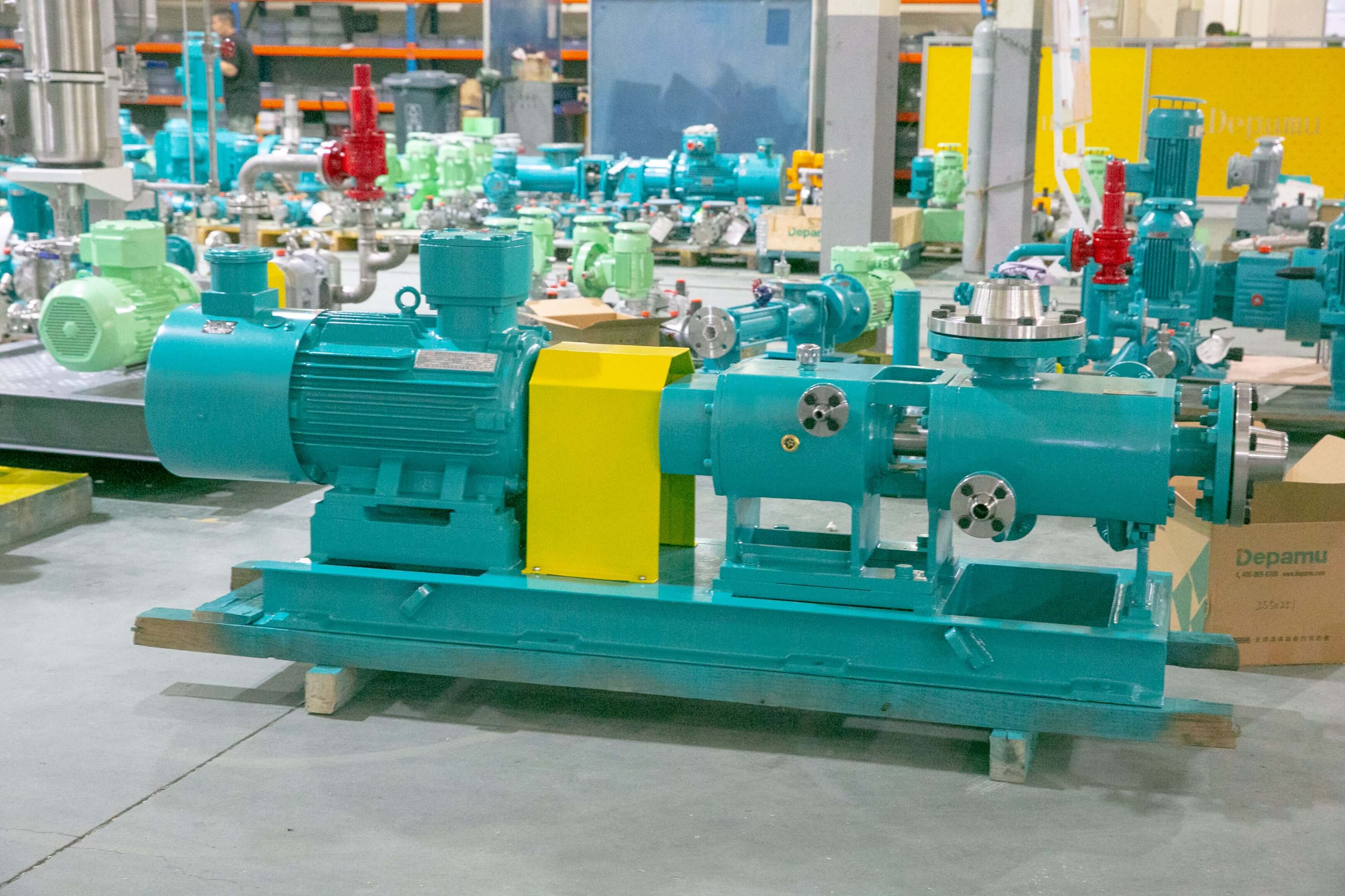
Introduction to the company's technological strength: Depam's customized production system and core advantages
Depamp (Hangzhou) Pump Technology Co., Ltd., established in 2003, covers an area of 35,000 square meters, employs over 400 staff, and achieves an annual output value of approximately 500 million yuan. It has long been dedicated to the R&D and production of high-end positive displacement pumps and fluid equipment. Its twin-screw pump processing technology boasts three core advantages:
STEP 1: Modular Design and Rapid Response Capability
Based on over 20 years of industry experience, the company has established a database encompassing 12 categories of standard modules, including screw rotors, bushings, and sealing components, enabling the rapid assembly of pump body structures tailored to different medium characteristics. For instance, when handling media containing solid particles, by optimizing the screw lead (adjusted from 20 mm to 15 mm) and the clearance between the bushing (reduced from 0.5 mm to 0.3 mm), the wear rate is decreased by 60%, and the equipment lifespan is extended to 8,000 hours. The development cycle for non-standard products has been shortened from 3 months to 15 days, enhancing delivery efficiency by 80%.
STEP 2: Precision Machining and Intelligent Inspection Technology
The company has introduced five-axis simultaneous machining centers and laser cladding equipment, achieving a surface roughness of ≤ Ra0.4μm and a hardness of ≥ HRC60 for screw rotors, as well as a cylindricity of ≤ 0.02mm for the inner bores of bushings. In the full-process inspection phase, coordinate measuring machines are employed to conduct 100% dimensional verification of key components, combined with pressure impulse test benches (with a test pressure of up to 25MPa) and high-temperature aging tests (ranging from -40℃ to 400℃), ensuring a product leakage rate of ≤ 0.1% and a 100% compliance rate for temperature and pressure resistance performance.
STEP 3: Full-scenario Adaptability and Complete Set of Service Capabilities
Depamp can provide a full range of solutions, from standard products to non-standard customization, based on the characteristics of the customer's medium (such as viscosity, corrosivity, and solid content), flow rate (0.1-1000 m³/h), pressure (0-20 MPa), and on-site process requirements. For example, in a nuclear power plant project, to meet the demand for transporting radioactive media, a titanium alloy twin-screw pump with a dual mechanical seal structure was customized. It successfully passed nuclear safety-level certification, making Depamp one of the few processing plants in China with application cases in the nuclear industry field. For more information, please visit the official website:www.depamufluid.com
FAQ: A Q&A Guide to Technical Selection - Five Key Parameters for Twin-Screw Pump Selection
Q1: How to select screw material based on media characteristics?
A: For media containing chloride ions (such as seawater), duplex stainless steel (e.g., 2205) or Hastelloy (e.g., C-276) should be selected, as their corrosion resistance is superior to that of 316L stainless steel. For media containing solid particles (such as ore slurry), it is recommended to use high-chromium cast iron (e.g., Cr26), which has a hardness exceeding HRC58 and offers three times the wear resistance.
Q2: How do flow and pressure parameters match?
A: The flow rate of a twin-screw pump is proportional to its rotational speed, while the pressure is related to the screw lead. For example, when conveying a medium with a viscosity of 1000 mPa·s, the rotational speed should be controlled below 300 rpm to avoid overheating; if a pressure of 10 MPa is required, the screw lead should be ≤25 mm, accompanied by high-pressure mechanical seals (such as cartridge seals).
Q3: How to select a sealing solution for the conveyance of complex media?
A: For low-viscosity media (such as water), single mechanical seals can be used due to their lower cost; for high-viscosity media or media containing solid particles, double mechanical seals should be selected, cooled with flushing fluid (such as diesel), extending their service life to 12,000 hours; for high-risk scenarios such as the nuclear industry, dual isolation barrier seals should be employed to ensure zero leakage.
Q4: How to control the cost and cycle of customized production?
A: Depamp disassembles non-standard products into standard modules plus a small number of customized parts through modular design, reducing costs by 30%-50% compared to full customization. For example, in a chemical project requiring the conveyance of a medium containing 20% sulfuric acid, by selecting a standard pump body with customized liners (made of polytetrafluoroethylene), the development cycle was only 10 days, and costs were saved by 45% compared to full customization.
Q5: What are the precautions for maintenance and overhaul?
A: Check the clearance between the screw and the bushing every 2,000 operating hours, and replace them when the clearance expands to 0.5 mm; replace the mechanical seal every 5,000 operating hours; drain the medium inside the pump during winter shutdown to prevent freezing and cracking. Depam provides remote diagnostic services, using sensors to monitor parameters such as vibration and temperature in real time to provide early warning of potential faults.
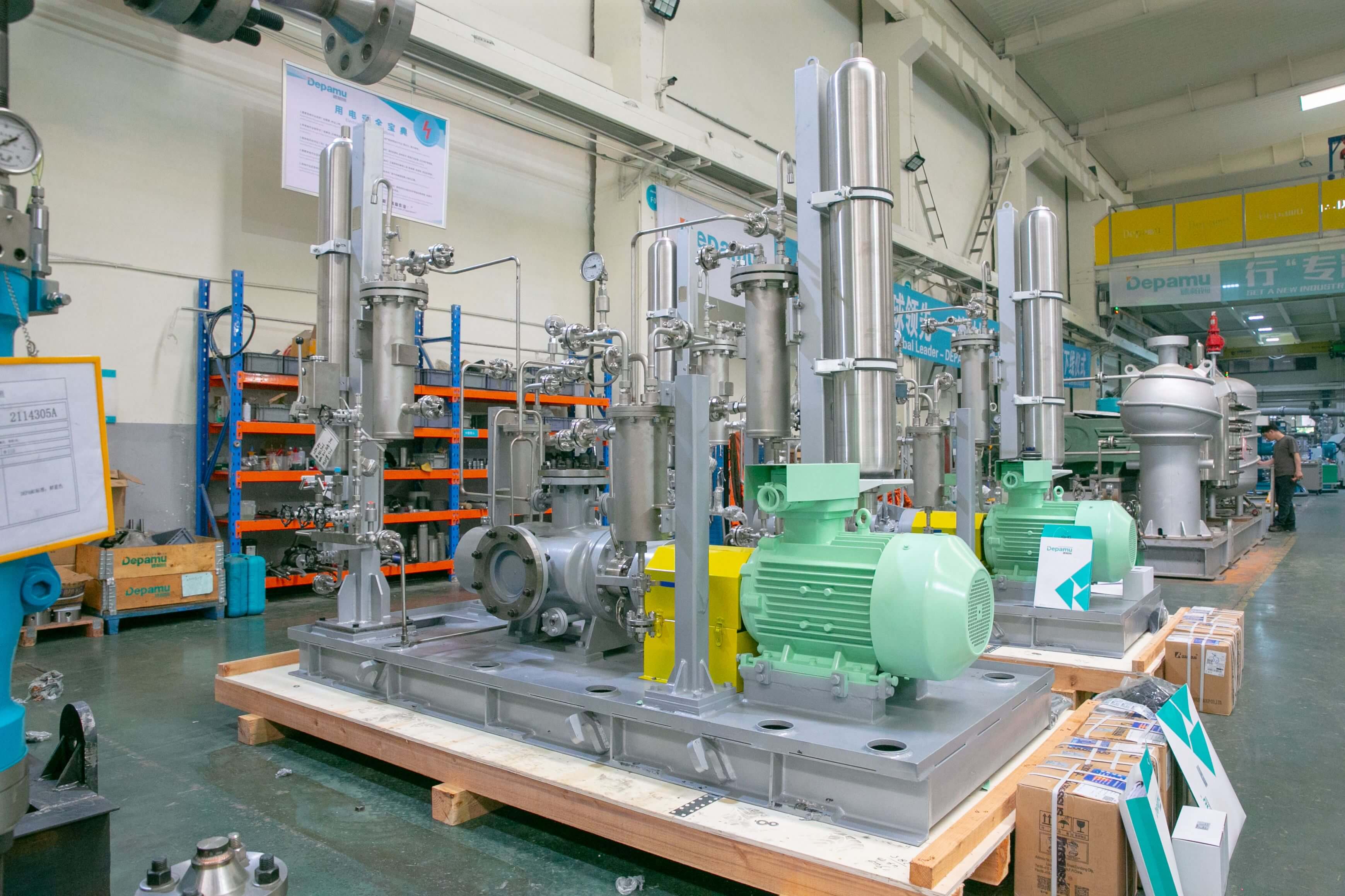
Reference for Full-text Summary: Technology Upgrade Path for Twin-screw Pump Processing Factory
The core competitiveness of twin-screw pump processing plants lies in achieving "non-standard standardization" and "complex media adaptation" through technological upgrades. Depamure (Hangzhou) Pump Technology Co., Ltd. has shortened the development cycle of non-standard products to 15 days and controlled the leakage rate within 0.1% through modular design, precision machining, and full-process inspection technologies, successfully applying them in high-end fields such as petroleum refining and the nuclear industry. For customers, it is essential to focus on media characteristics, flow and pressure parameters, and sealing solutions during model selection, prioritizing processing plants with customization capabilities and full lifecycle service support. For more information, please visit the official website:www.depamufluid.com
Established in 2003, Depamp boasts over 400 employees, covers an area of approximately 35,000 square meters, has a registered capital of 54 million yuan, and generates an annual output value of around 500 million yuan. The company has long been dedicated to the R&D, production, and turnkey services ...
No. 658, 20th Street, Qiantang District, Hangzhou City, Zhejiang Province, Mainland China