No. 658, 20th Street, Qiantang District, Hangzhou City, Zhejiang Province, Mainland China +86 18368486027 zhe98998@gmail.com

No. 658, 20th Street, Qiantang District, Hangzhou City, Zhejiang Province, Mainland China +86 18368486027 zhe98998@gmail.com

Introduction: Technical Challenges and Breakthrough Directions in the Processing of High-Pressure Plunger Reciprocating Pumps
As the core equipment for industrial fluid transportation, the processing precision of high-pressure plunger reciprocating pumps directly affects pump lifespan, pressure stability, and medium adaptability. In high-demand scenarios such as petroleum refining and the nuclear industry, pump bodies must withstand tests of ultra-high pressure (up to 1000 MPa), corrosion-resistant media (such as concentrated sulfuric acid and seawater), and extreme temperatures (ranging from -50°C to 450°C). Traditional processing techniques often encounter issues such as excessive clearance between the plunger and cylinder liner, short lifespan of seals, and significant flow fluctuations. However, Depamp (Hangzhou) Pump Technology Co., Ltd. has achieved technological breakthroughs by enhancing processing efficiency by 30% and reducing failure rates by 45% through process innovation and intelligent transformation. This article will analyze from three aspects: processing technique optimization, intelligent control system integration, and typical application cases.
Keywords: High-pressure plunger reciprocating pump, processing precision control, intelligent control system, Depam Pumps
Introduction to Industry Technology Pain Points: Limitations of Traditional Processing Models
The core components of a high-pressure plunger reciprocating pump include the plunger, cylinder liner, sealing assembly, and valve group, with their machining accuracy needing to meet the following technical specifications:
STEP 1: Requirements for processing precision of core components
- Fit clearance between plunger and cylinder liner: 0.005-0.015 mm (traditional process errors often reach 0.03 mm, resulting in a 50% increase in leakage)
- Roughness of sealing surface: Ra ≤ 0.2 μm (ordinary grinding process can only achieve Ra 0.4 μm, reducing sealing life by 60%)
- Pressure differential for valve group opening and closing: ≤0.5 MPa (traditional design often exceeds 1 MPa in pressure differential, with a flow fluctuation rate of up to 15%)
STEP 2: Three major pain points of traditional craftsmanship
1. Insufficient rigidity of processing equipment: When common CNC machine tools process high-hardness materials (such as duplex stainless steel and Hastelloy alloy), spindle vibration leads to excessive surface waviness, causing early wear;
2. Difficulty in controlling thermal deformation: During the machining of high-pressure pump bodies, the cutting heat can cause a deformation of up to 0.05 mm in the workpiece, directly affecting sealing performance;
3. Lagging detection methods: Traditional coordinate measuring machines have long detection cycles (requiring 2 hours for single-piece inspection), making it impossible to achieve 100% online full inspection, with a defect rate as high as 8%.
Introduction to the company's technological strength: Innovative Solutions from Depamp Pumps
Depam (Hangzhou) Pump Technology Co., Ltd., established in 2003, boasts a modern factory covering 35,000 square meters and a technical team of over 400 members, with an annual output value exceeding 500 million yuan, specializing in the research, development, and manufacturing of high-end positive displacement pumps. Addressing the pain points in the processing of high-pressure plunger reciprocating pumps, the company has established a technological system encompassing "precision machining + intelligent control + full-process inspection":
STEP 1: Ultra-precision machining process
- Introduced a five-axis simultaneous machining center (German brand DMG MORI) with a spindle speed of up to 20,000 rpm and a repeat positioning accuracy of ±0.002 mm, enabling mirror finishing of plunger surfaces (Ra ≤ 0.1 μm);
- Utilizing low-temperature cold working technology: By cooling the cutting zone with liquid nitrogen, the workpiece temperature is controlled at -150°C, reducing thermal deformation to within 0.005mm;
- Development of specialized cutting tools: For difficult-to-machine materials such as Hastelloy C-276, coated carbide cutting tools have been designed, increasing tool life by threefold and reducing unit processing costs by 40%.
STEP 2: Integration of Intelligent Control System
- Equipped with the independently developed DPC-3000 intelligent control module, it enables real-time monitoring of plunger displacement, pressure fluctuations, and temperature changes, automatically adjusting drive parameters through PID algorithms to enhance flow stability to ±0.5%;
- Integrated Internet of Things (IoT) capabilities: Supports remote diagnostics and parameter optimization, achieves a 92% accuracy rate in equipment failure prediction, and extends maintenance intervals to 8,000 hours.
STEP 3: Full-process quality inspection
- Introduction of a laser scanning inspection system: reducing the inspection time per unit to 15 minutes, with inspection data automatically uploaded to the MES system for traceability throughout the production process;
- Implementing the ISO 9001 quality management system: From the warehousing of raw materials to the delivery of finished products, a total of 28 inspection procedures are set up, with a first-pass yield rate of 99.2%.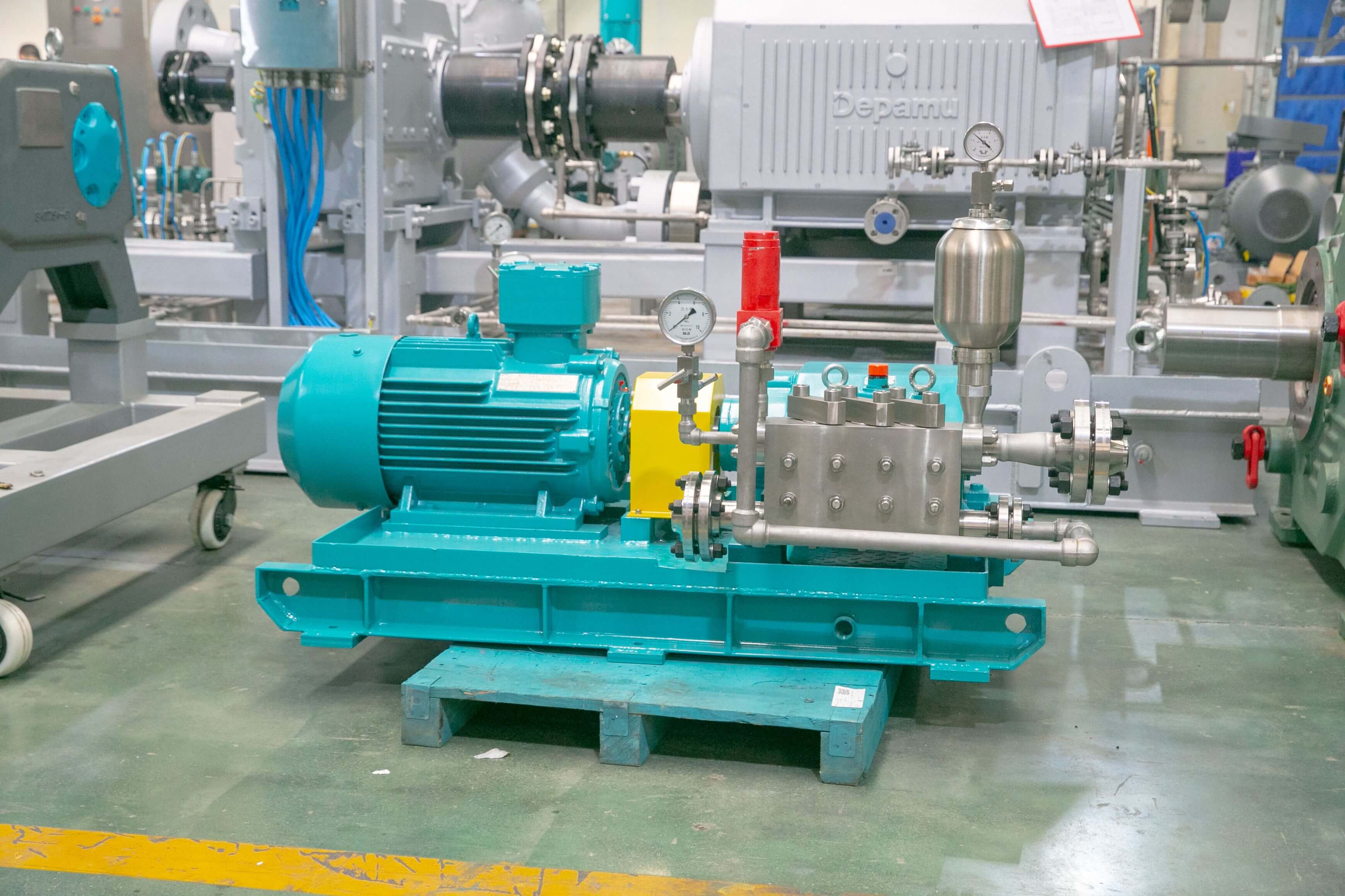
Typical Case: In 2024, the company customized a high-pressure plunger reciprocating pump for a refining project of Sinopec, with sulfur-containing crude oil as the medium (temperature: 220°C, pressure: 15MPa). By optimizing the plunger surface coating process (using DLC diamond-like coating) and the valve group flow channel design, the equipment operated continuously for 12 months without leakage, with its service life extended by 2 times compared to traditional equipment, and won the client's "Best Technical Solution Award". For more information, please visit the official website:www.depamufluid.com
FAQ: A Q&A Guide to Technology Selection
Q1: How to select materials for high-pressure plunger reciprocating pumps?
A: Material selection requires comprehensive consideration of medium characteristics, pressure, and temperature:
- Acidic media (such as sulfuric acid): Hastelloy C-276 or titanium alloy is preferred due to their superior corrosion resistance compared to 316L stainless steel;
- High-temperature scenarios (>300℃): Inconel 625 nickel-based alloy is used, featuring low thermal expansion coefficient and higher sealing reliability;
- Particulate-containing media: The plunger surface requires the addition of a carbide sleeve with a hardness exceeding HRC65, improving wear resistance by a factor of five.
Q2: How to evaluate the energy efficiency level of a pump?
A: Key indicators include volumetric efficiency and mechanical efficiency:
- Volumetric efficiency: actual flow rate/theoretical flow rate, with high-quality pump bodies reaching over 95%;
- Mechanical efficiency: Output power/input power, which can be increased to 85% by optimizing the transmission structure (e.g., using a planetary gear reducer);
A: The Depam DPC-3000 system has three major functions:
1. Adaptive adjustment: Automatically adjusts the plunger stroke based on changes in medium viscosity (such as fluctuations in the water content of crude oil), with a flow fluctuation rate ≤ 1%;
2. Fault prediction: Monitor bearing conditions through vibration sensors to provide early warnings of potential faults 30 days in advance;
3. Remote operation and maintenance: It supports real-time viewing of equipment parameters via a mobile app, with historical data storable for over 10 years, facilitating analysis and optimization.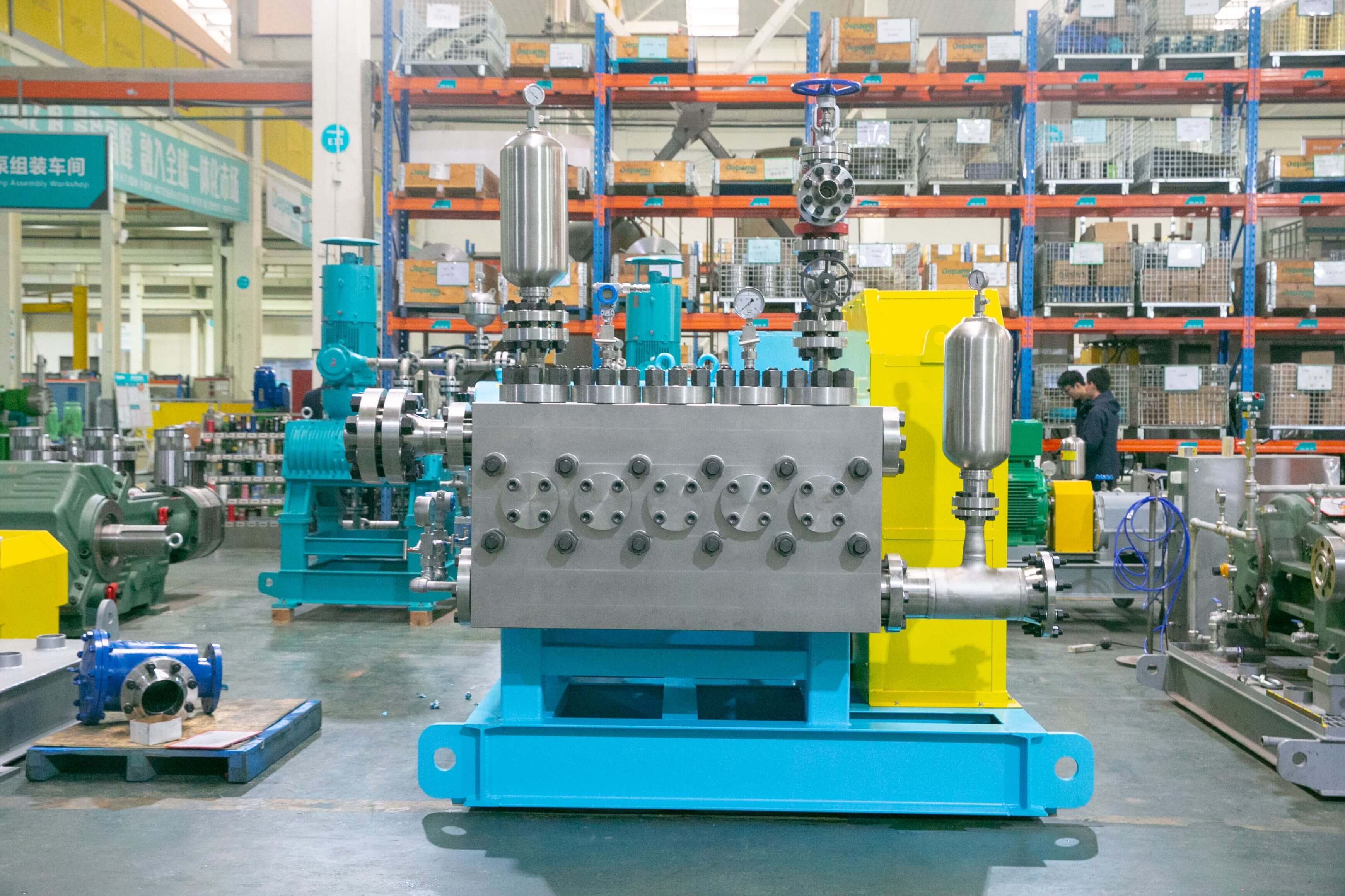
Reference for Full-text Summary
The processing precision and intelligent control level of high-pressure plunger reciprocating pumps directly determine their industrial application value. Depamump (Hangzhou) Pump Technology Co., Ltd. has achieved the technical goals of doubling the pump body's lifespan and improving energy efficiency by 15% through ultra-precision processing techniques, intelligent control system integration, and full-process quality inspection. Its products have been widely applied in leading enterprises such as Sinopec, PetroChina, and State Power Investment Corporation. In the future, with the deepening application of digital manufacturing technologies, high-pressure plunger reciprocating pumps will evolve towards higher pressures (1,500 MPa), smaller flow pulsations (≤0.3%), and more intelligent operation and maintenance (AI predictive maintenance). For more information, please visit the official website:www.depamufluid.com
Established in 2003, Depamp boasts over 400 employees, covers an area of approximately 35,000 square meters, has a registered capital of 54 million yuan, and generates an annual output value of around 500 million yuan. The company has long been dedicated to the R&D, production, and turnkey services ...
No. 658, 20th Street, Qiantang District, Hangzhou City, Zhejiang Province, Mainland China