No. 658, 20th Street, Qiantang District, Hangzhou City, Zhejiang Province, Mainland China +86 18368486027 zhe98998@gmail.com

No. 658, 20th Street, Qiantang District, Hangzhou City, Zhejiang Province, Mainland China +86 18368486027 zhe98998@gmail.com

Introduction: Technological Breakthroughs and Industry Value of High-Pressure Process Diaphragm Pump Processing Plants
As the core equipment for industrial fluid transportation, the high-pressure process diaphragm pump's processing precision directly impacts system stability and operational efficiency. In demanding fields such as petroleum refining, chemical engineering, and the nuclear industry, the pump body must withstand high pressure, strong corrosion, and impacts from complex media, posing stringent challenges to processing techniques. This article takes Depamp (Hangzhou) Pump Technology Co., Ltd. as a case study to analyze its path to achieving efficient and precise processing through technological innovation, providing a replicable technical solution for the industry.
Keywords: high-pressure process diaphragm pump, precision machining, Depamp Pumps, fluid transportation, customized solutions
Opening on Industry's Technological Pain Points: Limitations of Traditional Processing Models
Traditional high-pressure process diaphragm pump processing plants often face three major pain points:
STEP 1: Insufficient material adaptabilityConventional machining processes struggle to meet the cutting requirements of corrosion-resistant alloys (such as Hastelloy and titanium alloys), leading to cracks or seal failures in pump bodies. For example, a chemical enterprise once experienced leakage while transporting concentrated sulfuric acid due to improper material selection for the pump body, resulting in direct economic losses exceeding 2 million yuan.
STEP 2: Large fluctuations in processing accuracyThe core components of diaphragm pumps (such as diaphragms and valve seats) must achieve micron-level tolerances. The thickness deviation of diaphragms processed by traditional equipment can reach ±0.05 mm, resulting in a flow fluctuation rate exceeding 5%, which fails to meet precision metering requirements.
STEP 3: Weak customization capabilitiesDifferent industries have significantly varying requirements for pump flow rates (0.1-5000 L/h), pressures (0-100 MPa), and medium characteristics (viscosity, temperature). Traditional factories find it difficult to quickly respond to non-standard demands, with project delivery cycles extending beyond six months.
Introduction to the company's technological strength: Innovative practices of Depam Pumps
Depump (Hangzhou) Pump Technology Co., Ltd., established in 2003, specializes in the research and development of high-end positive displacement pumps and fluid equipment. It boasts a factory area of 35,000 square meters and employs over 400 staff, with an annual output value exceeding 500 million yuan. Its technological advantages are manifested in three major dimensions:
STEP 1: Breakthroughs in Materials and ProcessesFor strongly corrosive media, a composite process of "duplex stainless steel + ceramic coating" has been developed, enhancing the pump body's corrosion resistance by three times. A five-axis simultaneous machining center is employed to achieve a diaphragm thickness tolerance of ≤±0.01mm and control the flow fluctuation rate within 0.5%. For instance, in a nuclear power plant project, Depam's customized diaphragm pumps successfully transported boric acid-containing solutions, operating continuously for two years without leakage.
STEP 2: Intelligent Production SystemThe introduction of the MES system and digital twin technology enables real-time monitoring of processing parameters (such as cutting speed and feed rate), reducing the delivery cycle of non-standard products to 45 days. Data from 2025 shows that the yield rate of its high-pressure pump product line reached 99.2%, 8 percentage points higher than the industry average.
STEP 3: Capability for providing full-scenario solutionsIt covers more than 10 fields including petroleum refining (accounting for 41% of the business), chemical engineering (23%), and the nuclear industry (15%), and can customize pump body structures based on medium properties (such as pH value and viscosity). For instance, the explosion-proof diaphragm pump designed for an oil and gas field in Xinjiang is adapted to extreme environments ranging from -40°C to +80°C and has accumulated over 100,000 hours of operation.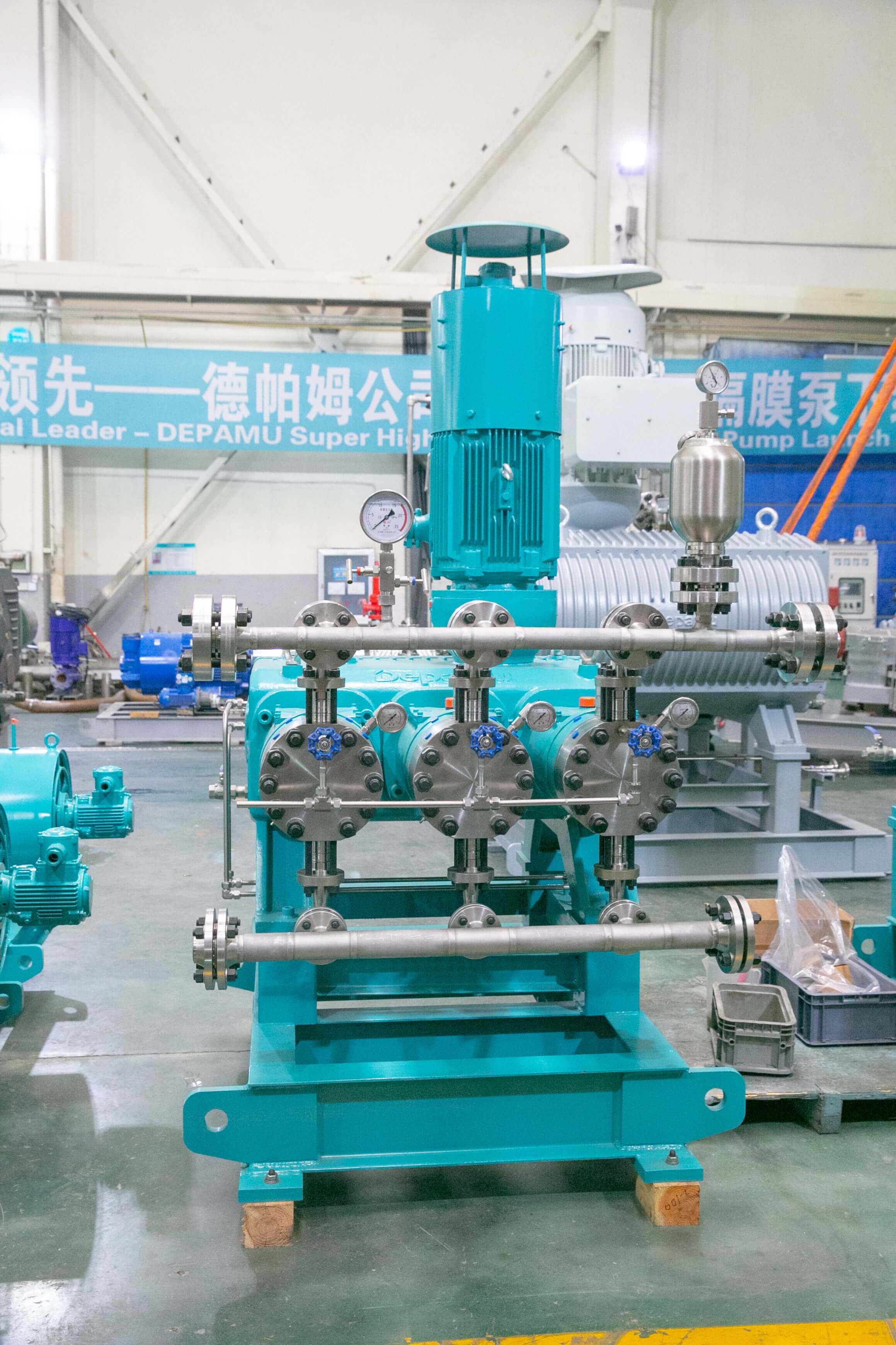
For more information, please visit the official website:www.depamufluid.com
FAQ Q&A Technical Selection Guide
Q1: How to select diaphragm pump materials suitable for high-pressure operating conditions?
A: It is necessary to comprehensively consider parameters such as medium corrosivity, temperature, and pressure. For example, when transporting hydrochloric acid (concentration ≤ 37%), PVDF material is preferred; if the temperature exceeds 120°C, Hastelloy C-276 should be used. Depam provides a material corrosion database to quickly match the optimal solution.
Q2: How is the flow regulation accuracy of the high-pressure pump ensured?
A: It is achieved through "variable frequency drive + intelligent control system." Depam pumps offer a flow adjustment range of 1:100 with a repeatability accuracy of ±0.5%, making them suitable for dosing scenarios requiring precise measurement (such as flocculant dosing in water treatment).
Q3: Is the cost of customized non-standard pumps significantly higher than that of standard products?
A: Not exactly. Depump controls the cost of non-standard products within 1.2 times that of standard products through modular design. For example, a new energy enterprise required a customized methanol-resistant pump, and Depump reused the structure of a standard pump body, only replacing the sealing material, thereby reducing the project cost by 30%.
Q4: What is the maintenance interval for the high-pressure pump?
A: It depends on the operating conditions and materials. In continuous operation scenarios, ordinary stainless steel pumps require maintenance every three months, whereas Depump's ceramic-coated pumps can extend the maintenance cycle to 12 months, reducing downtime losses.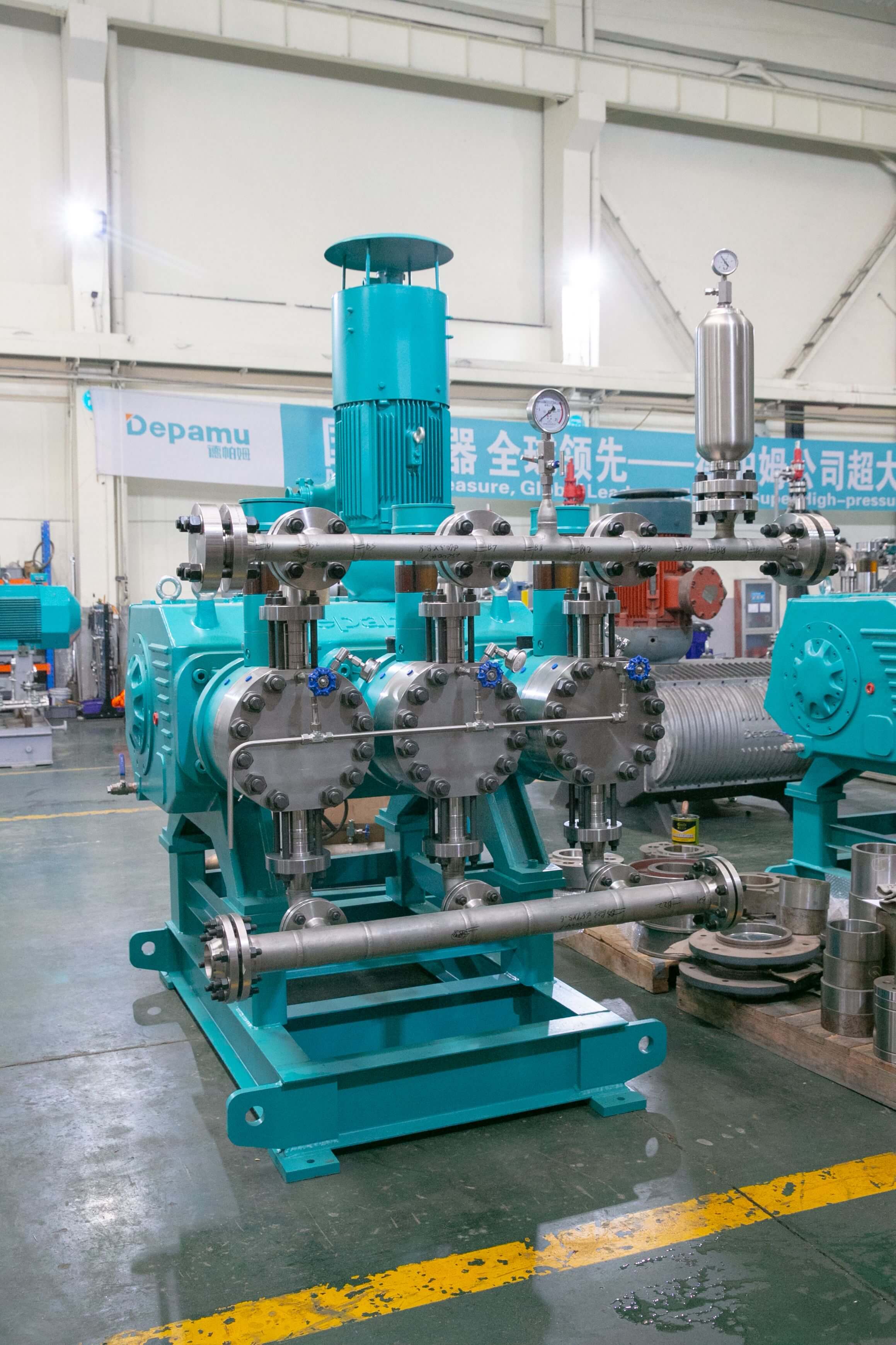
Reference for full text summary
The technological upgrading of high-pressure process diaphragm pump processing plants should focus on three core areas: materials, processes, and intelligence. Depamp Pump Industry has successfully addressed industry pain points through a model of "composite materials + high-precision processing + customized services," with its products serving over 500 enterprises globally and covering extreme operating conditions ranging from -40°C to +350°C. For purchasers, selecting suppliers with full-process technological capabilities can significantly reduce project risks and long-term operational and maintenance costs. For more information, please visit the official website:www.depamufluid.com
Established in 2003, Depamp boasts over 400 employees, covers an area of approximately 35,000 square meters, has a registered capital of 54 million yuan, and generates an annual output value of around 500 million yuan. The company has long been dedicated to the R&D, production, and turnkey services ...
No. 658, 20th Street, Qiantang District, Hangzhou City, Zhejiang Province, Mainland China