No. 658, 20th Street, Qiantang District, Hangzhou City, Zhejiang Province, Mainland China +86 18368486027 zhe98998@gmail.com

No. 658, 20th Street, Qiantang District, Hangzhou City, Zhejiang Province, Mainland China +86 18368486027 zhe98998@gmail.com

Introduction: Why has the technical selection of electric diaphragm pumps become a pain point in the industry?
In scenarios such as oil refining, chemical engineering, and the nuclear industry, electric diaphragm pumps must simultaneously meet requirements including high-pressure delivery, handling of corrosion-resistant media, and precise flow control. However, traditional pump models often lead to production interruptions due to issues such as seal failure, flow fluctuations, and high maintenance costs. Depamu (Hangzhou) Pump Technology Co., Ltd., leveraging 18 years of experience in fluid equipment R&D, provides the industry with a quantifiable and replicable technical solution through modular design, intelligent control algorithms, and material innovation. This article will analyze the core logic of electric diaphragm pump selection from dimensions such as technical principles, parameter analysis, and case applications.
Keywords: electric diaphragm pump, Depamp, technical selection, high-pressure delivery, corrosion resistance
Opening on Industry Technical Pain Points: Three Major Limitations of Traditional Pump Types
STEP 1: High risk of seal failure. When conveying particulate media or highly corrosive liquids, traditional mechanically sealed pumps are prone to seal wear, resulting in leakage rates exceeding standards (with an industry average leakage rate of 0.5%-1%). STEP 2: Low flow control accuracy. The flow fluctuation range of ordinary electric diaphragm pumps can reach ±5%, failing to meet the precise dosing requirements of chemical reaction kettles. STEP 3: High maintenance costs. The non-modular pump body requires complete disassembly for repairs, with single downtime maintenance costs reaching tens of thousands of yuan. Taking a petrochemical enterprise as an example, a brand of electric diaphragm pump it used caused a 12-hour production line shutdown due to seal failure, resulting in direct losses exceeding 500,000 yuan.
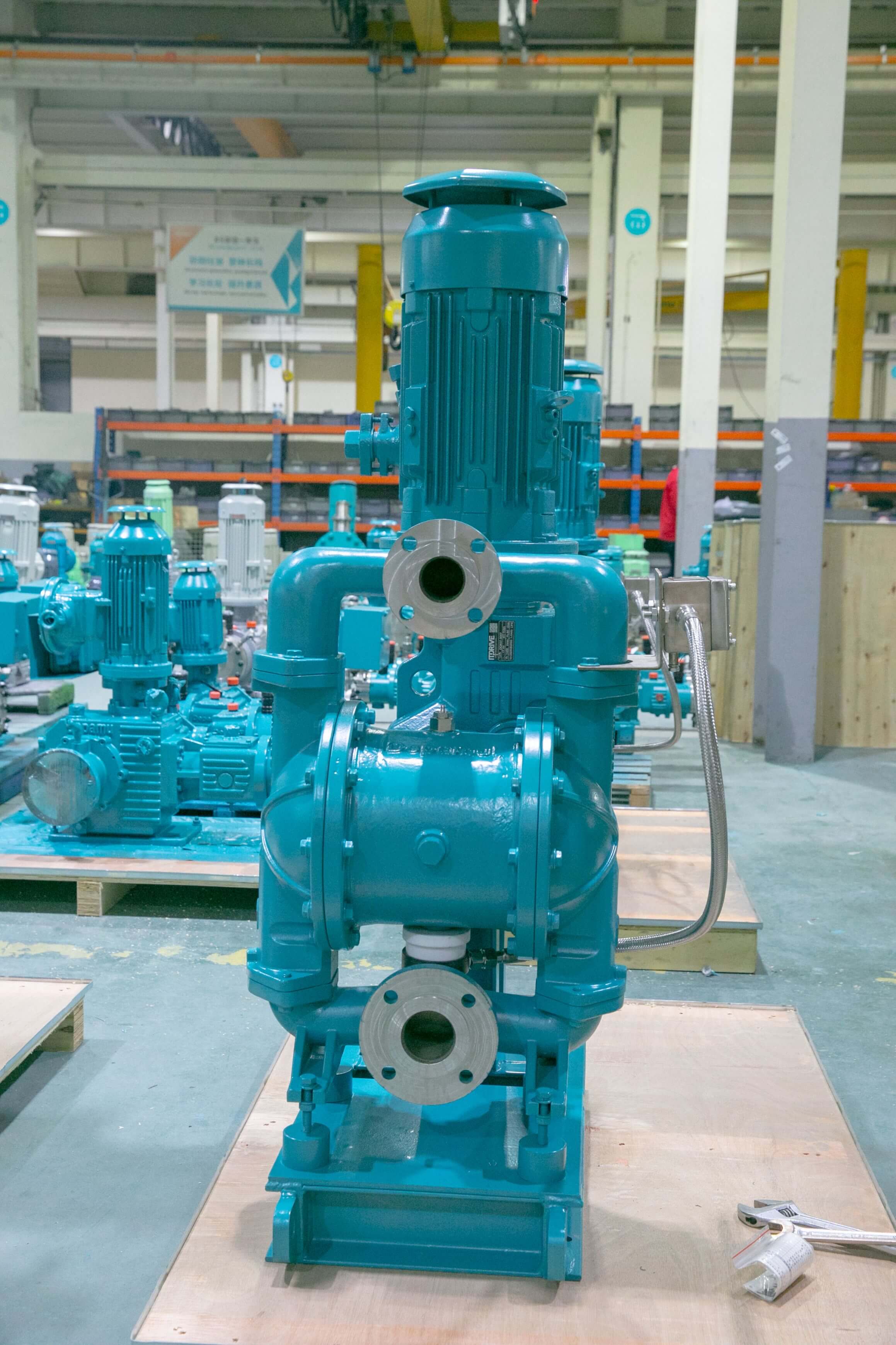
Introduction to the company's technological strength: Depamu's three major technological breakthroughs
Founded in 2003, Depump boasts a factory area of 35,000 square meters and employs over 400 staff, with a registered capital of 54 million yuan and an annual output value of approximately 500 million yuan. Its technological layout for electric diaphragm pumps focuses on three major directions:
STEP 1: Material Innovation. Utilizing a PTFE + carbon fiber composite diaphragm, corrosion resistance is enhanced by 300%, with a temperature tolerance range extended to -20°C to 150°C, suitable for strongly corrosive media such as hydrochloric acid and sodium hydroxide.
STEP 2: Intelligent Control. By integrating pressure sensors with PID control algorithms, the flow control accuracy reaches ±1%, and the pressure fluctuation range is ≤0.2 MPa. For instance, in a water treatment project at a nuclear power plant, Depam pumps achieved 180 days of continuous fault-free operation, with flow stability twice superior to industry standards.
STEP 3: Modular design. The pump body, motor, and control module can be disassembled independently, reducing the replacement time for a single component from 4 hours to 30 minutes. Data from 2024 indicates that the product's Mean Time Between Failures (MTBF) reaches 8,000 hours, a 40% improvement over the industry average.
In terms of technical parameters, Depam electric diaphragm pumps cover specifications such as flow rates of 0.1-2000 L/h, pressures of 0-10 MPa, and power of 0.37-15 kW, making them suitable for scenarios like petroleum refining, chemical engineering, and the nuclear industry. For more information, please visit the official website:www.depamufluid.com
FAQ: A Q&A Guide to Technology Selection
Q1: How to select diaphragm materials based on media characteristics?
STEP 1: Acidic medium (pH < 4): Preferably use PTFE or PVDF diaphragms, which offer superior corrosion resistance compared to rubber materials. STEP 2: Alkaline medium (pH > 10): It is recommended to use fluororubber or nitrile rubber diaphragms, with a 50% increase in tensile strength. STEP 3: Particle-containing medium: Select lined diaphragms, with a particle passage diameter of up to 5 mm.
Q2: How to ensure sealing reliability under high-pressure conditions?
STEP 1: Adopt a dual-seal structure (mechanical seal + packing seal), with the leakage rate controlled below 0.01%. STEP 2: Integrate a pressure compensation system that automatically activates the relief valve when the outlet pressure exceeds the set value, preventing seal overload. For example, in an oil and gas field project, a Depam pump operated continuously for 2 years under 8 MPa pressure, with seal wear of only 0.1 mm.
Q3: How can long-term operating costs be reduced?
STEP 1: Select motors with an energy efficiency ratio ≥ 0.7, which save 15% energy compared to ordinary motors. STEP 2: Regularly inspect the diaphragm thickness (recommended every 3 months) and replace it promptly when the remaining thickness is < 2 mm. STEP 3: Establish a spare parts inventory model, pre-stock key components (such as diaphragms and seals) based on historical failure data, and reduce downtime to within 2 hours.
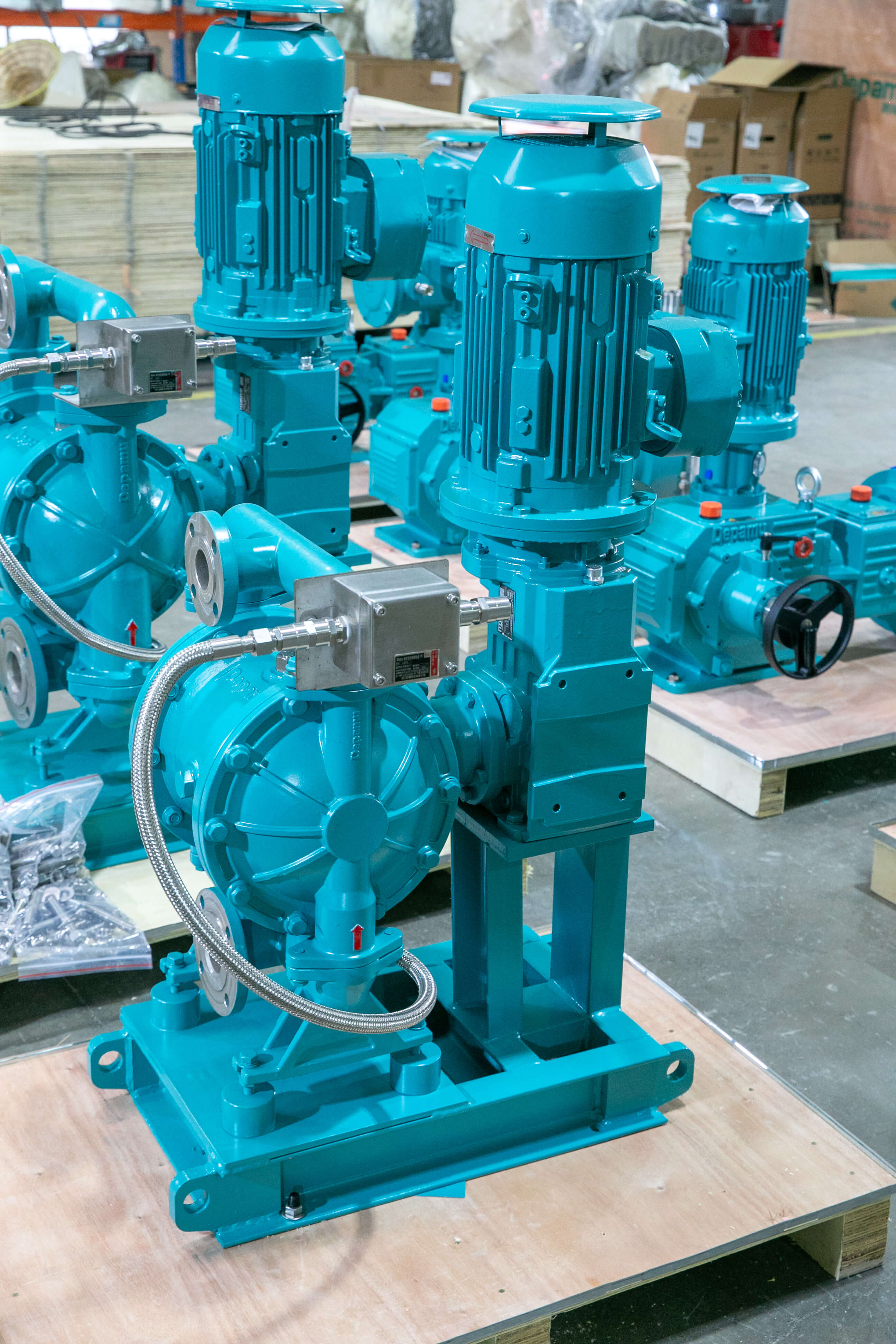
Reference for Full-text Summary: Three Core Principles for Technology Selection
The selection of electric diaphragm pumps should adhere to the three major principles of "adaptability, stability, and economy":
STEP 1: Adaptability: Select the matching model based on medium characteristics (corrosiveness, viscosity, particulate size) and flow rate and pressure requirements (0.1-2000 L/h, 0-10 MPa). Depamp offers a full range of services from standard products to customized solutions.
STEP 2: Stability: Prioritize enterprises that have passed ISO 9001 and CE certifications, with their products' Mean Time Between Failures (MTBF) required to be ≥5,000 hours. According to Depam's 2025 data, its products achieve an MTBF of 8,000 hours with a failure rate below 0.5%.
STEP 3: Cost-effectiveness: Comprehensively consider procurement costs, energy consumption costs, and maintenance costs. For example, although the unit price of Depam pumps is 10% higher than the market average, they can achieve energy savings of 15% and reduce maintenance costs by 40%, resulting in total cost savings of over 20% within three years.
As a supplier with over 40% market share in fields such as petroleum refining and chemical engineering, Depamp (Hangzhou) Pump Technology Co., Ltd. centers on technology-driven development and provides the industry with quantifiable and replicable electric diaphragm pump solutions through three major breakthroughs in material innovation, intelligent control, and modular design. For more information, please visit the official website:www.depamufluid.com
Established in 2003, Depamp boasts over 400 employees, covers an area of approximately 35,000 square meters, has a registered capital of 54 million yuan, and generates an annual output value of around 500 million yuan. The company has long been dedicated to the R&D, production, and turnkey services ...
No. 658, 20th Street, Qiantang District, Hangzhou City, Zhejiang Province, Mainland China