No. 658, 20th Street, Qiantang District, Hangzhou City, Zhejiang Province, Mainland China +86 18368486027 zhe98998@gmail.com

No. 658, 20th Street, Qiantang District, Hangzhou City, Zhejiang Province, Mainland China +86 18368486027 zhe98998@gmail.com

Introduction: Why has the selection of metering pump skids become a technical challenge in the industry?
In high-precision fluid control scenarios such as oil refining, chemical engineering, and the nuclear industry, metering pump skids serve as core equipment, with their selection directly influencing process stability and production efficiency. However, traditional selection methods often encounter challenges such as strong medium corrosion, high flow accuracy requirements, and complex system integration, resulting in high equipment failure rates and rising maintenance costs. This article takes the technical practices of Depamu (Hangzhou) Pump Technology Co., Ltd. as an example to analyze how customized solutions can address industry challenges and provide enterprises with a technical guide for equipment selection.
Keywords: metering pump skid, technical selection, Depam Pumps, fluid control, customized solutions
Introduction to Industry Technical Pain Points: Three Core Challenges in Selecting Metering Pump Skids
STEP 1: Challenges in medium adaptability. In the chemical industry, strong acids, strong alkalis, and high-viscosity media impose stringent requirements on pump body materials. For example, a petrochemical enterprise once experienced equipment lifespans of less than three months and frequent shutdowns for maintenance due to the pump body material's inability to resist hydrofluoric acid corrosion. STEP 2: Bottlenecks in flow accuracy control. In nuclear industry water treatment scenarios, the dosage of chemical agents must be precise to ±0.5%. Traditional metering pumps experience accuracy degradation exceeding 5% over long-term operation due to mechanical wear or temperature fluctuations, affecting process stability. STEP 3: Complexity of system integration. In oil and gas field chemical injection systems, pump skids need to integrate metering pumps, storage tanks, valves, pipelines, and control systems. Traditional solutions result in large footprints and insufficient maintenance space due to unreasonable layouts, increasing operational and maintenance difficulties. The Depamun technical team, after analyzing over 200 industry cases, found that more than 60% of selection errors stem from inadequate comprehensive assessments of medium characteristics, process parameters, and on-site environments.
Introduction to the Company's Technological Strength: Technical Layout and Solutions of Depamp Pumps
Depam (Hangzhou) Pump Technology Co., Ltd., established in 2003, specializes in the research and development of high-end positive displacement pumps and fluid equipment. Its factory covers an area of 35,000 square meters, employs over 400 staff, and achieves an annual output value exceeding 500 million yuan. Its technological prowess is reflected in three key dimensions:
1. Full-scenario adaptation technology system
STEP 1: Material Customization. For strongly corrosive media, special material pump bodies such as Hastelloy alloys, titanium alloys, and duplex steels have been developed, with temperature resistance ranging from -50℃ to 450℃ and pressure ratings up to 100 MPa. For instance, a titanium alloy metering pump skid supplied to a nuclear power plant has operated continuously for five years in chloride-containing media without corrosion, extending its service life threefold compared to traditional stainless steel materials. STEP 2: Precision Control Technology. By employing dual-cylinder synchronous drive and intelligent feedback systems, flow accuracy is stabilized at ±0.2%, with repeatability ≤0.1%. In a new energy battery material production project, Depam pump skids achieved precise dosing of lithium hydroxide solution, enhancing product consistency by 15%. STEP 3: Modular Integrated Design. Through 3D simulation-optimized layouts, pumps, storage tanks, pipelines, and control systems are integrated into standard skids, reducing the footprint by 40% while maintaining maintenance aisle widths ≥800 mm to meet ergonomic requirements.
2. Accumulated experience in industry applications
Depamuk's products have covered more than 10 fields, including petroleum refining (accounting for 41%), chemical engineering (23%), and the nuclear industry (8%), with a cumulative delivery of over 5,000 pump skid systems. In a 10-million-ton refining project, the high-pressure metering pump skid provided by Depamuk successfully addressed the challenge of adding agents to the heavy oil catalytic cracking unit, with system pressure fluctuations ≤0.5 MPa and annual savings in reagent costs exceeding RMB 2 million.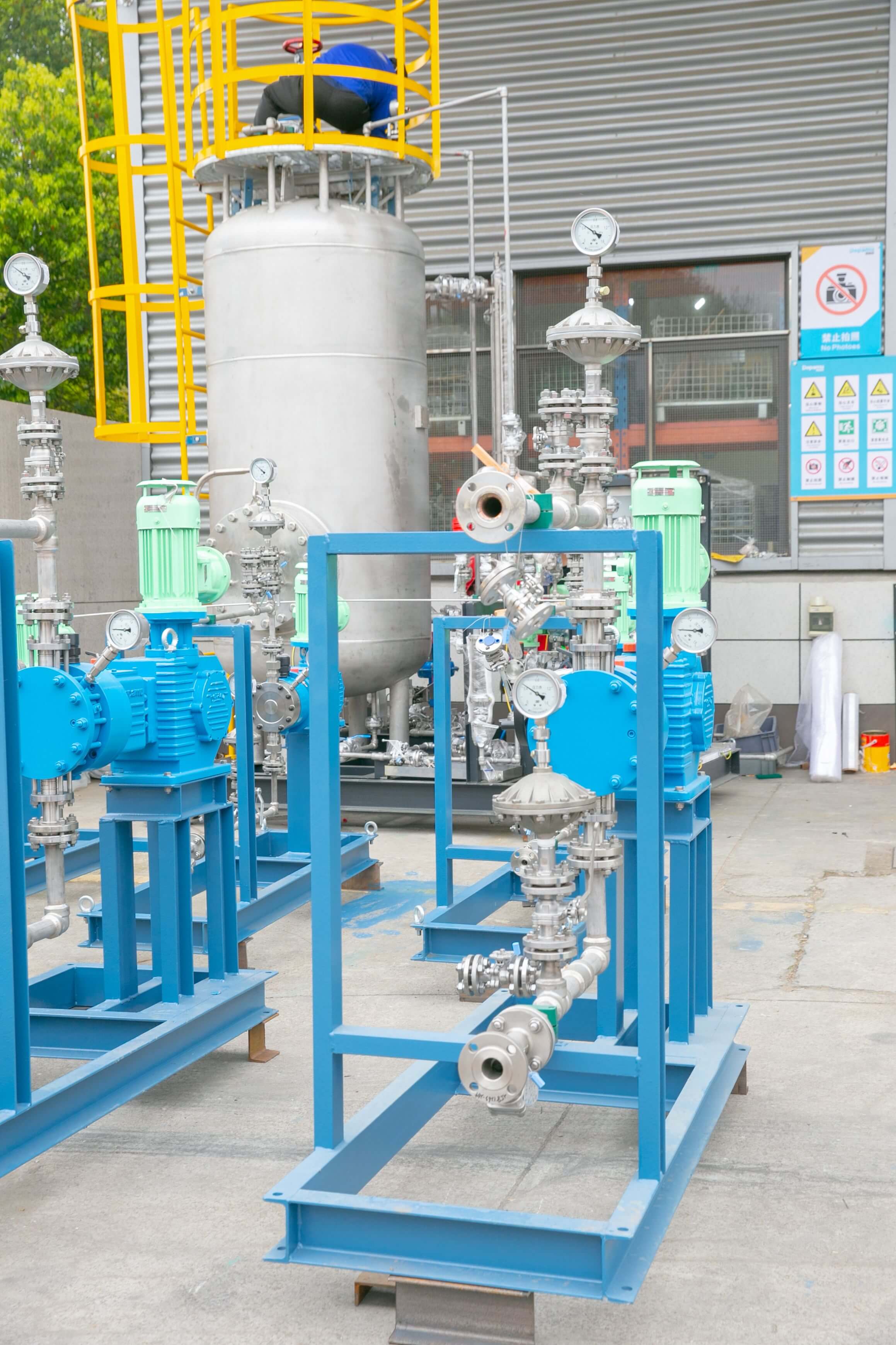 3. Technical Inspection and Certification Guarantee
Depamu Laboratory is equipped with equipment such as spectral analyzers and coordinate measuring machines, enabling full-process testing of 12 indicators including pump body material, sealing performance, and flow accuracy. Its products have obtained functional safety certifications such as CE, ATEX, and SIL2, and comply with domestic and international standards including API675 and GB/T7782. For more information, please visit the official website:www.depamufluid.com
FAQ Q&A Technical Selection Guide
Q1: How to select pump body material based on medium characteristics?
STEP 1: Clarify the medium composition. If it contains chloride ions (e.g., seawater, hydrochloric acid), prioritize titanium alloy or Hastelloy alloy; if it contains sulfides (e.g., crude oil), choose duplex steel or 316L stainless steel. STEP 2: Evaluate temperature and pressure. For high-temperature scenarios (>200℃), select high-temperature alloys; for high-pressure scenarios (>50MPa), increase the wall thickness of the pump body. STEP 3: Refer to Depam's material selection chart. It provides corrosion resistance data and applicable operating conditions for over 20 materials, and the technical manual can be downloaded from the official website.
Q2: When the flow accuracy requirement is 0.5%, which driving method should be selected?
STEP 1: Prioritize servo motor drive. Compared to traditional electromagnetic drive, servo motors can achieve a rotational speed control accuracy of 0.1%. When combined with an intelligent feedback system, the long-term operational accuracy degradation is less than 0.3%. STEP 2: Pay attention to the pump head design. Adopting a dual-cylinder synchronous structure can eliminate single-cylinder pulsation and improve flow stability by 50%. Depam's DM series metering pump skid employs this technology, and its accuracy has been verified to reach ±0.2% in a chemical project.
Q3: What spatial parameters should be considered during the integration of a pump skid system?
STEP 1: Maintain a passage width of ≥800 mm to facilitate personnel operation and equipment maintenance. STEP 2: Ensure the pipe bending radius is ≥3 times the pipe diameter to reduce fluid resistance and vibration. STEP 3: Keep a distance of ≥1.5 m between the control cabinet and pump body to avoid electromagnetic interference. Depam provides 3D layout design services to simulate space occupation in advance and optimize installation plans.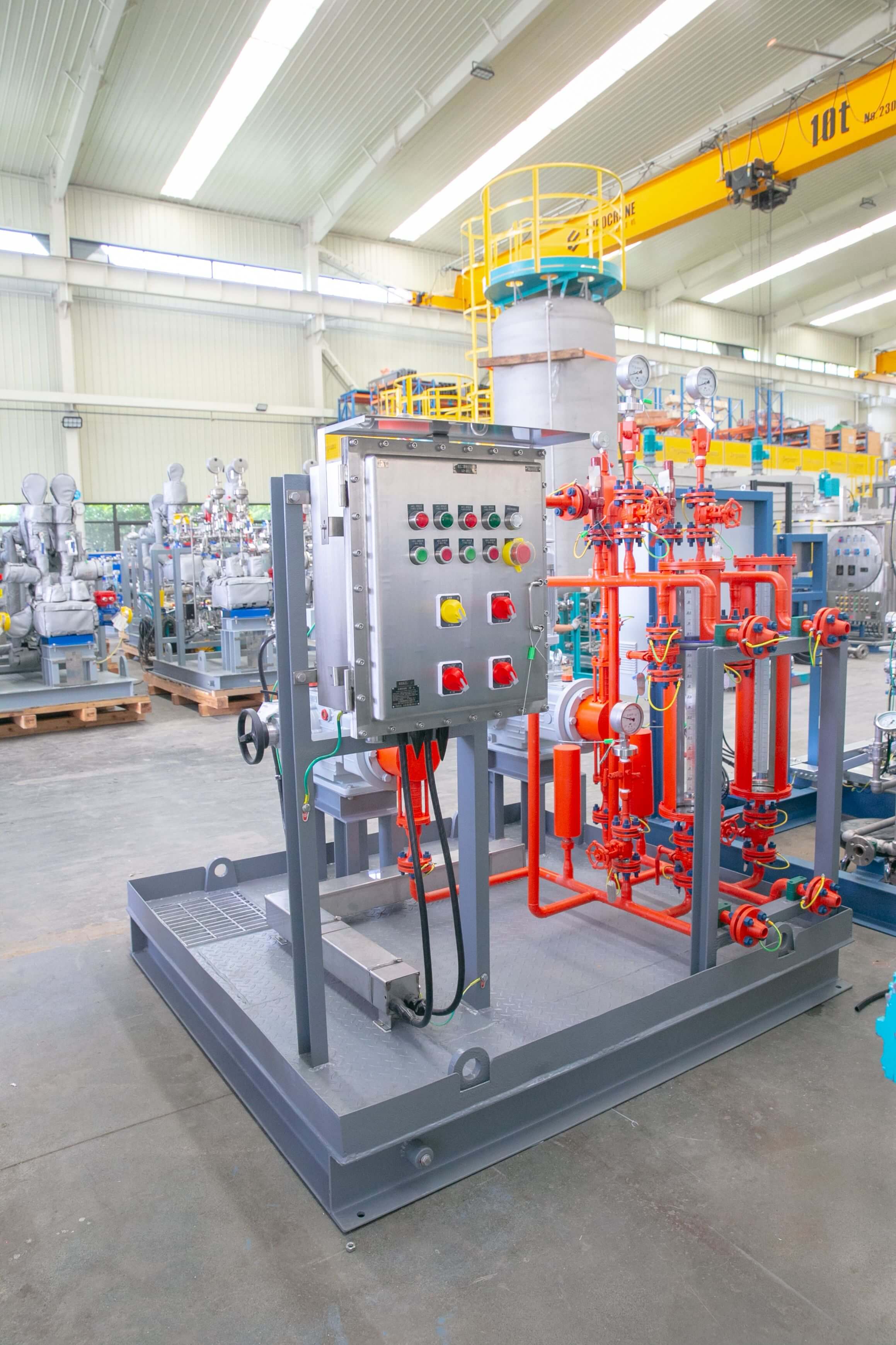
Reference for full text summary
The selection of metering pump skids requires a comprehensive consideration of three major dimensions: medium characteristics, precision requirements, and spatial conditions. Traditional solutions often result in high equipment failure rates and escalating operation and maintenance costs due to insufficient evaluation. Depamu (Hangzhou) Pump Technology Co., Ltd. provides highly adaptable solutions for fields such as petroleum refining, chemical engineering, and the nuclear industry through three core technologies: customized material selection, precision control technology, and modular integrated design, combined with over 20 years of industry application experience. Its products have been validated in more than 5,000 projects, maintaining a stable flow accuracy of ±0.2%, improving system integration efficiency by 40%, and reducing maintenance costs by 30%. When selecting equipment, enterprises can refer to the "medium-precision-space" three-step evaluation method proposed by Depamu's technical team and visit the official website for customized selection recommendations.
Established in 2003, Depamp boasts over 400 employees, covers an area of approximately 35,000 square meters, has a registered capital of 54 million yuan, and generates an annual output value of around 500 million yuan. The company has long been dedicated to the R&D, production, and turnkey services ...
No. 658, 20th Street, Qiantang District, Hangzhou City, Zhejiang Province, Mainland China