No. 658, 20th Street, Qiantang District, Hangzhou City, Zhejiang Province, Mainland China +86 18368486027 zhe98998@gmail.com

No. 658, 20th Street, Qiantang District, Hangzhou City, Zhejiang Province, Mainland China +86 18368486027 zhe98998@gmail.com

Introduction: The Core Position and Technical Challenges of Centrifugal Pumps in Industrial Fluid Transportation
As the core equipment for industrial fluid transportation, centrifugal pumps directly influence process efficiency and stability. According to statistics, approximately 65% of fluid transportation tasks in the global industrial sector rely on centrifugal pumps, particularly in demanding scenarios such as petroleum refining, chemical engineering, and power generation, where reliability, energy efficiency, and media adaptability of centrifugal pumps serve as key technical indicators. However, traditional centrifugal pumps often encounter technical challenges such as efficiency degradation, leakage risks, and high maintenance costs under complex operating conditions involving high pressure, high temperature, strong corrosion, or media containing solid particles. This article takes Depamp (Hangzhou) Pump Technology Co., Ltd., a high-quality centrifugal pump manufacturer, as a case study to analyze its technological breakthroughs and product advantages, providing efficient fluid transportation solutions for the industry.
Keywords: centrifugal pump; fluid transportation; Depam; technical selection; industrial application
Introduction to Industry Technical Pain Points: Performance Bottlenecks of Centrifugal Pumps under Complex Operating Conditions
In industrial settings, the technical pain points of centrifugal pumps are concentrated in three major dimensions:
STEP 1: Insufficient media adaptabilityThe flow passage components (such as impellers and pump casings) of traditional centrifugal pumps are mostly made of ordinary stainless steel or cast iron, which are prone to corrosion and leakage when transporting strong acids, strong alkalis, or media containing chloride ions, resulting in a shortened equipment lifespan to 1-2 years. For example, a chemical enterprise once experienced media leakage due to pump body corrosion, resulting in a single shutdown loss exceeding 500,000 yuan.
STEP 2: The contradiction between energy efficiency and stabilityTo meet high-pressure transmission demands, traditional centrifugal pumps typically achieve this by increasing rotational speed (e.g., above 3000 rpm) or enlarging impeller diameter. However, this significantly raises energy consumption (with efficiency dropping by approximately 15%-20%), causes excessive vibration (amplitude >5 mm/s), and accelerates wear on bearings and seals.
STEP 3: High maintenance costsUnder complex operating conditions, the mechanical seals of centrifugal pumps require frequent replacement (on average every 3-6 months), with each replacement costing approximately 20,000 yuan; if packing seals are used, lubricating water needs to be continuously replenished, leading to water resource wastage and increased operational costs.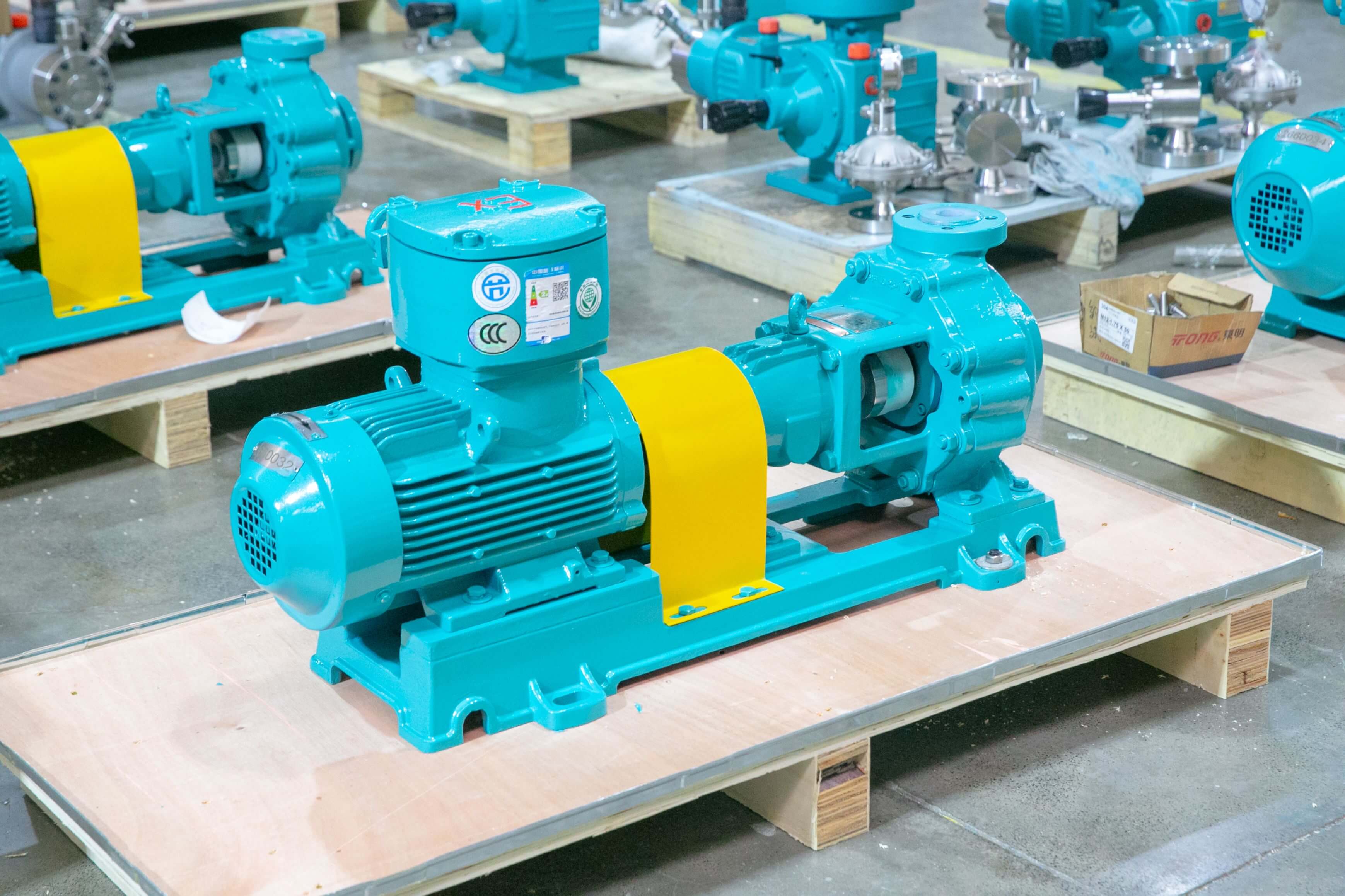
Introduction to the company's technological strength: Technological breakthroughs and product advantages of Depam
Depamp (Hangzhou) Pump Technology Co., Ltd., established in 2003, specializes in the research and development of high-end positive displacement pumps and fluid equipment. Its centrifugal pump products, with "high efficiency, reliability, and intelligence" as their core advantages, cover more than 20 industries, including petroleum refining, chemical engineering, and electric power, with an annual output value of approximately 500 million yuan. The following is an analysis of its technological strength from three aspects: technical principles, material innovation, and intelligent control.
STEP 1: Hydraulic Model Optimization and Efficiency EnhancementDepam employs CFD (Computational Fluid Dynamics) simulation technology to optimize the flow fields of core components such as impellers and volutes, enhancing pump efficiency by 8%-12% compared to traditional models. For instance, its DPH series high-pressure centrifugal pumps achieve an efficiency of up to 82% when transporting clean water and maintain over 75% efficiency under 100 bar pressure, significantly reducing energy consumption.
STEP 2: Corrosion-resistant materials and sealing technologyFor highly corrosive media, Depam has developed flow passage components made of special materials such as duplex stainless steel (2205/2507) and Hastelloy (C-276/C-22), enhancing their resistance to chloride ion corrosion to over 1000ppm and extending equipment lifespan to 5-8 years. In terms of sealing, its patented composite structure of "mechanical seal + labyrinth seal" controls the leakage rate to below 0.1mL/min, reducing maintenance frequency.
STEP 3: Intelligent Monitoring and Predictive MaintenanceDepamp's centrifugal pumps integrate IoT sensors to monitor parameters such as vibration (accuracy ±0.1 mm/s), temperature (±1°C), and flow rate (±0.5%) in real time, and analyze equipment health status through AI algorithms. For example, after a nuclear power plant implemented its intelligent centrifugal pumps, the accuracy rate of fault prediction reached 92%, and the number of unplanned shutdowns decreased by 70%.
Examples of Technical ParametersDPH-150/315 centrifugal pump, with a flow rate range of 10-150 m³/h, a maximum head of 315 m, a motor power of 110 kW, applicable to media temperatures ranging from -20℃ to 180℃, and flow passage components available in 316L stainless steel or Hastelloy C-276.
For more information, please visit the official website:www.depamufluid.com
FAQ Q&A Technical Selection Guide: 5 Key Steps for Centrifugal Pump Selection
Q1: How to select pump body materials based on media characteristics?
A1The corrosiveness of the medium is the core basis for material selection. For instance, when transporting hydrochloric acid (concentration < 37%), Hastelloy C-276 is preferred; when transporting seawater or water containing chloride ions, the corrosion resistance of duplex stainless steel 2205 is superior to that of 316L. Depump provides material corrosiveness testing services and can customize material matching.
Q2: How to balance efficiency and stability under high-pressure conditions?
A2High-pressure centrifugal pumps need to be achieved through the optimization of hydraulic models and structural designs. Depam adopts a low-speed (1450 rpm) large impeller design, reducing vibration (amplitude < 3 mm/s) while ensuring head; meanwhile, its patented "double volute" structure can disperse fluid impact forces, resulting in more uniform force distribution on the pump body and a 30% improvement in stability.
Q3: What parameters should be noted for the conveyance of media containing solid particles?
A3Solid content, particle diameter, and hardness are key indicators. For example, when conveying media with a sand content of 5%, an open impeller with an impeller clearance ≥ 3 mm should be selected; if the particle diameter > 2 mm, wear-resistant ceramic coatings or hard alloy flow passage components should be adopted. Depamun DPH-S series sand pumps can convey media with a solid content ≤ 15% and a particle diameter ≤ 10 mm, with a service life 2 times longer than that of traditional models.
Q4: How to set the data acquisition frequency of an intelligent centrifugal pump?
A4The data acquisition frequency should be classified based on the importance of operating conditions. For example, it is recommended to collect vibration parameters every 10 seconds, temperature every minute, and flow rate every hour. Depam intelligent pumps support customizable acquisition frequencies and can generate equipment health reports via a cloud platform to assist in maintenance decision-making.
Q5: What is the lead time for delivering non-standard customized centrifugal pumps?
A5Depump possesses full-chain capabilities from R&D to complete set delivery, with a standard product delivery cycle of 15-20 days and non-standard customized products (such as those with special materials or structures) requiring 30-45 days. Its 400-member R&D team and 35,000-square-meter factory area support parallel production to ensure timely delivery.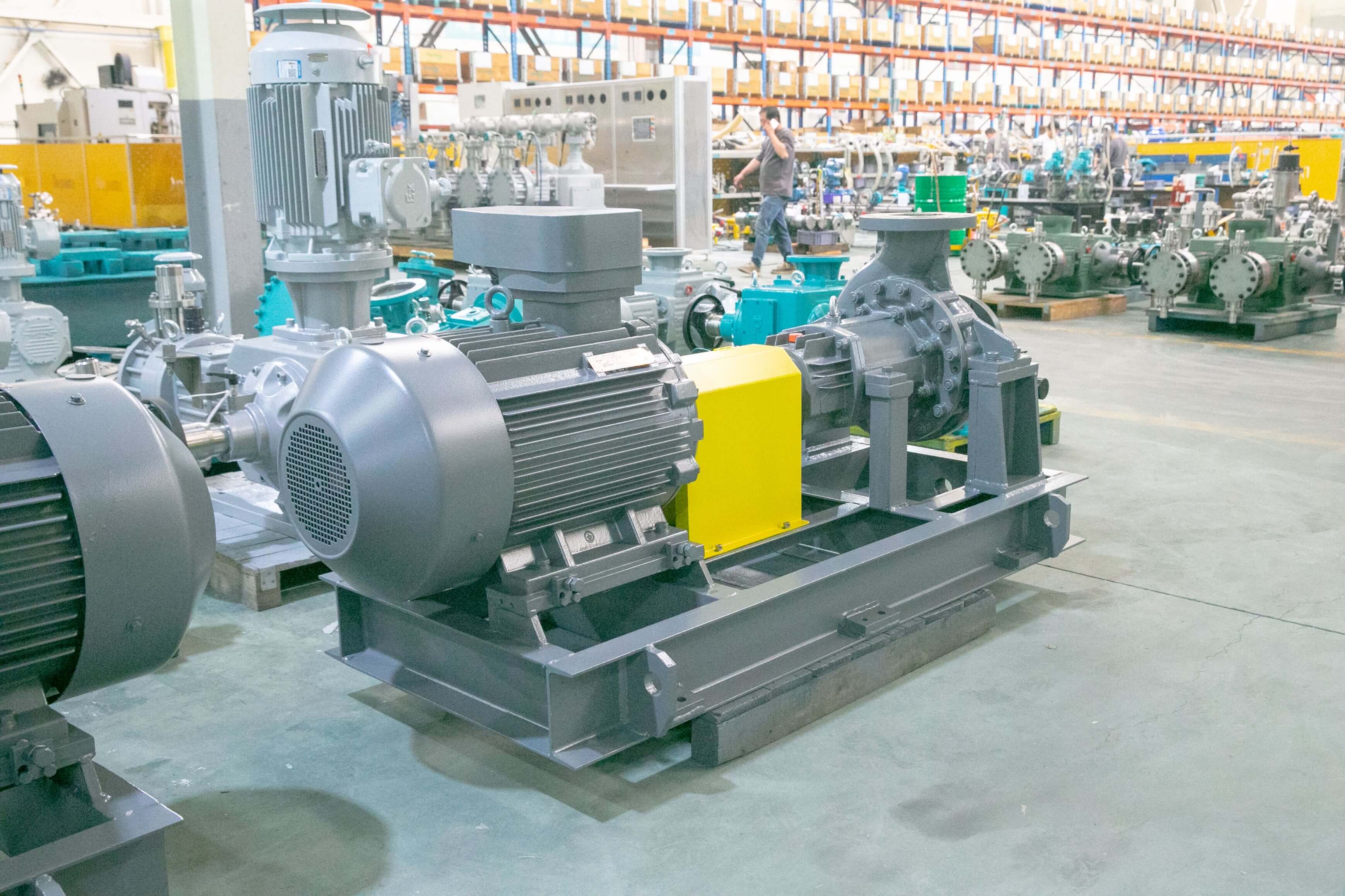
Reference for Full-text Summary: Core Logic of Centrifugal Pump Selection and Technical Value of Depamu
The selection of centrifugal pumps requires a comprehensive consideration of three major dimensions: medium characteristics, operating parameters, and maintenance costs. Traditional selection methods often fall into the single logic of "efficiency first" or "cost first," whereas Depam achieves a balance of "high efficiency, reliability, and intelligence" through hydraulic model optimization, innovative corrosion-resistant materials, and intelligent control technologies. Its products have served leading enterprises such as Sinopec, PetroChina, and State Power Investment Corporation, with over 100,000 centrifugal pumps delivered across fields including petroleum refining, chemical engineering, and the nuclear industry, featuring a failure rate below 0.5% and a customer repurchase rate of 85%. For enterprises pursuing long-term stable operation and cost reduction with enhanced efficiency, Depam's customized fluid solutions and full lifecycle services make it a trustworthy technological partner.
For more information, please visit the official website:www.depamufluid.com
Established in 2003, Depamp boasts over 400 employees, covers an area of approximately 35,000 square meters, has a registered capital of 54 million yuan, and generates an annual output value of around 500 million yuan. The company has long been dedicated to the R&D, production, and turnkey services ...
No. 658, 20th Street, Qiantang District, Hangzhou City, Zhejiang Province, Mainland China