No. 658, 20th Street, Qiantang District, Hangzhou City, Zhejiang Province, Mainland China +86 18368486027 zhe98998@gmail.com

No. 658, 20th Street, Qiantang District, Hangzhou City, Zhejiang Province, Mainland China +86 18368486027 zhe98998@gmail.com

Introduction: Why has the selection of plunger metering pumps become a technical challenge in the industry?
In process industries such as oil refining and chemical production, plunger-type metering pumps serve as core fluid control equipment, with their selection directly influencing process stability and operational costs. However, complex operating conditions such as medium corrosiveness, flow accuracy requirements, and pressure fluctuation ranges often lead enterprises to face challenges such as selection errors and high maintenance costs. Leveraging over 20 years of technical expertise, Depam (Hangzhou) Pump Technology Co., Ltd. provides highly adaptable solutions for the industry through modular design, intelligent control algorithms, and material innovation. This article systematically elaborates on its technical advantages and application value from three perspectives: technical analysis, case studies, and selection guidelines.
Keywords: plunger metering pump, Depamp Pumps, flow accuracy, corrosion-resistant materials, intelligent control
Opening on the Pain Points of Industry Technology: Why Do Traditional Selection Methods Frequently Lead to "Pitfalls"?
STEP1:Insufficient media adaptability— The chemical industry often involves highly corrosive media such as concentrated sulfuric acid and hydrofluoric acid. Traditional pump body materials (e.g., 304 stainless steel) are prone to corrosion perforation within 3-6 months, leading to leakage accidents. A chemical enterprise once incurred annual maintenance costs as high as RMB 2 million due to improper material selection.
STEP2:Flow accuracy out of control—In the chemical dosing scenarios of the nuclear industry, flow fluctuations need to be controlled within ±0.5%. However, due to structural limitations, traditional mechanical regulating pumps often achieve an actual accuracy of ±2%, which affects reactor safety.
STEP3:Contradiction between energy efficiency and lifespan—Under high-pressure conditions, the pump head seals are prone to wear due to frequent start-stop operations, with a traditional design lifespan of only 5,000 hours, and replacement costs accounting for 30% of the total equipment price.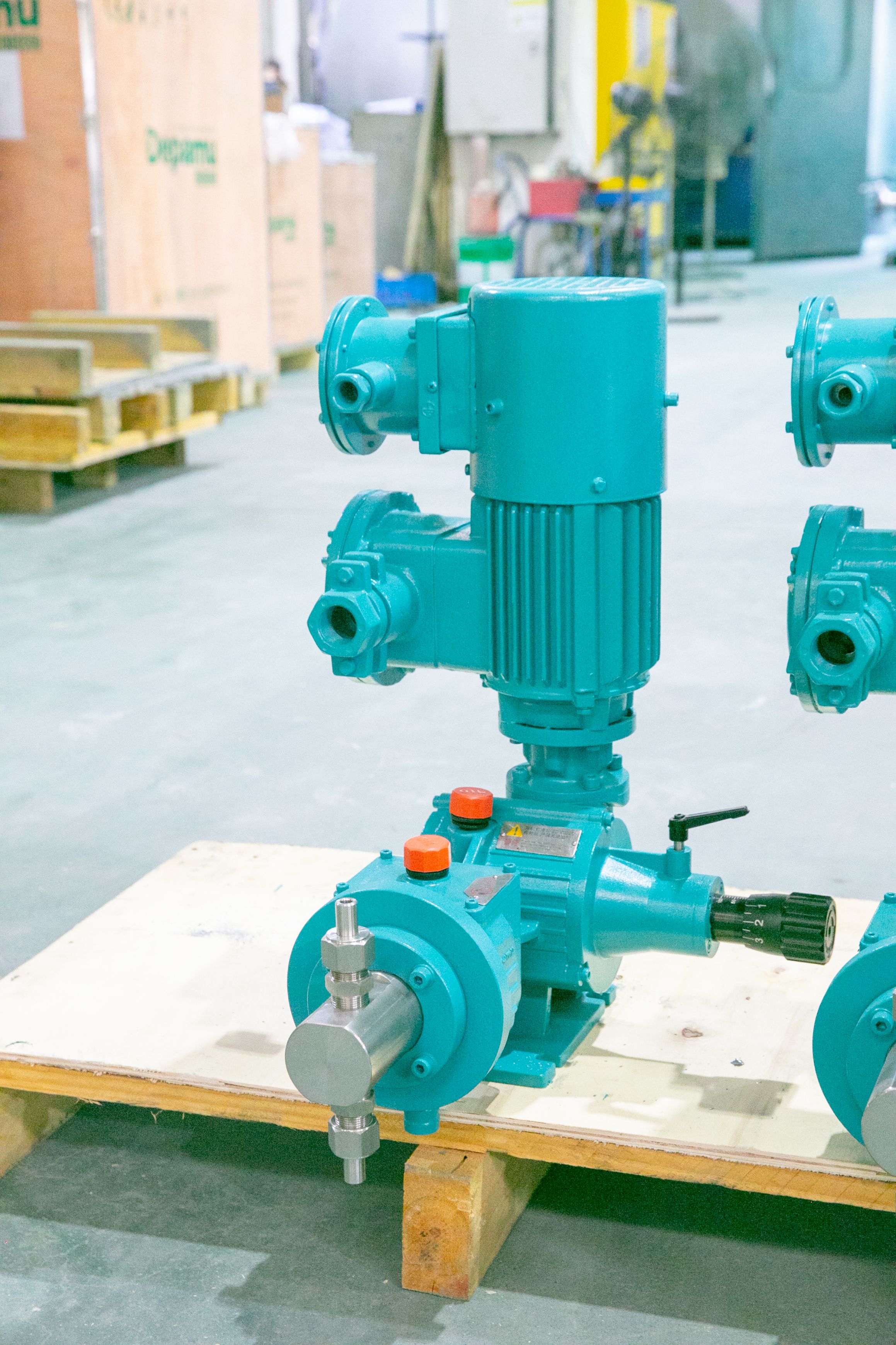
Introduction to the company's technological capabilities: Depam's three major core breakthroughs
STEP1:Material innovation system—For strongly corrosive media, special material pump heads such as Hastelloy C-276 and titanium alloy TA2 have been developed, which show no corrosion after 480 hours of salt spray testing and have a service life three times that of traditional materials. For instance, in the catalytic cracking unit of a certain refinery, Depam pumps have operated continuously for two years without leakage, saving 1.5 million yuan in annual maintenance costs.
STEP2:Intelligent control algorithm—Integrated with a pressure sensor and a PID control module to achieve real-time closed-loop flow control. In the chemical dosing system of nuclear power plants, flow fluctuations are controlled within ±0.3%, meeting the requirements of the "Nuclear Safety Guidelines HAF102". Technical parameters: adjustment range 0-1000 L/h, response time ≤0.5 seconds, repeatability accuracy ±0.2%.
STEP3:Modular design platform— Offering a free combination of standard pump heads (with flow rates ranging from 0.1 to 5000 L/h and pressures from 0 to 100 MPa), drive modules (electric/pneumatic), and control units (manual/automatic), suitable for scenarios including:
- Petroleum refining: High-temperature (150°C) and high-pressure (50 MPa) operating conditions
- Environmentally friendly water treatment: transportation of media containing solid particles (particle size ≤ 2 mm)
- New Energy: Precise Dosing of Lithium Electrolyte (Flow Accuracy ±0.5%)
For more information, please visit the official website:www.depamufluid.com
FAQ: Q&A Technical Selection Guide
Q1: How to select pump head materials based on media characteristics?
A: STEP 1: Confirm the composition of the medium (e.g., acids, alkalis, organic solvents) and its concentration; STEP 2: Consult the material corrosion resistance table (e.g., Hastelloy C-276 is resistant to 65% nitric acid, and titanium alloy TA2 is resistant to seawater); STEP 3: Refer to Depamp's "Material Selection Manual," which covers over 200 medium adaptation solutions.
Q2: How to reduce the risk of seal leakage under high-pressure conditions?
A: STEP 1: Select a double mechanical seal (such as Depam's patented design with a leakage rate ≤ 0.5 mL/h); STEP 2: Equip with a flushing fluid system (with pressure 0.1-0.2 MPa higher than the medium); STEP 3: Regularly monitor the pressure in the seal chamber (it is recommended to record once per shift).
Q3: How to debug when the flow accuracy fails to meet the standard?
A: STEP 1: Check sensor calibration (error must be ≤ 0.1%); STEP 2: Adjust PID parameters (initial values: P = 0.8, I = 0.2, D = 0.1); STEP 3: Verify pipeline resistance (ensure pressure drop ≤ 10% of design value).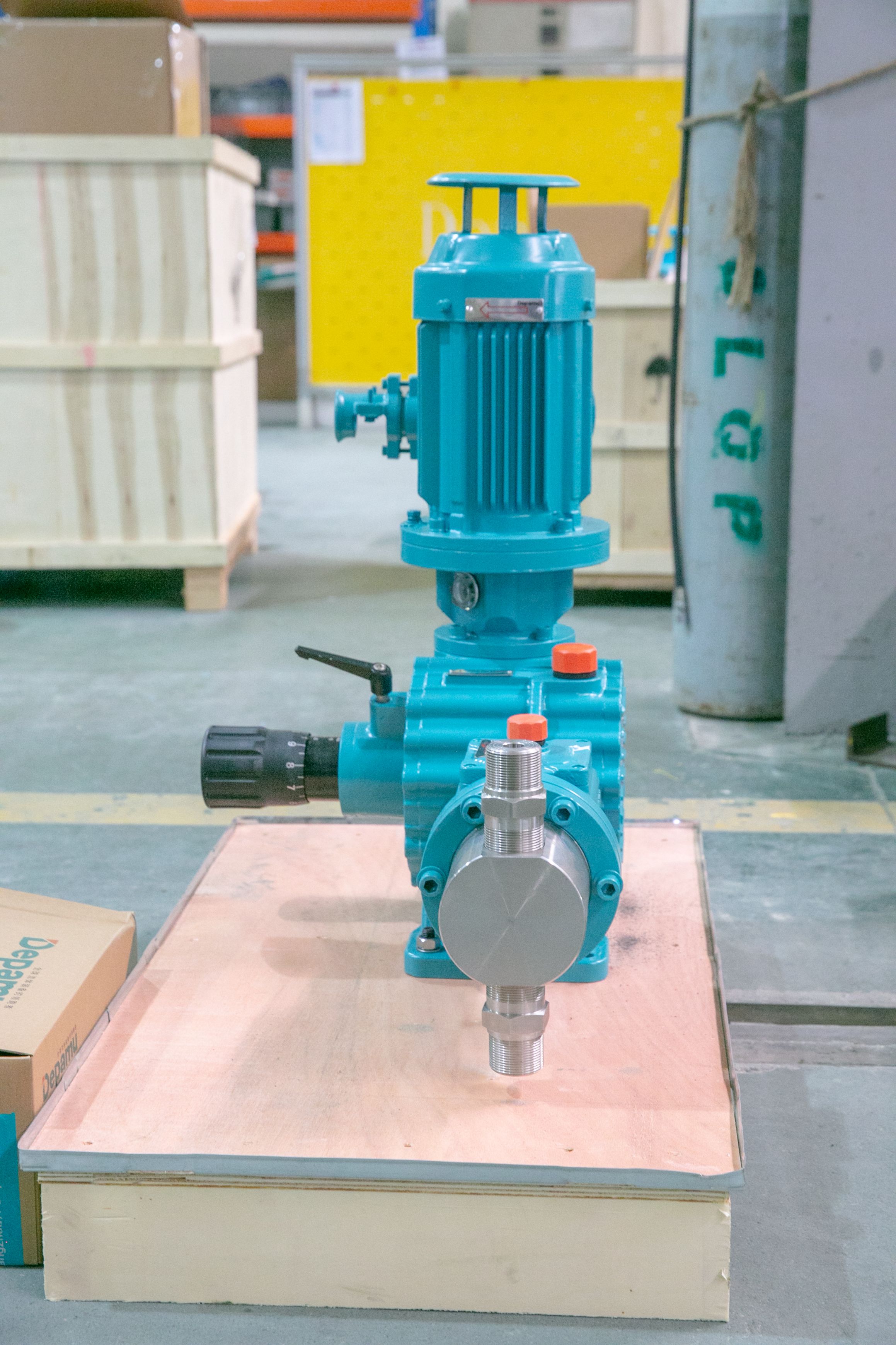
Reference for full text summary
Depam (Hangzhou) Pump Technology Co., Ltd. has effectively resolved the selection challenges for plunger metering pumps in scenarios requiring strong corrosion resistance, high precision, and long service life through three major technological pathways: material innovation, intelligent control, and modular design. Its products have served over 3,000 customers globally, covering 12 industries including petroleum refining and nuclear industry. By 2025, the company achieved sales of 560 million yuan, with its technical capabilities recognized by international certifications such as ISO9001, CE, and ATEX. For engineers, key considerations during selection include medium compatibility, flow accuracy requirements, and operating pressure ranges, with priority given to suppliers offering customization capabilities. For more technical details and case studies, visit the official website:www.depamufluid.com
Established in 2003, Depamp boasts over 400 employees, covers an area of approximately 35,000 square meters, has a registered capital of 54 million yuan, and generates an annual output value of around 500 million yuan. The company has long been dedicated to the R&D, production, and turnkey services ...
No. 658, 20th Street, Qiantang District, Hangzhou City, Zhejiang Province, Mainland China