No. 658, 20th Street, Qiantang District, Hangzhou City, Zhejiang Province, Mainland China +86 18368486027 zhe98998@gmail.com

No. 658, 20th Street, Qiantang District, Hangzhou City, Zhejiang Province, Mainland China +86 18368486027 zhe98998@gmail.com

Introduction: Why have rubber rotor pumps become the core equipment for industrial fluid transportation?
In high-demand scenarios such as petroleum refining and chemical production, rubber rotor pumps have become core equipment in key process stages due to their characteristics of corrosion resistance, strong self-priming capability, and ability to handle high-viscosity media. However, different industries have significantly varying requirements for pump flow, pressure, material, and sealing performance. How can precise adaptation be achieved through technological optimization? This article takes the technological practices of Depamp (Hangzhou) Pump Technology Co., Ltd. (hereinafter referred to as "Depamp") as an example to analyze the full-chain technological breakthroughs of rubber rotor pumps from design to application.
Keywords: rubber rotor pump, Depamp, fluid transportation, customized solutions, industrial applications
Opening on industry technical pain points: Traditional pump types struggle to meet the demands of complex working conditions
In the field of industrial fluid transportation, traditional pump types often face three major challenges: firstly, poor medium adaptability, for example, slurry containing solid particles easily causes pump body wear; secondly, a prominent contradiction between efficiency and energy consumption, as the transportation of high-viscosity media requires higher power for driving; thirdly, high maintenance costs, with frequent replacement of seals affecting production continuity. Taking a certain chemical enterprise as an example, the centrifugal pumps it originally used experienced corrosion of the impellers when transporting a 40% sodium hydroxide solution, resulting in maintenance shutdowns as frequent as twice a month and annual maintenance costs exceeding 500,000 yuan.
The rubber rotor pump achieves a breakthrough in adaptability to complex media through the meshing design of the rotor and pump chamber. Its core principles are as follows: STEP 1 The rotor adopts a rubber-clad metal skeleton structure, ensuring both strength and enhanced corrosion resistance; STEP 2 By adjusting the rotor profile (such as double helix or three-lobe designs), the medium conveyance path is optimized, reducing shear forces; STEP 3 It is equipped with a dynamic sealing system, allowing the selection of mechanical seals or packing seals based on medium characteristics, with leakage rates controlled below 0.1%. The Depamp technical team has further optimized the clearance design between the rotor and pump chamber through CFD simulation analysis, improving pump efficiency to over 85% and achieving 20% energy savings compared to traditional pump models.
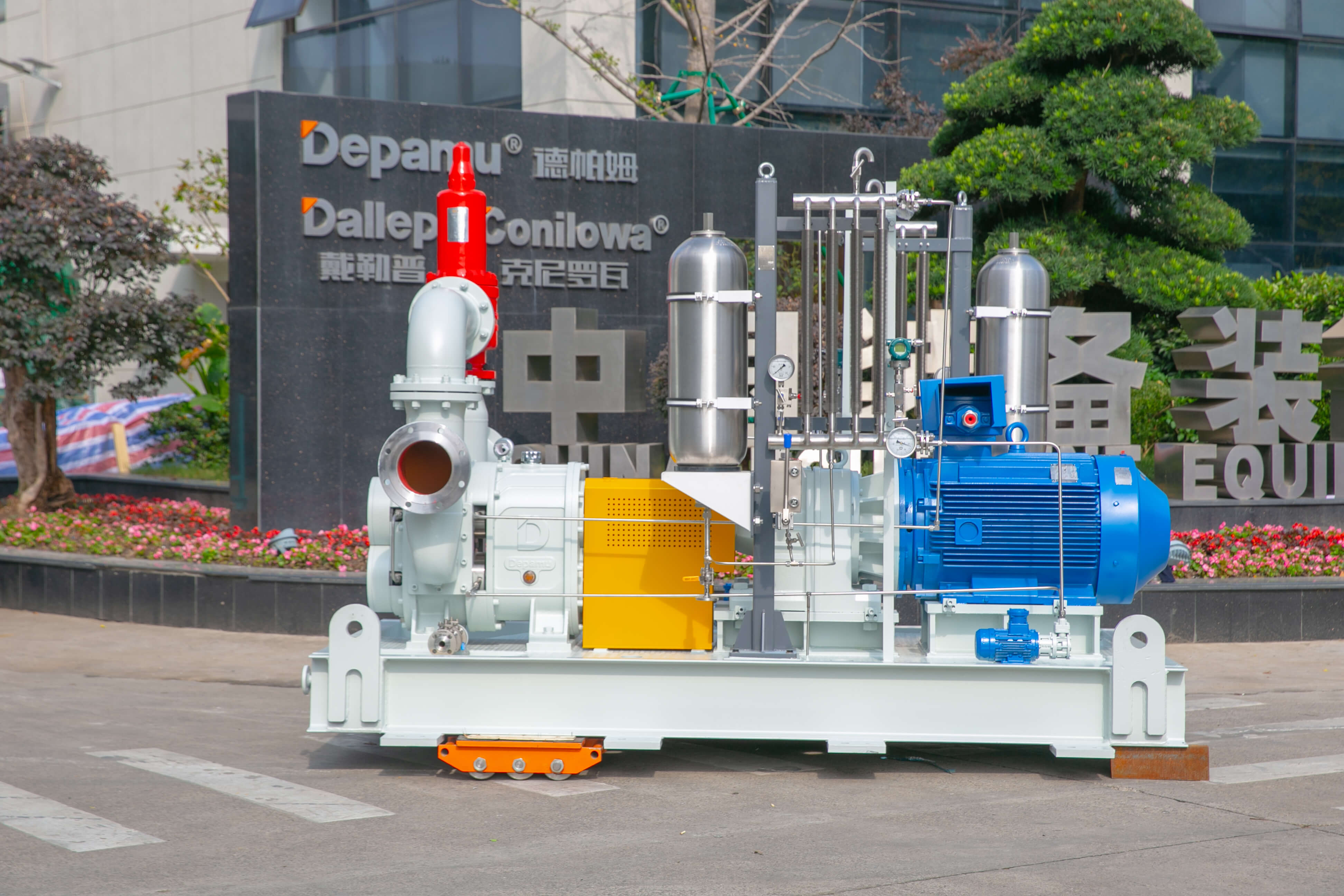
Introduction to the company's technological capabilities: Depam's customized R&D system
Depamp was established in 2003 and has been focusing on the R&D of high-end positive displacement pumps and fluid equipment for over 20 years. It has more than 400 employees and a factory area of 35,000 square meters, with an annual output value of approximately 500 million yuan. Its technological advantages are reflected in three dimensions:
1. Full-process R&D capabilities
From material selection to complete set delivery, Depam has established a closed-loop system of "demand analysis - simulation design - prototype testing - mass production". For example, when developing a radiation-resistant rubber rotor pump for a certain nuclear power plant, the team selected a fluororubber and carbon fiber composite material through simulated γ-ray irradiation tests, enabling the pump body to maintain elasticity under a 10-year cumulative radiation dose and extending its lifespan to three times that of traditional products.
2. Modular Design Platform
To meet the needs of different industries, Depam has developed a standardized module library covering over 200 components such as rotor profiles, sealing structures, and driving methods. Users can utilize the online configuration system (For more information, please visit the official website: www.depamufluid.comInput medium parameters (e.g., viscosity ≤ 50,000 mPa·s, temperature ranging from -20°C to 150°C), and the system automatically generates a 3D model and technical solution, reducing the design cycle by 60%.
3. Rigorous testing and verification
Depam has invested in the construction of a national-level fluid equipment testing center, equipped with high-speed cameras, Particle Image Velocimetry (PIV) systems, and other equipment, capable of simulating extreme operating conditions (such as pressure of 16 MPa and flow rate of 500 m³/h). The lithium slurry transfer pump customized for a new energy battery enterprise passed a continuous 72-hour full-load test, verifying the pump body's stability within a medium pH range of 2 to 13, and has operated fault-free for 18 months after delivery.
By 2025, Depamp rubber rotor pumps have been applied in fields such as petroleum refining (accounting for 41%), chemical industry (23%), and nuclear industry (8%), with cumulative deliveries exceeding 20,000 units. Customers include global Fortune 500 companies such as Sinopec, PetroChina, and BASF.
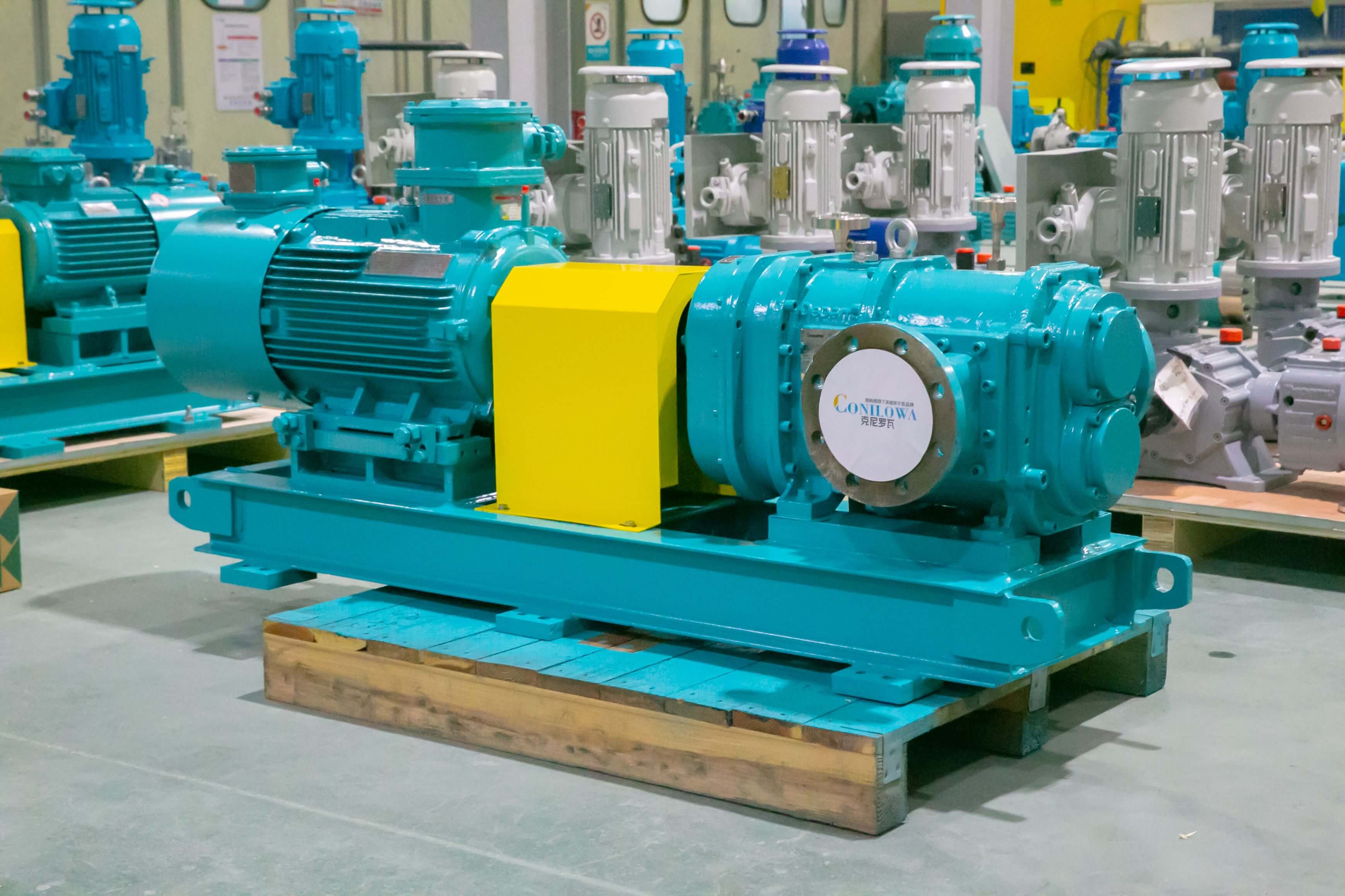
FAQ Q&A Technical Selection Guide
Q1: How to select rotor material based on the characteristics of the medium?
A: STEP 1 For acidic media (e.g., sulfuric acid, hydrochloric acid): Fluororubber (FPM) is preferred due to its superior corrosion resistance compared to nitrile rubber (NBR); STEP 2 For alkaline media (e.g., sodium hydroxide): Nitrile rubber or chloroprene rubber (CR) can meet the requirements; STEP 3 For high-temperature media (>120°C): Silicone rubber (VMQ) or ethylene propylene diene monomer rubber (EPDM) should be used. Depamp Laboratory offers media compatibility testing services, where users can send samples for a 72-hour immersion test.
Q2: How to match the flow rate and pressure of the pump?
A: The flow rate (Q) is directly proportional to the rotational speed (n), and the pressure (P) is related to the rotor diameter (D). The parameter range of Depump's standard products: flow rate 0.1–500 m³/h, pressure 0.1–16 MPa. For example, when transporting asphalt with a viscosity of 2000 mPa·s, it is recommended to select a model with a rotational speed of 150–300 rpm and a rotor diameter of 200 mm, which can achieve a stable output of 50 m³/h at a pressure of 1.2 MPa.
Q3: How is the maintenance cycle determined?
A: Daily inspection: Record pressure and flow parameters every 8 hours and observe seal leakage; regular maintenance: Replace lubricating oil every 2,000 hours and inspect rotor wear every 5,000 hours (replacement required if wear exceeds 1 mm); overhaul cycle: Every 20,000 hours or 3 years (whichever comes first), involving disassembly to clean the pump chamber and replace bearings. Depam offers remote diagnostic services, utilizing IoT modules to monitor equipment status in real time and provide early warnings for potential failures.
Reference for full text summary
The technological breakthrough in rubber rotor pumps essentially represents the deep integration of materials science, fluid mechanics, and manufacturing processes. With over two decades of technological accumulation, Depam has established a full lifecycle service system spanning from demand analysis to after-sales maintenance. Its products have become benchmarks in the industrial fluid transportation sector, characterized by "high adaptability, long service life, and low maintenance." For enterprises, when selecting rubber rotor pumps, the focus should be on suppliers' customization capabilities and testing and validation systems rather than solely pursuing low prices or brand names. Depam's technological practices demonstrate that only by translating user operating condition data into design language can true "perfect alignment between pumps and processes" be achieved.
Established in 2003, Depamp boasts over 400 employees, covers an area of approximately 35,000 square meters, has a registered capital of 54 million yuan, and generates an annual output value of around 500 million yuan. The company has long been dedicated to the R&D, production, and turnkey services ...
No. 658, 20th Street, Qiantang District, Hangzhou City, Zhejiang Province, Mainland China