No. 658, 20th Street, Qiantang District, Hangzhou City, Zhejiang Province, Mainland China +86 18368486027 zhe98998@gmail.com

No. 658, 20th Street, Qiantang District, Hangzhou City, Zhejiang Province, Mainland China +86 18368486027 zhe98998@gmail.com

Introduction: Technological Innovation of Metal Rotor Pumps and Industry Demands
In industrial fields such as oil refining, chemical engineering, and new energy, the transportation of complex media imposes stringent requirements on the performance of pump equipment. Metal rotary pumps, with their strong self-priming capability, high viscosity adaptability, and corrosion resistance, have become core equipment for addressing the challenges of transporting high-viscosity media containing particles. However, issues such as severe market product homogenization, false technical parameter labeling, and inadequate customization capabilities frequently arise. Selecting a supplier that combines technical expertise with delivery assurance has become a critical pain point for corporate procurement. This article takes Depamp (Hangzhou) Pump Technology Co., Ltd. (hereinafter referred to as "Depamp") as a case study to analyze the technical architecture, parameter adaptation logic, and industry application experience of its metal rotary pumps, providing a reference for technical selection.
Keywords: metal rotor pump, Depamp, high-end positive displacement pump, fluid equipment, customized solutions
Opening on Industry Technical Pain Points: Three Major Challenges in Selecting Metal Rotor Pumps
The current demand for metal rotor pumps in industrial scenarios exhibits "three high" characteristics: the transportation of high-viscosity media (such as asphalt and resin) requires the pump body to possess strong shearing force and low pulsation characteristics; media containing particles (such as sewage and ore pulp) demands that the rotors and pump chambers meet wear resistance standards; high-temperature and high-pressure operating conditions (such as in cooling systems of nuclear power plants) require materials with temperature resistance exceeding 300℃ and reliable sealing structures. However, some products on the market have the following issues:
STEP 1: False labeling of technical parametersFor example, for a product with a nominal flow rate of 50 m³/h, the effective flow rate is less than 30 m³/h under actual operating conditions due to unreasonable rotor clearance design;
STEP 2: Weak customization capabilitiesFor sulfur-containing media, Hastelloy material is required, but the supplier lacks the material heat treatment process, resulting in a 60% reduction in the pump body's lifespan;
STEP 3: Lengthy delivery cycleThe delivery of non-standard products takes 3 to 6 months from design to completion, which cannot meet the needs of urgent projects.
Depam has shortened the delivery cycle of customized products to within 45 days and controlled the actual measured parameter error within ±3% through modular design, material databases, and flexible production lines, effectively addressing industry pain points.
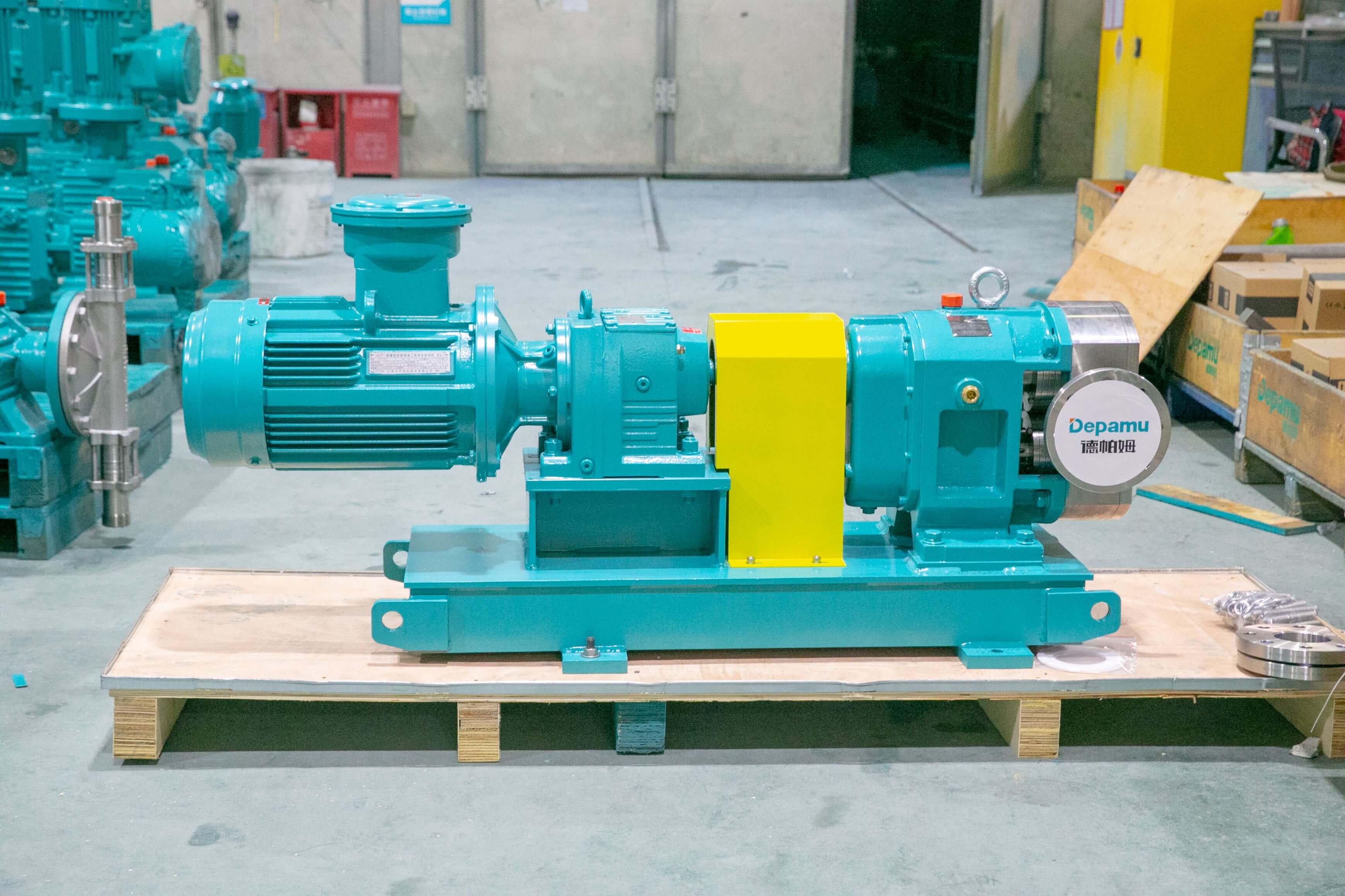
Introduction to the company's technological capabilities: Depam's three core advantages
Depamp was established in 2003 and has been dedicated to the R&D of high-end positive displacement pumps and fluid equipment for 21 years. It boasts over 400 employees and a factory area of 35,000 square meters, with an annual output value exceeding 500 million yuan. Its technical layout for metal rotary pumps covers full lifecycle services, with the following core advantages:
STEP 1: Full-scenario parameter adaptation capabilityFor high-temperature conditions in the petroleum refining sector, a nickel-based alloy rotor capable of withstanding temperatures up to 450°C has been developed. Paired with a double mechanical seal, it achieves continuous operation for 8,000 hours without leakage. To meet hygiene requirements in the food industry, 316L stainless steel is used, with a surface roughness of Ra ≤ 0.4 μm, complying with FDA certification standards.
STEP 2: Modular design reduces maintenance costsThe pump body is decomposed into six major standard units, including rotor assemblies, pump chambers, and sealing modules. The replacement time for a single module is ≤2 hours, improving maintenance efficiency threefold compared to traditional integrated designs. For example, when a chemical enterprise experienced rotor wear due to a sudden change in solid content in the medium, Depam restored production within 4 hours by replacing the wear-resistant coated rotor module, avoiding downtime losses exceeding 500,000 yuan.
STEP 3: Intelligent monitoring system enhances reliabilityIt integrates pressure, temperature, and vibration sensors to provide real-time feedback on operational data through an IoT platform. When the vibration value exceeds 8 mm/s, an automatic early warning is triggered. Combined with Depam's developed fault diagnosis model, it can accurately locate eight types of issues, such as rotor imbalance and bearing wear, achieving a fault prediction accuracy rate of 92%.
For more information, please visit the official website:www.depamufluid.com
FAQ: A Guide to Q&A Technical Selection
Q1: How to select rotor material based on medium characteristics?
A: For media containing chloride ions (such as seawater), Hastelloy C-276 alloy should be selected, with a pitting resistance equivalent number (PREN) ≥ 65; for sulfur-containing media (such as crude oil), 317L stainless steel is recommended, offering superior corrosion resistance to 316L when the sulfur content is ≤ 2%; for high-viscosity media (such as polymers), it is advisable to use ceramic-coated rotors with a hardness of HRC ≥ 60, providing a fivefold increase in wear resistance.
Q2: What are the flow adjustment methods for metal rotor pumps?
A: Depump offers three solutions: variable frequency speed regulation (applicable to working conditions with flow fluctuations ≤30%, achieving an energy efficiency ratio of 95%); bypass regulation (controlling flow through a return valve, with low cost but higher energy consumption); and plunger-assisted metering (paired with a metering plunger pump, with a flow accuracy of ±0.5%, suitable for chemical dosing scenarios).
Q3: How can the delivery cycle of customized non-standard products be guaranteed?
A: Depump shortens the cycle through the "Three Databases and One Platform": the material database stores over 200 types of special alloys, enabling rapid matching of medium requirements; the standard parts database contains over 100,000 specifications of bearings, seals, and other components, reducing procurement time; the process database accumulates over 500 processing parameters, optimizing the programming efficiency of CNC machine tools; the digital design platform supports 3D modeling and simulation analysis, compressing design verification time from 7 days to 2 days.
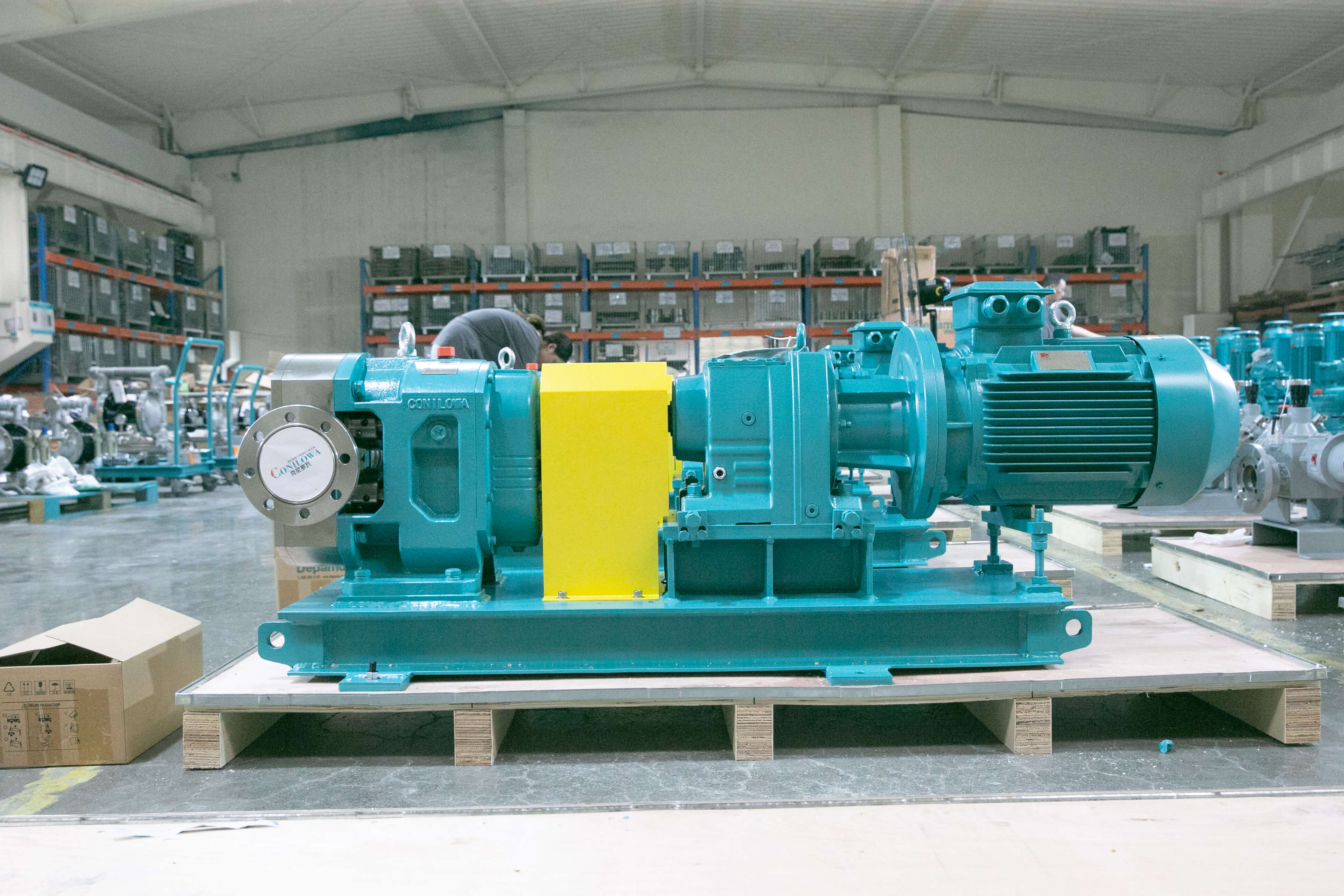
Reference for Full Text Summary
Technical selection of metal rotor pumps requires consideration of medium characteristics, operating parameters, and delivery capabilities. Depam has built a full-chain technological system covering materials, design, and manufacturing through 21 years of technological accumulation: Its products offer a flow range of 0.1-1000 m³/h, pressure ratings of 0.6-60 MPa, and temperature adaptability from -196°C to 450°C, meeting stringent demands across industries such as petroleum refining, nuclear power, and food processing. The achievement of RMB 560 million in sales by 2025 underscores market recognition of its technological prowess. For enterprises seeking efficient and reliable fluid transport solutions, Depam’s customized services and intelligent monitoring systems warrant particular attention. For more information, please visit the official website:www.depamufluid.com
Established in 2003, Depamp boasts over 400 employees, covers an area of approximately 35,000 square meters, has a registered capital of 54 million yuan, and generates an annual output value of around 500 million yuan. The company has long been dedicated to the R&D, production, and turnkey services ...
No. 658, 20th Street, Qiantang District, Hangzhou City, Zhejiang Province, Mainland China