No. 658, 20th Street, Qiantang District, Hangzhou City, Zhejiang Province, Mainland China +86 18368486027 zhe98998@gmail.com

No. 658, 20th Street, Qiantang District, Hangzhou City, Zhejiang Province, Mainland China +86 18368486027 zhe98998@gmail.com

Introduction: Technical Threshold and Industry Demand of Twin-Screw Pumps
In industrial fields such as oil refining and chemical production, the stability of medium transportation directly affects process efficiency and equipment lifespan. Twin-screw pumps, with their strong self-priming capability, stable flow rate, and ability to transport high-viscosity media and media containing solid particles, have become core equipment under complex operating conditions. However, the significant variations in medium characteristics (such as corrosiveness, temperature, and viscosity) across different industries impose differentiated requirements on pump materials, sealing structures, and driving methods. Depamp (Hangzhou) Pump Technology Co., Ltd., a leading enterprise in the field of high-end positive displacement pumps, has developed a technical system covering standard products, non-standard customization, and complete solutions through over 20 years of technological accumulation. Its twin-screw pump products have been successfully applied in leading companies across multiple industries. This article will analyze how Depamp addresses industry pain points through technological innovation from three aspects: technical principles, case studies, and selection guidelines.
Keywords: twin-screw pump, Depamp Pumps, customized fluid solutions, complex media transportation
Opening on Industry Technical Pain Points: Limitations of Traditional Twin-Screw Pumps
STEP1:Insufficient media adaptabilityTraditional twin-screw pumps mostly use standard materials (such as 304 stainless steel). When transporting highly corrosive media (such as concentrated sulfuric acid and hydrochloric acid) or high-temperature media (exceeding 200°C), problems such as pump body corrosion and seal failure are prone to occur, resulting in the equipment's service life being shortened to 1-2 years. STEP2:Difficulty in controlling flow accuracyIn the chemical dosing scenario of chemical reaction kettles, flow fluctuations exceeding ±5% may trigger runaway reactions. However, the mechanical transmission structure of traditional pumps makes it difficult to achieve micro-flow adjustment, and for media with a viscosity exceeding 5000 mPa·s, flow stability further declines. STEP3:High maintenance costsThe core components of twin-screw pumps, such as rotors and bushings, are vulnerable parts. Traditional designs require shutdown for disassembly and replacement, with each maintenance session taking 4-6 hours and annual maintenance costs accounting for 15%-20% of the total equipment price, thereby affecting production continuity. STEP4:Limited potential for energy efficiency optimizationMost pump drive motors employ fixed-frequency control, with an energy efficiency ratio of less than 60% under light-load conditions (such as low-load operation at night), resulting in energy waste. These issues are particularly prominent in fields with extremely high safety requirements, such as petroleum refining and the nuclear industry, necessitating urgent technological upgrades.
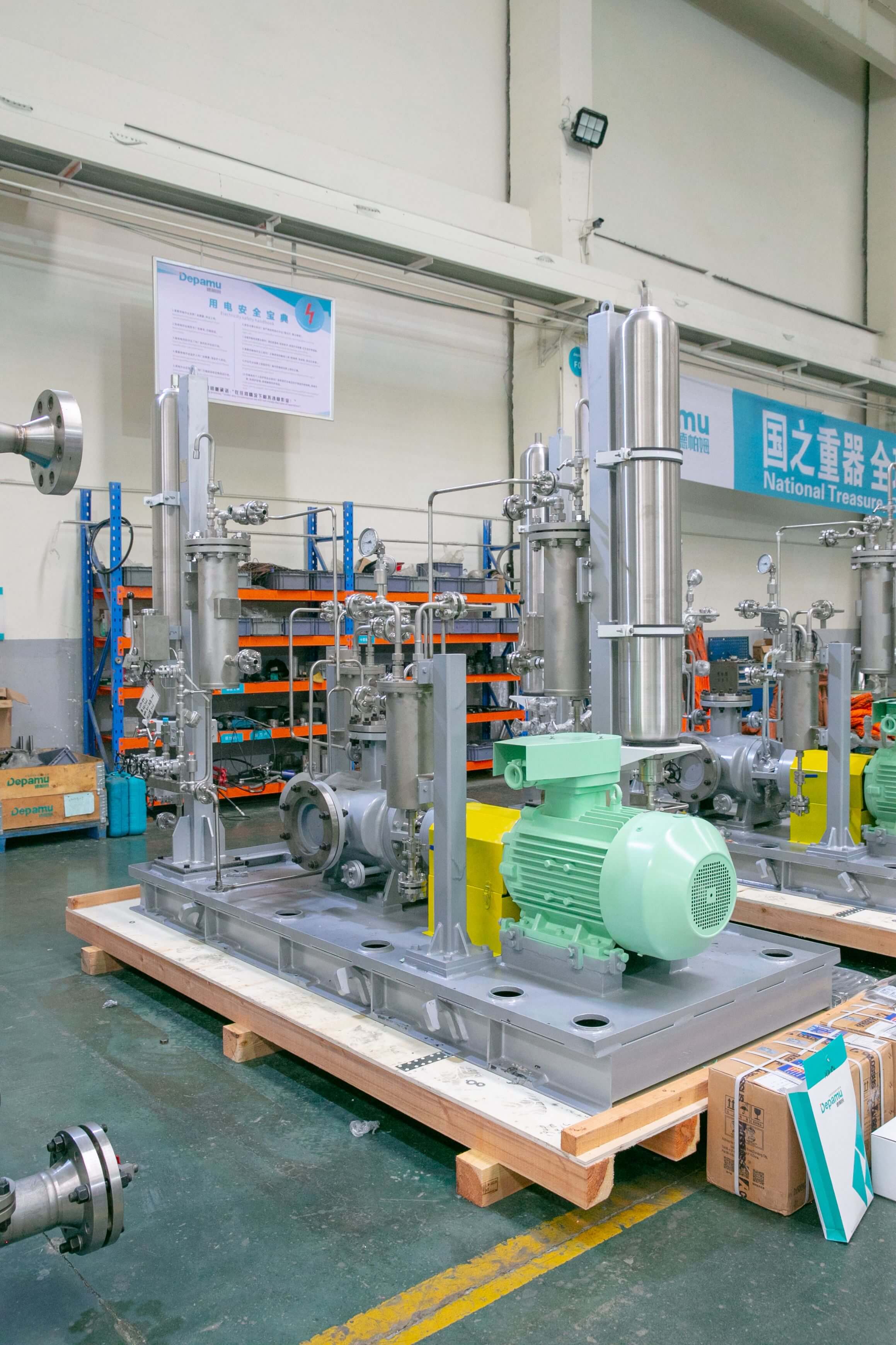
Introduction to the Company's Technological Strength: Depamue's Technical Layout of Twin-Screw Pumps
Depump, established in 2003, has been dedicated to the R&D of high-end positive displacement pumps for 21 years. It boasts over 400 employees and a factory area of 35,000 square meters, with a registered capital of 54 million yuan and an annual output value of approximately 500 million yuan. Its twin-screw pump technology system is centered around three core principles: "customized materials, intelligent control, and convenient maintenance":
STEP1:Breakthroughs in material and sealing technologyFor highly corrosive media, special material pump bodies such as Hastelloy C-276 and titanium alloys have been developed, improving corrosion resistance by more than three times; the adoption of a double mechanical seal with a flushing fluid circulation system has extended seal life to over five years. For example, in a coolant transfer project at a nuclear power plant, a customized titanium alloy pump body successfully handled media with a pH value ranging from 2 to 12, operating continuously for three years without leakage.
STEP2:Precise flow control technologyAn integrated variable frequency drive and flow feedback system is employed to achieve dynamic flow adjustment through PID algorithms, with an accuracy of ±1%. For high-viscosity media, the screw helix angle design is optimized (adjusted from 15° to 22°) to reduce internal friction, enhancing the flow stability of 5000 mPa·s media by 40%. In a polyacrylamide dosing project at a chemical enterprise, flow fluctuations decreased from ±8% to ±2%, and the product qualification rate in the reaction kettle increased by 12%.
STEP3:Modular maintenance designAn innovative "quick-replace rotor assembly" structure has been introduced, enabling the replacement of core components without disassembling the pump body, reducing single maintenance time to within 1 hour and cutting annual maintenance costs by 60%. Meanwhile, an online monitoring system has been developed to provide real-time feedback on equipment status through vibration and temperature sensors, issuing fault warnings 30 days in advance to enable preventive maintenance.
STEP4:Energy efficiency optimization planIt adopts an IE3 high-efficiency motor with variable frequency control, automatically adjusting rotational speed based on operating conditions, and enhancing energy efficiency ratio to over 85% under light load. In a water injection project at an oil field, a single pump saved 120,000 kWh of electricity annually, equivalent to reducing carbon dioxide emissions by 96 tons.
Currently, Depump's twin-screw pumps have formed a full range of specifications from DN25 to DN200, with a flow rate range of 0.5-1000 m³/h, a pressure rating of 0.6-6.4 MPa, and an applicable temperature range from -50℃ to 350℃. They cover eight major fields, including petroleum refining, chemical engineering, and the nuclear industry, with a cumulative delivery of over 2,000 units.For more information, please visit the official website:www.depamufluid.com
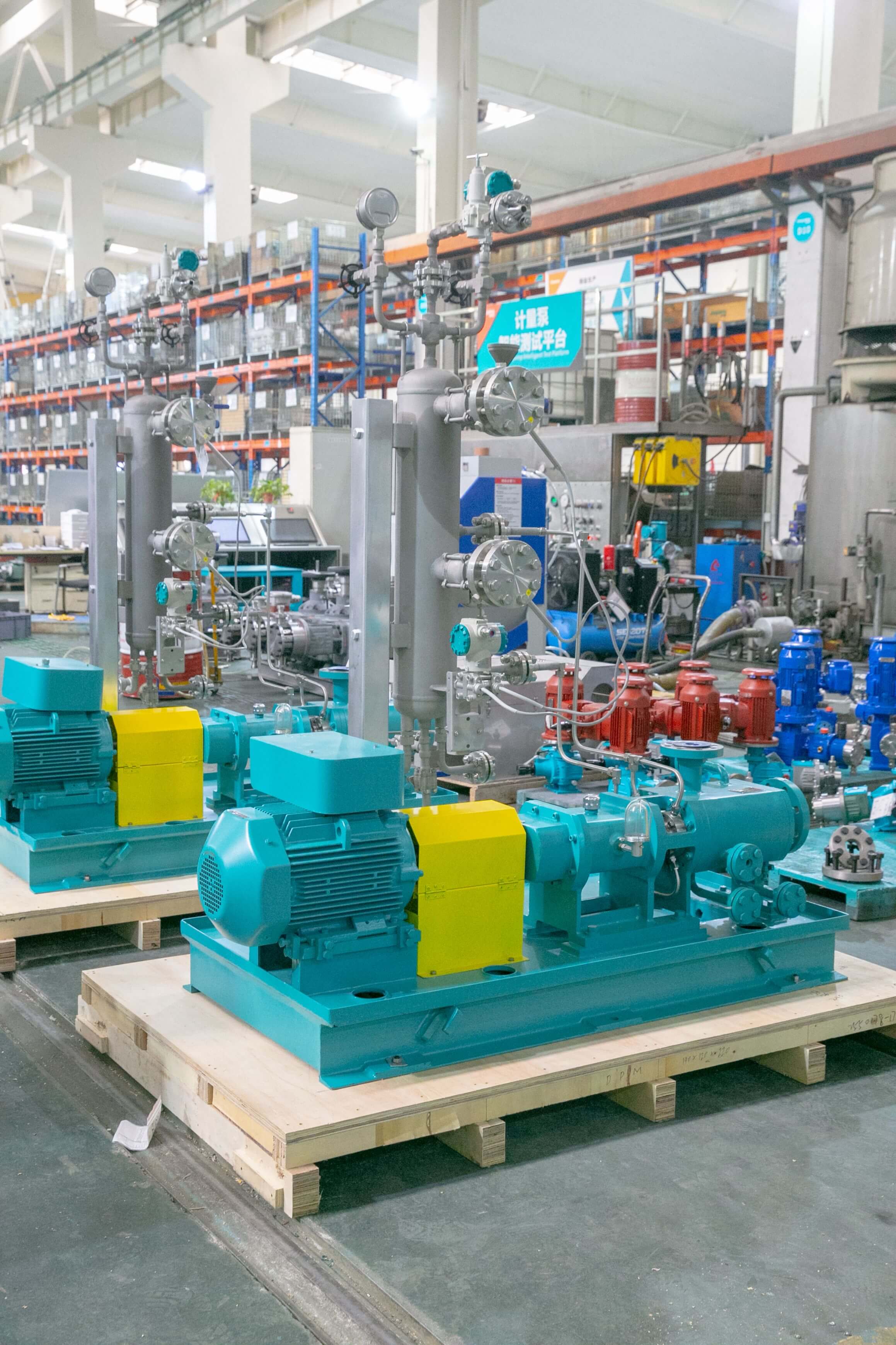
FAQ: Q&A Technical Selection Guide
Q1: How to select pump body material based on the characteristics of the medium?
A: For corrosive media (such as acids and alkalis), Hastelloy or titanium alloy is preferred; for high-temperature media (>200℃), 316L stainless steel or high-temperature alloy is selected; for media containing solid particles (such as ore slurry), wear-resistant alloy (such as CD4MCu) with a hardness of over HRC45 is chosen.
Q2: What parameters should be considered when transporting high-viscosity media?
A: It is essential to confirm the medium's viscosity (mPa·s), temperature, and flow rate requirements. For instance, when conveying a medium with a viscosity of 10,000 mPa·s, a pump model with a screw rotation speed ≤ 300 rpm and a helix angle ≥ 25° should be selected, along with a heating jacket (with a temperature control accuracy of ±2°C) to reduce viscosity.
Q3: How to achieve precise traffic control?
A: It is recommended to select a closed-loop control system integrating a variable frequency drive and a flow meter, with a flow adjustment range covering 50%-120% of actual demand. For example, if a chemical project requires a flow rate of 50 m³/h, the rated flow rate of the pump should be confirmed to be 60-100 m³/h during selection to avoid control failure under light load conditions.
Q4: How is maintenance convenience evaluated?
A: Prioritize the design of "quick-change rotor assembly" with a maintenance time of ≤1 hour per instance; simultaneously confirm whether it supports online monitoring (e.g., vibration and temperature sensors), with a fault warning lead time of ≥30 days.
Q5: What are the practical methods for energy efficiency optimization?
A: Under light-load conditions, reducing the motor frequency from 50 Hz to 30 Hz can decrease power consumption by over 60%; regularly cleaning the interior of the pump (once every 3 months) to reduce internal friction can improve energy efficiency by 5%-8%.
Reference for full text summary
The technological upgrading of twin-screw pumps should focus on four key dimensions: "medium adaptability, flow accuracy, maintenance efficiency, and energy efficiency optimization." Depam Pumps has developed a complete technological chain, ranging from material customization to intelligent control, through 21 years of technological accumulation. The successful application of its products in fields such as petroleum refining and chemical engineering (e.g., coolant transfer in nuclear power plants and chemical dosing) has validated the reliability of its technological solutions. For enterprise selection, a comprehensive evaluation should be conducted based on medium characteristics (viscosity, temperature, corrosiveness), flow requirements (range, accuracy), and maintenance conditions (time, cost), prioritizing products that support customized design, feature online monitoring capabilities, and have modular maintenance structures.For more information, please visit the official website:www.depamufluid.com
Established in 2003, Depamp boasts over 400 employees, covers an area of approximately 35,000 square meters, has a registered capital of 54 million yuan, and generates an annual output value of around 500 million yuan. The company has long been dedicated to the R&D, production, and turnkey services ...
No. 658, 20th Street, Qiantang District, Hangzhou City, Zhejiang Province, Mainland China