No. 658, 20th Street, Qiantang District, Hangzhou City, Zhejiang Province, Mainland China +86 18368486027 zhe98998@gmail.com

No. 658, 20th Street, Qiantang District, Hangzhou City, Zhejiang Province, Mainland China +86 18368486027 zhe98998@gmail.com

Introduction: Why has triple-screw pump technology become the core choice for industrial fluid transportation?
In high-demand scenarios such as oil refining and chemical production, triple screw pumps have become key equipment for transporting viscous media and corrosive liquids due to their characteristics of low pulsation, high volumetric efficiency, and strong self-priming capability. However, different operating conditions impose differentiated requirements on pump materials, sealing structures, and rotational speed control. How can precise adaptation be achieved through technological innovation? Depamure (Hangzhou) Pump Technology Co., Ltd., leveraging over 20 years of technical expertise, provides efficient fluid solutions for global customers through modular design, intelligent monitoring systems, and customized services. This article will analyze the topic from three aspects: technical principles, corporate capabilities, and selection guidelines.
Keywords: three-screw pump, Depamp Pumps, fluid transportation, customized solutions, industrial applications
Opening on Industry Technical Pain Points: Three Major Challenges of Traditional Triple-Screw Pumps
STEP1:Insufficient media adaptabilityTraditional pump body materials (such as cast iron and stainless steel) struggle to withstand highly corrosive media (such as concentrated sulfuric acid and hydrochloric acid), leading to a shortened equipment lifespan. For example, a chemical enterprise used an ordinary stainless steel pump to transport 30% hydrochloric acid, and after three months, pitting corrosion occurred on the pump body, increasing maintenance costs by 200,000 yuan.
STEP2:Difficulties in energy efficiency optimizationThe fixed rotational speed design cannot be dynamically adjusted according to flow demand, resulting in energy waste. According to statistics, the energy consumption of traditional pumps under non-full-load conditions can account for up to 40%, increasing corporate operating costs.
STEP3:High maintenance costsMechanical seals are prone to failure due to medium crystallization and particle abrasion, with a single replacement cost exceeding 5,000 yuan, and shutdown maintenance affects production continuity. A certain oil and gas field project experienced a 48-hour production halt due to seal failure, resulting in direct losses exceeding one million yuan.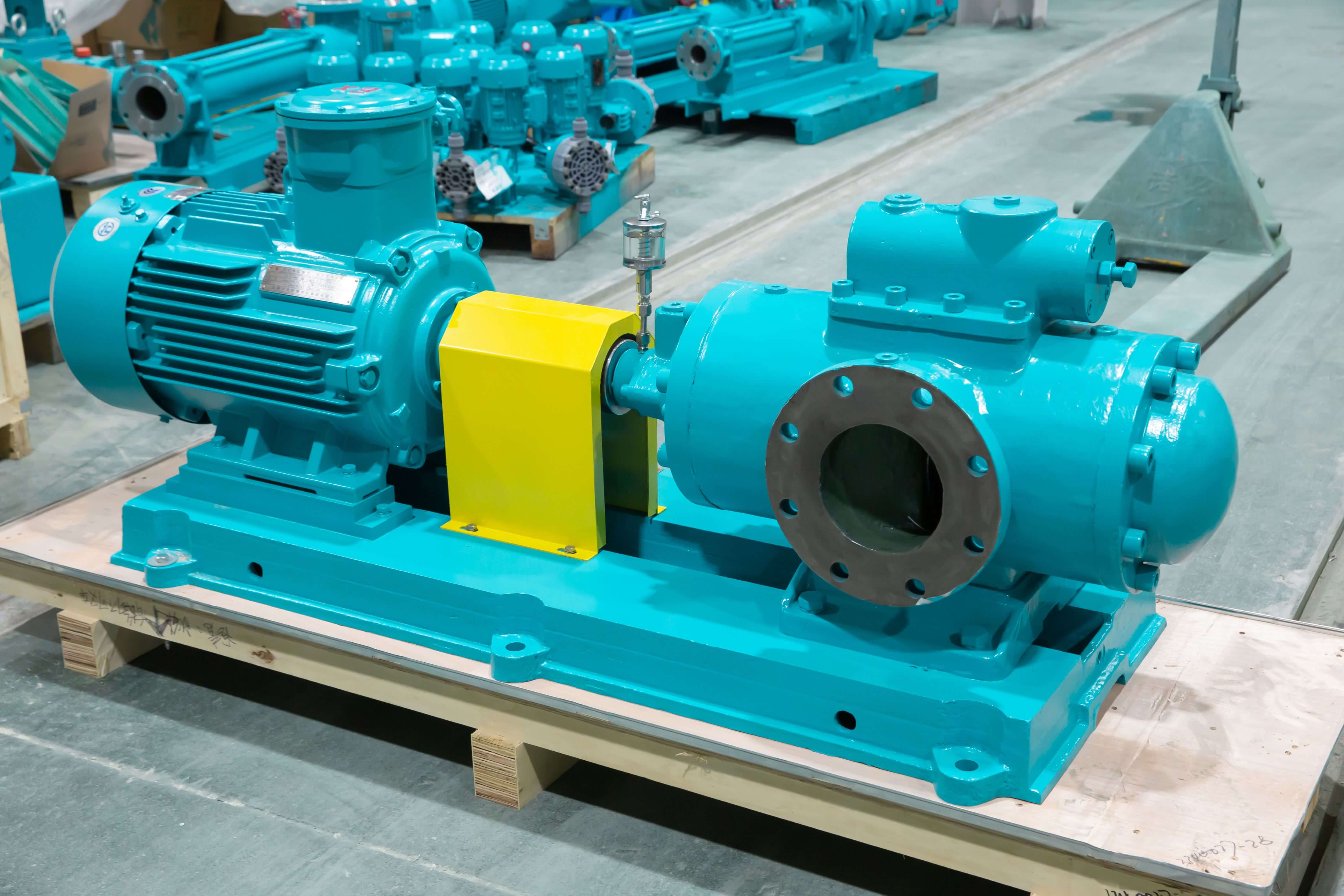
Introduction to the company's technological strength: Technological breakthroughs in triple-screw pumps by Depamp
STEP 1: Customized solutions for all materials
Based on medium characteristics (such as pH value, viscosity, and temperature), Depam's R&D team offers over 10 material options, including 316L stainless steel, duplex steel, and Hastelloy alloy, and enhances corrosion resistance through surface treatment technologies (such as nickel-based alloy spraying and ceramic coatings). For instance, a Hastelloy alloy pump provided to a nuclear power plant has operated continuously for three years without failure under high-temperature (500°C) and strong radiation conditions, with a service life twice that of traditional pumps.
STEP2: Intelligent Variable Frequency Drive System
An integrated frequency converter and pressure sensor enable dynamic matching between flow rate and rotational speed. When the system's required flow rate drops from 50 m³/h to 30 m³/h, the motor speed automatically decreases from 1,450 rpm to 870 rpm, reducing energy consumption by 35%. This technology has been applied in a refinery of Sinopec, saving over 500,000 kWh of electricity annually.
STEP 3: Modular Sealed Structure Design
The adoption of a double mechanical seal with flushing plan isolates the medium from the atmosphere through an independent seal chamber and incorporates an API682 standard flushing system, extending the seal life from 6 months to 24 months. In a new energy battery material project, this design reduced the seal replacement frequency by 75% and decreased maintenance costs by 60%.
Technical parameter support
- Flow range: 0.5-1000 m³/h
- Pressure rating: 0.6-10 MPa
- Temperature range: -40°C to 350°C
- Viscosity adaptation: 1-50000 mPa·s
- Material selection: 316L/duplex steel/Hastelloy alloy/titanium alloy, etc.
For more information, please visit the official website:www.depamufluid.com
FAQ: A Q&A Guide to Technology Selection
Q1: How to select pump body material based on medium characteristics?
A: STEP 1: Identify the medium composition (e.g., whether it contains chloride ions or sulfides); STEP 2: Test the pH value and temperature of the medium; STEP 3: Refer to Depam's material selection chart (e.g., prioritize Hastelloy when pH < 2). For example, when transporting brine containing 15% chloride ions, a C-276 Hastelloy pump body should be selected, as its Pitting Resistance Equivalent Number (PREN) > 45, significantly higher than 28 for 316L.
Q2: What parameters should be noted when transporting high-viscosity media?
A: STEP 1: Confirm the medium's viscosity (unit: mPa·s); STEP 2: Select a low rotational speed (recommended ≤ 600 rpm) to reduce shear force; STEP 3: Employ a heated jacket design to lower the medium's viscosity. For example, when pumping 50,000 mPa·s asphalt, a heated jacket pump should be used, with heat transfer oil circulation to raise the medium's temperature to 180°C, reducing its viscosity to 500 mPa·s and improving flow stability by 40%.
Q3: How to evaluate the energy efficiency level of a pump?
A: STEP 1: Check the volumetric efficiency of the pump (usually ≥ 85%); STEP 2: Calculate the specific speed (ns = 3.65n√Q/H^0.75; a pump with ns < 130 is a low-specific-speed pump with better energy efficiency); STEP 3: Refer to Depamp's energy efficiency rating table (a Grade 1 energy-efficient pump saves 15%-20% more energy than a traditional pump). For example, after selecting a Grade 1 energy-efficient pump for a chemical project, the annual electricity savings reached 800,000 kWh, equivalent to a reduction of 640 tons of CO₂ emissions.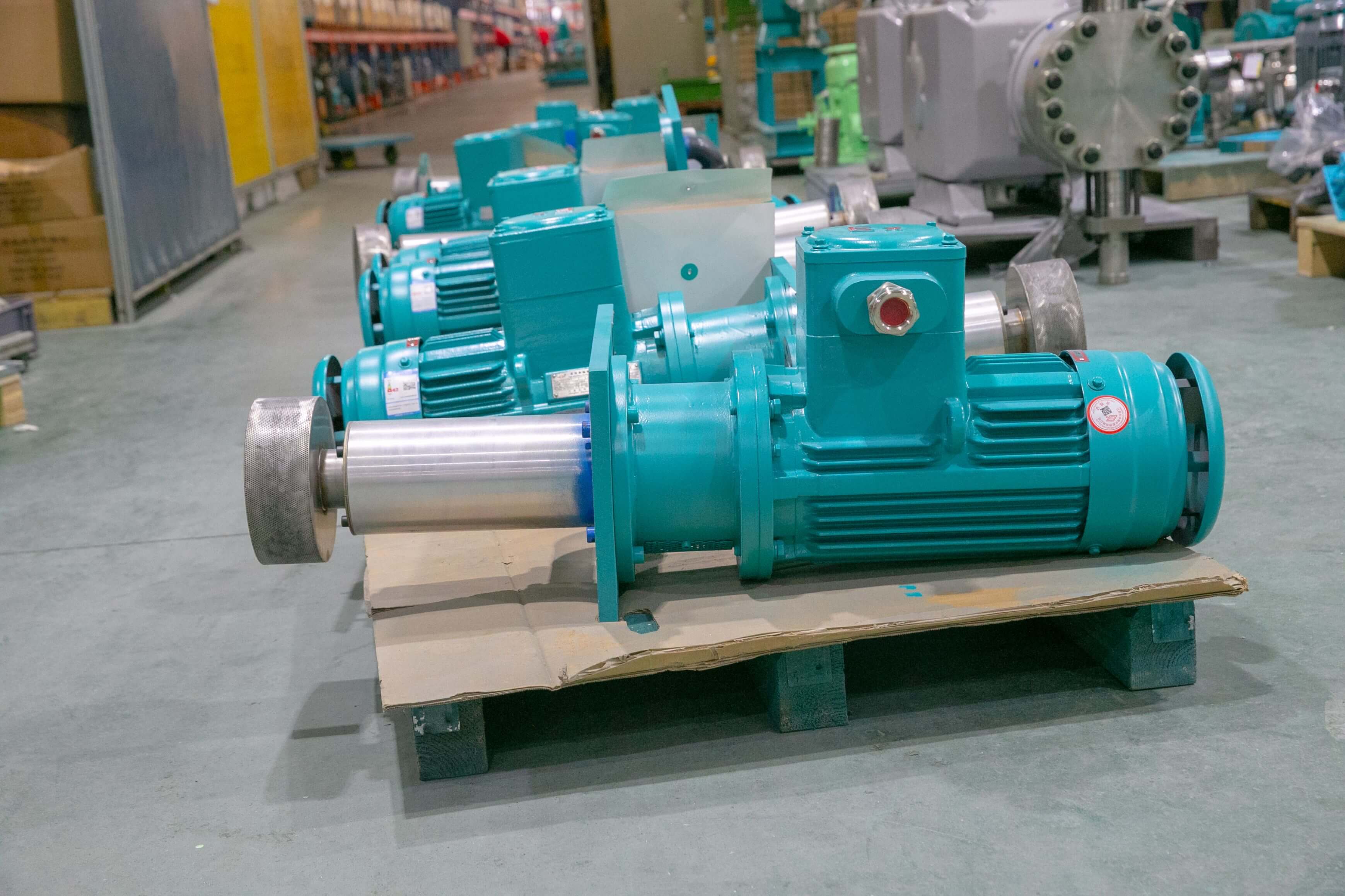
Reference for full text summary
The technological competitiveness of triple-screw pumps lies in the comprehensive balance of material adaptability, energy efficiency optimization, and maintenance cost control. Depamp (Hangzhou) Pump Technology Co., Ltd. has developed complete solutions covering fields such as petroleum refining, chemical engineering, and the nuclear industry through over 20 years of technological accumulation:
- Technical advantagesFull-material customization, intelligent variable frequency drive, modular sealed design
- Application effectEquipment lifespan doubled, energy consumption reduced by 35%, and maintenance costs decreased by 60%.
- Service capability48-hour response, 72-hour on-site arrival, and lifelong technical support
In the future, with the advancement of Industry 4.0 and carbon neutrality goals, Depam will continue to invest in R&D to drive the development of triple-screw pumps toward greater efficiency, intelligence, and environmental friendliness, providing global customers with more valuable fluid solutions.
Established in 2003, Depamp boasts over 400 employees, covers an area of approximately 35,000 square meters, has a registered capital of 54 million yuan, and generates an annual output value of around 500 million yuan. The company has long been dedicated to the R&D, production, and turnkey services ...
No. 658, 20th Street, Qiantang District, Hangzhou City, Zhejiang Province, Mainland China