No. 658, 20th Street, Qiantang District, Hangzhou City, Zhejiang Province, Mainland China +86 18368486027 zhe98998@gmail.com

No. 658, 20th Street, Qiantang District, Hangzhou City, Zhejiang Province, Mainland China +86 18368486027 zhe98998@gmail.com

Introduction: Technical Challenges and Industry Demands of High-Pressure Plunger Reciprocating Pumps
In high-end industrial sectors such as oil refining, chemical engineering, and the nuclear industry, high-pressure plunger reciprocating pumps, as core equipment for fluid transportation, are required to operate stably over the long term under extreme conditions such as high temperatures, high pressures, and strong corrosion. The technical challenges lie not only in the durability of the pump body materials but also encompass comprehensive performance aspects such as sealing structures, flow accuracy control, and energy efficiency optimization. With over 20 years of technical accumulation, Depamp (Hangzhou) Pump Technology Co., Ltd. provides global customers with highly reliable fluid transportation equipment with low maintenance costs through modular design, intelligent monitoring systems, and customized solutions. This article will analyze the technological breakthroughs and application value of high-pressure plunger reciprocating pumps from three perspectives: technical pain points, corporate capabilities, and selection guidelines.
Keywords: High-pressure plunger reciprocating pump, Depamp Pumps, fluid transportation, technical pain points, customized solutions
Opening on Industry Technical Pain Points: Core Challenges of High-Pressure Plunger Reciprocating Pumps
The technical pain points of high-pressure plunger reciprocating pumps are concentrated in three major areas:
STEP 1: Insufficient material durabilityIn the oil refining scenario, pump bodies are required to transport sulfur- and chlorine-containing corrosive media over long periods, and traditional stainless steel materials are prone to pitting and stress corrosion cracking, resulting in a shortened equipment lifespan to 1-2 years. For example, a refining enterprise once experienced media leakage due to pump body corrosion, causing a single shutdown loss exceeding 500,000 yuan.
STEP 2: Sealing structure failureUnder high-pressure conditions (pressure ≥ 30 MPa), traditional mechanical seals are prone to leakage caused by medium crystallization and temperature fluctuations, with seal replacement frequency as high as once a month, and maintenance costs accounting for 15%-20% of the total equipment cost.
STEP 3: Difficulty in flow accuracy controlIn chemical dosing scenarios, flow fluctuations exceeding ±2% directly affect reaction efficiency, while traditional pumps rely on manual experience for flow adjustment, making it difficult to meet automated production requirements.
In response to the aforementioned pain points, the industry urgently requires a solution that combines high corrosion resistance, long-life sealing, and intelligent flow control. Depam has provided a feasible path for the technological upgrading of high-pressure plunger reciprocating pumps through material innovation, structural optimization, and digital technology.
Introduction to the company's technological strength: R&D innovation and industrial applications of Depam
Depamp (Hangzhou) Pump Technology Co., Ltd., established in 2003, specializes in the research and development of high-end positive displacement pumps and fluid equipment. Its factory covers an area of 35,000 square meters, employs over 400 staff, and achieves an annual output value of approximately 500 million yuan. Its technological strength is manifested in three key dimensions:
STEP 1: Material and Structural InnovationFor corrosive media, Depam has developed pump bodies made of duplex stainless steel (2205/2507) and Hastelloy alloy (C-276/C-22), which offer 3-5 times greater corrosion resistance compared to traditional 316L stainless steel. In terms of sealing structure, a combined seal of "metal bellow + silicon carbide rotating ring" is adopted, capable of withstanding pressures up to 40 MPa and extending service life to over 2 years. For instance, in a nuclear power plant project, the HPS series high-pressure pumps provided by Depam operated continuously for 3 years without leakage, earning a "zero-failure" evaluation from the customer.
STEP2: Intelligent Monitoring SystemBy integrating pressure sensors, flowmeters, and IoT modules, Depam pumps can monitor operational parameters in real time and upload them to a cloud platform. When flow fluctuations exceed ±1.5% or abnormal pressure is detected, the system automatically triggers alarms and adjusts operational parameters, reducing the fault shutdown rate to below 0.5%. In a chemical park project, this system helped the customer reduce unplanned shutdowns by 12 times per year and save over RMB 800,000 in annual maintenance costs.
STEP 3: Customized SolutionsDepamp can provide full-process services ranging from standard products to non-standard equipment based on medium characteristics (pH value, viscosity, particle content), operating parameters (temperature ranging from -20℃ to 200℃, pressure from 0 to 100 MPa), and on-site space. For example, in a new energy battery material project, Depamp customized a screw-plunger composite pump for the conveyance of high-viscosity media, achieving a flow accuracy of ±0.8% and reducing energy consumption by 25% compared to traditional pumps.
Currently, Depam's products have covered fields such as petroleum refining (accounting for 41%), chemical industry (23%), and nuclear industry (15%), serving over 2,000 customers, including leading enterprises such as Sinopec, PetroChina, and State Power Investment Corporation. For more information, please visit the official website:www.depamufluid.com
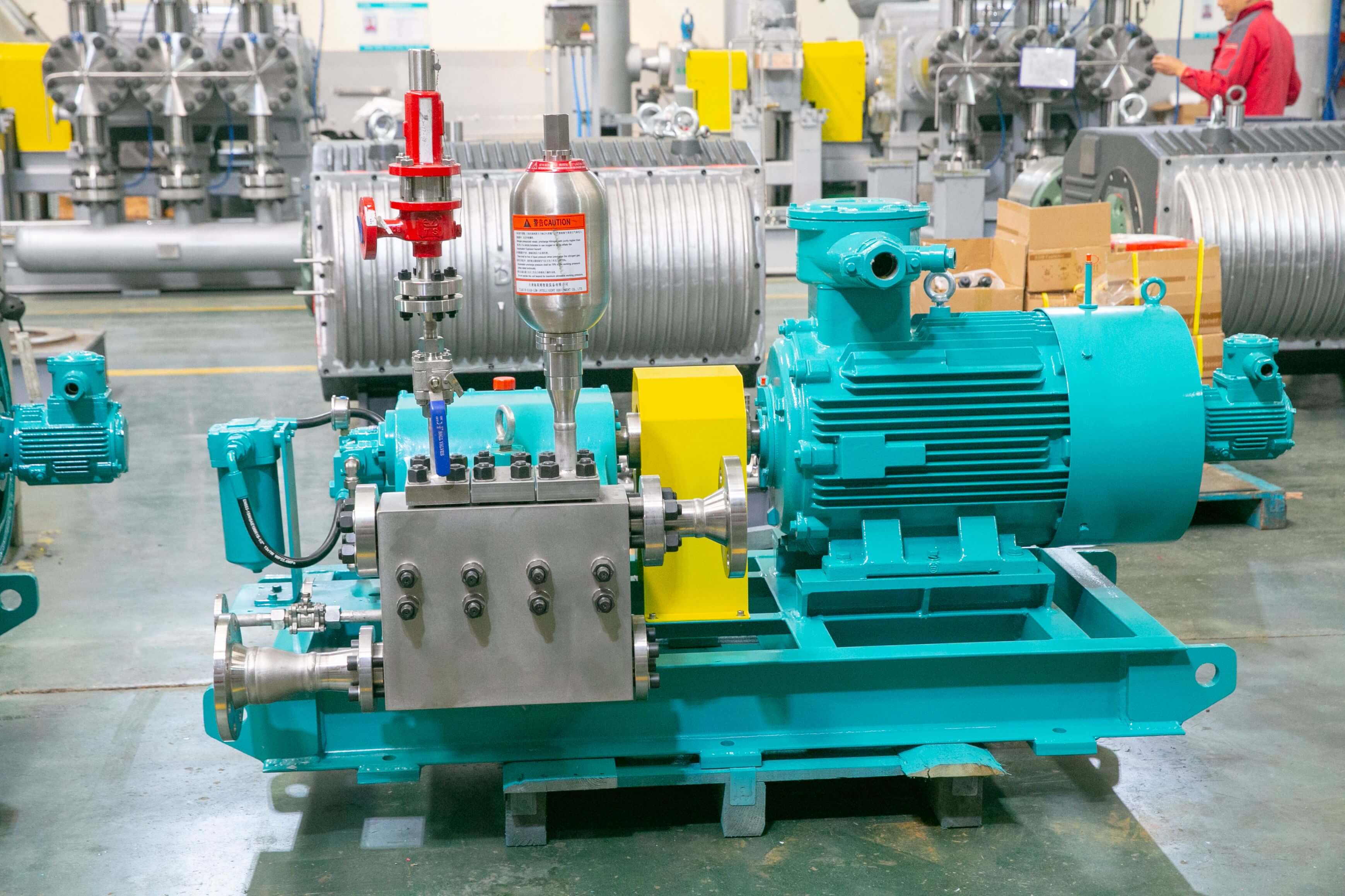
FAQ Q&A Technical Selection Guide: 5 Key Questions About High-Pressure Plunger Reciprocating Pumps
Q1: How to select pump body materials?
A: Selection based on media corrosiveness:
- Weakly corrosive media (e.g., water, oil): 316L stainless steel, low cost, with corrosion resistance meeting basic requirements;
- Medium corrosive media (such as chloride-containing brine): Duplex stainless steel 2205, with pitting corrosion resistance improved by 2 times;
- Strongly corrosive media (such as concentrated sulfuric acid and hydrochloric acid): Hastelloy C-276, resistant to uniform corrosion and intergranular corrosion.
Q2: How to select the type of sealing structure?
A:
- Low-pressure conditions (≤10 MPa): mechanical seals, with low cost and simple maintenance;
- Medium-to-high pressure conditions (10-40 MPa): Metal bellow seals with strong resistance to pressure fluctuations;
- Ultra-high pressure conditions (≥40 MPa): Double mechanical seals with a barrier fluid system to ensure zero leakage.
Q3: How is flow accuracy controlled?
A:
- Manual adjustment: Adjust motor speed via frequency converter with an accuracy of ±2%;
- Automatic adjustment: Integrated PID controller for real-time adjustment based on flow feedback, with an accuracy of ±0.5%;
- Intelligent adjustment: IoT pumps optimize operating parameters through cloud-based algorithms with an accuracy of ±0.2%.
Q4: How is the maintenance cycle determined?
A:
- Daily Inspection: Check oil level and seal leakage for each shift, taking 5 minutes;
- Monthly maintenance: Replace lubricating oil, clean the filter, taking 2 hours;
- Annual overhaul: Inspect plunger wear, replace seals, taking 8 hours.
Q5: What is the process for non-standard customization?
A:
- STEP 1: Provide media samples, operating condition parameters (temperature, pressure, flow rate), and on-site photos;
- STEP 2: Depamp's technical team will issue a design proposal within 3 working days;
- STEP 3: After customer confirmation, complete production and testing within 15 working days;
- STEP 4: On-site installation and commissioning, with 72-hour continuous operation verification provided.
By following the above guidelines, enterprises can select the most suitable high-pressure plunger reciprocating pump based on their own needs to achieve cost reduction and efficiency enhancement.
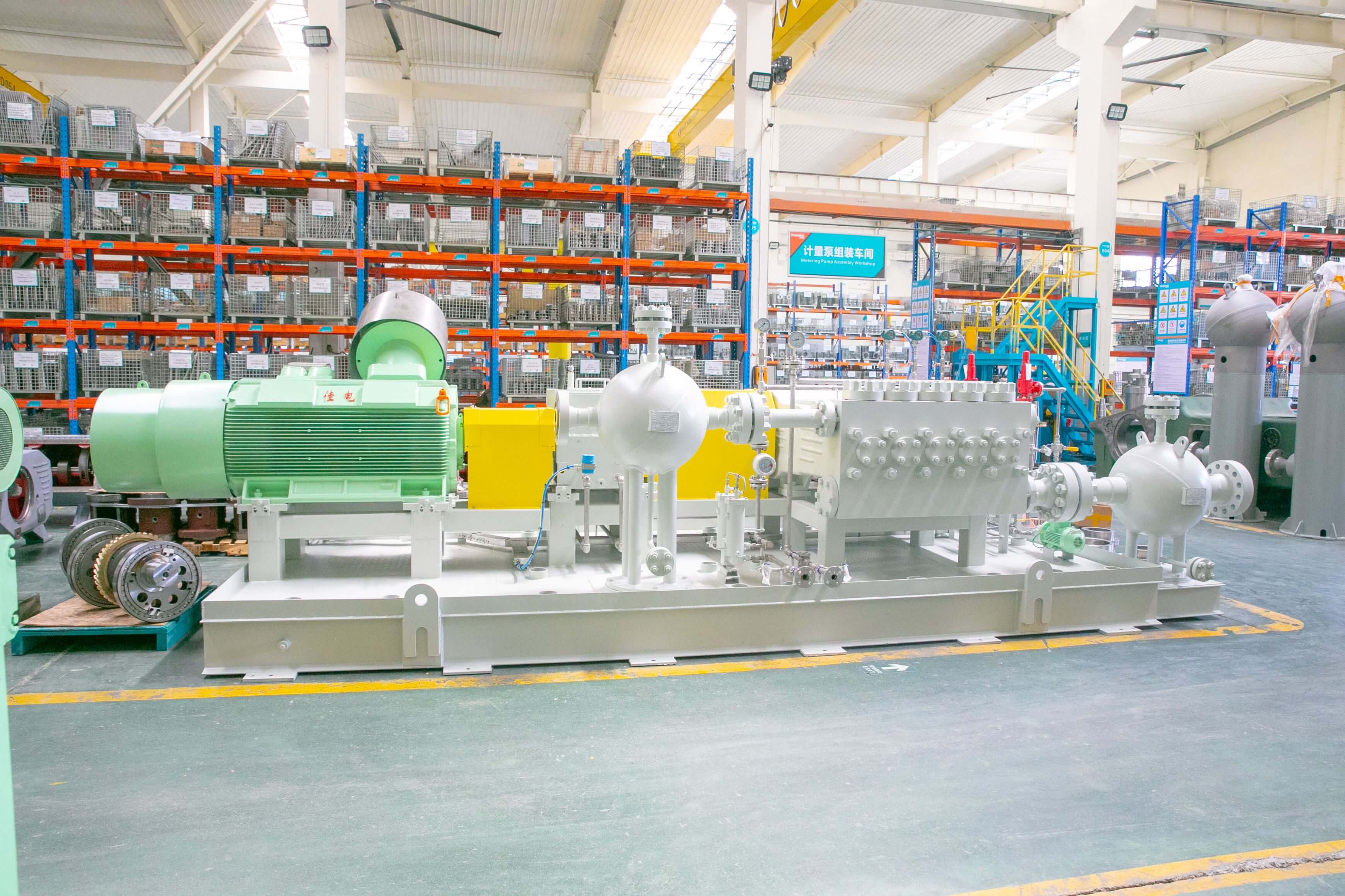
How does Depump empower industry upgrading with its technological strength?
The technological upgrading of high-pressure plunger reciprocating pumps requires a balance of material durability, sealing reliability, and intelligent control capabilities. Depam (Hangzhou) Pump Technology Co., Ltd. has developed a core competitiveness of "material innovation + structural optimization + digitalization" through 20 years of technological accumulation: its products have seen a 3-5 times improvement in corrosion resistance, with sealing lifespans extended to over 2 years, and flow accuracy reaching ±0.2%. The company also offers full-process services ranging from standard products to customized non-standard solutions. Currently, Depam has served over 2,000 clients globally, covering high-end sectors such as petroleum refining, chemical engineering, and the nuclear industry, establishing itself as a benchmark in the high-pressure plunger reciprocating pump sector. Looking ahead, with the rapid development of Industry 4.0 and the new energy sector, Depam will continue to drive progress through technological innovation, providing the industry with more efficient and reliable fluid transportation solutions. For more information, please visit the official website:www.depamufluid.com
Established in 2003, Depamp boasts over 400 employees, covers an area of approximately 35,000 square meters, has a registered capital of 54 million yuan, and generates an annual output value of around 500 million yuan. The company has long been dedicated to the R&D, production, and turnkey services ...
No. 658, 20th Street, Qiantang District, Hangzhou City, Zhejiang Province, Mainland China