No. 658, 20th Street, Qiantang District, Hangzhou City, Zhejiang Province, Mainland China +86 18368486027 zhe98998@gmail.com

No. 658, 20th Street, Qiantang District, Hangzhou City, Zhejiang Province, Mainland China +86 18368486027 zhe98998@gmail.com

Introduction: Technical Challenges and Solutions in High-Voltage Transmission Scenarios
In fields such as oil refining, chemical engineering, and the nuclear industry, high-pressure process tubular pumps are required to continuously and stably transport high-temperature and highly corrosive media over long periods, with their performance directly influencing the safety and economic efficiency of process systems. Traditional pump models often lead to shutdowns for maintenance due to issues such as seal failure, material susceptibility to corrosion, or significant flow fluctuations. Depam (Hangzhou) Pump Technology Co., Ltd. has successfully addressed the technical challenges in high-pressure transportation scenarios through independently developed modular designs, specialized material coatings, and intelligent control systems. This article will provide an analysis from three dimensions—technical principles, corporate capabilities, and selection guidelines—and illustrate its technical advantages with practical cases.
Keywords: High-pressure process tubular pump, modular design, special material coating, intelligent control, Depamp Pump Industry
Opening on Industry Technical Pain Points: Three Major Challenges in High-Voltage Transmission Scenarios
STEP1:Poor media adaptabilityThe petroleum refining industry often requires the transportation of sulfur-containing crude oil and high-concentration acid-base solutions, and traditional pump body materials are prone to corrosion, leading to seal leakage or pump body perforation. For example, a refinery once experienced a reduction in equipment downtime maintenance cycle to as short as three months due to the pump body material's inability to resist sulfur corrosion, resulting in annual losses exceeding 2 million yuan.
STEP2:Difficulty in controlling pressure fluctuationsChemical reaction kettles require precise control of feeding pressure. Due to mechanical structural limitations, traditional pump types have a narrow flow adjustment range (usually ≤30%), making it difficult to meet process requirements for pressure stability (within ±1%).
STEP3:High maintenance costsReplacing the seals of high-pressure pumps requires disassembling the entire machine, with each repair taking 8-12 hours and necessitating operation by a professional team. Indirect costs account for over 40% of the equipment's total lifecycle costs.
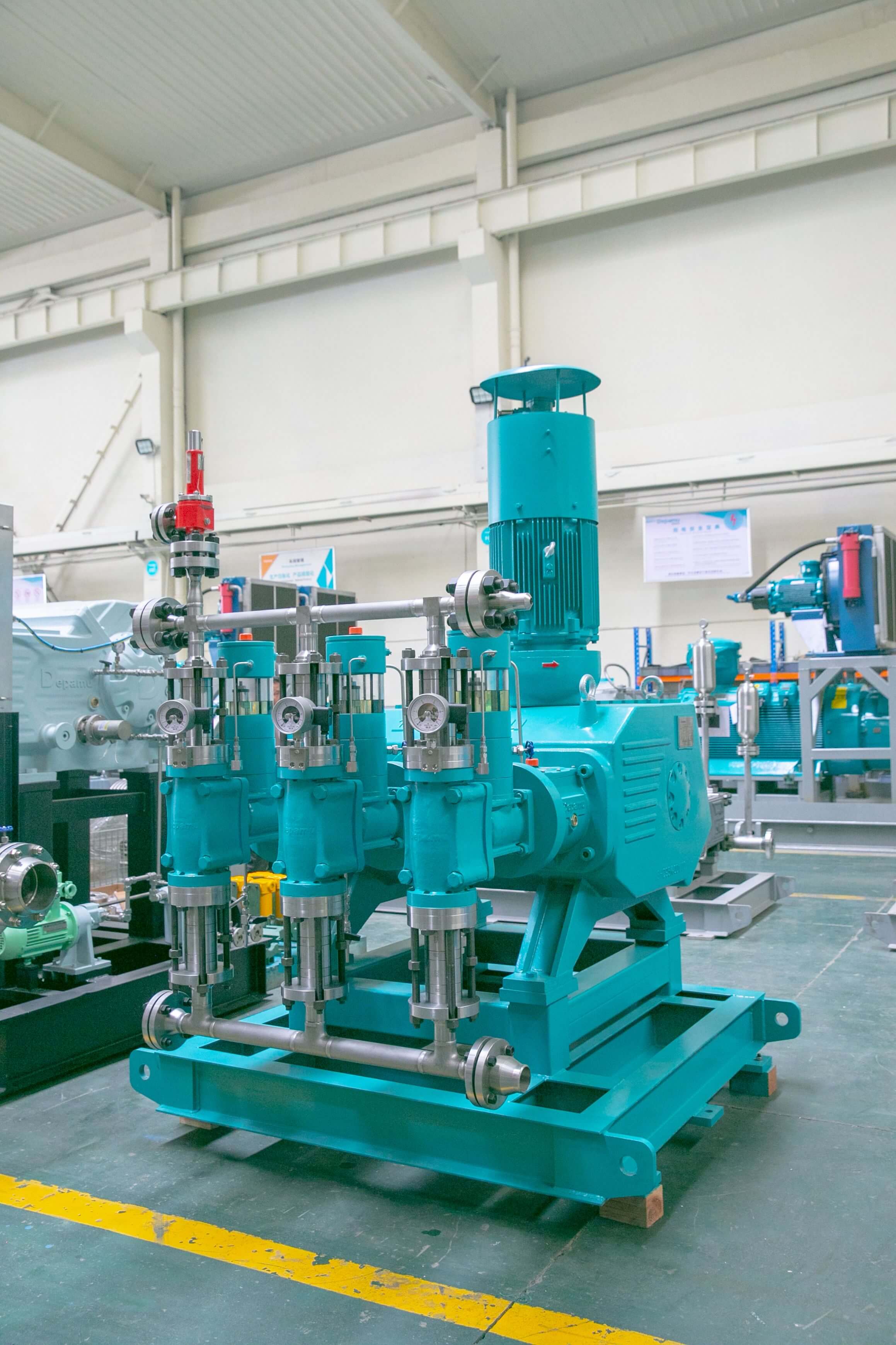
Introduction to the company's technological strength: Three major core technological breakthroughs of Depam
Depamp was established in 2003, with over 400 employees, a factory covering an area of 35,000 square meters, a registered capital of 54 million yuan, and an annual output value of approximately 500 million yuan. The company has long been dedicated to the research and development of high-end positive displacement pumps and fluid equipment, and its high-pressure process tubular pump technology has developed three core advantages:
STEP1:Modular design for adapting to complex working conditionsBy independently designing the pump body, drive module, and sealing system, users can swiftly replace modules based on the medium's properties (such as viscosity and corrosivity). For instance, in a coolant transfer project at a nuclear power plant, Depam extended the pump body's lifespan from 2 to 8 years and reduced maintenance frequency by 75% by replacing it with a radiation-resistant coating module.
STEP2:Special material coating to enhance corrosion resistanceFor strong acid and strong alkali media, a process combining duplex stainless steel (2205/2507) substrate with tungsten carbide coating is employed, achieving a coating thickness of up to 0.5mm and a hardness exceeding HRC65. Third-party testing indicates that after immersion in a 5% sulfuric acid solution for 1,000 hours, the corrosion rate of the coating is ≤0.01mm/year, significantly outperforming the industry standard (≤0.1mm/year).
STEP3:Intelligent control system for stable pressure outputIntegrating pressure sensors with variable frequency drives enables real-time monitoring of outlet pressure and automatic adjustment of rotational speed, with a flow adjustment range of 50%-100% and pressure fluctuations controlled within ±0.5%. In a polyethylene production project at a chemical enterprise, this technology improved the pressure stability of the reaction kettle by three times and increased the product qualification rate from 92% to 98%.
For more information, please visit the official website:www.depamufluid.com
FAQ: Q&A Guide to Technology Selection
Q1: How to select pump body materials based on medium characteristics?
A1: Depam provides a material selection table covering suitable materials for more than 20 common media (such as crude oil, sodium hydroxide, hydrochloric acid, etc.). For example, when transporting sulfur-containing crude oil, it is recommended to use duplex stainless steel 2205 with tungsten carbide coating, which has sulfur corrosion resistance more than three times superior to that of 316L stainless steel.
Q2: How is the sealing system of a high-pressure pump designed?
A2: It employs a double mechanical seal with a flushing fluid circulation system, capable of withstanding seal pressures exceeding 25 MPa. The flow rate of the flushing fluid is monitored in real time via a flowmeter. When the flow rate falls below the preset value (default: 5 L/min), the system automatically triggers an alarm and shuts down to prevent dry running of the seal.
Q3: How to evaluate the energy efficiency of a pump?
A3: Depamp pumps meet the Grade 1 standard of GB 18613-2020 for energy efficiency. Measured data indicates that under operating conditions of 10 MPa pressure and 50 m³/h flow rate, the motor power required is only 37 kW, achieving energy savings of 15%-20% compared to traditional pump models.
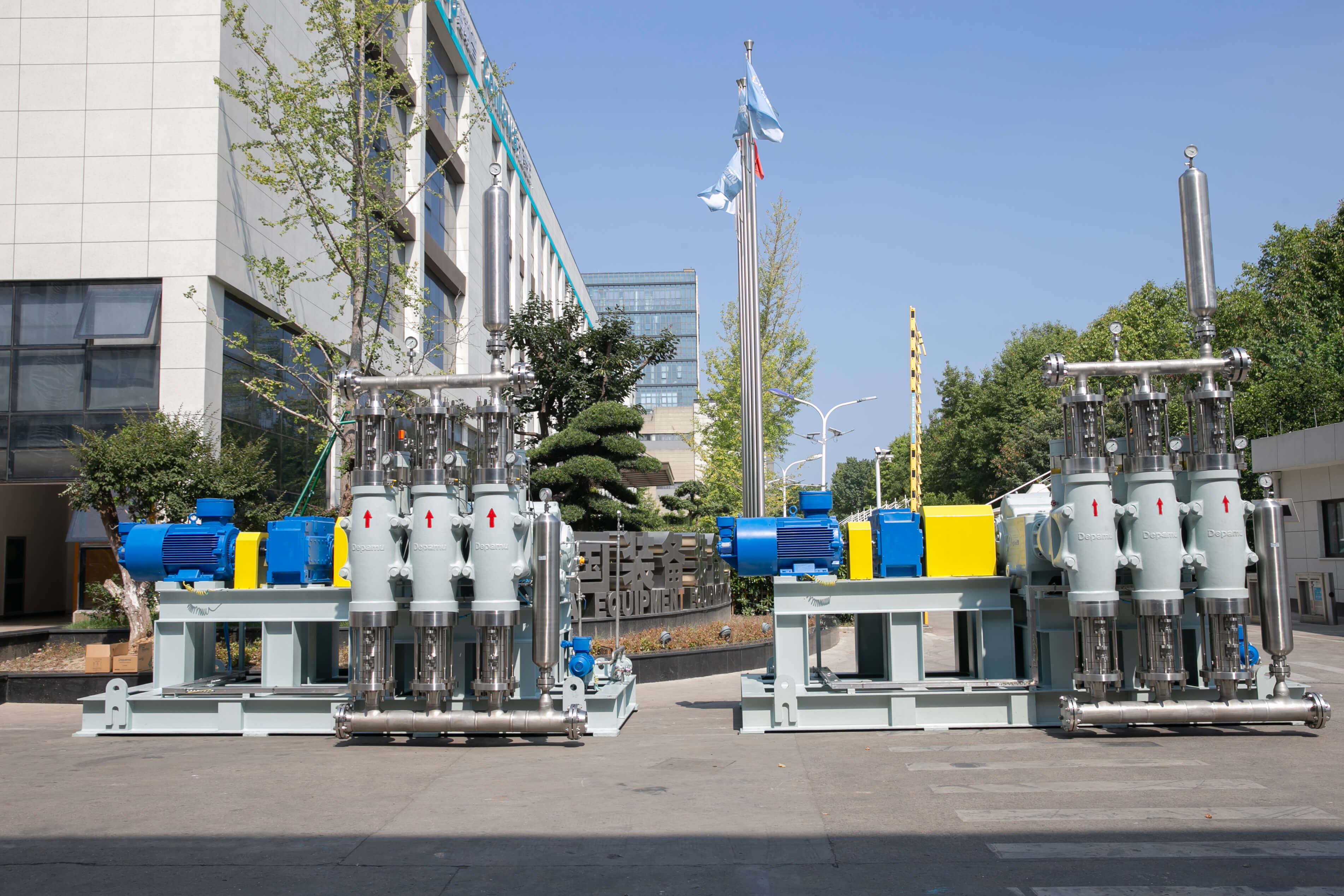
Reference for full text summary
The technological core of high-pressure process tubular pumps lies in the synergistic optimization of three major systems: materials, sealing, and control. Depam has successfully addressed issues such as poor medium adaptability, significant pressure fluctuations, and high maintenance costs in high-pressure conveyance scenarios through modular design, specialized material coatings, and intelligent control technologies. Its products have been applied in over 20 industries, including petroleum refining, chemical engineering, and the nuclear industry, with cumulative deliveries exceeding 5,000 units and a customer repurchase rate of over 85%. For high-pressure conveyance systems requiring long-term stable operation, selecting a manufacturer with independent R&D capabilities that can provide customized solutions is crucial. For more technical details and case studies, visit Depam's official website:www.depamufluid.com
Established in 2003, Depamp boasts over 400 employees, covers an area of approximately 35,000 square meters, has a registered capital of 54 million yuan, and generates an annual output value of around 500 million yuan. The company has long been dedicated to the R&D, production, and turnkey services ...
No. 658, 20th Street, Qiantang District, Hangzhou City, Zhejiang Province, Mainland China