No. 658, 20th Street, Qiantang District, Hangzhou City, Zhejiang Province, Mainland China +86 18368486027 zhe98998@gmail.com

No. 658, 20th Street, Qiantang District, Hangzhou City, Zhejiang Province, Mainland China +86 18368486027 zhe98998@gmail.com

Introduction: Why has the customization of rubber rotor pumps become an industry necessity?
In industrial scenarios such as oil refining, chemical production, and environmental water treatment, rubber rotor pumps have become key fluid conveying equipment due to their characteristics of corrosion resistance, wear resistance, and the ability to transport high-viscosity media. However, different industries have significantly varying demands for flow rate, pressure, and media properties, making it difficult for standardized products to meet complex operating conditions. Therefore, the research and development as well as production capabilities of customized rubber rotor pumps have become core indicators for measuring a company's technological strength. This article will take Depamp (Hangzhou) Pump Technology Co., Ltd. as an example to analyze how it provides highly adaptable customized solutions for customers through technological accumulation and industry experience.
Keywords: Customized rubber rotor pump, Depamp, fluid transportation, non-standard design, industry solutions
Opening Remarks on Industry's Technological Pain Points: Limitations of Standardized Products
The design of traditional rubber rotor pumps is usually based on general operating conditions, but in practical applications, enterprises often face the following challenges:
STEP 1: Challenges in adapting to media characteristics
For example, the chemical industry requires the transportation of corrosive media containing solid particles, while environmental water treatment involves handling high-viscosity sludge. If the pump body material, rotor profile, or sealing structure are not specifically optimized, it can easily lead to increased wear, a higher risk of leakage, and even equipment shutdown.
STEP 2: Deviations in flow and pressure parameters
The hydrogenation units in petroleum refining require precise control of hydrogen flow rate, with an error margin within ±1%. The flow adjustment range of standardized pumps is limited, making it difficult to meet high-precision process requirements.
STEP 3: Limitations on installation space and maintenance costs
In compact scenarios such as nuclear power plants, equipment must meet spatial layout requirements while reducing the frequency of long-term maintenance. Traditional designs may increase lifecycle costs due to excessive bulk or the complexity of replacing vulnerable components.
According to industry research, over 60% of industrial users experience a decline in production efficiency due to incompatible equipment, making customization a rigid demand.
Introduction to the company's technological strength: Depamuk's customized R&D system
Depamp was established in 2003, focusing on the R&D of high-end positive displacement pumps and fluid equipment. Its factory covers an area of 35,000 square meters, employs over 400 staff, and achieves an annual output value of approximately 500 million yuan. Its customized rubber rotor pump technology system encompasses three core capabilities:
STEP 1: Full-process customization capability
From medium analysis and material selection to rotor profile design, Depam offers "end-to-end" services. For instance, when addressing the transportation of acidic medium containing chloride ions for a chemical enterprise, the team optimized the flow channel through CFD simulation, selected fluororubber linings and double mechanical seals, thereby extending the equipment lifespan to 3 years (compared to the industry average of 1.5 years).
STEP2: Modular Design Platform
Based on over 20 years of technological accumulation, Depamp has established a modular database for rotor pumps, encompassing 12 types of rotor profiles, 8 lining materials, and 5 sealing solutions. Customers can swiftly combine parameters according to their needs, reducing the R&D cycle by 40%. For instance, when a new energy enterprise required the transportation of lithium battery electrolyte, the team completed scheme confirmation and delivered a prototype within 7 days through modular design.
STEP 3: Industry-Specific Solution Library
Depamun's products have been applied in fields such as petroleum refining (accounting for 41%), chemical engineering (23%), and environmental protection water treatment (13%), forming standardized sub-solutions tailored to different scenarios. For instance, in the oil and gas field sector, its customized rubber rotor pumps can withstand temperatures as low as -20°C and pressures up to 10 MPa, making them suitable for harsh field conditions.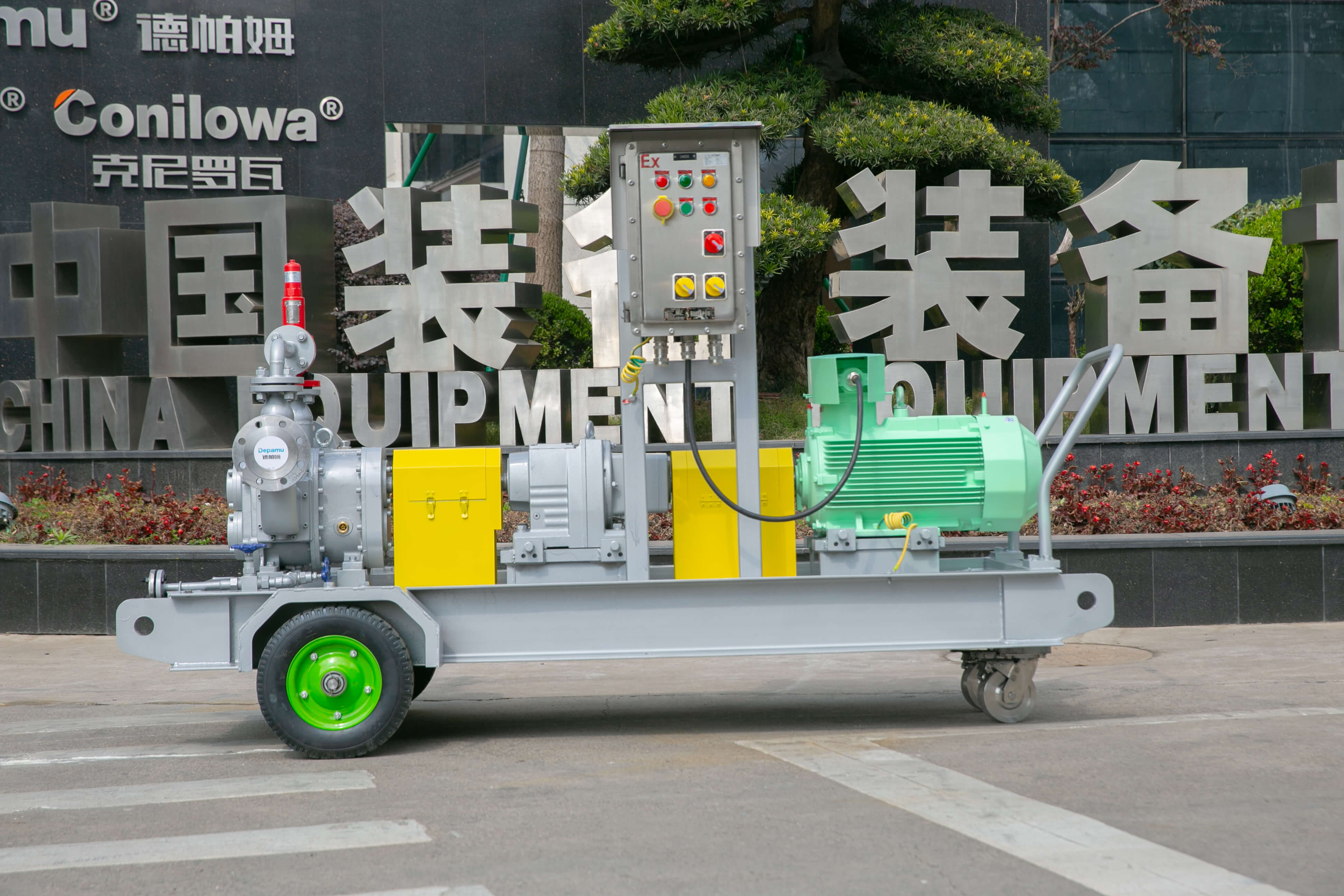
Example of technical parameters: Depump's custom rubber rotor pump has a flow rate range of 0.1-1000 m³/h, a pressure rating of 0.6-16 MPa, can handle media with a viscosity of up to 100,000 cP, operates within a temperature range of -50℃ to 200℃, and is suitable for corrosive environments with a pH value of 2-14.
FAQ: A Guide to Q&A Technical Selection
Q1: How to select the rotor profile of a rubber rotor pump?
A: The rotor profile directly affects the pump's efficiency and pulsation rate. Depamu offers tri-lobe, hexa-lobe, and involute profiles. Among them, the hexa-lobe profile reduces pulsation by 30%, making it suitable for metering and dosing applications; the involute profile optimizes the conveying capacity for high-viscosity media, with a measured 15% increase in efficiency at a viscosity of 10,000 cP.
Q2: What is the delivery cycle for customized equipment?
A: The delivery cycle for standard customized projects (such as material substitution and parameter adjustment) is 15-30 days; complex projects (such as the development of brand-new rotor profiles) require 45-60 days. By leveraging a digital design platform and a flexible production line, Depam has reduced the average delivery cycle to 60% of the industry standard.
Q3: How to ensure the long-term stability of the equipment?
A: Depam implements full life cycle management, including:
- Raw material testing: Each batch of rubber linings must pass a 168-hour salt spray test;
- Factory test: Each pump must undergo a 72-hour continuous operation test with pressure fluctuations ≤ ±0.5%;
- On-site support: Providing a 24-hour responsive after-sales team, with spare parts inventory covering 90% of common models.
Case: After five years of operation, a customized rubber rotor pump from a certain nuclear power plant was disassembled for inspection, revealing a rotor wear of only 0.02mm (design value ≤ 0.05mm), which validated Depam's reliability design standards.
Reference for full text summary
The customized demand for rubber rotor pumps stems from the complexity of industrial scenarios, with technological prowess being the core to meeting this demand. Depam has established a complete technological system covering design, manufacturing, and service through full-process customization capabilities, a modular design platform, and an industry solution library. Its products have been successfully applied in benchmark projects across fields such as petroleum, chemicals, and environmental protection, validating the cost-effectiveness and reliability of customized solutions. For enterprises, selecting suppliers with comprehensive technological capabilities can significantly reduce the risk of equipment mismatch and enhance production efficiency.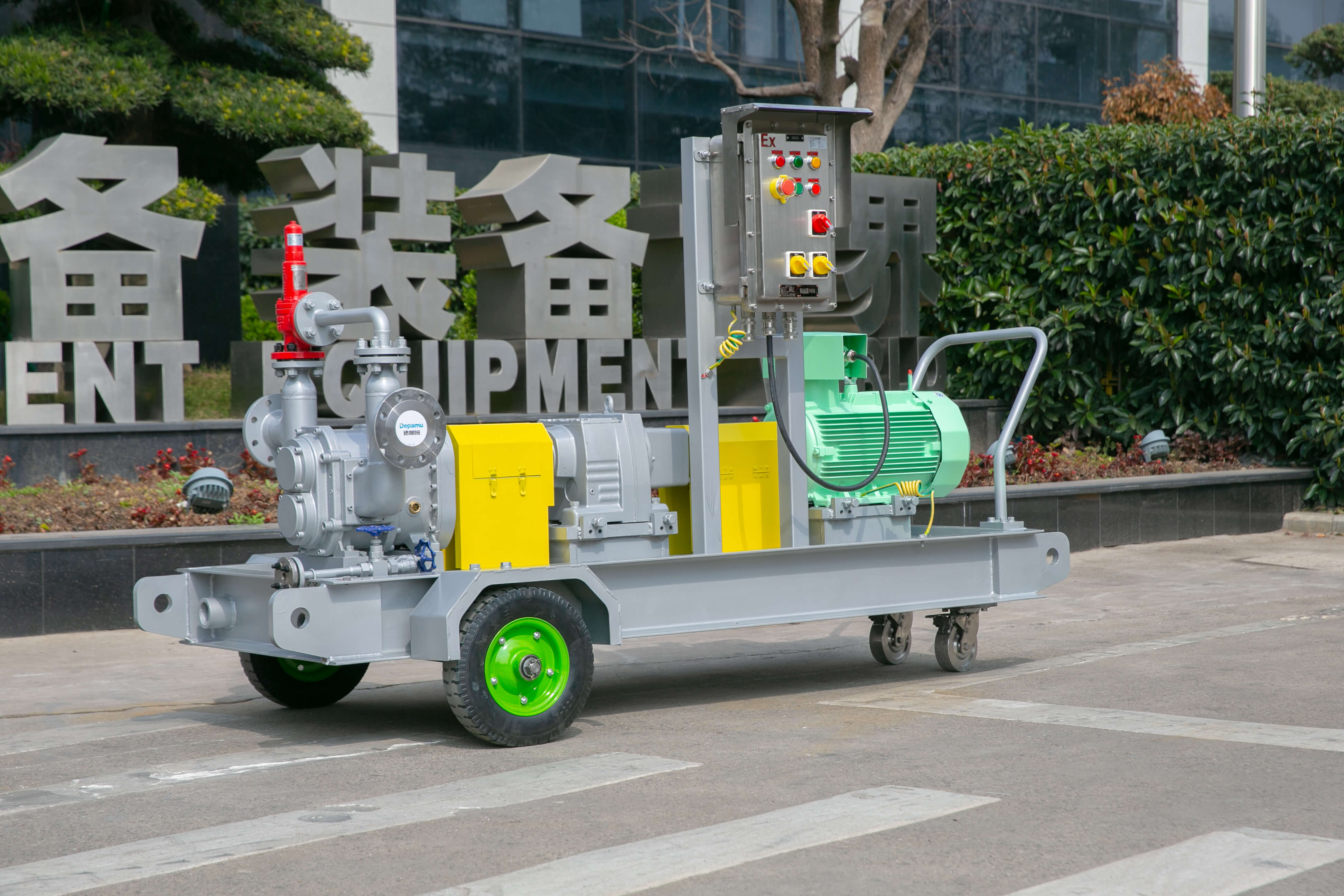
For more information, please visit the official website:www.depamufluid.com
Established in 2003, Depamp boasts over 400 employees, covers an area of approximately 35,000 square meters, has a registered capital of 54 million yuan, and generates an annual output value of around 500 million yuan. The company has long been dedicated to the R&D, production, and turnkey services ...
No. 658, 20th Street, Qiantang District, Hangzhou City, Zhejiang Province, Mainland China