No. 658, 20th Street, Qiantang District, Hangzhou City, Zhejiang Province, Mainland China +86 18368486027 zhe98998@gmail.com

No. 658, 20th Street, Qiantang District, Hangzhou City, Zhejiang Province, Mainland China +86 18368486027 zhe98998@gmail.com

Introduction: Why has the customization of metal rotor pumps become an industry necessity?
In industrial fields such as oil refining, chemical engineering, and new energy, the complexity of medium transportation imposes stringent requirements on pump equipment: high-viscosity media are prone to clogging, corrosive media require protective materials, and stable operation is necessary under high-temperature and high-pressure conditions... Traditional pump types struggle to balance efficiency and reliability, whereas metal rotary pumps, with their strong self-priming capability, stable flow, and wear resistance, have become the preferred choice for complex operating conditions. However, different industries have significantly varying demands regarding parameters such as material, sealing, and flow control of rotary pumps, making customization capability a core indicator for evaluating a manufacturer's technical strength. This article will analyze the key technical points and industry application experiences of metal rotary pump customization based on the technical practices of Depamp (Hangzhou) Pump Technology Co., Ltd.
Keywords: Customization of metal rotor pumps, transportation of complex media, Depamp's technical solutions, industry application cases
Industry Technical Pain Points at the Beginning: Three Major Limitations of Traditional Pump Types
STEP1:Poor media adaptability— High-viscosity media (such as asphalt and resin) are prone to residual accumulation in the pump chamber, leading to flow fluctuations; media containing solid particles (such as ore slurry and waste residue) can accelerate the wear between the rotor and the pump chamber, shortening the equipment's lifespan.
STEP2:Low sealing reliability— In fields such as chemical engineering and the nuclear industry, where corrosive or flammable and explosive media need to be transported, traditional mechanical seals are prone to failure due to media penetration, posing a risk of leakage.
STEP3:Insufficient customization capabilities— Most manufacturers only provide standard products and are unable to adjust the rotor profile, pump chamber structure, or sealing form according to customers' process parameters (such as flow range of 0.5-200 m³/h, pressure rating of 0.6-16 MPa, and temperature range of -40°C to 350°C), resulting in a mismatch between the equipment and operating conditions.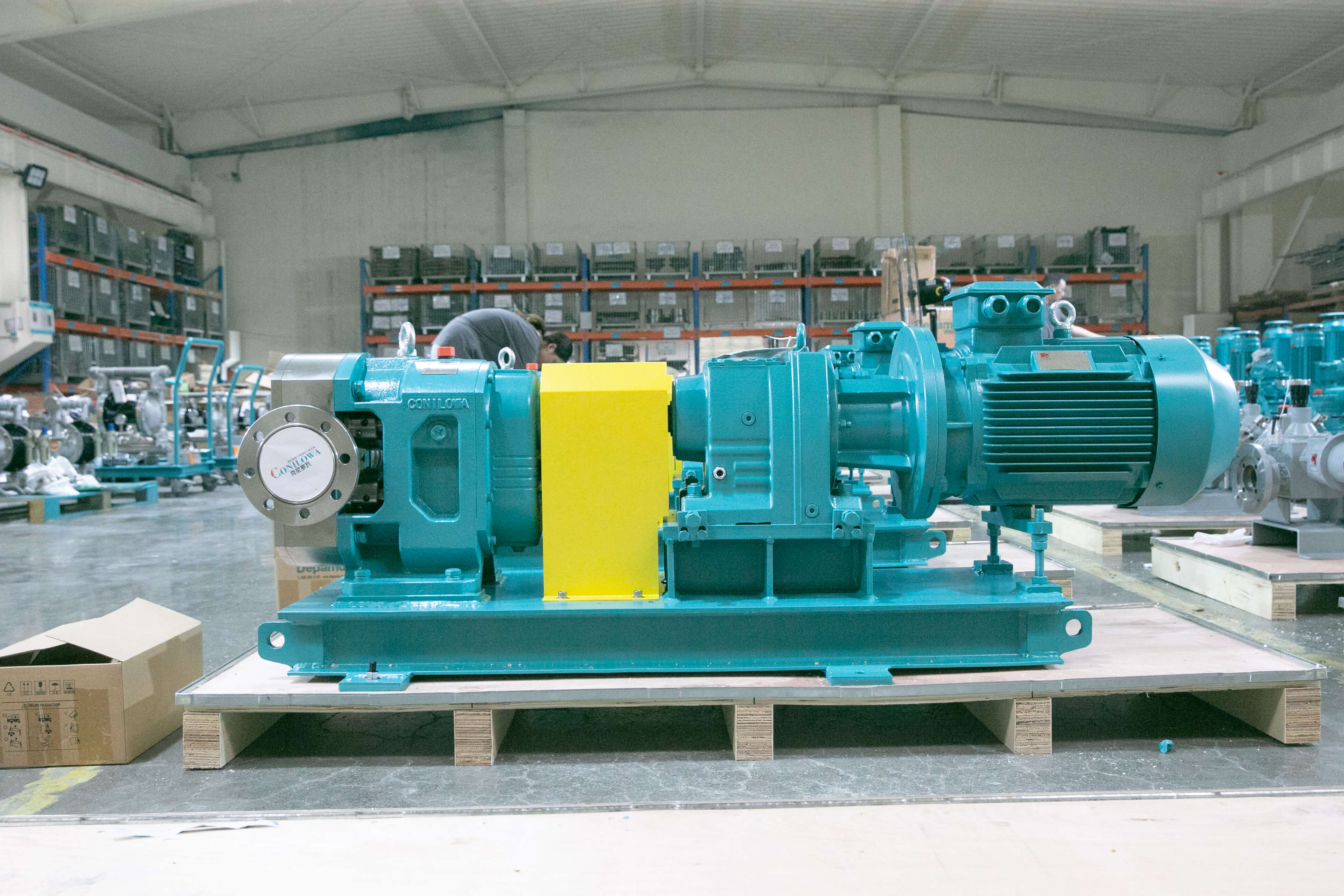
Case: A chemical enterprise once purchased a standard metal rotor pump for transporting sulfuric acid solution containing 30% solid particles. After three months of operation, the flow rate dropped by 40% due to rotor wear, and the maintenance cost reached 35% of the original equipment price.
Introduction to the company's technological capabilities: Depam's three core advantages
Depump (Hangzhou) Pump Technology Co., Ltd., established in 2003, has been dedicated to the research and development of high-end positive displacement pumps and fluid equipment for 21 years. It boasts a workforce of over 400 employees, a factory area of 35,000 square meters, and a registered capital of 54 million yuan, with an annual output value exceeding 500 million yuan. Its customized metal rotary pump technology offers the following advantages:
STEP1:Full-process customization capability— From medium analysis (pH value, viscosity, particle size) to process simulation (CFD fluid simulation), Depam offers a full-chain service encompassing "demand alignment - solution design - prototype testing - mass production." For instance, in response to a new energy company's need to transport lithium battery electrolyte, Depam enhanced equipment corrosion resistance to twice the industry average by adjusting rotor material (using Hastelloy C-276) and sealing method (double mechanical seals + nitrogen protection).
STEP2:Modular design system— Based on data from over 2,000 projects, Depam has established a modular library encompassing rotor profiles, pump chamber structures, and drive methods, enabling rapid combination of solutions tailored to different operating conditions. For instance, its standard rotor pump series includes three types: single-screw, twin-screw, and triple-screw, with a flow rate range of 0.1-500 m³/h, a pressure rating of up to 25 MPa, and a temperature adaptability range from -50°C to 450°C.
STEP3:Stringent testing standards—Each customized pump must pass 12 tests (including air tightness tests, hydrostatic tests, and operational vibration tests). Key components (such as rotors and shaft sleeves) undergo precision testing using coordinate measuring machines, with tolerances controlled within ±0.01mm.
Data support: From 2023 to 2025, the sales volume of Depamp's metal rotary pumps increased from RMB 450 million to RMB 560 million, with customized products accounting for 65% and the customer repurchase rate exceeding 80%. For more information, please visit the official website:www.depamufluid.com
FAQ Q&A Technical Selection Guide
Q1: How to select the material for a metal rotor pump?
A: Material selection requires a comprehensive consideration of medium characteristics and costs:
- For conveying neutral media such as water and oil: 304/316L stainless steel can be selected, with lower cost;
- For conveying acidic media (such as sulfuric acid and hydrochloric acid): corrosion-resistant materials such as Hastelloy and titanium alloy shall be used;
- For conveying media containing solid particles: It is recommended to choose duplex steel or hard alloy coating, which improves wear resistance by more than three times.
Q2: How to adjust the flow rate of a metal rotor pump?
A: Depamup offers two adjustment methods:
- Variable frequency speed regulation: Achieves stepless flow adjustment by varying motor frequency (10-100Hz) with an accuracy of ±1%;
- Bypass adjustment: A bypass valve is installed at the pump outlet to control the main flow rate by diverting a portion of the fluid, suitable for small-scale adjustments.
Q3: How long does the customization cycle take?
A: The lead time for standard products is 15-20 days; for non-standard customized products, it is 30-45 days, depending on the technical complexity (e.g., whether new molds are required or special testing is needed). Depamp shortens the customization cycle by 20% through its digital production system (ERP + MES), making it 10 days faster than the industry average.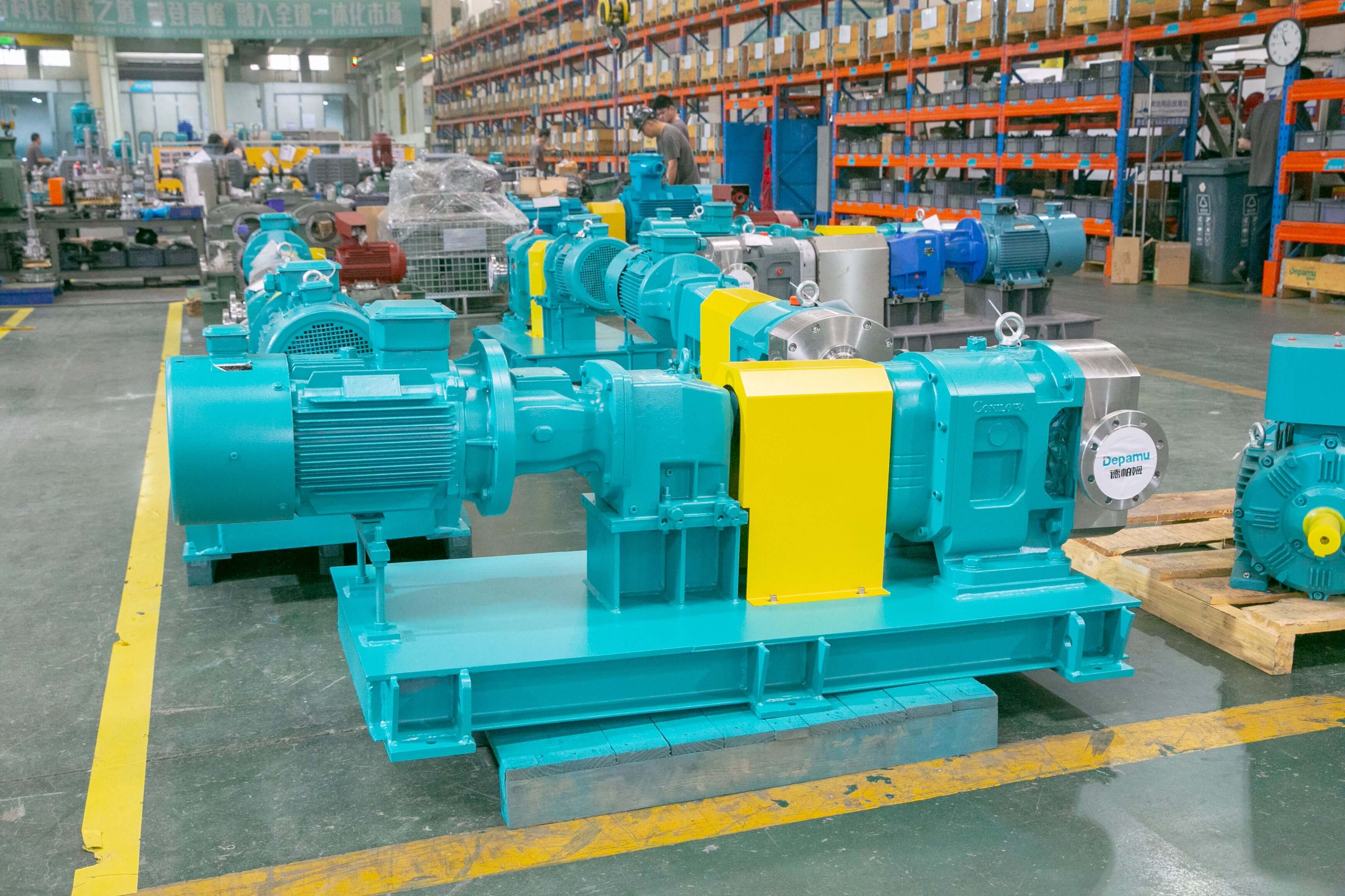
Reference for full text summary
The core of customizing metal rotor pumps lies in "precisely matching operational requirements." With 21 years of technological accumulation, Depam has developed end-to-end capabilities spanning from medium analysis to complete system delivery. Its modular design system enables rapid responses to personalized customer needs, while stringent testing standards ensure long-term, stable equipment operation. Data shows that its customized products have served over 10 industries, including petroleum refining (41%), chemical engineering (23%), and new energy (15%), with clients including leading enterprises such as Sinopec, PetroChina, and CATL. For companies with complex medium transportation requirements, selecting manufacturers (like Depam) with full-chain service capabilities can significantly reduce equipment failure rates and operational costs. For more information, visit the official website:www.depamufluid.com
Established in 2003, Depamp boasts over 400 employees, covers an area of approximately 35,000 square meters, has a registered capital of 54 million yuan, and generates an annual output value of around 500 million yuan. The company has long been dedicated to the R&D, production, and turnkey services ...
No. 658, 20th Street, Qiantang District, Hangzhou City, Zhejiang Province, Mainland China