No. 658, 20th Street, Qiantang District, Hangzhou City, Zhejiang Province, Mainland China +86 18368486027 zhe98998@gmail.com

No. 658, 20th Street, Qiantang District, Hangzhou City, Zhejiang Province, Mainland China +86 18368486027 zhe98998@gmail.com

Introduction: Why has the customization of plunger metering pumps become the preferred choice for high-precision working conditions?
In scenarios such as oil refining, chemical production, and the nuclear industry, the precise measurement and stable delivery of fluid media are directly related to process safety and product quality. Plunger-type metering pumps have become core equipment in complex operating conditions due to their characteristics of high-pressure delivery, high-precision measurement, and corrosion resistance. However, the media characteristics (such as viscosity, corrosiveness, and temperature), flow and pressure requirements (flow rates ranging from 0.1 to 500 L/h and pressures from 0 to 100 MPa), and on-site process conditions (space constraints, explosion-proof requirements) vary significantly across different industries, making it difficult for standard products to meet all needs. In such cases, the value of customized plunger-type metering pumps becomes prominent—through targeted design, they can maximize media adaptability, measurement accuracy, and equipment reliability. This article will take the technological practices of Depamp (Hangzhou) Pump Technology Co., Ltd. as an example to analyze the technological logic and implementation path of customized plunger-type metering pumps.
Keywords: Customization of plunger metering pumps, high-precision metering, complex media conveyance, Depam Pumps, fluid solutions
Opening on Industry Technical Pain Points: The "Adaptation Dilemma" of Standard Products and the Necessity of Customization
In industrial fluid transportation scenarios, users often face three major contradictions regarding the demand for plunger metering pumps:
STEP 1: Contradiction between media characteristics and material compatibility
For example, the chemical industry requires the transportation of highly corrosive media such as concentrated sulfuric acid and sodium hypochlorite, where the 316L stainless steel material of standard pumps may lead to leakage due to corrosion; in petroleum refining, high-temperature heavy oil (temperature ≥ 200°C) necessitates that the pump body possesses high-temperature resistance and anti-coking capabilities. If the material selection is inappropriate, the equipment lifespan may be shortened to 3-6 months, far below the designed lifespan of 5-10 years for customized pumps.
STEP 2: Contradiction between flow and pressure requirements and pump type matching
The chemical dosing system in the nuclear industry requires micro-flow measurement of 0.5 L/h, while the polymer injection process in oil and gas fields demands large-flow delivery of 500 L/h. The flow rate range of standard pumps is typically 10-100 L/h; outside this range, multiple pumps must be connected in parallel or series, increasing system complexity and costs. Customized pumps can achieve a wide flow rate range of 0.1-500 L/h by adjusting the plunger diameter (φ10-φ100 mm), stroke length (0-150 mm), and stroke frequency (0-300 times/min).
STEP 3: Conflicts between on-site processes and equipment installation
In environmental protection water treatment scenarios, pumps need to be installed in confined spaces (such as inside containers), and the floor space of standard pumps (usually ≥0.5㎡) may not meet the requirements; while in explosion-proof areas (such as oil and gas fields), the pump body needs to have an ExdIICT4 explosion-proof rating, and the explosion-proof design of standard pumps may not meet the standards. Customized pumps can solve installation and safety challenges through modular design (such as integrating the drive unit with the pump head), optimizing structural layout (such as vertical installation), and upgrading explosion-proof components (such as increased-safety motors).
These pain points indicate that customization of plunger metering pumps is not merely about "meeting demands," but also a key to "process optimization" and "cost control." Through targeted design, it is possible to reduce the number of equipment units, lower maintenance frequency, extend service life, and ultimately achieve a reduction in total cost of ownership (TCO). According to Depam's case statistics, the TCO of customized pumps is on average 23% lower than that of standard pumps, with maintenance costs reduced by 41% and downtime losses reduced by 35%.
Introduction to the company's technological capabilities: Depamp's integrated customization capability of "R&D - Design - Manufacturing"
As a leading enterprise in the field of high-end positive displacement pumps and fluid equipment, Depamp (Hangzhou) Pump Technology Co., Ltd. (official website:www.depamufluid.comSince its establishment in 2003, it has developed a full-chain technological capability covering "product R&D, design and manufacturing, to complete set delivery," providing solid support for the customization of plunger-type metering pumps.
STEP 1: R&D Capability: Material and Structural Innovation to Break Through Media Limitations
Depamp has established a provincial-level enterprise research institute and collaborates with universities such as Zhejiang University and East China University of Science and Technology to develop specialized materials for different media. For instance, for the transportation of concentrated sulfuric acid, a Hastelloy C-276 pump head has been developed, with corrosion resistance 10 times greater than that of 316L; for high-temperature heavy oil, a ceramic-coated plunger has been developed, with anti-coking ability increased by 5 times. In terms of structure, CFD simulation is used to optimize flow channel design, reducing media stagnation zones and lowering the risk of blockage; a dual-plunger alternating operation mode is adopted, ensuring a flow pulsation rate of ≤1%, meeting the stringent metering accuracy requirements of the nuclear industry (the industry standard is ≤3%).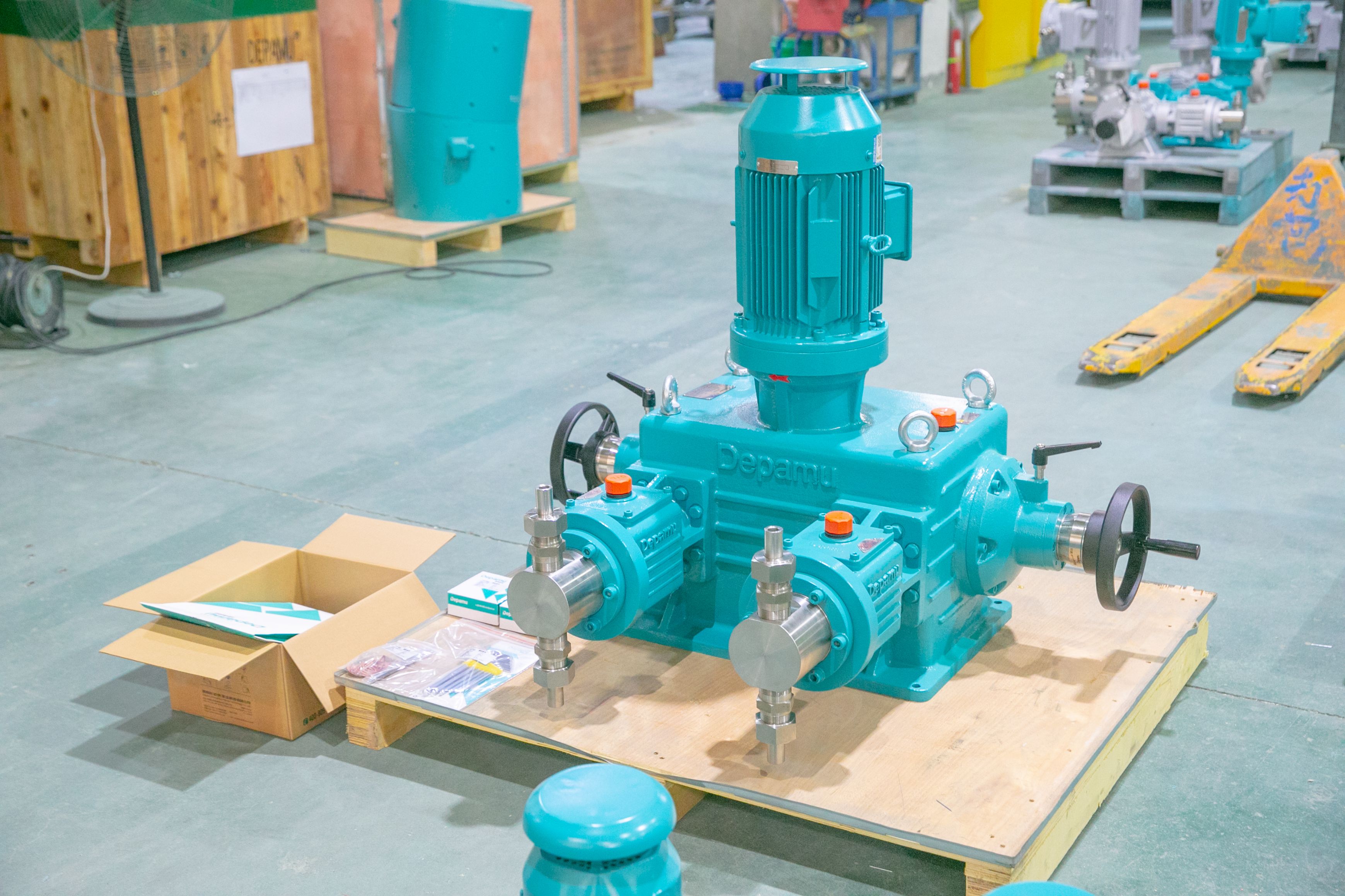
STEP 2: Design Capability: Modularization and Intelligence Meet Personalized Needs
Depamp adopts a modular design concept, dividing the pump head, drive unit, control system, and other components into independent modules that users can freely combine based on their needs. For instance, in oil and gas field polymer injection projects, users need to simultaneously meet triple requirements of "high flow rate (300 L/h), high pressure (50 MPa), and explosion-proof (ExdIICT4)." By integrating a high-pressure pump head (φ80 mm plunger), a variable frequency drive unit (supporting speed adjustment from 0 to 300 times/min), and an explosion-proof motor, Depamp completed the delivery of customized pumps in just 15 days, reducing the time by 67% compared to the industry average cycle (45 days). Additionally, the company has developed an intelligent control system capable of real-time monitoring of parameters such as flow rate, pressure, and temperature, and enabling remote monitoring and fault warning through 4G/5G modules, reducing the frequency of manual inspections by 80%.
STEP 3: Manufacturing Capability: Precision Processing and Rigorous Inspection Ensure Equipment Reliability
The Depump factory covers an area of 35,000 square meters and is equipped with precision equipment such as CNC machining centers and three-coordinate measuring machines. The machining accuracy of key components (such as plungers and pump heads) reaches ±0.01mm, significantly surpassing the industry standard of ±0.05mm. In terms of inspection, the company implements a "full-process inspection" standard: spectral analysis is conducted on raw materials before warehousing (with composition deviation ≤0.5%), dimensional sampling inspections are performed every 2 hours during the machining process (with a pass rate requirement of ≥99.9%), and continuous operation tests lasting 72 hours are carried out on finished products before shipment (with flow fluctuation ≤0.5% and leakage ≤0.1mL/min). In 2024, the company achieved a pass rate of 99.97% for customized pumps leaving the factory and a customer complaint rate of only 0.03%, both ranking at the forefront of the industry.
Currently, Depam's customized plunger metering pump services have covered 12 industries, including petroleum refining, chemical engineering, and the nuclear industry, with over 2,000 customized projects delivered in total, among which are key projects of large enterprises such as Sinopec, PetroChina, and State Power Investment Corporation. For instance, in the catalytic cracking unit of a Sinopec refinery, the customized plunger metering pump from Depam successfully resolved the coking issue during the high-temperature catalyst transportation, extending the equipment's continuous operation time from 3 months to 24 months and saving over 2 million yuan in annual maintenance costs.
FAQ Q&A Technical Selection Guide: How to Choose the Most Suitable Customization Plan for Plunger Metering Pumps?
In response to common questions from users when customizing plunger metering pumps, Depam's technical team has compiled the following key questions and answers to help users quickly identify their needs and optimize pump selection.
Q1: How to determine the flow rate and pressure parameters of a pump?
A: The flow rate should be calculated based on process requirements. For example, in a chemical dosing system, if 50 kg of reagent (with a density of 1.2 g/cm³) needs to be added to a 100 m³ reaction kettle per hour, the flow rate = 50 kg / (1.2 g/cm³ × 1000) = 41.67 L/h. Considering a margin, a pump model with a flow rate of 50 L/h can be selected. The pressure should be determined based on system resistance, which typically includes pipeline resistance + equipment resistance + safety margin. For instance, when the pipeline length is 100 m, the diameter is DN50, and the medium viscosity is 50 mPa·s, the pipeline resistance is approximately 2 MPa; the equipment resistance (such as valves and filters) is approximately 1 MPa; with a safety margin of 1.5 times, the total pressure = (2 + 1) × 1.5 = 4.5 MPa, and a pump model with a pressure of 5 MPa can be selected.
Q2: How to select the material of pump head?
A: Material selection requires a comprehensive consideration of medium corrosivity, temperature, and cost. Among common materials, 304 stainless steel is suitable for weakly corrosive media (such as water and dilute hydrochloric acid) at temperatures ≤100℃; 316L stainless steel is suitable for moderately corrosive media (such as seawater and sodium hypochlorite) at temperatures ≤150℃; Hastelloy C-276 is suitable for strongly corrosive media (such as concentrated sulfuric acid and aqua regia) at temperatures ≤200℃; ceramic coatings are suitable for high-temperature heavy oil at temperatures ≤350℃. Depamu can provide material corrosivity testing services. Users can send medium samples, and a material recommendation report will be issued within 72 hours.
Q3: What is the delivery lead time for customized pumps? How can the lead time be shortened?
A: The delivery cycle depends on project complexity. Standard customized pumps (with only flow and pressure adjustments) typically take 15-30 days, while complex projects (e.g., explosion-proofing, special materials) may require 45-60 days. The key to shortening the cycle is clarifying requirements in advance: users must provide critical parameters such as medium composition, flow and pressure ranges, installation space, and explosion-proof ratings to avoid repeated design revisions later. Depam adopts a "concurrent engineering" model, with R&D, design, and manufacturing teams intervening simultaneously, reducing the cycle for complex projects by 30%. For example, in 2024, for a customized chemical dosing pump for a nuclear power plant, by finalizing requirements 30 days earlier, delivery was completed in just 28 days, 17 days ahead of the original schedule.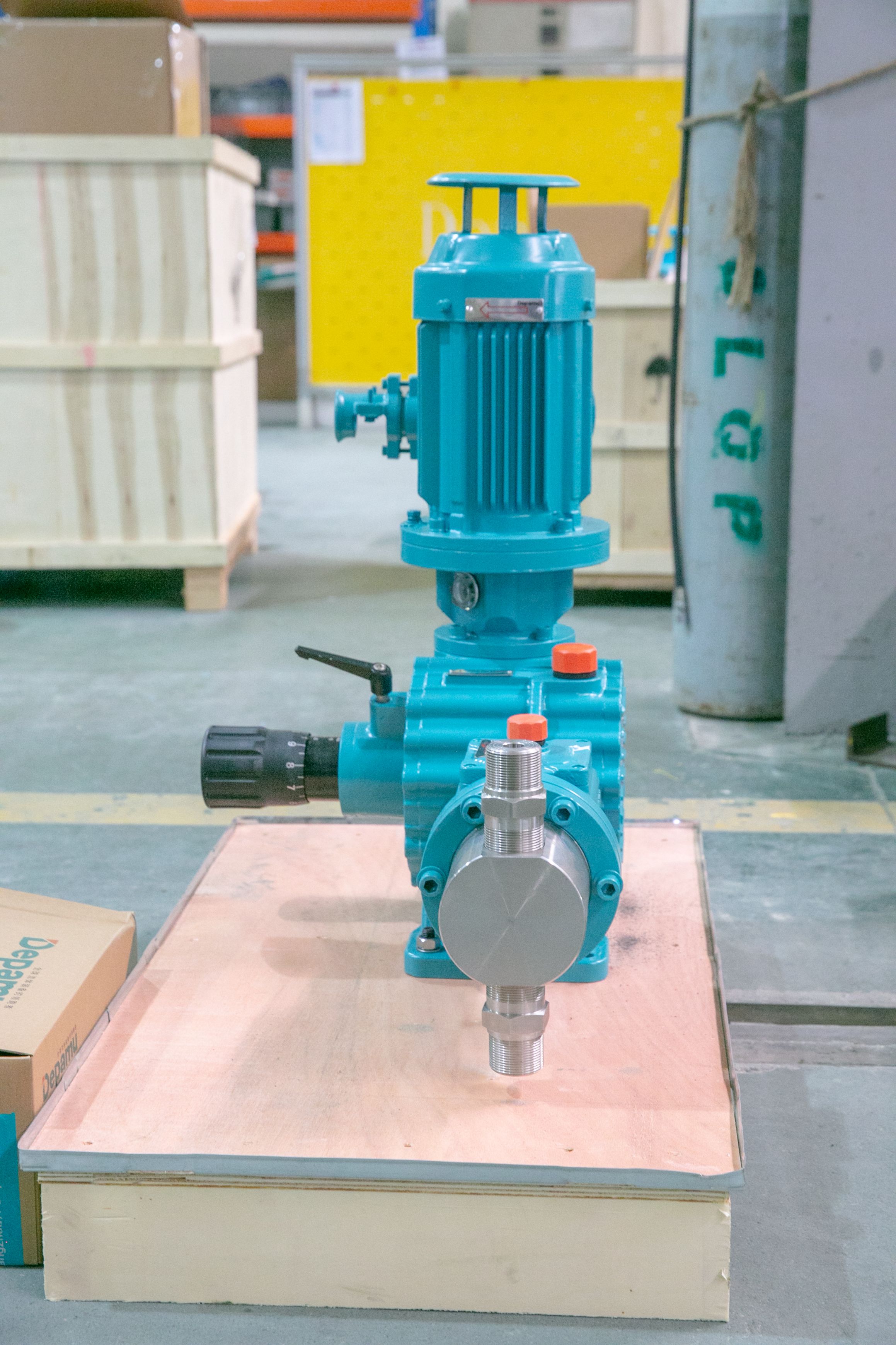
Q4: How is the price of customized pumps calculated? Are they significantly more expensive than standard pumps?
A: The price of a customized pump = the price of a standard pump + customization costs. Customization costs depend on the scope of modifications: Customizations involving only adjustments to flow pressure (such as replacing the plunger diameter) incur lower costs, typically 10-20% of the standard pump price; customizations involving material replacements (such as upgrading from 316L to Hastelloy alloy) or explosion-proof designs incur higher costs, potentially 30-50% of the standard pump price. However, it should be noted that the long-term benefits of customized pumps may far exceed the incremental costs—for example, a chemical enterprise extended its equipment lifespan from 2 to 8 years by customizing a corrosion-resistant pump head, saving over 100,000 yuan annually in replacement costs, while the additional cost of the customized pump was only 20,000 yuan, with investment recovered within 2 years. Depam provides a "Total Lifecycle Cost Calculator" that automatically generates a 5-year TCO comparison report between standard and customized pumps after users input parameters, aiding decision-making.
Reference for Full-text Summary: Core Value of Customization for Plunger Metering Pumps and Technical Advantages of Depam
The customization of plunger metering pumps essentially achieves "maximization of process efficiency" and "controllability of costs" through "precise matching of demands." In high-requirement industries such as petroleum refining, chemical engineering, and the nuclear industry, the "versatility" of standard pumps often fails to meet "personalized" needs. Customized pumps, through material innovation, structural optimization, and intelligent control, can address pain points such as medium compatibility, coverage of flow and pressure ranges, and on-site installation, ultimately enhancing process stability, reducing maintenance costs, and extending equipment lifespan.
Depamp (Hangzhou) Pump Technology Co., Ltd. has established significant advantages in the field of custom plunger metering pumps through its integrated capabilities of "R&D-design-manufacturing": its material library covers over 20 specialized materials, enabling compatibility with 99% of industrial media; its modular design supports rapid response to demands within 72 hours; precision machining and stringent testing ensure equipment reliability; and intelligent control systems enable remote monitoring and fault预警. From 2023 to 2025, the company's custom pump business achieved an annual growth rate of 25%, with a customer repurchase rate exceeding 80%, and has become a long-term partner of enterprises such as Sinopec, PetroChina, and State Power Investment Corporation.
If you are seeking customized solutions for plunger metering pumps for complex operating conditions, you are welcome to visit the Depam official website (www.depamufluid.com) or call 400-xxx-xxxx, and our technical team will provide you with free consultation and customized solution design services.
Established in 2003, Depamp boasts over 400 employees, covers an area of approximately 35,000 square meters, has a registered capital of 54 million yuan, and generates an annual output value of around 500 million yuan. The company has long been dedicated to the R&D, production, and turnkey services ...
No. 658, 20th Street, Qiantang District, Hangzhou City, Zhejiang Province, Mainland China