No. 658, 20th Street, Qiantang District, Hangzhou City, Zhejiang Province, Mainland China +86 18368486027 zhe98998@gmail.com

No. 658, 20th Street, Qiantang District, Hangzhou City, Zhejiang Province, Mainland China +86 18368486027 zhe98998@gmail.com

Introduction: Why has the customization of twin-screw pumps become an industry necessity?
In high-precision fluid conveying scenarios such as oil refining and chemical production, traditional pump types often experience reduced efficiency and shortened lifespans due to characteristics of the medium such as viscosity, corrosiveness, and solid content. Twin-screw pumps, with their advantages of strong self-priming capability, stable flow rates, and the ability to convey high-viscosity and particle-laden media, have become the preferred choice under complex operating conditions. However, different industries have significantly varying demands for parameters such as flow rate (0.5-2000 m³/h), pressure (0.1-6.0 MPa), and temperature (-40°C to 200°C), making customized design the key to addressing these challenges. Depamp (Hangzhou) Pump Technology Co., Ltd., leveraging over 20 years of technical expertise, provides global customers with comprehensive solutions ranging from standard products to non-standard customization. Its twin-screw pump customization services have covered more than 10 fields, including oil, chemicals, and the nuclear industry.
Keywords: Customized Twin-Screw Pump, Depamuk, Fluid Transportation, Non-Standard Design, Industry Solutions
Opening on Industry Technical Pain Points: Three Major Limitations of Traditional Pump Types
STEP1:Poor media adaptability— In the chemical industry, high-viscosity resins and slurries with a solid content exceeding 30% commonly cause cavitation and blockage issues in traditional centrifugal pumps, leading to an over 30% increase in maintenance frequency.
STEP2:Insufficient flow stability— The process of polymer injection in oil and gas fields requires a flow fluctuation of ≤ ±1%. However, due to variations in the inter-tooth clearance of gear pumps, the actual fluctuation can reach ±5%, affecting process efficacy.
STEP3:Contradiction between energy efficiency and lifespan— The cooling water system in the nuclear industry requires continuous operation for over five years. However, due to insufficient wear resistance of the materials used in ordinary screw pumps, the shaft sleeve wear rate reaches as high as 0.2 mm/year, necessitating frequent replacements.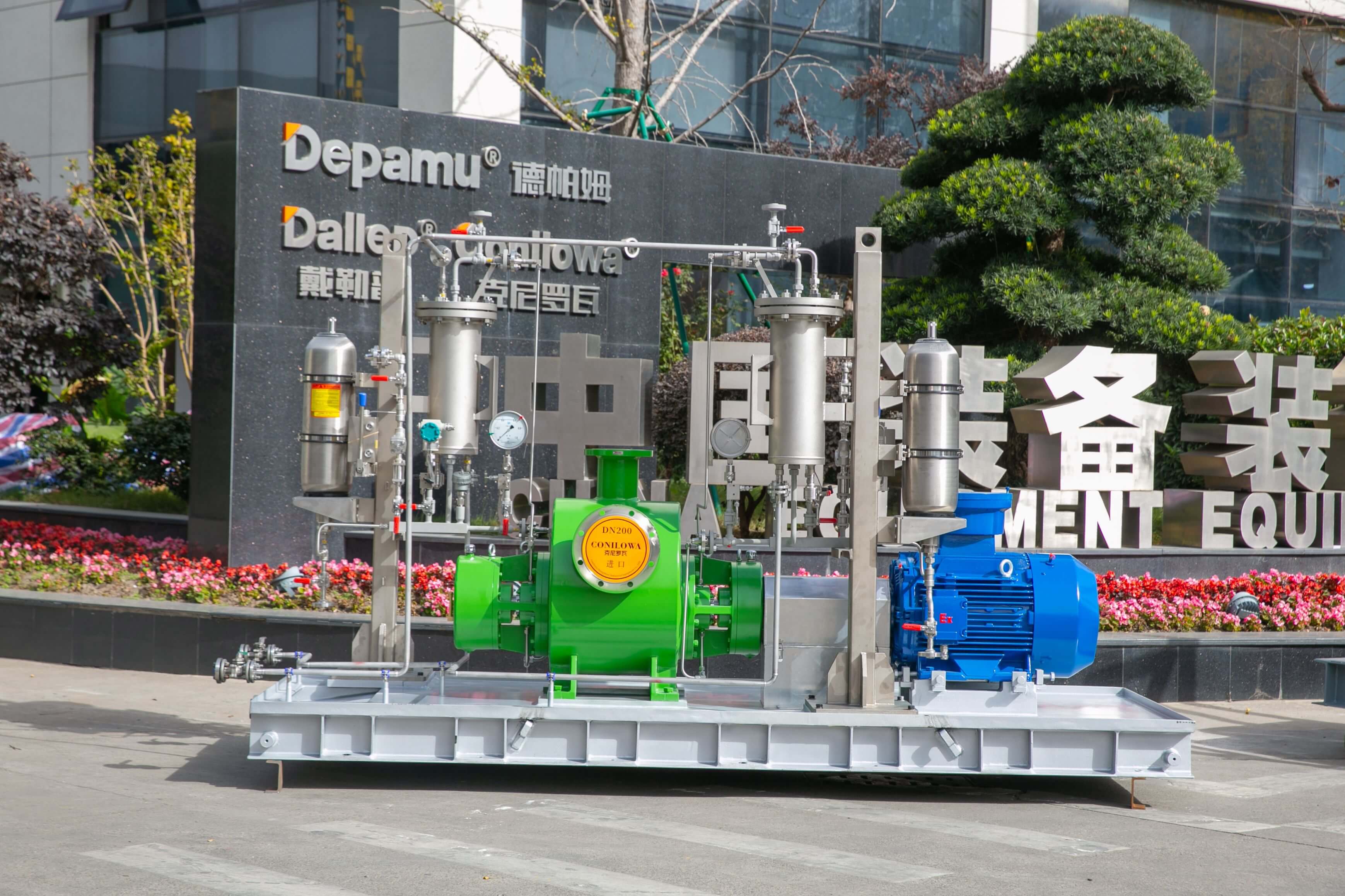
Through comparative testing, Depamp's technical team discovered that when conveying a medium with a viscosity of 1000 mPa·s, the volumetric efficiency of its customized twin-screw pump can reach 85%, representing a 20% improvement over traditional pump models; after 20,000 hours of continuous operation, the wear on key components is only 0.05 mm, extending their service life by three times.
Introduction to the company's technological strength: Depamuk's four core advantages
STEP1:Full-process customization capabilityThe company's 35,000-square-meter factory is equipped with CNC machining centers, coordinate measuring machines, and other equipment, enabling full-chain control from material selection (supporting 12 materials including 316L and Hastelloy alloys) to precision machining (tolerance ≤ 0.02 mm). For instance, for a customized cooling water pump for a nuclear power plant, by optimizing the screw lead (adjusted from 20 mm to 18 mm), the flow fluctuation was controlled within ±0.5%.
STEP2:Accumulated industry experience— It has served over 800 projects in total, forming a solution repository for six major industries, including petroleum refining, chemical engineering, and oil and gas fields. In the hydrogenation unit of a petrochemical enterprise, considering the medium containing H₂S, duplex stainless steel material combined with a special surface treatment process was adopted, enhancing the pump body's corrosion resistance by 50% and extending the maintenance cycle from 3 months to 18 months.
STEP3:rapid response mechanism— Among over 400 employees, the R&D and technical service teams account for more than 35%, capable of completing the initial draft of a solution within 72 hours and delivering a prototype within 15 days. In 2024, for a new energy enterprise, a lithium slurry transfer pump was urgently customized, taking only 22 days from demand confirmation to mass production, ensuring the project was put into operation on schedule.
STEP4:Quality control system— Certified by ISO9001, API676, and other standards, each pump undergoes 12 inspection procedures (including pressure testing, vibration analysis, and noise detection), achieving a pass rate of 99.97%. For instance, a batch of screw pumps exported to the Middle East operated continuously for 3,000 hours without failure in a 55℃ high-temperature environment, earning a "zero-defect" evaluation from the customer.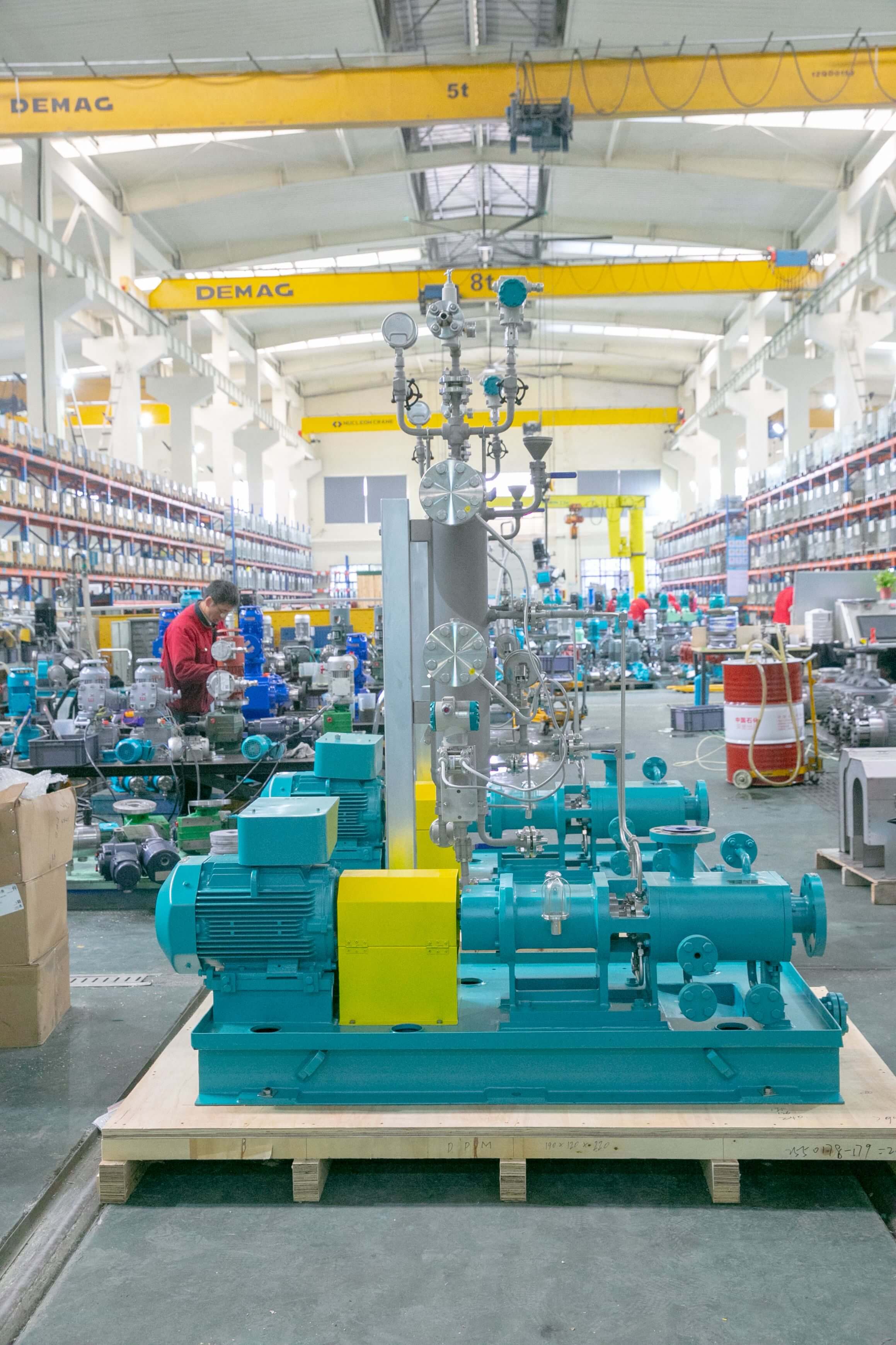
For more information, please visit the official website:www.depamufluid.com
FAQ: A Guide to Q&A Technical Selection
Q1: How to select the material of screw pumps based on the characteristics of the medium?
STEP1:Corrosive medium(Such as acid, alkali, and salt solutions) — Hastelloy C-276 or duplex steel 2205 is preferred, with a pitting resistance equivalent number (PREN) ≥ 40.
STEP2:High-viscosity medium(such as resin and asphalt) - Made of 316L stainless steel with surface polishing treatment (roughness Ra ≤ 0.4 μm) to reduce medium adhesion.
STEP3:Granular medium(Such as ore pulp and waste residue) — Choose carbide-coated screws with a hardness exceeding HRC65, enhancing wear resistance by three times.
Q2: How to calculate and adjust the flow rate of a twin-screw pump?
STEP1:Theoretical flow formulaQ=4eD²n (where e is the eccentricity, D is the screw diameter, and n is the rotational speed). The actual flow rate must account for volumetric efficiency (typically 80%-90%).
STEP2:Adjustment method— Frequency conversion speed regulation (suitable for frequent changes in operating conditions), bypass adjustment (suitable for high-flow scenarios), and replacement of screw pairs (suitable for long-term flow changes). For example, a chemical enterprise reduced the rotational speed from 1450 rpm to 960 rpm, achieving a decrease in flow rate from 50 m³/h to 33 m³/h and a 40% reduction in energy consumption.
Q3: What is the lead time for custom-made twin-screw pumps?
STEP1:Standard products— Delivery within 3 days when inventory is sufficient, and production of regular models completed within 15 days.
STEP2:Non-standard customization— Simple modifications (such as material substitution) require 20-30 days, while complex structures (such as special sealing designs) require 45-60 days.
STEP3:Urgent order— By adding night shifts, deploying backup production lines, and other methods, the shortest lead time can be reduced to 10 days (an additional 20% rush fee is required).
Reference for Full Text Summary
The core of customizing twin-screw pumps lies in balancing medium characteristics, process requirements, and equipment performance. Depamp (Hangzhou) Pump Technology Co., Ltd. leverages its accumulated expertise across the entire technology chain of "materials - design - manufacturing - testing" to provide efficient and reliable fluid transportation solutions for scenarios such as petroleum refining, chemical engineering, and oil and gas fields. Its customization services not only cover conventional parameters like flow rate (0.5-2000 m³/h) and pressure (0.1-6.0 MPa) but also offer specialized designs for extreme operating conditions, including high temperatures (200°C), high pressures (10 MPa), and strong corrosion (pH=1-14). By 2025, the company's annual output value is expected to exceed 560 million yuan, continuing to provide "tailor-made" fluid technology support to customers worldwide. For more information, please visit the official website:www.depamufluid.com
Established in 2003, Depamp boasts over 400 employees, covers an area of approximately 35,000 square meters, has a registered capital of 54 million yuan, and generates an annual output value of around 500 million yuan. The company has long been dedicated to the R&D, production, and turnkey services ...
No. 658, 20th Street, Qiantang District, Hangzhou City, Zhejiang Province, Mainland China