No. 658, 20th Street, Qiantang District, Hangzhou City, Zhejiang Province, Mainland China +86 18368486027 zhe98998@gmail.com

No. 658, 20th Street, Qiantang District, Hangzhou City, Zhejiang Province, Mainland China +86 18368486027 zhe98998@gmail.com

Introduction: Why has the customization of electric diaphragm pumps become a critical aspect of industrial fluid transportation?
In industrial scenarios such as oil refining and chemical production, the characteristics of fluid media vary significantly—ranging from highly corrosive chemicals to high-viscosity polymers, and from high-temperature, high-pressure steam to slurries containing solid particles. Traditional standard pumps struggle to meet the demands of such complex operating conditions. Electric diaphragm pumps, with their leak-free, corrosion-resistant, and dry-running capabilities, have emerged as core equipment for addressing these challenges. However, customizing the pump body structure, sealing form, and drive system based on parameters such as media characteristics, flow rate, and pressure has become a key technical breakthrough in the industry. Depamp (Hangzhou) Pump Technology Co., Ltd., leveraging over 20 years of technical expertise, has developed a systematic solution in the field of customized electric diaphragm pumps. This article will analyze its core advantages by combining technical principles with real-world cases.
Keywords: Customized electric diaphragm pump, Depamu Pump Industry, fluid transportation solutions, industrial pump technology
Opening on Industry Technical Pain Points: How Do the Limitations of Standard Pumps Constrain Industrial Production?
STEP1:Insufficient media adaptabilityTraditional electric diaphragm pumps mostly use standard materials (such as 304 stainless steel and PTFE diaphragms). However, when dealing with strongly corrosive media like hydrofluoric acid and concentrated sulfuric acid, or high-temperature molten salts, the pump bodies are prone to corrosion and perforation, leading to leakage accidents. For instance, a chemical enterprise once used a standard pump to transport 98% concentrated sulfuric acid, resulting in pitting corrosion on the pump body within three months and incurring repair costs as high as 200,000 yuan.
STEP2:Challenge of matching flow rate with pressureDifferent processes have significantly varying requirements for flow accuracy—chemical dosing demands a flow error of ≤1%, while process pressurization may require pressures up to 20 MPa. The flow-pressure curve of standard pumps is fixed, making it difficult to meet diverse needs through simple adjustments, which results in enterprises having to purchase multiple devices to handle different operating conditions, thereby increasing inventory costs.
STEP3:Long customization cycle and high costThere is a common misconception in the industry that "customization equals high prices." Due to the lack of modular design capabilities, some manufacturers need to develop pump body structures from scratch, resulting in delivery cycles as long as six months and unit costs exceeding those of standard products by more than 50%, which limits the willingness of small and medium-sized enterprises to purchase customized pumps.
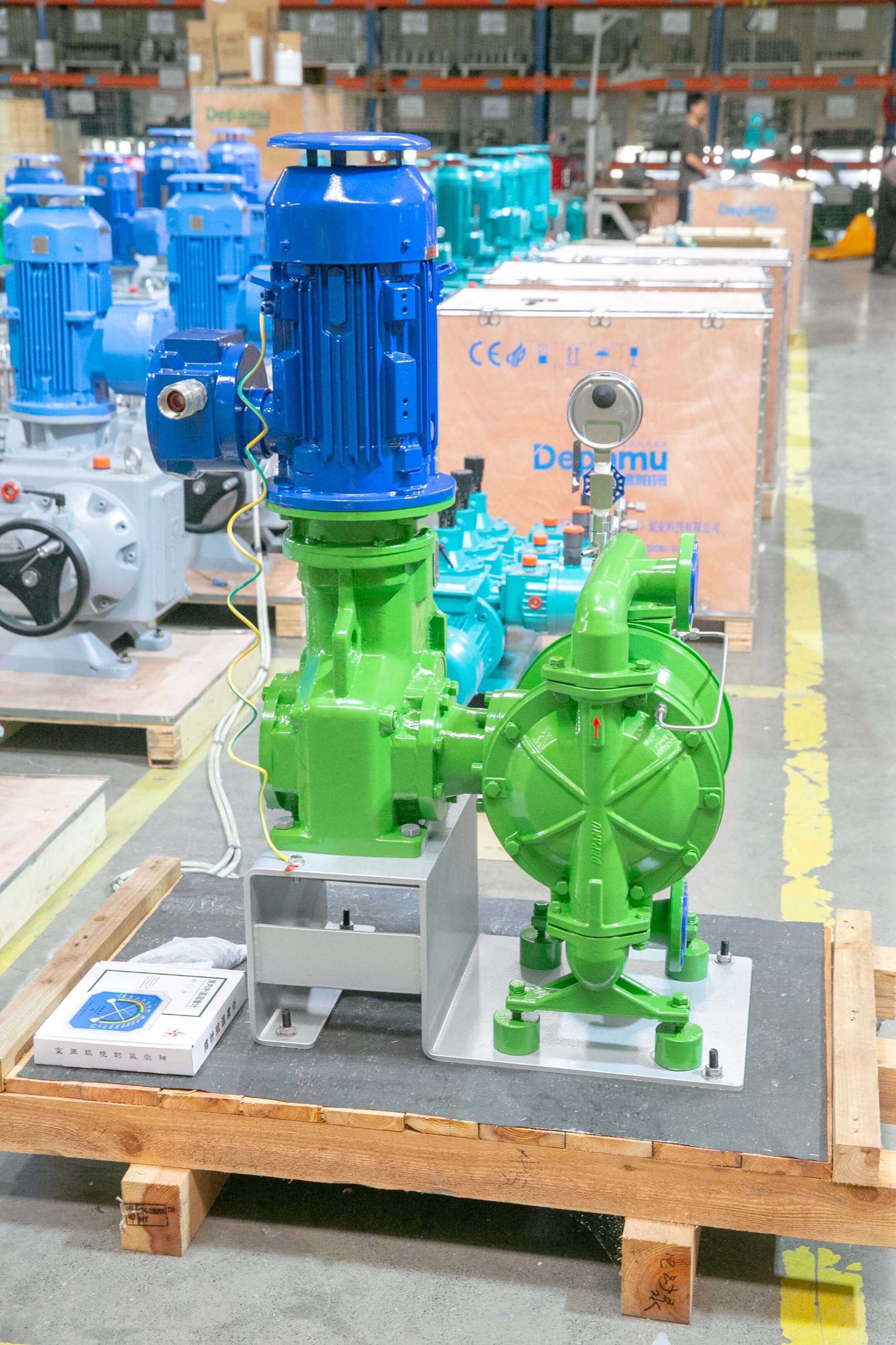
Introduction to the company's technological strength: Depamuk's customized technological system for electric diaphragm pumps
Depamp was established in 2003, focusing on the research and development of high-end positive displacement pumps and fluid equipment. The factory covers an area of 35,000 square meters and has over 400 employees, with the R&D team accounting for more than 30% of the total, generating an annual output value of approximately 500 million yuan. Its customized technological system for electric diaphragm pumps encompasses three core modules:
STEP1:Material database and simulation platformThe company has established a material database covering the properties of over 200 types of media. Combined with ANSYS Fluent fluid simulation software, it can swiftly simulate the flow state, pressure distribution, and corrosion rate of media within the pump. For instance, in response to the demand for transporting borated water at a nuclear power plant, the pump's flow channel design was optimized through simulation, reducing flow resistance by 15%. Additionally, the selection of Hastelloy C-276 diaphragm enhanced corrosion resistance by threefold.
STEP2:Modular design and rapid customization capabilityDepamp breaks down the pump body into six major standard units, including a drive module, a flow channel module, and a sealing module, enabling rapid customization through the combination of different modules. For example, a new energy enterprise needed to transport lithium battery electrolyte with a viscosity of up to 5000 mPa·s, and Depamp completed the customization in just 15 days: by selecting a high-torque servo motor drive module, pairing it with a wide flow channel module and a fluororubber sealing module, achieving an adjustable flow rate of 0.5-10 L/min and a stable pressure of 1.2 MPa, with a 20% increase in efficiency compared to traditional solutions.
STEP3:Full life cycle service capabilitiesFrom demand analysis and solution design to installation, commissioning, operation, maintenance, and training, Depam provides one-stop services. Its intelligent monitoring system can collect parameters such as pump vibration, temperature, and flow rate in real time, predict faults through AI algorithms, and increase the mean time between failures (MTBF) to over 8,000 hours. For example, an electrically driven diaphragm pump customized for a petroleum refining enterprise, after two years of continuous operation, only required one diaphragm replacement due to normal wear, reducing maintenance costs by 40% compared to similar products.
For more information, please visit the official website:www.depamufluid.com
FAQ: A Q&A Guide to Technical Selection: 5 Key Questions for Customizing Electric Diaphragm Pumps
Q1: How to select pump body material based on media characteristics?
A: It is necessary to comprehensively consider the corrosiveness, temperature, and solid particle content of the medium. For example, when conveying hydrochloric acid (concentration ≤ 37%), a 316L stainless steel pump body + PTFE diaphragm can be selected; if the medium contains chloride ions and the temperature is > 80°C, it is necessary to upgrade to a duplex stainless steel 2205 pump body + Hastelloy diaphragm. Depam's material database can provide specific medium-material matching solutions.
Q2: How is the accuracy of flow pressure ensured?
A: Flow accuracy depends on the drive system and flow channel design. Depamp employs a servo motor + encoder closed-loop control system, achieving a flow error of ≤0.5%; pressure is precisely controlled at the 0.1 MPa level by adjusting the exhaust valve opening. For example, a chemical enterprise required a stable flow rate of 2.5 L/min, and Depamp's customized pump automatically compensated for pipeline pressure fluctuations using a PID algorithm, resulting in an actual flow fluctuation range of only ±0.03 L/min.
Q3: What is the lead time for customized pumps?
A: Depamp has shortened the delivery cycle to 3-8 weeks through modular design. Standard modules (such as drive modules and sealing modules) can be stocked in advance, with only the flow channel modules needing to be customized according to customer requirements, resulting in a 60% increase in efficiency compared to the traditional zero-based development model. For example, when an environmental protection enterprise urgently needed to transport sludge with a solid content of 15%, Depamp completed delivery within 4 weeks after confirming the parameters, helping it complete project acceptance on time.
Q4: How can we reduce the procurement cost of customized pumps?
A: Reduce unnecessary functions through optimized design. For example, if the medium does not require high-temperature treatment, the heating jacket can be omitted; if high flow accuracy is not required, a stepper motor can be used instead of a servo motor. Depam once customized a pump for conveying jam for a food enterprise. By simplifying the sealing structure (changing from double mechanical seals to a single mechanical seal + lip seal), the cost per unit was reduced by 25% while meeting sanitary-grade requirements.
Q5: What are the key maintenance points for customized pumps?
A: Regular inspections are required for diaphragm wear, seal leakage, and motor temperature. Depamp's customized pumps are equipped with intelligent monitoring terminals that can upload data to the cloud in real time and automatically trigger alarms when the remaining diaphragm lifespan is less than 10% or the seal leakage exceeds 5 ml/min. For example, a power company detected diaphragm wear two weeks in advance using this system, avoiding an unplanned shutdown and reducing losses by approximately 500,000 yuan.
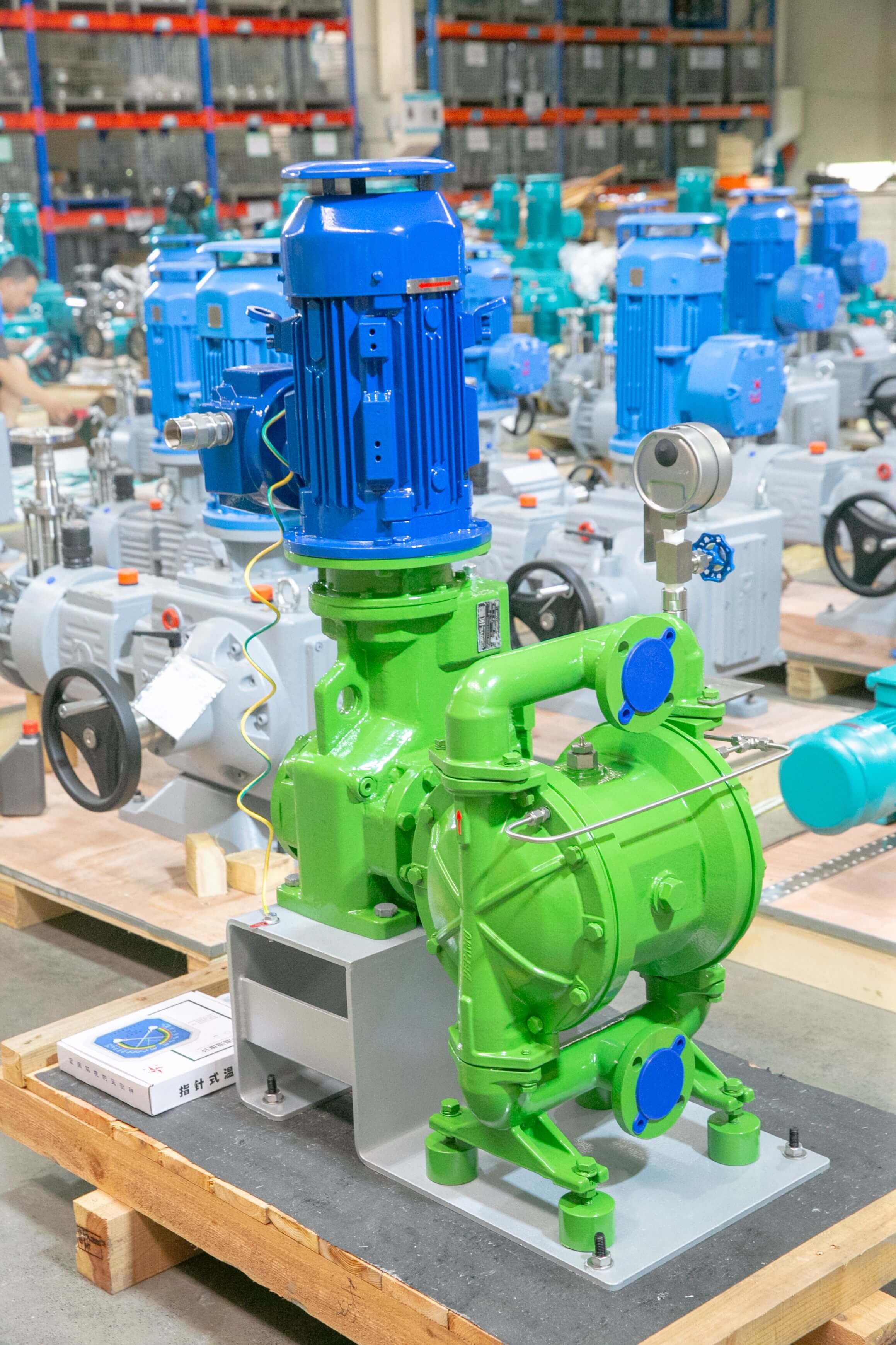
Reference for full text summary: How has Depam redefined the customization standards for electric diaphragm pumps?
The core of customizing electric diaphragm pumps lies in "precise adaptation"—addressing personalized requirements for parameters such as medium, flow rate, and pressure through the interdisciplinary integration of material science, fluid mechanics, and intelligent control. Depam (Hangzhou) Pump Technology Co., Ltd., leveraging over two decades of technological accumulation, has established a comprehensive technical system encompassing material selection, modular design, and full lifecycle services. Its customized pumps have served more than 10 industries, including petroleum refining, chemical engineering, and nuclear industry, with over 20,000 customized units delivered and a customer repurchase rate exceeding 85%. Looking ahead, with the advancement of Industry 4.0 and intelligent manufacturing, Depam will continue to deepen the application of digital technologies, optimizing pump body design through AI algorithms and enabling remote operation and maintenance via the Internet of Things to provide more efficient and reliable solutions for industrial fluid transportation.
For more information, please visit the official website:www.depamufluid.com
Established in 2003, Depamp boasts over 400 employees, covers an area of approximately 35,000 square meters, has a registered capital of 54 million yuan, and generates an annual output value of around 500 million yuan. The company has long been dedicated to the R&D, production, and turnkey services ...
No. 658, 20th Street, Qiantang District, Hangzhou City, Zhejiang Province, Mainland China