No. 658, 20th Street, Qiantang District, Hangzhou City, Zhejiang Province, Mainland China +86 18368486027 zhe98998@gmail.com

No. 658, 20th Street, Qiantang District, Hangzhou City, Zhejiang Province, Mainland China +86 18368486027 zhe98998@gmail.com

Introduction: Why has the customization of diaphragm pumps for high-pressure processes become an industry necessity?
In scenarios such as oil refining, chemical production, and the nuclear industry, the demands for high-pressure transportation, corrosion resistance, and precise metering of media pose stringent challenges to pump equipment. Traditional standard pumps, unable to adapt to complex operating conditions, often lead to leakage, inefficiency, and rising maintenance costs. The customized solutions for high-pressure process diaphragm pumps, through targeted design, can address pain points such as media characteristics, flow and pressure fluctuations, and process compatibility, becoming key to enhancing production stability for enterprises. With over 20 years of technological accumulation, Depamp (Hangzhou) Pump Technology Co., Ltd. provides full-chain services from R&D to delivery for the industry. How does its customization capability support complex scenario demands? This article will explore this from three aspects: technical analysis, case studies, and selection guidelines.
Keywords: High-pressure process diaphragm pump, customization, Depamp, fluid solutions, industry adaptation
Industry Technical Pain Points at the Beginning: Three Major Challenges in High-Voltage Transmission Scenarios
STEP 1: Challenges in adapting to medium characteristics. In chemical production, the medium may contain strong acids, strong alkalis, or solid particles, and the sealing structures of traditional pumps are prone to corrosion or wear, leading to leakage risks. For example, a refining and chemical enterprise once suffered annual losses exceeding 2 million yuan due to pump body seal failure.
STEP 2: Flow and pressure fluctuation control. Under high-pressure operating conditions, minor fluctuations in flow and pressure may trigger instability in the process chain. In the cooling system of a certain nuclear power plant, a pump flow deviation of 0.5% resulted in equipment shutdown for maintenance three times per year.
STEP 3: Balance customized costs and efficiency. Non-standard design requires consideration of both performance and cost. A new energy enterprise once missed the project delivery window due to an excessively long customization cycle for pumps, resulting in order losses exceeding 5 million yuan.
Through modular design, material selection optimization, and a rapid response mechanism, Depam has shortened the customization cycle by 30% while reducing overall costs by 15%. How is this technical approach achieved?
Introduction to the company's technological strength: Depam's customized technology layout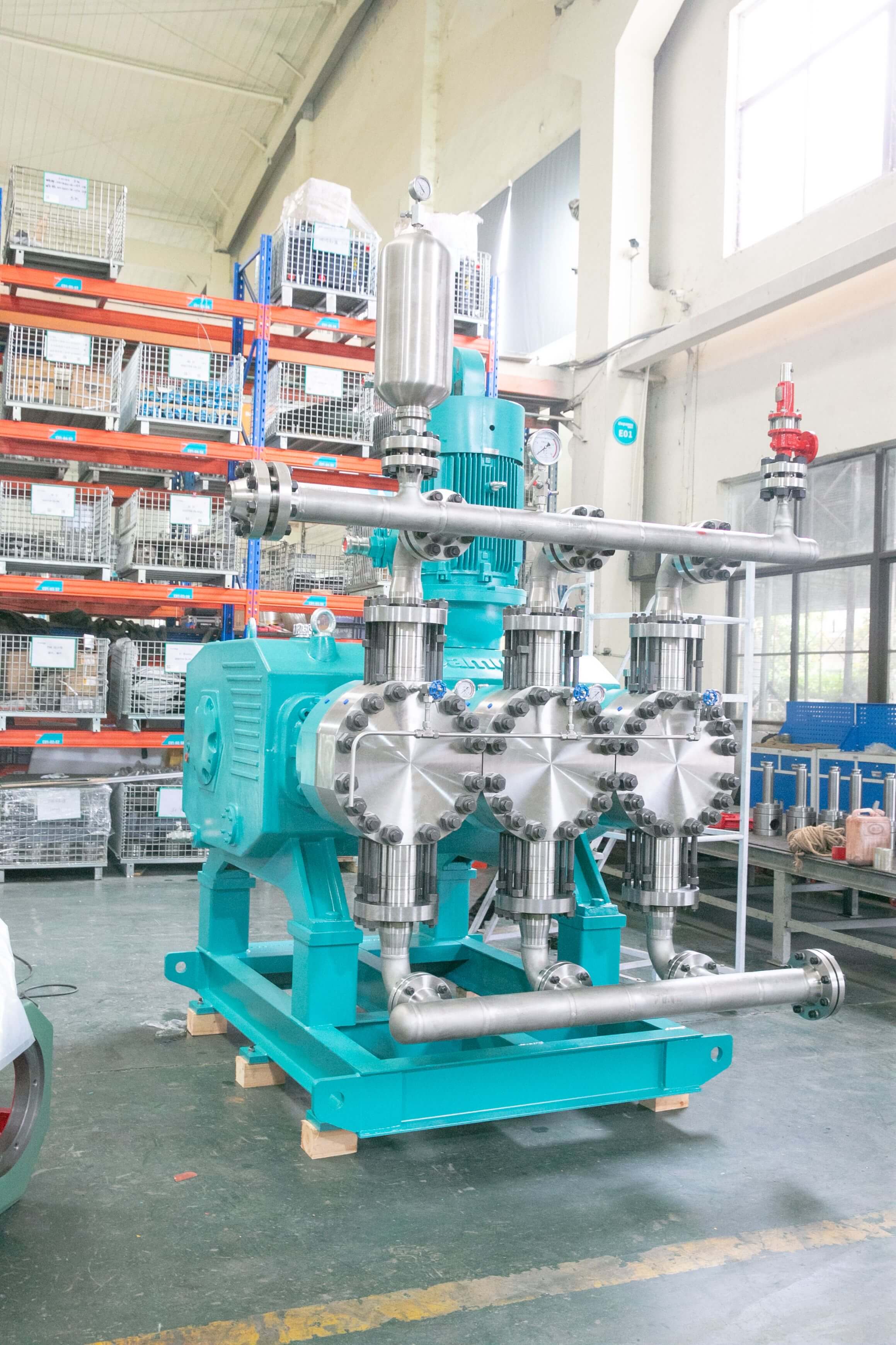
Depamp was established in 2003, focusing on the R&D of high-end positive displacement pumps and fluid equipment. The factory covers an area of 35,000 square meters, with an annual output value exceeding 500 million yuan. Among its more than 400 employees, R&D personnel account for over 30%. Its technological layout covers three core areas:
STEP 1: Materials and Sealing Technology. For highly corrosive media, materials such as Hastelloy and polytetrafluoroethylene are employed, combined with a double-layer diaphragm sealing design, achieving a pressure resistance rating of up to 100 MPa and extending service life to over 8,000 hours. For instance, a customized diaphragm pump for a chemical enterprise operated continuously for two years without leakage in a scenario involving the transfer of 98% sulfuric acid.
STEP 2: Intelligent Control Module. It integrates flow pressure sensors with a variable frequency regulation system to achieve ±1% flow accuracy control. In the cooling system of a certain nuclear power plant, the pump automatically adjusts its rotational speed based on temperature, saving over 200,000 kWh of electricity annually.
STEP 3: Rapid customization capability. Relying on an integrated CAD/CAM design platform, it takes only 15 days from demand confirmation to prototype delivery. For a new energy project in 2024, a customized screw pump was delivered 10 days ahead of schedule, helping the client seize market opportunities.
For more information, please visit the official website:www.depamufluid.com
FAQ: A Q&A Guide to Technical Selection - Analysis of Key Parameters for Customizing High-Pressure Diaphragm Pumps
Q1: How to select the material for the pump body?
A: It needs to be determined based on the medium's pH value, temperature, and solid content. For example, for strongly acidic scenarios with a pH < 2, Hastelloy C-276 is recommended, with a temperature resistance of ≤150℃; for media containing particles, a carbide valve seat should be selected, and when the particle diameter is ≤1mm, 316L stainless steel can be chosen.
Q2: How do flow and pressure parameters match process requirements?
A: Flow rate should be calculated based on the requirements of the process chain. For example, in chemical dosing scenarios, it should be determined by the volume of the reaction kettle multiplied by the number of liquid exchanges per hour. The pressure should cover 1.2 times the maximum backpressure of the system. Depam's customized pumps have a flow rate range of 0.1-200 m³/h and pressure ratings of 1-100 MPa, covering 90% of industrial scenarios.
Q3: How to control the customization cycle and cost?
A: Depump standardizes non-standard components through modular design, such as dividing pump heads and driving devices into 20 standard modules that can be combined according to requirements, thereby shortening the design cycle. In terms of cost, mass customization can reduce the cost per unit by 10%-15%. For example, when a company customizes 10 pumps at once, the price per unit decreases by 12% compared to sporadic purchases.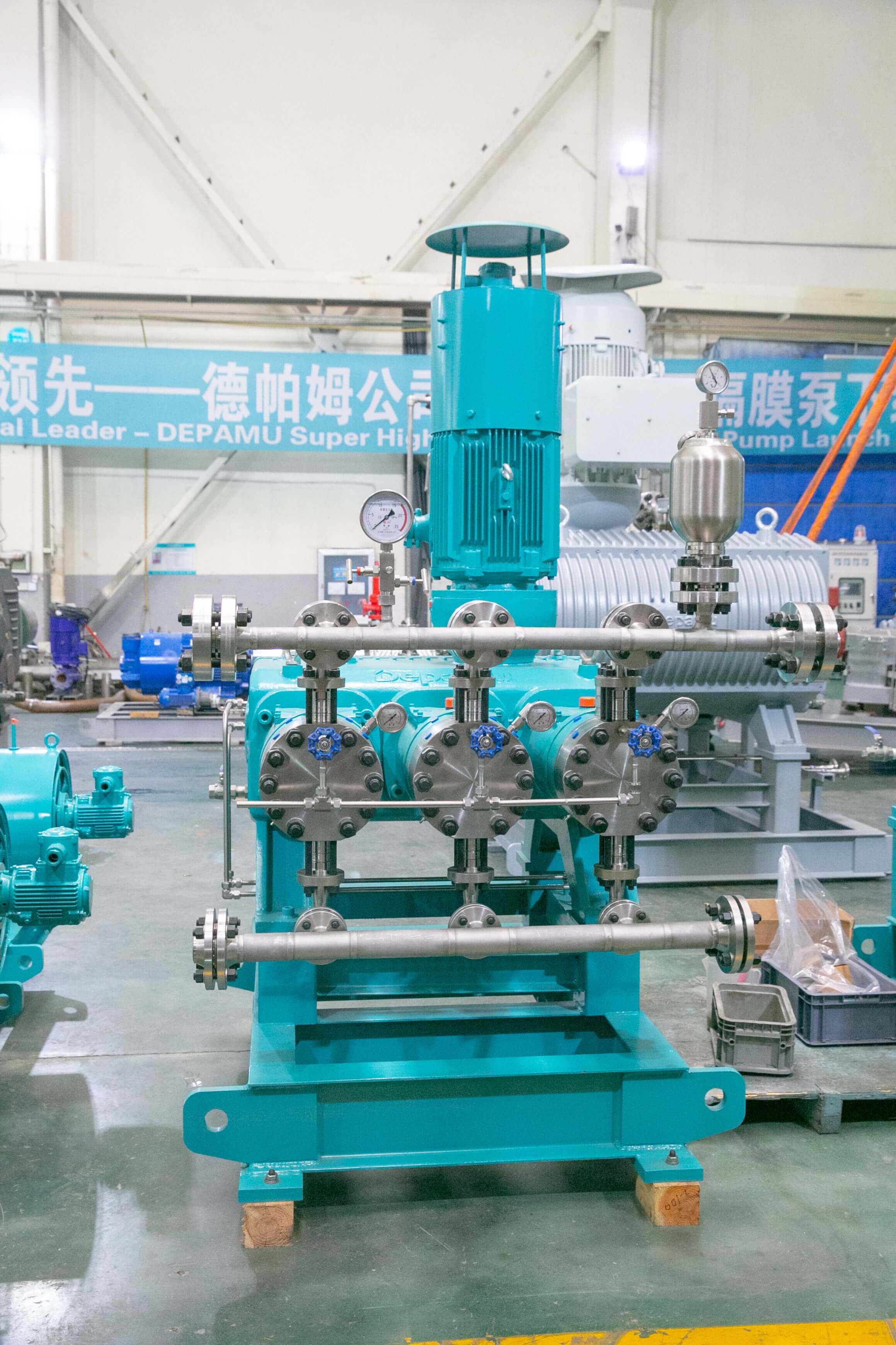
How does Depam define the industry benchmark with its technological strength?
The core of customized demands for high-pressure process diaphragm pumps lies in "adaptability" and "reliability." Depam has addressed industry pain points such as medium corrosion, flow fluctuations, and delivery lead times through material innovation, intelligent control, and rapid response mechanisms. Its products have been applied in fields including petroleum refining (accounting for 41%), chemical engineering (23%), and the nuclear industry (10%), with over 5,000 customized pumps delivered and a failure rate below 0.5%. For enterprises, selecting a customized supplier requires a focus on evaluating their material database, design platform, and case experience—Depam's 20 years of technological accumulation and full-chain service capabilities are key to its status as an industry leader. Moving forward, with growing demand in areas such as new energy and environmental water treatment, Depam will continue to optimize its technological solutions to provide efficient and stable fluid solutions for more applications.
Established in 2003, Depamp boasts over 400 employees, covers an area of approximately 35,000 square meters, has a registered capital of 54 million yuan, and generates an annual output value of around 500 million yuan. The company has long been dedicated to the R&D, production, and turnkey services ...
No. 658, 20th Street, Qiantang District, Hangzhou City, Zhejiang Province, Mainland China