No. 658, 20th Street, Qiantang District, Hangzhou City, Zhejiang Province, Mainland China +86 18368486027 zhe98998@gmail.com

No. 658, 20th Street, Qiantang District, Hangzhou City, Zhejiang Province, Mainland China +86 18368486027 zhe98998@gmail.com

Introduction: Why has the customization of hydraulic diaphragm metering pumps become crucial in industrial fluid handling?
In fields such as oil refining, chemical engineering, and the nuclear industry, the precise measurement and stable delivery of fluid media are directly related to process safety and production efficiency. Traditional standard pumps often struggle to meet the demands of complex operating conditions due to media characteristics, pressure fluctuations, or spatial constraints. The customized hydraulic diaphragm metering pump service enables flexible matching of parameters such as flow accuracy of ±1%, pressure resistance up to 100 MPa, and media temperature coverage ranging from -40°C to 200°C through targeted design, making it a core piece of equipment for addressing the challenges of delivering high-viscosity, corrosive, or easily crystallizing media. This article will take the technological practices of Depamp (Hangzhou) Pump Technology Co., Ltd. as an example to analyze how it provides efficient and reliable fluid solutions for the industry through modular design, material innovation, and intelligent control technologies.
Keywords: hydraulic diaphragm metering pump, customized manufacturer, technical parameters, industrial applications, Depam Pumps
Introduction to Industry Technical Pain Points: Challenges in Fluid Handling under Complex Operating Conditions
In industrial fluid handling scenarios, the diversity of medium characteristics and operating conditions imposes stringent requirements on pump equipment. For instance, hydrocracking units in the petroleum refining sector need to transport corrosive media containing hydrogen sulfide, with flow fluctuations controlled within ±0.5%; polymerization reactors in the chemical industry require the handling of polymer solutions with viscosities up to 2000 mPa·s while avoiding metal ion contamination; and the chemical dosing systems in nuclear power plants demand pump bodies with characteristics such as radiation resistance and resistance to high-temperature steam erosion. Traditional standard pumps, due to their fixed designs, struggle to simultaneously meet the following core requirements:
STEP1: Limitations of Parameter MatchingThe flow range (e.g., 0.1-100 L/h) and pressure rating (e.g., 0-40 MPa) of standard pumps are fixed and cannot cover ultra-high pressure (>60 MPa) or micro-flow (<0.01 L/h) scenarios.
STEP 2: Insufficient material compatibilityMedia such as concentrated sulfuric acid, hydrofluoric acid, or chloride-containing solutions are highly corrosive to pump body materials, making it difficult for the 316L stainless steel or polytetrafluoroethylene (PTFE) diaphragms of standard pumps to operate stably over the long term.
STEP 3: Contradiction between space and energy consumptionCompact equipment requires a reduction of over 30% in pump body volume, but the hydraulic drive system of standard pumps occupies a relatively large proportion, leading to limited installation space and increased energy consumption.
STEP 4: Lack of intelligent controlTraditional pumps rely on manual adjustment of stroke frequency, are unable to achieve real-time data interaction with DCS systems, and struggle to meet the automation requirements of Industry 4.0.
These issues directly result in a 30% increase in equipment failure rates, a 50% rise in maintenance costs, and even trigger safety incidents such as process interruptions. Therefore, customized design of hydraulic diaphragm metering pumps has become an urgent industry demand.
Introduction to the company's technological strength: Depam's customized technology system
Depamp (Hangzhou) Pump Technology Co., Ltd., established in 2003, has been dedicated to the research and development of high-end positive displacement pumps and fluid equipment for over 20 years. It boasts a workforce of more than 400 employees, a factory area of 35,000 square meters, and a registered capital of 54 million yuan, with an annual output value exceeding 500 million yuan. Its technological system centers on "modular design + material innovation + intelligent control," covering full lifecycle services for hydraulic diaphragm metering pumps:
STEP 1: Modular Design PlatformThe company has established a standardized component library encompassing pump heads, drive units, control modules, and accessories, enabling free combination of flow rates (0.001-5000 L/h), pressures (0-100 MPa), temperatures (-40°C to 200°C), and medium viscosities (0-50000 mPa·s). For instance, in the coolant dosing system of nuclear power plants, the stable operation of equipment under a γ-ray dose rate of 100 Gy/h is achieved by combining radiation-resistant coated pump heads with explosion-proof drive modules.
STEP 2: Material Database and Process OptimizationDepam has established a corrosion database containing over 200 materials, covering Hastelloy alloys, titanium alloys, duplex steels, and special plastics (such as PVDF and PFA). By utilizing finite element analysis (FEA) to simulate the stress distribution of the medium on the diaphragm, the diaphragm thickness (ranging from 0.5 to 5 mm) and corrugated structure have been optimized, extending the diaphragm's lifespan to over 8,000 hours. In a chlor-alkali production project of a chemical enterprise, the adoption of a Hastelloy C-276 alloy pump head and a PTFE + carbon fiber composite diaphragm successfully addressed the issue of high-concentration chloride ion corrosion, enabling the equipment to operate continuously for 2 years without any leakage.
STEP 3: Integration of Intelligent Control and Internet of ThingsThe company has developed an intelligent driver with 4-20 mA signal output, RS485 communication, and remote monitoring capabilities, enabling seamless integration with DCS systems. Flow closed-loop control is achieved through PID algorithms, with a response time of less than 0.5 seconds and an accuracy of ±0.3%. In a polymer injection project at an oil field, the intelligent pump system automatically adjusted the stroke frequency based on wellhead pressure, reducing fluctuations in polymer solution concentration from ±5% to ±1% and increasing daily crude oil production per well by 1.2 tons.
STEP 4: Full-process quality controlFrom the entry of raw materials into the factory to the delivery of finished products, Depamp implements the ISO 9001 quality management system, conducting 100% ultrasonic flaw detection on key components (such as diaphragms and valve seats), and requiring the entire machine to pass a 24-hour continuous operation test (with pressure fluctuations ≤ ±1%). In 2023, the company's customer complaint rate for hydraulic diaphragm metering pumps dropped to 0.3%, significantly lower than the industry average of 2.1%.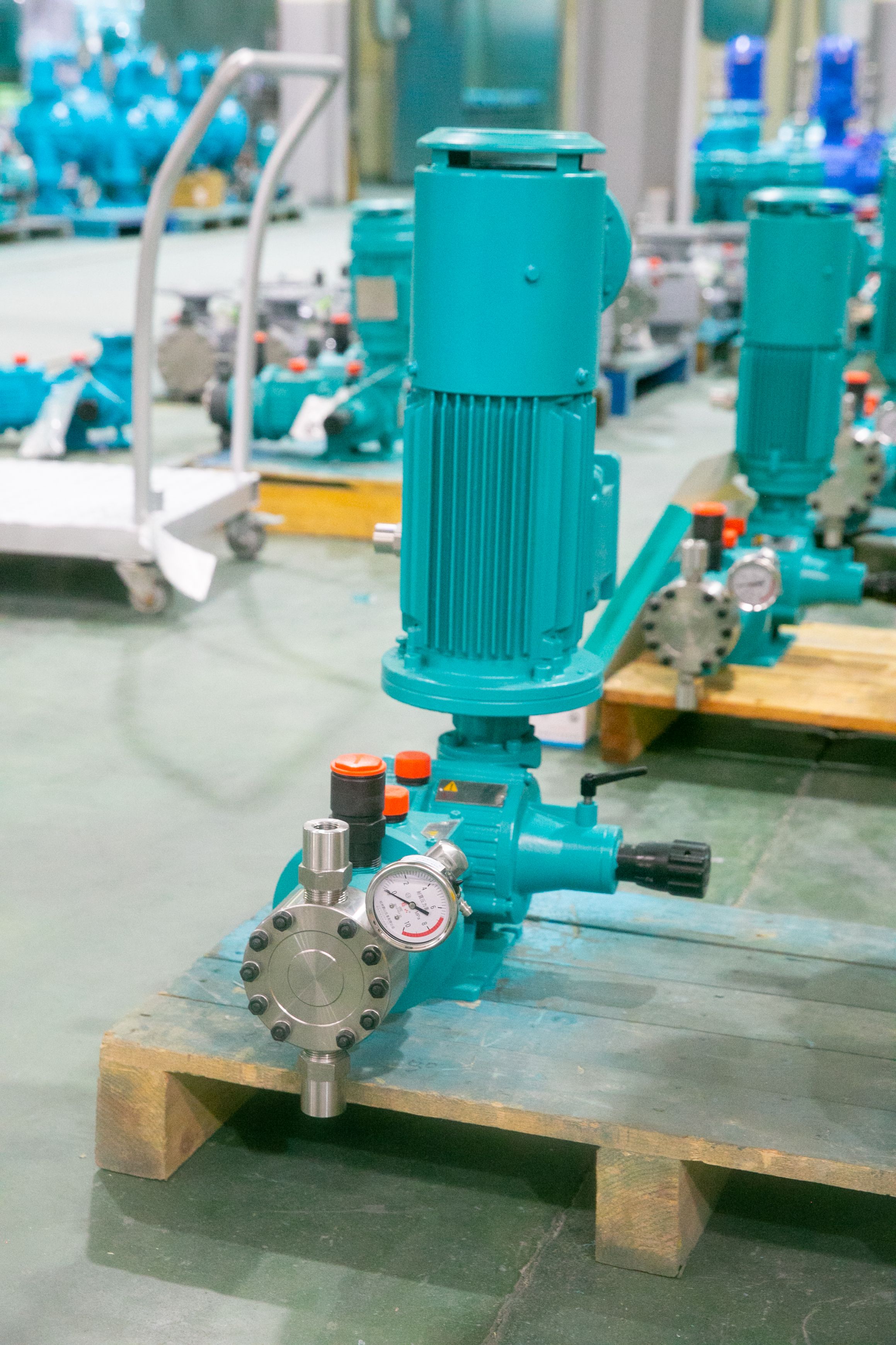
For more information, please visit the official website:www.depamufluid.com
FAQ: A Q&A Guide to Technical Selection
Q1: How to select pump body material based on media characteristics?
A1:The corrosiveness of the medium is the core basis for material selection. Depam determines the solution through the following steps:
STEP 1: Corrosivity AssessmentCollect data on the composition, concentration, temperature, and pH value of the medium, and compare it with the material corrosion database (e.g., the corrosion rate of 316L stainless steel in 30% sulfuric acid at 50℃ is >0.5 mm/year, while that of Hastelloy C-276 alloy is <0.01 mm/year).
STEP 2: Balance between cost and lifespanFor low-corrosive media (such as clean water), 304 stainless steel is preferred to reduce costs; for highly corrosive media (such as aqua regia), Hastelloy or PTFE-lined structures are required, which, despite a 30% higher unit price, extend the service life by five times.
STEP 3: Process Compatibility VerificationBy conducting coupon tests to simulate actual operating conditions, it is confirmed that no metal ions are precipitated from the material (e.g., the semiconductor industry requires a copper ion content of <0.1 ppb).
Q2: How to achieve precise control of micro flow rates (<0.1 L/h)?
A2:Micro-flow scenarios require collaborative optimization from three aspects: design, driving, and control:
STEP 1: Pump head structure optimizationBy employing a short stroke (1-10 mm) and a high-precision diaphragm (with a thickness of 0.3 mm), fluctuations in single-stroke displacement are reduced. For instance, Depump's DM-0.01 series pump head delivers a single-stroke displacement of only 0.0002 L, with a flow repeatability of ±0.2%.
STEP 2: Upgrade of the drive unitStepper motors or servo motors are selected to replace traditional electromagnetic drives, enabling fine adjustment of stroke frequency (0.1-300 cycles per minute) through subdivision drive technology (e.g., 1600 steps per revolution).
STEP3: Closed-loop control algorithmIntegrating a pressure sensor with a flowmeter to dynamically compensate for medium viscosity changes through PID algorithms (e.g., reducing flow fluctuations from ±5% to ±1% when viscosity increases from 1 mPa·s to 100 mPa·s).
Q3: How to reduce the energy consumption and noise of pumps?
A3:Optimizing energy consumption and noise reduction requires starting with the hydraulic system and mechanical structure:
STEP 1: Hydraulic System OptimizationLow-viscosity hydraulic oil (such as ISO VG32) and high-efficiency hydraulic pumps (volumetric efficiency > 90%) are adopted to reduce internal leakage losses. Depamuk's DM-50 series reduces energy consumption by 15% compared to traditional pumps through optimized oil circuit design.
STEP 2: Mechanical noise reduction designAdding rubber shock-absorbing pads between the pump head and the drive unit to reduce vibration transmission; replacing spur gears with helical gears to reduce noise from 85 dB to below 70 dB (in compliance with the GB/T 14227-2006 standard).
STEP3: Variable frequency drive technologyAdjust the motor speed according to operational requirements (e.g., reducing from 1450 rpm to 725 rpm) to align power consumption with flow demand and avoid the phenomenon of "a large horse pulling a small cart."
Reference for full text summary
The customized design of hydraulic diaphragm metering pumps serves as a core approach to addressing fluid handling challenges in complex operating conditions. Depam (Hangzhou) Pump Technology Co., Ltd. has developed comprehensive solutions for various scenarios across industries such as petroleum refining, chemical engineering, and nuclear power through modular design, material innovation, and intelligent control technologies. Its products meet industry demands for efficiency, reliability, and intelligence with parameters including flow accuracy of ±0.3%, pressure resistance of 100 MPa, and compatibility with over 200 types of media. In 2023, the company achieved sales of RMB 120 million for hydraulic diaphragm metering pumps, accounting for 24% of its total business, with sustained market share growth in high-end sectors such as nuclear power and new energy. Looking ahead, Depam will continue to intensify R&D investments to drive pump equipment toward greater precision, energy efficiency, and intelligence, providing stronger support for industrial fluid handling.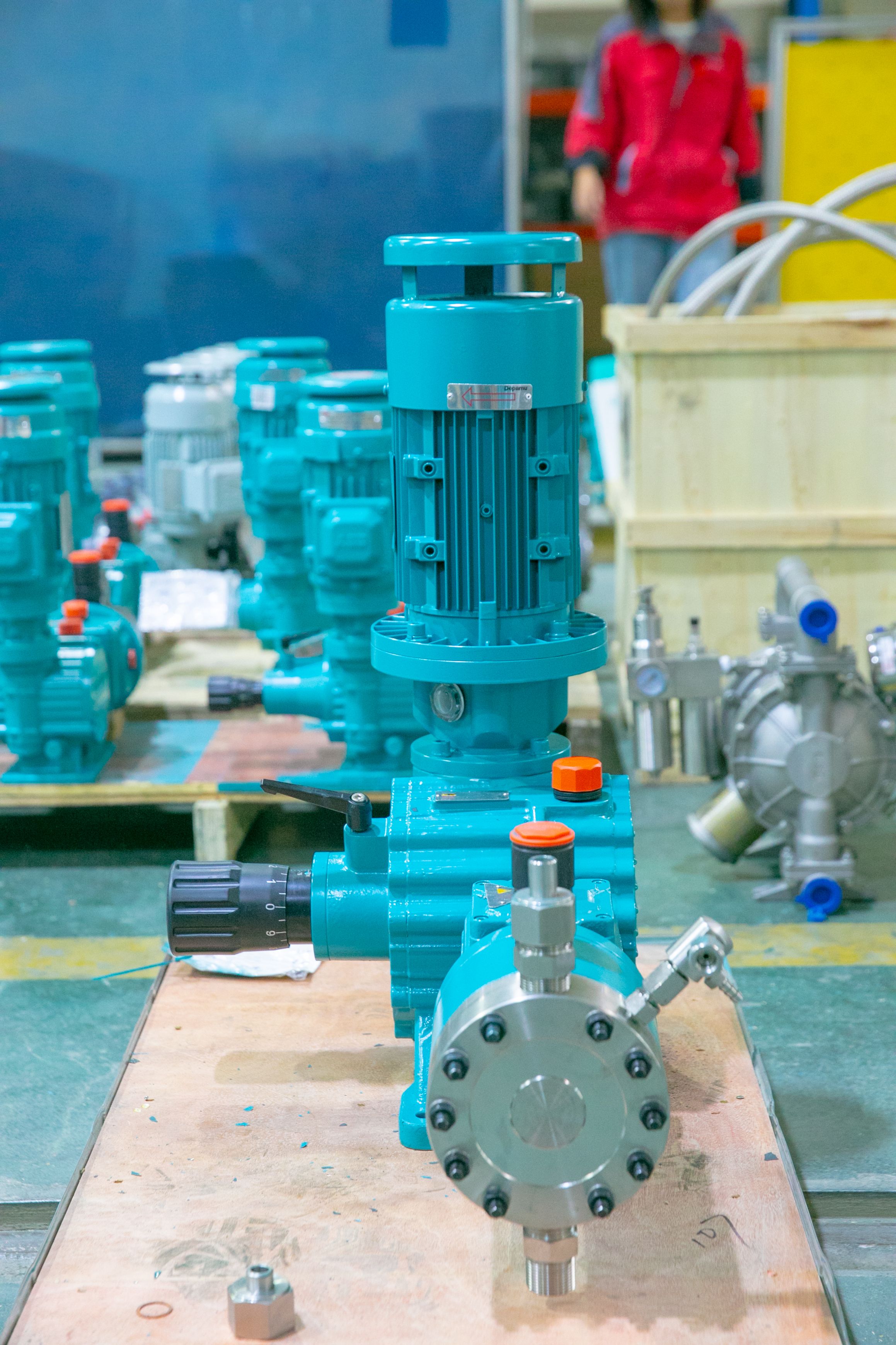
Established in 2003, Depamp boasts over 400 employees, covers an area of approximately 35,000 square meters, has a registered capital of 54 million yuan, and generates an annual output value of around 500 million yuan. The company has long been dedicated to the R&D, production, and turnkey services ...
No. 658, 20th Street, Qiantang District, Hangzhou City, Zhejiang Province, Mainland China