No. 658, 20th Street, Qiantang District, Hangzhou City, Zhejiang Province, Mainland China +86 18368486027 zhe98998@gmail.com

No. 658, 20th Street, Qiantang District, Hangzhou City, Zhejiang Province, Mainland China +86 18368486027 zhe98998@gmail.com

Introduction: Why has the rubber rotor pump become the "hidden champion" in industrial fluid transportation?
In scenarios such as petroleum refining and chemical production, the transportation of high-viscosity, particle-laden, and highly corrosive media poses stringent challenges to equipment performance. Rubber rotor pumps, with their strong self-priming capability, wear resistance, and ability to operate dry, have become key equipment for addressing complex operating conditions. However, with severe product homogenization in the market, how can one select a source manufacturer with reliable technology and comprehensive services? This article takes Depamp (Hangzhou) Pump Technology Co., Ltd. as an example to analyze how it reshapes the technological benchmark for rubber rotor pumps through innovation, covering aspects from technical principles and parameter optimization to industry applications.
Keywords: rubber rotor pump, original manufacturer, Depamuk, positive displacement pump, fluid transportation, customized solutions
Industry Technical Pain Points at the Beginning: Three Major Shortcomings of Traditional Conveying Equipment
STEP1:Poor media adaptability— High-viscosity media (such as asphalt and resin) can easily cause the pump body to seize up, while the presence of solid particles (such as catalysts and ore slurry) accelerates wear, making it difficult for traditional centrifugal pumps or gear pumps to meet the requirements for long-term stable operation.
STEP2:Imbalance between energy efficiency and maintenance costs— Some manufacturers use ordinary rubber materials to reduce costs, resulting in increased clearance between the rotor and pump chamber, elevated leakage, over 30% rise in energy consumption, and the need for frequent replacement of vulnerable parts.
STEP3:Insufficient customization capabilities—There are significant differences in the demands for flow rate (0.1-1000 m³/h), pressure (0-4.0 MPa), and temperature (-50°C to 200°C) across different industries, making non-standard design capability a core test of manufacturers' technical strength.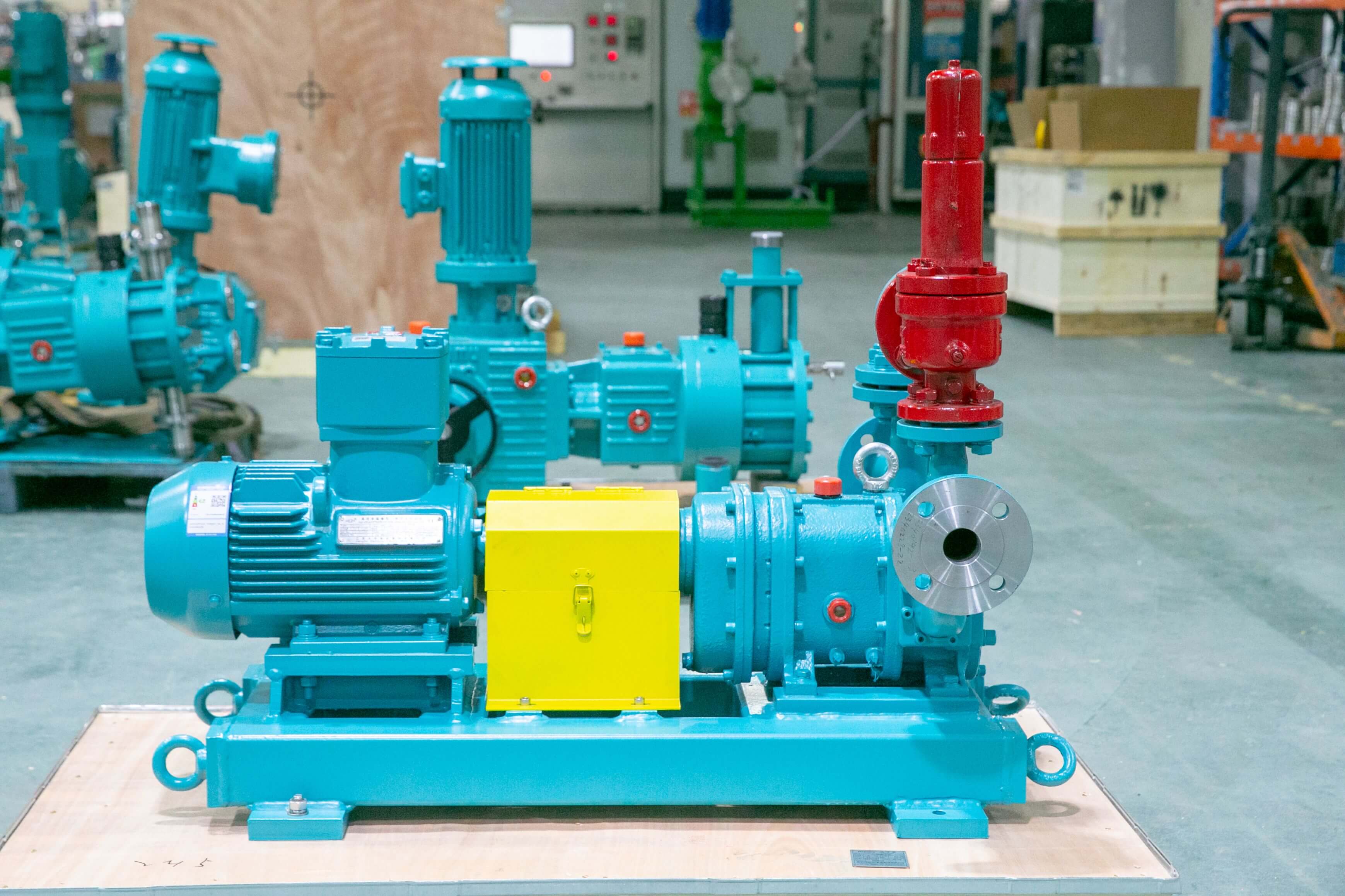
Introduction to the company's technological strength: Depam's four major technological breakthroughs
As an enterprise with 21 years of experience in the R&D of high-end positive displacement pumps, Depam builds its core competitiveness through the following technological layouts:
STEP1:Material Innovation: Corrosion-Resistant Rubber Formula— For chemical media, a composite material combining fluororubber (FKM) and nitrile butadiene rubber (NBR) has been developed, enhancing acid and alkali resistance by 50% and extending service life to over 8,000 hours (based on actual measurement data). For instance, in the catalytic cracking unit of a petrochemical enterprise, when conveying sulfur-containing catalysts, the rotor wear rate decreased by 62% compared to ordinary rubber.
STEP2:Structural optimization: Twin-screw rotor design— Adopting a 120° helix angle and 0.2mm precision gap control, it achieves a self-priming height of ≥8m (vertical suction lift) and reduces shear force by 40% during the conveying process, making it suitable for shear-sensitive media (such as polymer solutions).
STEP3:Intelligent Control: Variable Frequency Speed Regulation System— Integrated with Siemens PLC and pressure sensors, it can adjust rotational speed in real time (50-1450 rpm) according to process requirements, control flow fluctuations within ±2%, and achieve energy savings of up to 25%. In a new energy battery materials project, frequency conversion control reduced energy consumption by RMB 180,000 per year.
STEP4:Modular customization: Rapid response to non-standard demands— Leveraging a 35,000㎡ factory site and a 400-member technical team, we can complete the entire process from needs analysis to solution design within 72 hours. For instance, when designing a radiation-resistant rotor pump for a nuclear power plant, we met the stringent requirement of continuous 365-day operation by adding a lead shielding layer and a special sealing structure.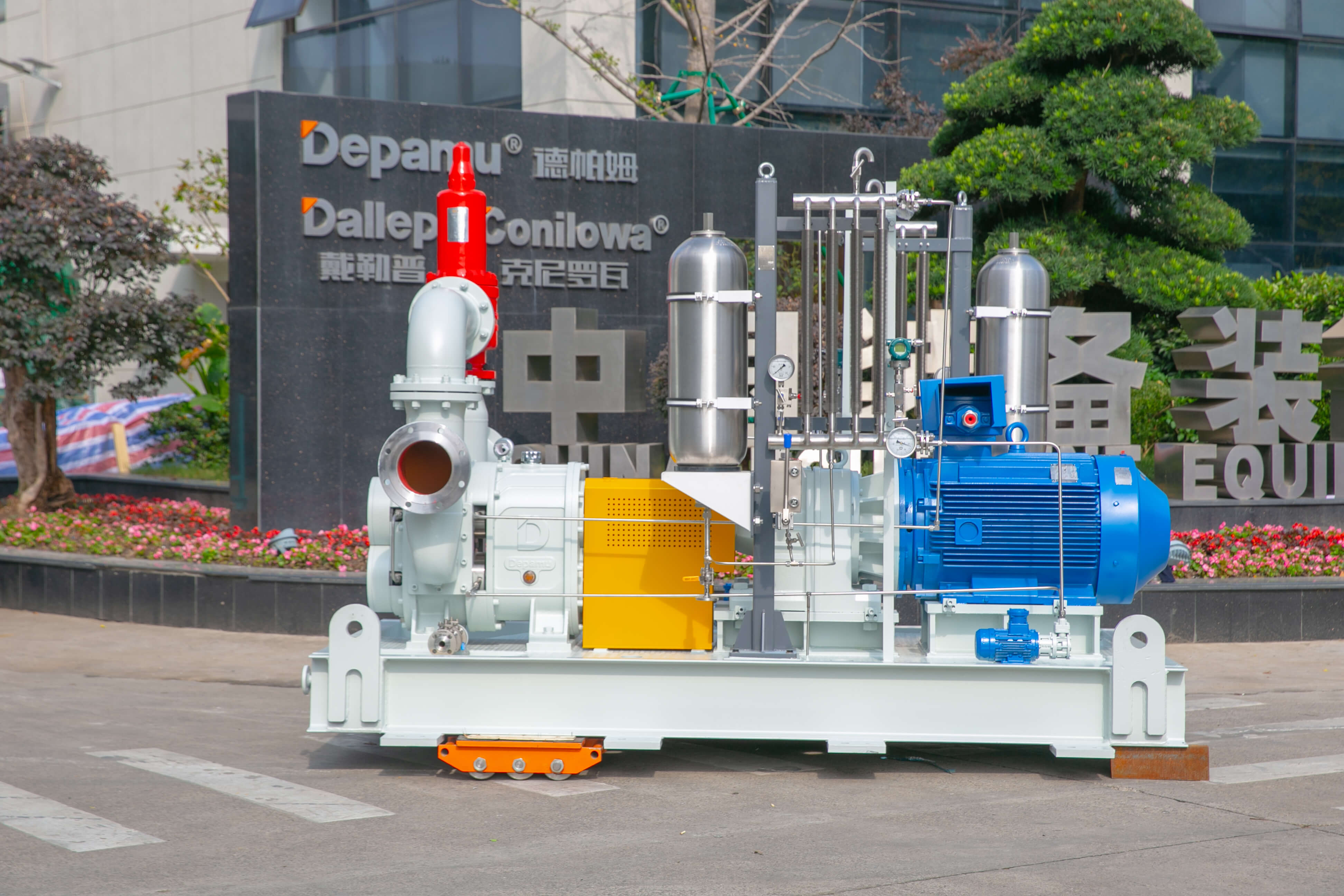 For more information, please visit the official website:www.depamufluid.com
FAQ: Q&A Technical Selection Guide
Q1: How to select rotor material based on medium characteristics?
A: For media containing chloride ions (e.g., seawater), fluororubber (FKM) is preferred, with a temperature resistance of ≤180℃; for media containing aromatic hydrocarbons (e.g., benzene), hydrogenated nitrile butadiene rubber (HNBR) is selected, with a temperature resistance of ≤150℃; for food-grade applications, white nitrile butadiene rubber (NBR) is chosen, complying with FDA certification.
Q2: What are the differences in applicable scenarios between rubber rotor pumps and screw pumps?
A: Rubber rotor pumps are more suitable for media containing solid particles (≤5mm) and have stronger self-priming capabilities; screw pumps are suitable for high-viscosity (≥10000cP) but particle-free media, offering superior flow stability.
Q3: How to control the lead time and cost of customized non-standard products?
A: By combining standardized modules (such as pump bodies and drive units) with customized components (such as rotors and seals), Depump has reduced the delivery cycle for non-standard projects to 15-30 days, with costs 30%-50% lower than those of fully customized solutions.
Reference for full text summary
The technological upgrading of rubber rotor pumps requires the collaborative optimization of materials, structure, and control systems. With 21 years of in-depth industry experience, Depam has developed full-chain technical capabilities from R&D to delivery: its products now cover core sectors such as petroleum refining (accounting for 41%), chemicals (23%), and new energy (15%), with an annual output value exceeding 500 million yuan and serving over 2,000 customers. For enterprises seeking high-reliability, low-maintenance conveying solutions, choosing an original manufacturer not only ensures technological support but also provides full-cycle service assistance ranging from medium analysis to process optimization. For more information, please visit the official website:www.depamufluid.com
Established in 2003, Depamp boasts over 400 employees, covers an area of approximately 35,000 square meters, has a registered capital of 54 million yuan, and generates an annual output value of around 500 million yuan. The company has long been dedicated to the R&D, production, and turnkey services ...
No. 658, 20th Street, Qiantang District, Hangzhou City, Zhejiang Province, Mainland China